
For the Elderly, Companionship Without Marriage is the Greatest Kindness
Retired and Realizing: Companionable Living Is Fine, but the Marriage Certificate Is a Trap

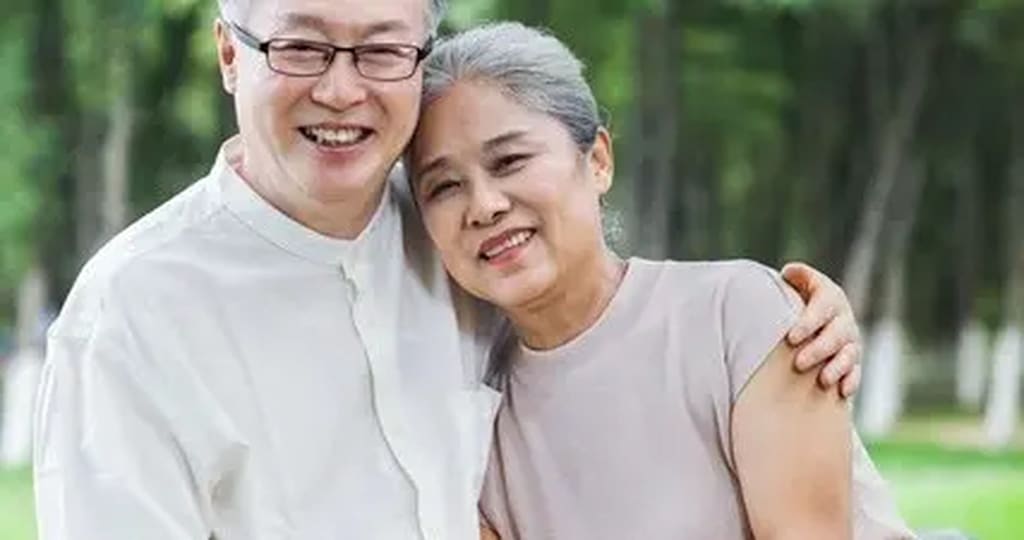
The old saying goes, you don’t truly know the flavor of life until you reach retirement.
My name is Old Chen. I’m sixty-three and have been retired for three years. My wife passed away five years ago, and my daughter is married and lives in the provincial capital. She only makes it back two or three times a year. Most of the time, I live alone in this three-bedroom apartment. To be honest, I didn’t feel much the first two years. After retiring, I suddenly had all this time on my hands. During the day, I could go to the park to play chess or practice Tai Chi, but once night fell and that house went empty, even with the TV volume cranked to the max, it still felt desolate.
Then, I met Xiuying in a calligraphy class at the Senior Citizen University.
Xiuying is four years younger than me and lives alone too; her husband passed away from illness two years ago. She’s neat and tidy, speaks with a gentle cadence, and writes beautiful small-script calligraphy. Our seats were next to each other, and over time, we became familiar. After class, she’d bring me homemade steamed buns, and occasionally I’d treat her to dumplings at the shop by the neighborhood gate. After about six months of this, a certain chord began to tighten in my heart.
Honestly, at our age, "liking" someone isn't that heart-pounding, blushing sensation young people have. It’s more about the groundedness of "having someone by your side to talk to." One winter night, I came down with a sudden high fever—over 39 degrees. I scrolled through my entire phone contact list and, in the end, I called Xiuying. She took a taxi in the middle of the night and stayed with me at the hospital while I was on an IV drip until four in the morning. That night, I thought to myself: How wonderful it would be to have a partner at my side.
Later, when I brought this up to Xiuying, she fell silent for a long time. Then she said, "Old Chen, I’ve thought it through. At our age, we want companionship, not drama. If you’re sincere, we can try living together, but on one condition—no marriage certificate."
I was a bit unhappy at first. I thought, what’s the point of living together without the certificate? It felt unofficial, like we weren't "proper," and I worried people would gossip. Xiuying didn't explain much, only saying, "Don't rush to a conclusion. Once you’ve lived with me for a while, you’ll understand."
I never expected that living together would truly teach me so much.
Once we officially started our "partnered life," Xiuying moved in with me. She rented out her small apartment and kept the rent for herself, saying it was her "retirement nest egg" and she wouldn't touch it. As for daily expenses, we agreed I’d cover the lion's share and she’d cover a smaller portion so neither felt taken advantage of. At first, it was lovely. There were meals on the table, the house was tidy, and I had someone to watch TV with at night. She even managed to revive my nearly-dead Clivia plant.
But the honeymoon phase didn't last two months before trouble started.
First was her son. He works locally. When he found out his mother moved in with me, he didn't say much to her face, but every time he came over for dinner, his expression was sour. Once, after a few drinks, he said to me directly: "Uncle Chen, it’s not that I’m against you being with my mom, but we need to be clear. That apartment of hers is meant for me in the future; that can’t be touched. If you two get legally married, things get messy."
I felt a lump in my chest. When had I ever schemed for his mother's apartment? Isn't my place bigger than hers? But I stayed quiet. After all, he wasn't entirely wrong. But that conversation stuck like a thorn—it didn't hurt constantly, but it was always irritating.
Then came my daughter. When she heard I was living with Xiuying, she called from the city. Her first question was: "Dad, did you get a marriage certificate?" I said no. She let out a long sigh of relief. "That’s good. Dad, I’m not against you finding a partner, but don't be foolish and get legally married. This way is fine. If things don't work out, the split is clean. If you marry, then things like property, inheritance, and elder care will turn into a mountain of lawsuits later."
After hanging up, I sat on the balcony and smoked half a pack of cigarettes. I realized that at our age, finding a partner isn't just about two people anymore. Behind us are two families, houses, savings, and the calculations and anxieties of our children.
Yet, what truly made me see the light wasn't the kids—it was the reality of living together.
Xiuying is a good woman—hardworking, meticulous, and caring. But she has her habits. She likes to wake up at 5:00 AM to chant sutras in the living room. She isn't loud, but I can hear it clearly in the bedroom, and I can never get back to sleep. I like watching ball games late into the night, sometimes until midnight, but she finds the flickering light of the TV disruptive to her rest. Even the food was an issue; she prefers light flavors while I like heavy seasoning. She thinks my salt intake is unhealthy; I think food without salt is meaningless.
None of these issues are deal-breakers on their own, but when piled up daily, they are like sand in your shoe—constantly chafing. Once, we bickered over how much soy sauce to put in the braised pork, and she got so upset she went back to her own apartment for three days. During those three days, I actually felt relieved. I ate what I wanted, slept when I wanted, and the house was quiet. It was quite nice.
She eventually came back, and neither of us brought up the argument again. But from then on, I understood: people our age have spent a lifetime forming habits. Want to change? You can’t. Forcing ourselves together 24/7 isn't "living"; it's mutual torment.
Xiuying later told me something I still remember. She said, "Old Chen, look how good we have it now. Usually, we live in our own places. When we miss each other, we stay over for a few days. If we get tired of it, we go back to our own homes. If one of us has a headache or a fever, there's someone to look after us. But if we’re tied together every single day, you’ll get sick of me and I’ll get sick of you. At our age, aren't we just looking for peace and freedom?"
She was right.
I knew an old friend, Old Li, two years older than me. He found a partner after retiring, they had great chemistry, and they got the marriage certificate. The result? They divorced in less than a year, and it was ugly. Why? Old Li's son was afraid the stepmother would take the family assets, and the stepmother’s son was afraid Old Li was taking advantage of her. The two families fought tooth and nail. In the end, Old Li had to pay the lady 100,000 yuan just to get the divorce finalized. Old Li later told me, "Brother, I regret it to my core. If I’d known, I wouldn't have signed that paper for anything. Now the money is gone, the person is gone, and even my son is distant from me."
So now, I firmly believe in one principle: for elderly people finding a partner, you can "partner up" (搭伙), you can cohabitate, but absolutely do not get that marriage certificate.
Without the certificate, you remain independent individuals with your own homes, savings, and children. If things go well, you look after each other; if they don't, you part ways amicably, owing nothing. Once you marry, it’s no longer about two people—it’s two families stirred together. Assets are blurred, legal relationships change, and even the children's inheritance rights are affected. When a conflict arises, it’s not just a breakup; it’s a divorce that requires going to court.
I know some will say, "Isn't living together without marriage just 'illegal cohabitation'?" That’s a harsh way to put it. But at our age, you live your life for yourself, not for show. Is that piece of paper really that important? What matters is whether the two of you are happy and comfortable, and whether someone is there to talk to you, eat with you, and go to the hospital with you.
That’s how Xiuying and I are now. She stays at her place, I stay at mine. We see each other three or four times a week. Sometimes she stays with me for a couple of days, sometimes I go to hers. On normal days, we do our own things—she does her square dancing, I play my chess. During holidays, we go to our respective homes to be with our own children. No one interferes, and no one burdens the other.
If you ask me if this life is good? I’d say yes. It’s better than marrying and fighting over trivialities every day, better than being caught between your children’s suspicions, and better than having your kids sue each other over an inheritance after you're gone.
My daughter is at peace now too. Every time she calls, she says, "Dad, it’s great that you and Auntie Xiuying have things this way. You look out for each other, and I don't have to worry about you being home alone." Xiuying’s son is polite to me now, too; he even brings me a couple of bottles of wine during the holidays.
In the end, what old people fear most isn't loneliness—it’s trouble. Creating trouble for yourself, for your children, and for those around you. Not marrying simply means inviting less trouble.
I sometimes think back to when I was young. When you fall in love then, you head toward marriage, thinking the certificate is the "rightful conclusion." But after sixty, you have to think in reverse—not getting married is actually the greatest kindness you can show each other.
Some might not like to hear this, but this is the truth I’ve gathered from three years of "partnered living."
As you age, affection is about peace of mind. Not marrying isn't about a lack of responsibility; it’s about having thought everything through and avoiding the pitfalls. Clarity lasts much longer than passion.
About the Creator
Water&Well&Page
I think to write, I write to think
Enjoyed the story? Support the Creator.
Subscribe for free to receive all their stories in your feed.
Comments
There are no comments for this story
Be the first to respond and start the conversation.