
food waste is the world dumbest problem
do not waste food

MIT is known for fostering a great deal of noteworthy innovation.
In any case, concealed in the kitchen of MIT's Media Lab is, maybe,
my #1 MIT innovation: the FoodCam.
Alright, so it may not appear as though much yet it's entirely splendid.
Suppose you have some extra food.
You put it under the camera and you hit the button.
FoodCam presents a photograph on Twitter, Slack, and a mailing list.
All with a basic message: Come and get it!
It seems to be a very decent box of doughnuts.
Indeed.
It looks yummy under FoodCam.
Indeed it does.
Getting the food can really be really cutthroat.
When we arrived, only 30 seconds after it was set,
the entire structure had amassed and all the pizza was no more.
There's a distraught surge of individuals that come from, as,
each entrance in here to get the pizza.
So you got to sort of move before long.
Better believe it, it's a game — it resembles the Yearning Games.
Where...
Will and Jon created the FoodCam as far as possible back in 1999.
This was before Facebook.
Prior to Gmail.
Before virtual entertainment as far as we might be concerned.
The thought came from a structure wide extras issue.
Furthermore, here and there, this straightforward development gets at the large issue of food squander.
I imply that is somewhat the significant piece of what you have done, truly, correct?
There is no question that this totally diminished food squander at the lab.
Practically all of the cooking individuals know that assuming they have spare food from their occasion,
they can just raise a ruckus around town and individuals will eat that food.
Also, those are not even Media Lab occasions that are presently powering the FoodCam.
When we picture the stuff that is harming our planet, what is our take of?
We consider, similar to, smokestacks, vehicles, oil slicks.
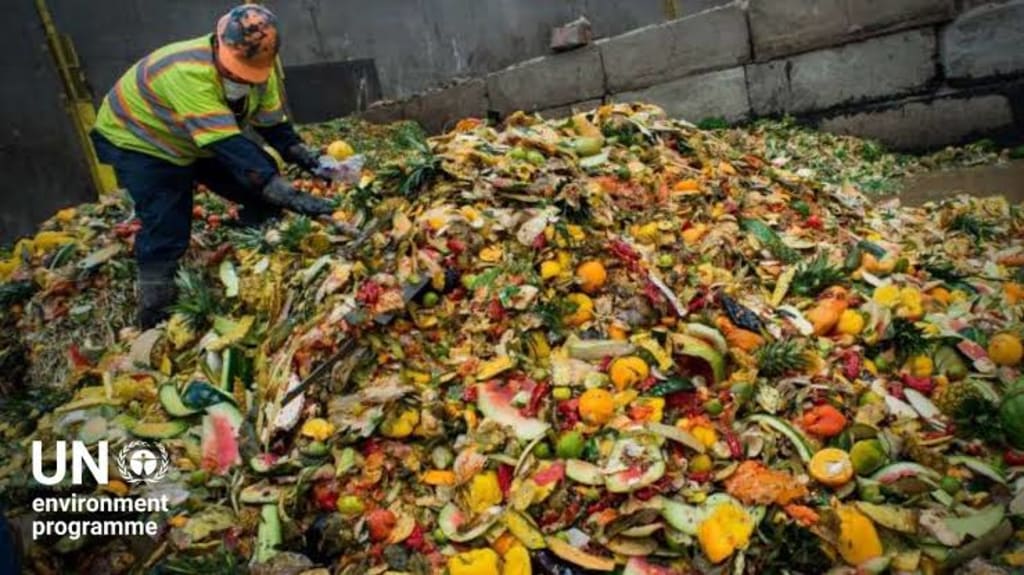
We don't actually ponder all the food we discard.
In the US, generally 40% of the food we produce never gets eaten.
That is more than 365 million pounds of food every day.
While that is going on, around one of every eight Americans
still don't have a consistent stockpile of food to their tables.
And this squandered food is all a tremendous supporter of environmental change.
In the event that worldwide food squander were a country,
it would be the third biggest producer of ozone depleting substances,
simply behind China and the US.
So it truly is a huge issue and perhaps of the most straightforward way
to address environmental change.
It takes a lot of assets to deliver food.
Additionally,
you have all of the energy it requires to keep it cold and transport it around the country.
Also, when food breaks down, it isn't simply stinky.
It discharges strong ozone depleting substances.
Fundamentally,
we're destroying our planet to develop food that nobody eats.But consider this: Nobody
as a matter of fact likes squandering food.
It's simply something that we haven't been giving a lot of consideration to.
Of every one of the difficult issues out there, diminishing how much food
we're squandering is quite possibly of the simplest.
In the US, customers altogether make up the biggest piece of food squander.
A group of four spends about $1,500 on food that they won't ever eat.
Meat is less as a level of what we purchase yet when you think of it as specifically,
as an ozone harming substance serious item, meat squander as a matter of fact
has the most noteworthy ozone depleting substance influence.
What's more, you don't need to be a specialist to comprehend the reason why food will squander in our homes.
All of us are occupied and in a hurry.
In some cases I purchase food automatically,
"Do I truly require that?"
There's even been a tad of examination to show that once something goes
in the fridge it's really worth less to us than previously.
Specialists inquired as to whether they returned home
from the supermarket and dropped a container of eggs.
And afterward they asked, well in the event that your eggs sat in your cooler for a very long time and,
you didn't utilize them, how might you feel about that?
Furthermore, individuals felt much less regret.
I figure a great deal of the loss in our general public does
boil down to decision and needing to have the choice to eat something whenever,
whether we use it.
Part of the explanation we over-purchase food is that we have lots of room to store it in.
Fridges have become around 15% since the 1970s.
Something we found in our examination is that individuals are awkward with
void area with regards to food.
So we love it in structures, or in plan,
be that as it may, with regards to food, we would rather not see void space in our coolers,
on our plates, thus I truly trust that in some
subconscious way we're simply filling everything.
What's more, assuming we had more modest coolers, that let us see all that was in there,
that in itself would prompt a lot less waste in our homes.
Also, it isn't simply our coolers that have gotten greater.
The typical supper plate has become by 36% beginning around 1960.
At the point when you have a major plate, you will generally put a ton of food on it —
whether you can eat everything.
This is the sort of thing Jill Horst saw at UC St Nick Barbara.
You have a plate that is 14-by-18 inches and you believe you really want to stack it up with food.
You would see understudies that had four glasses: water, juice, pop, milk —
furthermore, you'd go to the plate return and they would in any case be full.
In 2009, the feasting lobbies quit utilizing plate.
Understudies can take as much food as they need, yet there isn't a plate to heap it onto.
The food squander per individual, per plate, decreased by 50%.
I mean so that was gigantic.
Suppose that the typical understudy squanders six ounces of food for each feast.
That may not appear to be a great deal — however UC St Nick Barbara serves 13,000 feasts each day.
So that is almost 5,000 pounds of squandered food.
It resembles tossing 350 Thanksgiving turkeys into the trash each and every day.
What's more, when you remove the plate and it becomes three ounces, that is a critical effect
to assist with the food squander, however food cost.
Thus, incidentally, something tiny — like eliminating a plate or changing the
size of a plate — can significantly affect our way of behaving.
Furthermore, it doesn't require a lot of exertion, on the grounds that the impact is subconscious.
The other thing they're focusing on at UC St Nick Barbara is segment size.
Each plate is distributed one part for an understudy.
They can take however many segments as they like,
however, we are really plating the right size, the perfect sum that we ought to eat.
We've become acclimated to these colossal piece sizes at cafés.
What's more, in an unobtrusive manner, it urges us to gorge and discard a ton of food.
In the event that you glance around, there's not a ton of food squander on the plates
in light of the legitimate dividing.
I imply that is someone's dinner.
That is all they have left.
Not even one of us are great.
Squandering less food isn't about to work out by accident more or less.
In any case, simply having it on our radar can truly assist us with squandering significantly less.
What's more, in the event that we truly do have additional food, how about we essentially attempt to inspire it to individuals who could
use it.
There is such a lot of excellent excess that is squandered,
that simply has to find individuals that need it the most.
Komal is the organizer behind Copia, a startup that is attempting to recuperate the entirety of this completely great
food.
Assuming that you envision the world's biggest football arena filled to its outright edge
that is how much food goes squandered each and every day in America —
also, I'm not discussing the previous evening's cushion thai or today's half-eaten cakes,
however, immaculate, uneaten, completely consumable food.
So we don't have to buy or make more food.
We simply have to sort out some way to get it to individuals who need it.
MIT's FoodCam is perfect at recuperating food.
Be that as it may, when you fire increasing this from one structure to a whole city or a whole country,
it turns out to be substantially more troublesome.
Suppose you're a little organization and have 200 sandwiches left over from an occasion.
That is a great deal of food — yet it requires investment and work to sort out how and where to
give it away.
The vast majority truly don't have any desire to manage this.
Doing something to be thankful for ought not be this hard.
Like, how cool would it be assuming that individuals who have food could say, hello, we have food,
also, individuals who need food could say, hello we really want food,
furthermore, we could interface these two individuals and clear the commercial center?
So Komal is attempting to make food gift simple and natural.
On the off chance that you have some food, you type your data into the Copia application.
A driver will then, at that point, come get your food and convey it to covers that need it.
What's more, during large occasions, similar to Super Bowl 50, there's a lot of additional food.
The issue is that it has a short time span of usability.
Envision four 16-foot refrigerated trucks filled to their outright edge —
that is how much food we recuperated.
We took care of 23,000 individuals in two days.
No one rested.
Furthermore, it's not you know wieners and popcorn.
It was lobster rolls and pulled pork sandwiches and $300 cheeses.
Excellent food.
On the off chance that we can get food that would somehow be squandered to individuals who need it,
we're battling hunger, however we're really easing back an Earth-wide temperature boost.
It truly is a shared benefit.
Also, Komal would rather not address hunger in California.
She needs to settle widespread starvation — period.
There's no need to focus on hopefulness or negativity.
I believe it's simply that we're never going to budge on getting it going.
This won't be a short-term thing.
It must be approach change.
Being different entrepreneurs is going.
It will be huge organizations and establishments likewise standing firm
furthermore, saying that, guess what?
We don't endure completely incredible food being squandered.
See, nobody likes tossing out food.
So we made a straightforward manual for assist you with squandering less.
To figure out more go to climate.universityofcalifornia.edu.
About the Creator
Enjoyed the story? Support the Creator.
Subscribe for free to receive all their stories in your feed.
Comments
There are no comments for this story
Be the first to respond and start the conversation.