
Britain’s Politics Is Rotting From Within
Labour’s growing civil war is not just a crisis for Keir Starmer. It exposes a deeper collapse in loyalty, leadership, and political unity across Westminster.

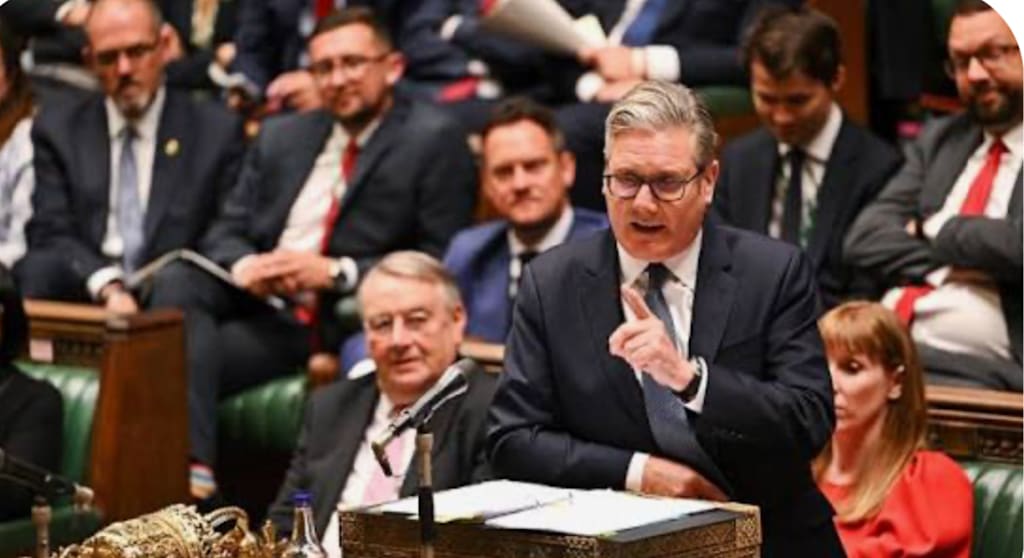
Britain’s Conservatives spent years spiralling through scandal, infighting, and public humiliation before finally reaching their breaking point under Liz Truss. Labour, astonishingly, appears to have reached a similar stage of instability in barely two years. The country is now watching a weakened prime minister attempt to hold together a divided government while Westminster descends into a spectacle of briefings, leaks, and leadership gossip. Yet for all the noise surrounding Keir Starmer, there remains one glaring problem for his critics: nobody waiting in the shadows looks convincingly better.
The growing rebellion against Starmer says less about his leadership than it does about the current state of British politics itself. Figures such as Wes Streeting have increasingly positioned themselves as alternatives, but their manoeuvring has looked driven more by ambition than vision. Streeting abandoning collective responsibility in such a visible way has exposed a nastiness within Labour that the party once accused the Conservatives of embodying. At the same time, Chancellor Rachel Reeves has warned that another leadership crisis could further damage already fragile market confidence. Britain is still living in the shadow of economic instability, soaring living costs, and stagnant wages. The last thing the country needs is another Westminster implosion.
Still, the atmosphere inside Parliament has become poisonous. Labour MPs openly undermine one another while political journalists treat every disagreement as the opening scene of a coup. Westminster now behaves less like a governing institution and more like a permanent reality show, where survival depends on media attention, anonymous briefings, and personal branding rather than competence.
Starmer has also suffered from the brutal reality of political timing. Midterm elections almost always punish governments, regardless of whether local councils have much connection to Westminster policy. Yet Labour’s recent setbacks in England, alongside disastrous performances in Scotland and Wales, have intensified fears that the party is rapidly losing public confidence. Reform UK’s rise has only added to the panic, tapping into growing frustration among working class voters who increasingly feel ignored by both major parties.
This crisis is not uniquely British. Across Europe, traditional party loyalties are collapsing. Voters are becoming more volatile, more distrustful, and less patient with establishment politics. In France, Germany, Italy, and the Netherlands, mainstream parties have all struggled against populist movements and anti establishment anger. Britain is experiencing the same political fragmentation, only with its usual theatrical intensity.
Ironically, Labour’s 2024 election victory was less commanding than it first appeared. Despite winning a parliamentary majority, Starmer secured a smaller share of the popular vote than Jeremy Corbyn achieved in 2019. Labour’s victory owed as much to Conservative collapse as to genuine enthusiasm for Starmer himself. That should have been a warning sign from the beginning.
Even so, Starmer entered office with a rare opportunity. After years of Conservative dysfunction, Britain needed structural reform. The country faces stagnant productivity, a housing crisis, collapsing public trust in institutions, overwhelmed public services, and an economy struggling to adapt to technological transformation. Artificial intelligence and automation are already reshaping industries faster than Westminster seems capable of understanding. Meanwhile, the welfare system has become increasingly unsustainable, burdened by bureaucracy, rising demand, and chronic underfunding.
No government could realistically solve those crises overnight. Starmer has only been in office for two years and inherited a cabinet lacking both experience and ideological unity. While many of his decisions deserve criticism, particularly around taxation and public spending, it is difficult to argue that he has yet been given sufficient time to either fully succeed or completely fail. Much of Labour’s hesitation has come from internal pressure, with MPs terrified of alienating voters while simultaneously demanding expensive spending commitments.
Starmer’s personality has also shaped public perception. Unlike charismatic Labour figures such as Harold Wilson or Tony Blair, he lacks natural political theatre. He often appears managerial rather than inspirational, cautious rather than visionary. In calmer times, that style might have reassured voters. In an age dominated by social media outrage and performative politics, it leaves him looking flat and reactive.
Compounding the problem is Labour’s striking lack of heavyweight political talent. Earlier Labour governments could rely on formidable figures such as Denis Healey, Roy Jenkins, Robin Cook, and Tony Benn. Those politicians disagreed fiercely, but they possessed intellectual depth, political authority, and personal loyalty to the broader project of government. Today’s parliamentary culture feels thinner, more transactional, and far more individualistic. The fact that Starmer reportedly turned to Gordon Brown for guidance highlights how few experienced figures remain capable of steadying the party.
To Starmer’s credit, foreign policy has arguably been his strongest area. He has navigated increasingly unstable relations between Europe and the United States with relative competence and avoided Britain becoming entangled in reckless international escalation. In a period shaped by the war in Ukraine, tensions in the Middle East, energy insecurity, and uncertainty surrounding a second Trump presidency in America, stability itself has become politically valuable.
Yet stability is precisely what Westminster no longer rewards. Instead, politics has become consumed by permanent positioning and internal warfare. Senior Labour figures including Angela Rayner and Andy Burnham increasingly appear focused on protecting their own future ambitions. The result is a government that looks divided even when attempting to project unity.
The French philosopher Alexis de Tocqueville once described British politics as functioning like a gentleman’s club, held together less by rigid rules than by mutual understanding and shared behaviour. Historian Peter Hennessy later described this as the politics of “good chaps”, where ministers maintained loyalty during crises because they understood that governments could not survive constant internal sabotage.
That political culture has almost entirely disappeared. Even divisive leaders such as Margaret Thatcher and Edward Heath governed within parties that still possessed personal bonds and collective discipline. Those relationships weakened under Theresa May before being effectively destroyed during Boris Johnson’s purge of colleagues who challenged him over Brexit. By the time Britain reached the chaotic administrations of Truss and Sunak, loyalty had been replaced entirely by survivalism.
Modern MPs no longer spend long evenings together building relationships across factions. Parliament itself has become less social, more fragmented, and heavily driven by online narratives. Political careers now rise or collapse according to clips on social media, anonymous WhatsApp leaks, and twenty four hour news cycles. Ideology has weakened while personal ambition has intensified.
What Britain is witnessing now is the consequence of that transformation. Labour’s internal conflict is not simply about Starmer. It reflects a wider collapse in political cohesion, patience, and collective responsibility across Westminster itself. Governments can survive unpopular policies, economic crises, and difficult elections. What they cannot survive is a political culture where colleagues behave more like rivals waiting for weakness than allies working toward a shared purpose.
Britain once functioned best when political leaders were surrounded by trusted allies who understood the value of loyalty during difficult periods. Today, that sense of common purpose appears dangerously absent. Westminster has become a place where enemies sit beside each other on the same front bench pretending to be teammates, and the country is beginning to feel the consequences of it.
About the Creator
Trina Dawes
Journlaist and radio presnter, podcast host - Passionate about social justice, feminism, family issues, culture, and music opinions and reviews.
Tips welcome
Enjoyed the story? Support the Creator.
Subscribe for free to receive all their stories in your feed.
Comments
There are no comments for this story
Be the first to respond and start the conversation.