
Benjamin Netanyahu reveals secret prostate cancer diagnosis
The Secret Netanyahu Kept from the World
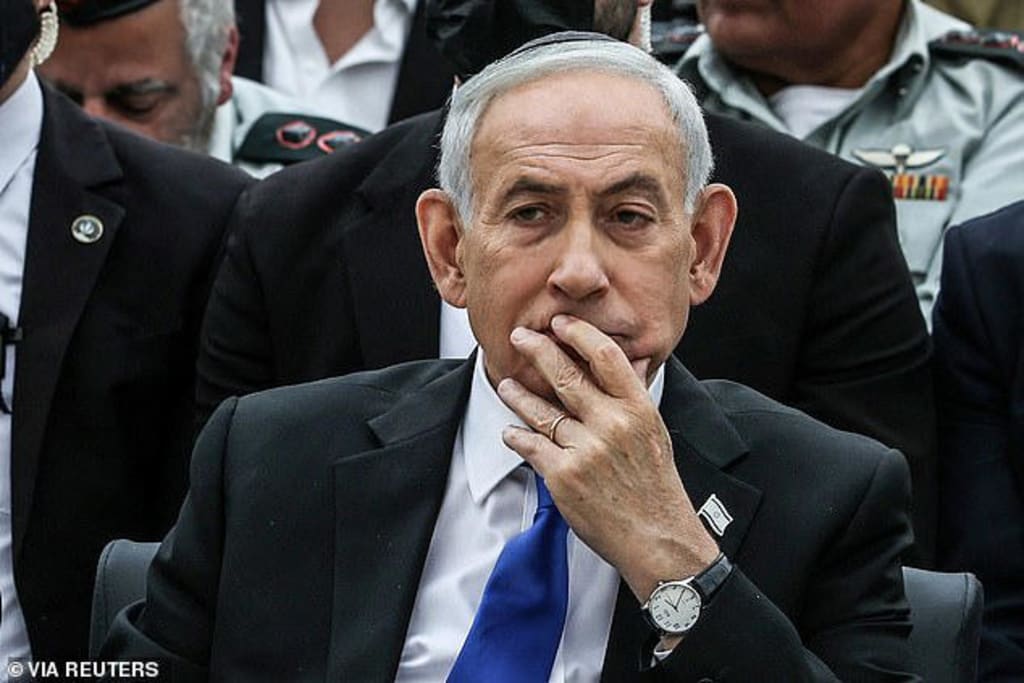
There are men who lead nations, and then there are men who lead nations while quietly fighting a war no one knew about — one happening not on a battlefield, but inside their own body.
Benjamin Netanyahu is 76 years old. He has survived assassination plots, political scandals, criminal trials, and decades of navigating one of the most volatile regions on earth. He has outlasted governments, outlasted critics, and outlasted enemies who have publicly promised his downfall. But in the final days of December 2024, the Israeli Prime Minister walked into Hadassah Medical Centre in Jerusalem for a surgery his country knew nothing about.
And the world is only finding out now.
It started, as these things often do, with something that didn't seem alarming. Netanyahu underwent surgery on December 29, 2024, to treat benign prostatic hyperplasia — an enlarged prostate, a condition so common in men his age that millions live with it without a second thought. The procedure was described as successful and complication-free. Routine. Unremarkable. Exactly the kind of thing a 76-year-old man in a demanding role might deal with quietly and move on from.
But medicine doesn't always let you move on quietly.
A follow-up MRI — the kind of precautionary scan that exists precisely to catch what the human body doesn't announce — identified something. A lesion. Less than one millimeter in size. A pinprick, almost invisible, hiding in the tissue of his prostate. Subsequent tests confirmed what that shadow suggested: early-stage prostate cancer. No metastases. No spread. Caught early, in the way that early detection is supposed to work, in the way that saves lives before lives need saving in the dramatic sense.
Netanyahu chose to act immediately. He's said as much himself. When given information about a potential danger, he addresses it — whether that danger is geopolitical or cellular. He underwent targeted treatment. The lesion disappeared. And then he went back to work.
For months, the world watched him negotiate ceasefires, manage a war, coordinate with Washington, and trade pointed statements with Tehran — all while carrying a medical secret that his office had deliberately chosen not to release.
The timing of the disclosure is as politically loaded as everything else surrounding this man.
Netanyahu has said he personally requested that the April 20 medical report be delayed by two months. His stated reason is exactly what you'd expect from someone who has spent decades thinking three moves ahead: he did not want the information released at the height of the war, arguing that Iran's government would weaponize the news, spinning it into propaganda, casting doubt on Israeli leadership stability at the worst possible moment.
It is a calculation that will divide opinion sharply and already has.
Supporters will see it as responsible statecraft — a leader protecting his country's image of strength during an existential conflict. Critics, and there are many, will see it as yet another instance of a man who has long been accused of placing his personal political survival above transparency. The debate over whether a sitting leader has the right to conceal a health diagnosis from the public is not new, but in Netanyahu's case, it lands differently. He is not merely a head of government. He is a war-time leader whose physical and mental capacity is, by any reasonable measure, a matter of public interest.
And yet — the diagnosis was early. The treatment worked. He is, by all medical accounts, healthy.
The revelation lands at a particularly charged moment on the global stage. Netanyahu is expected to visit the White House in the coming weeks, as the United States works to broker a lasting deal in the ongoing conflict with Iran. Israel's ceasefire with Lebanon — forged after months of fighting between Israeli forces and Iran-backed Hezbollah — has been extended by three weeks following talks in Washington. The region is in one of its rare, fragile pauses, the kind that everyone knows can shatter without warning.
Into all of this walks a 76-year-old man, cancer-free, saying: I am still here. I am still in this.
There is something almost cinematic about it — the kind of detail that, if written into a political drama, might feel too on-the-nose. A wartime leader secretly battling cancer while publicly battling enemies on multiple fronts. Reading a book during treatment, he says, then going straight back to the office.
Whether you admire Benjamin Netanyahu or despise him, whether you see him as a defender of his nation or a destabilizing force in an already fractured region, one thing is difficult to dispute:
The man does not stop.
And as of right now, medically at least, he has no plans to.
About the Creator
Enjoyed the story? Support the Creator.
Subscribe for free to receive all their stories in your feed.
Comments
There are no comments for this story
Be the first to respond and start the conversation.