
A Yellow Packet of Home: Finding Racik in Osaka
Racik

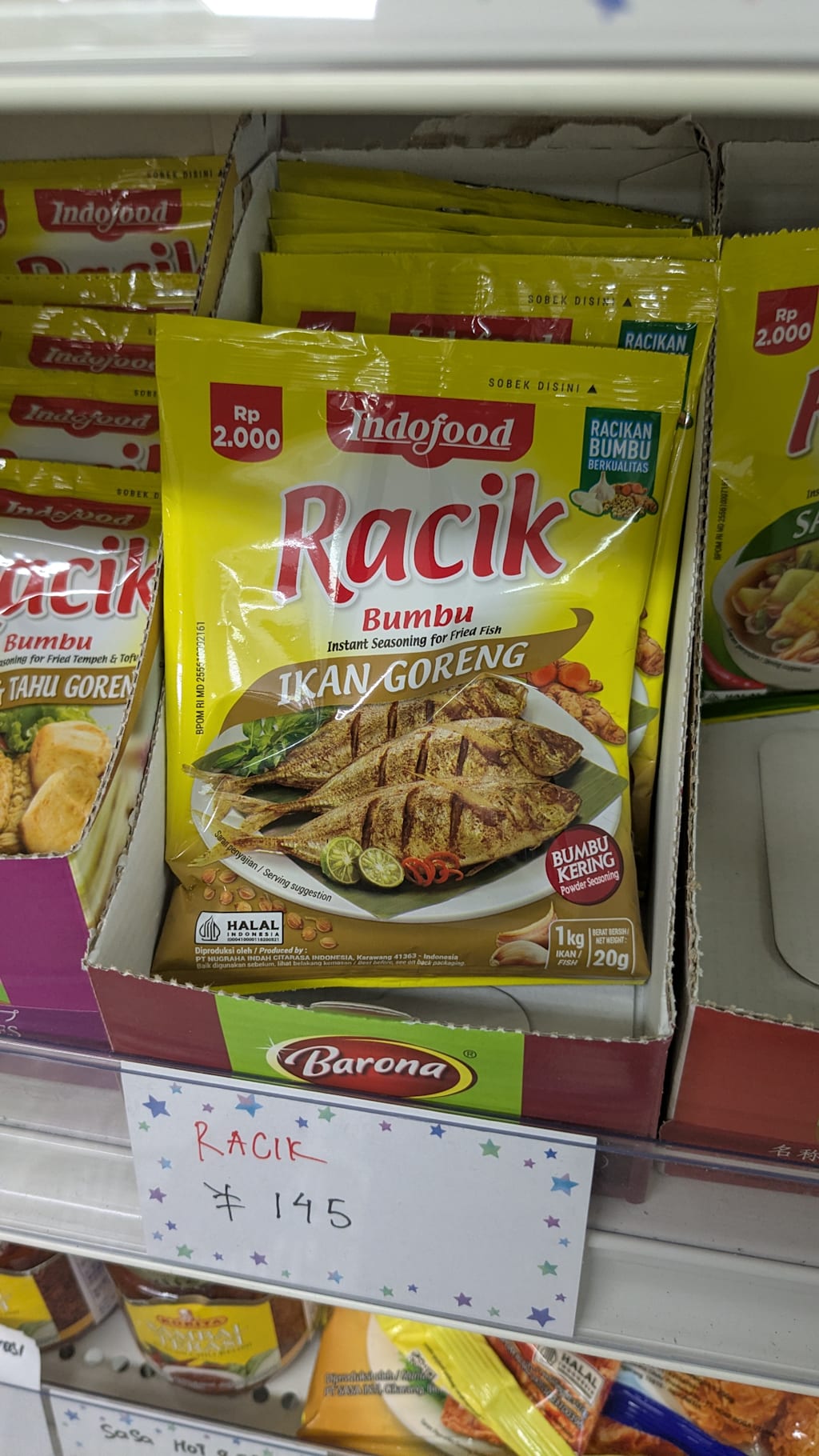
There is a particular kind of joy that only a fellow migrant worker will understand — the joy of walking into a small grocery store on a random weekday in Osaka and seeing a shelf stacked with yellow packets that say "Indofood Racik." No grand gesture, no dramatic music, just a cardboard box crammed full of instant seasoning packs, a handwritten price tag reading ¥145, and stars doodled around it in colored pen. And yet, for a few seconds, I forgot I was thousands of kilometers away from home.
I have lived in Osaka long enough now that most of my days follow a rhythm that has very little room for nostalgia. I wake up early, get ready for genba work, spend hours on my feet doing physical labor under fluorescent lights or open sky, and come home tired enough that even scrolling through my phone feels like an effort. Life here is not bad. It is simply different, structured, and quiet in a way that Indonesia never was. But every so often, something small breaks through that routine and reminds me exactly where I come from.
That day, it was a bag of fried fish seasoning.
I was not even looking for it. I had gone into the store for something else entirely — probably rice, or maybe eggs, the kind of unremarkable errand that fills up a Tuesday evening. But there it was, tucked into a shelf next to imported snacks and dry goods: an entire section dedicated to Indonesian pantry staples. Indofood Racik, in its unmistakable yellow packaging, with a photo of grilled fish on a banana leaf, lime wedges scattered beside it, and the proud red starburst announcing the price — Rp 2.000 printed on the original Indonesian packaging, now sold for ¥145 in a shop thousands of miles from where it was made.
I picked it up and just stood there for a moment, turning the packet over in my hands like it was something rare. On the back, the familiar words: "Diproduksi oleh PT Nugraha Indah Citarasa Indonesia, Karawang." Karawang. A place I have never even visited, and yet reading that name felt like being handed a small piece of a country I left behind. The halal logo, the "Sobek Disini" instruction telling you where to tear the packet open, the little illustration of garlic, tomatoes, and spices labeled "Racikan Bumbu Berkualitas" — every detail so ordinary back home, and so precious here.
This is the strange arithmetic of being a migrant worker. Things that meant nothing to you in your own country suddenly carry weight the moment they become hard to find. Back in Indonesia, Racik was just something my mother might grab off a shelf without a second thought, one of a dozen instant seasoning brands competing for space in a crowded supermarket aisle. Nobody photographs it. Nobody writes essays about it. But here in Osaka, in a shop that clearly caters to the Indonesian community living and working in this city, that same packet becomes a small monument. Someone imported it. Someone priced it by hand and taped a paper sign with stars drawn around the number, maybe hoping it would catch the eye of someone just like me — tired, a little homesick, wandering the aisles after a long shift.
I ended up buying three packets. Not because I needed that much fried fish seasoning, but because there is a comfort in stockpiling a taste of home, in knowing it will be there in my kitchen cupboard for whenever the craving hits. I thought about my upcoming wedding, still months away, still requiring careful budgeting and long hours of overtime to fund properly, and how food like this will matter even more once family gathers — how a plate of ikan goreng seasoned with something so simple and familiar might do more to comfort homesick relatives than any elaborate Japanese dish ever could.
Living abroad teaches you to find identity in unexpected places. It is not always in grand cultural events or curated diaspora meetups. Sometimes it is in a cardboard box on a store shelf, in a brand you grew up seeing on television commercials, in a price tag written by hand in a foreign currency. It is in the specific relief of recognizing your own language on packaging in a place where every other label is written in characters you are still learning to read.
That evening, I went home and fried tilapia the way the packet suggested, with lime and crushed chili on the side, banana leaf substituted with whatever plate I had. It did not taste exactly like my mother's cooking. Nothing here ever quite does. But it was close enough, and closer than I expected to find in Osaka on an ordinary Tuesday, one grocery aisle at a time.
About the Creator
Enjoyed the story? Support the Creator.
Subscribe for free to receive all their stories in your feed.
Comments
There are no comments for this story
Be the first to respond and start the conversation.