
Up to 3,400 years ago, ancient pigeons coexisted with humans.
A Common Route to Domestication

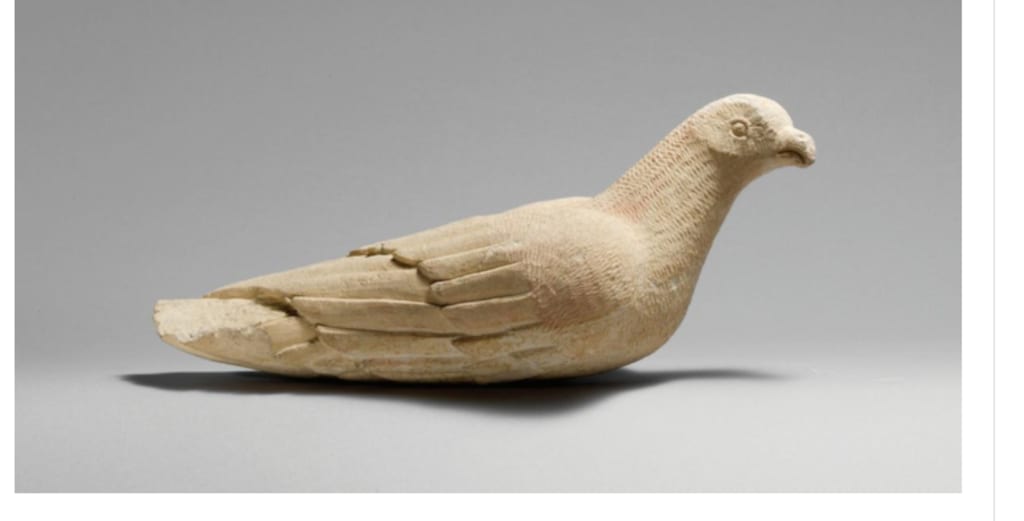
Nearly 3,400 years ago, pigeons were coexisting with humans and approaching domestication, according to a ground-breaking new study from Cyprus. The earliest direct evidence of pigeon domestication has been pushed back by nearly a millennium with this revelation.
The results indicate a close and long-standing relationship between people and the common rock dove, a bird that is now frequently written off as an urban annoyance. The Late Bronze Age harbour city of Hala Sultan Tekke, a thriving community on the southeast coast of Cyprus that flourished between 1650 and 1150 BC, was the subject of the study published in Antiquity.
A sizable collection of bird bones discovered at the location was analysed by researchers. concentrating on rock dove (Columba livia) remains in particular. The scientists discovered intriguing information about the lives of these ancient birds by fusing stable isotope analysis with zooarchaeological methods.
A Common Route to Domestication
The pigeons at Hala Sultan Tekke consumed food that was nearly identical to that of the local humans, according to stable isotope analysis, which uses chemical traces preserved in bones to study ancient diets. This implies an extremely intimate connection.
The birds were either being directly cared for and fed by city dwellers, or they were probably consuming human food waste. By about 1400 BC, researchers think the pigeons had become semi-domesticated and were most likely bred on-site.
The commensal road to animal domestication is the name given to this phenomenon. In this scenario, animals start residing close to human settlements in order to take advantage of the food and shelter that are accessible. This closeness eventually fosters a mutually beneficial connection that leads to complete domestication. The oldest direct evidence of domesticated pigeons was found in Hellenistic Greece between 323 and 265 BC, prior to this study.
Pigeons in Daily Life and Ritual
Additionally, the study found indications that pigeons were more than just a source of food. Many of the pigeon bones recovered there had been burnt and interred with other animal remains in areas set aside for ceremonial purposes. This implies that the birds were eaten at ceremonial feasts, which were a significant component of social or religious events in Bronze Age Cyprus.
Although no specific pigeon breeding buildings, such pigeon towers, have been found at Hala Sultan Tekke, the combination of isotope data and bone measurements suggests that people have been managing these birds for a long time. According to the researchers, these results represent some of the first direct biomolecular proof that pigeons and humans coexisted in the same habitat.
Reassessing the Lowly Pigeon
The research team expects that these results will alter people's current perceptions of pigeons. Although pigeons are frequently thought of as just city scavengers, they actually have a complicated and colourful history that is entwined with our own.
They were an essential component of daily life and ceremonial feasts in Bronze Age Cyprus. They have a long history with humans that dates back thousands of years—much earlier than historians had previously believed. Additionally consistent with later cultural links is the existence of pigeons in ancient Cyprus.
The island was well-known for being the birthplace of the goddess Aphrodite, who was frequently portrayed with pigeons or doves. By demonstrating that the relationship between the people of Cyprus and these birds was well-established even before the classical tales were documented, this new archaeological evidence offers a concrete historical context for these enduring mythological links.
Top image: A little sculpture of a pigeon made of limestone from Cyprus that dates to about 600 and 480 BC (Cypro-Archaic II). from the New York Metropolitan Museum of Art's Cesnola Collection of Cypriot Art.
About the Creator
Enjoyed the story? Support the Creator.
Subscribe for free to receive all their stories in your feed.
Comments
There are no comments for this story
Be the first to respond and start the conversation.