
The REAL Jesus
What Did Jesus Really Look Like?


What Did Jesus Really Look Like?
For more than two thousand years, artists have portrayed Jesus Christ in countless ways. Some paintings depict him with fair skin, blue eyes, and long light-brown hair, while others portray him with African, Asian, Indigenous, or Middle Eastern features. These images often reflect the culture and artistic traditions of the people who created them rather than historical evidence. The question, therefore, is not how artists imagined Jesus, but what the available evidence suggests about the appearance of the historical Jesus.
According to the New Testament, Jesus was born in Bethlehem and raised in Nazareth, in the region of Galilee, during the first century A.D. He was Jewish and lived in Roman-occupied Judea. Because the Gospels focus primarily on his teachings, ministry, death, and resurrection, they provide almost no physical description of his appearance. This omission is significant. If Jesus had possessed unusually distinctive physical features, the Gospel writers likely would have mentioned them. Instead, their silence suggests that his appearance was generally unremarkable for a Jewish man of his time.
Historical and archaeological evidence provides additional clues. Human remains, artwork, and skeletal studies from first-century Judea indicate that Jewish men of the region typically had olive to medium-brown skin, dark brown or black hair, and brown eyes. They generally stood between approximately five feet one inch and five feet five inches tall, shorter than the average man in many modern Western countries. Their physiques were usually lean and muscular due to lives of manual labor, walking long distances, and limited access to abundant food.
Jesus worked as a carpenter before beginning his public ministry. In the ancient world, carpentry involved far more than woodworking alone. Craftsmen often worked with stone and other building materials, requiring considerable physical strength. Combined with years of traveling on foot throughout Galilee and Judea, Jesus would likely have possessed a strong, weathered physique rather than the soft appearance often seen in Renaissance paintings.
His hair was most likely dark, thick, and either wavy or curly. While many modern images depict Jesus with long flowing hair, some scholars point to the Apostle Paul's comments in 1 Corinthians 11:14, where long hair on men is described as culturally unusual. Although this passage was written years after Jesus' ministry and does not specifically describe Jesus, it suggests that extremely long hair was not the norm for Jewish men of that period. Many historians therefore believe Jesus probably wore his hair relatively short by today's standards, perhaps reaching around the ears or neck rather than extending to his shoulders.
Jewish custom also makes it likely that Jesus wore a beard. Facial hair was common among Jewish men in first-century Judea and is consistent with cultural practices of the time. His beard would likely have been trimmed rather than highly styled.
Jesus' clothing would have reflected the modest dress of an ordinary Jewish laborer. Historical evidence indicates he likely wore a simple undyed wool tunic, a woven outer cloak, leather sandals, and a cloth belt. The Gospels mention that Roman soldiers cast lots for his seamless tunic at the crucifixion, suggesting it was a well-made but practical garment rather than luxurious clothing.
One of the most frequently quoted passages concerning Jesus' appearance is Isaiah 53:2, which says, "He had no form or majesty that we should look at him, and no beauty that we should desire him." Christians have traditionally understood this prophecy to emphasize that the Messiah would not attract followers through extraordinary physical appearance but through his mission and character. While interpretations differ regarding its exact application, the passage reinforces the broader biblical pattern of placing little importance on Jesus' outward appearance.
Modern forensic anthropology has also contributed to the discussion. By studying skulls from first-century Judea, ancient DNA, archaeological discoveries, and the physical characteristics of populations living in the region during that era, researchers have produced facial reconstructions representing what an average Jewish man from Galilee may have looked like. Although these reconstructions cannot identify Jesus specifically, they generally portray a man with olive-brown skin, dark curly hair, brown eyes, a broad face, and a full beard—features that differ considerably from many traditional European artistic depictions.
This difference is understandable when viewed through history. As Christianity spread across Europe, artists naturally portrayed biblical figures using the familiar features of their own communities. Similar adaptations occurred throughout Africa, Asia, and Latin America, where local artistic traditions often represented Jesus in ways that reflected their own cultures. These works served devotional and cultural purposes rather than historical reconstruction.
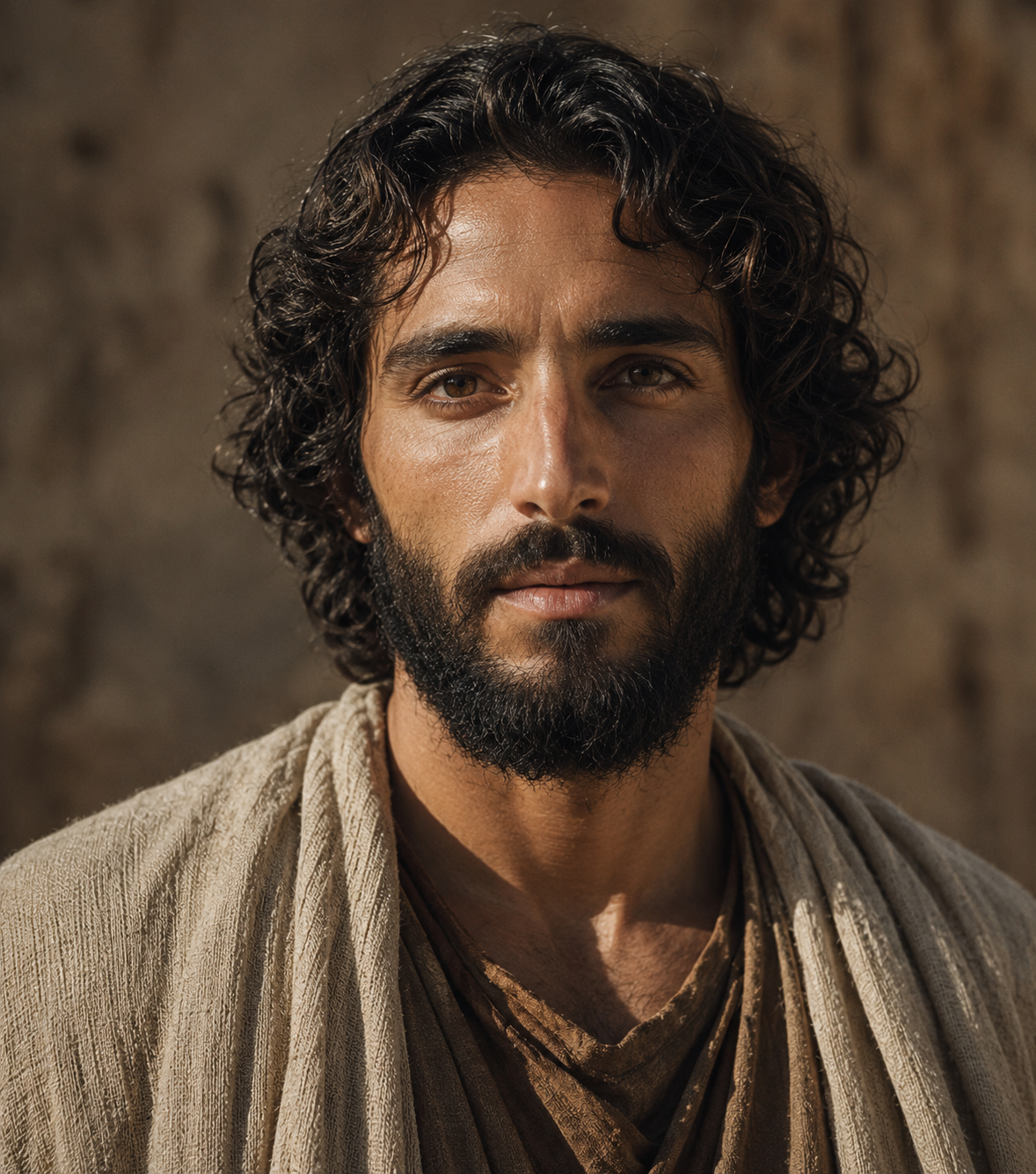
Ultimately, the Bible places far greater emphasis on Jesus' identity than on his appearance. The New Testament presents him as a Jewish teacher, healer, and Messiah whose message transformed history. Based on Scripture, archaeology, historical records, and forensic research, the most likely historical portrait is that of an ordinary first-century Jewish man from the Middle East: olive to medium-brown skin, dark hair, brown eyes, a beard, average height, and the strong build of someone accustomed to physical labor. While no definitive portrait exists, this evidence provides the most historically grounded understanding of what Jesus most likely looked like.
About the Creator
Violet Hamilton
Harlem born. Author of Shark Weak. Wrote multiple Award-Winning Cast and Crew screenplay "What If" and "Trickster." Educated. World traveler. I now reside in Long Island, New York. I adore writing. It's the only time I get to play God.
Enjoyed the story? Support the Creator.
Subscribe for free to receive all their stories in your feed.
Comments
There are no comments for this story
Be the first to respond and start the conversation.