
The Real History Behind The House Of The Dragon
All for a silly crown


British history has always been a chaotic mess full of battles, kings, and conquerors. Growing up in England, we are taught various parts of our history, from Henry VIII and his six wives to civil wars, religious or otherwise, to the Victorians and their insane lifestyles.
Early history tends to be a bit hit-and-miss, however. As there is quite a lot to cover, I mean, we did have an 111-year war with France, so that does take up a huge chunk.
As such, history lessons from this section of our bloody past tend to focus on the Battle of Hastings and William the Conqueror, with a brief pit stop at the War of the Roses (the civil war that inspired Game of Thrones), often to give us a bit of an exposition to the infamous Tudor Dynasty.
Very little is commonly known about the Anarchy. A civil war between King Stephen, Henry I’s nephew and his daughter Empress Matilda.
The Prologue
Now, to understand the events of the Anarchy, we have to go back to the death of William the Conqueror in 1079. His second son William, known as King Rufus, died in 1100 during a hunting ‘accident’ in the New Forest. This ‘accident’ is a 900-year-old mystery; some say it was just an unfortunate thing, while others decree that it was an assassination plot (this is the event that inspired Robert Barathron’s death).
The eldest son of the conqueror, Robert was not chosen as heir due to earlier betrayals, and the third son also died in the New Forest after being impaled by a tree. Leaving Henry, the youngest, who happened to be in the New Forest at the time of Rufus’ death, and very quickly made moves to crown himself king in Winchester.
(There are rumours of a curse, which I have covered, so feel free to check that one out).
This caused a bloody dispute between himself and his eldest brother, but ended with Robert losing and becoming Henry’s prisoner.
Fast forward a few years to 1120, when Henry’s son William was in the Channel, where he and his noblemen decided to race with another ship to see who could return to England the quickest. Fools as they were, they snagged a rock, and the ship sank, killing everyone on board. This is refered to as the White Ship Disaster.
This left Henry with no living sons, only daughters. Henry then sought to leave the English throne to his daughter, Empress Matilda, but was only partially successful in convincing the nobility to support her. Henry died in 1135.
The Dance of Dragons, Minus the Dragons
Stephen was crowned king; however, Matilda, understandably, was furious, beginning a bloody civil war. So, we are now in the Dance of Dragons era, but minus the dragons, of course.
King Stephen's early reign saw fierce fighting with disloyal English barons, rebellious Welsh leaders, and Scottish invaders. Following a major rebellion in the southwest of England, Matilda invaded from Normandy in 1139 with the help of her half-brother Robert of Gloucester.
Matilda then took the South West while Stephen held the South East. Noblemen across England sought to defend their lands and fortresses.
For a while, neither side held the advantage, and on many occasions it became a bit of a stalemate - most of the fighting was raids, skirmishes or sieges, mainly led by mercenaries, or ambitious rebels.
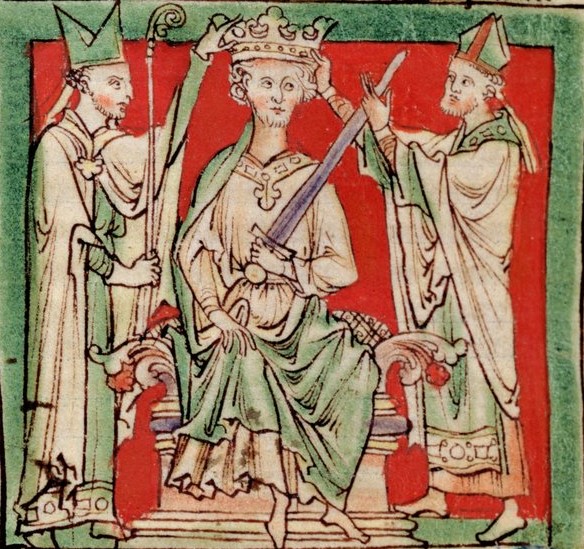
In 1141 Stephen was captured following the Battle of Lincoln. When Matilda attempted to be crowned queen, she was forced out of London by hostile crowds. Not long afterwards, Robert of Gloucester was captured by Stephen's wife. Both sides agreed to a hostage exchange.
Stephen then almost captured Matilda in 1142 during the Siege of Oxford, but she escaped from Oxford Castle across the frozen Thames to safety.
Matilda’s husband, Geoffrey Plantagenet, Count of Anjou, conquered Normandy in her name in 1143, but in England, neither side could achieve victory.
In 1148 Matilda returned to Normandy, leaving the campaigning in England to her eldest son, Henry (the future King Henry II of England).
In 1152 Stephen attempted to have his eldest son, Eustace, recognised by the Catholic Church as the next king of England, but the Church refused.
Henry of Plantagenet invaded England in 1153, but neither faction’s forces were keen to fight. Stephen and Henry began peace negotiations, during which Eustace died of illness, removing Stephen’s immediate heir.
Following this, the Treaty of Wallingford allowed Stephen to retain the throne but recognised Henry as his successor, but he died of disease in 1154. Henry became king of England, and then began a long period of reconstruction.
15 Years of Carnage
All in all, the civil war lasted 15 years, with different phases. So yeah, there's a lot to unpack, and that’s the short version, mind you. You can very easily spot the direct inspirations that formed the novel Fire and Blood/House of the Dragon. The conflict was considered particularly destructive, even by the standards of medieval warfare.
One chronicler states that:
"Christ and his saints were asleep"
during the period. Victorian historians coined the term "the Anarchy" because of the widespread chaos, although modern historians have questioned its accuracy.
We still do not know the total death count of the Anarchy. Some chronicles tell us that one battle claimed the lives of 11,000 men. Others suggest the toll could be up to 100,000 lives in total.
Either way, this period of history was bloody and long, and gave birth to the longest dynasty in Royal history, the Plantagenets, which lasted roughly 300 years, ending with Richard III at the Battle of Bosworth in 1485. It is no wonder its events continue to inspire fiction, all these centuries later.
Thank God they didn’t have dragons, hey?
Thank you for reading my work.
SubscribeAbout the Creator
Enjoyed the story? Support the Creator.
Subscribe for free to receive all their stories in your feed.
Comments
There are no comments for this story
Be the first to respond and start the conversation.