
The Pride and the Abyss: The Story of the Bismarck Battleship
Remembering When the Royal Navy Sank the Bismarck in May 1941
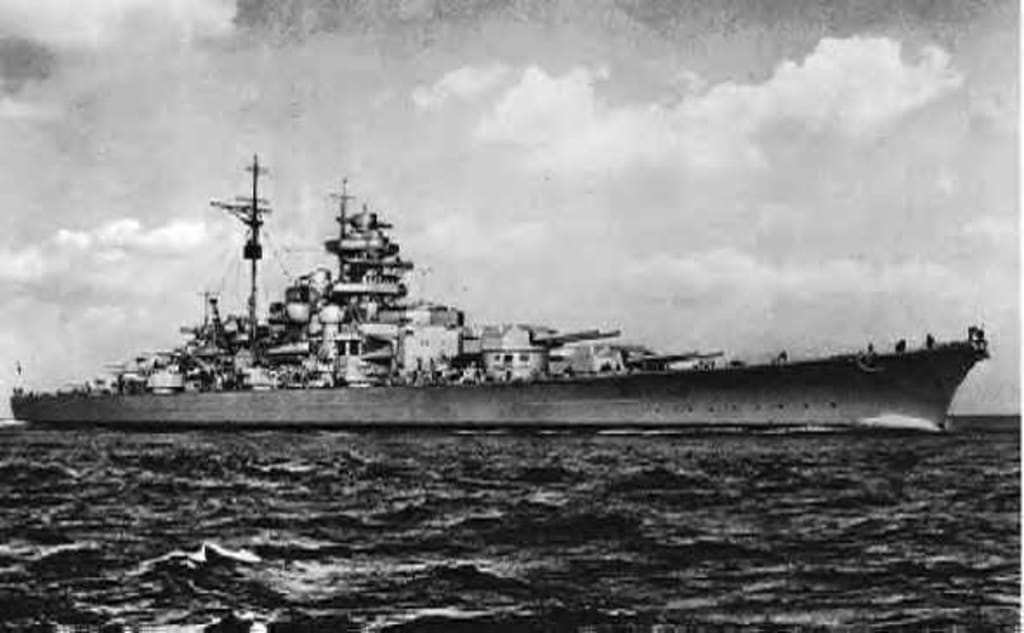
Bismarck was the hero of German unification during the 1870s, and in the 1930s, a new Bismarck battleship was laid down. It began construction in Hamburg at the Blohm and Voss shipyard and was completed by the early 1940s. In 1940, the Bismarck was commissioned after sea trials at Kiel Bay.
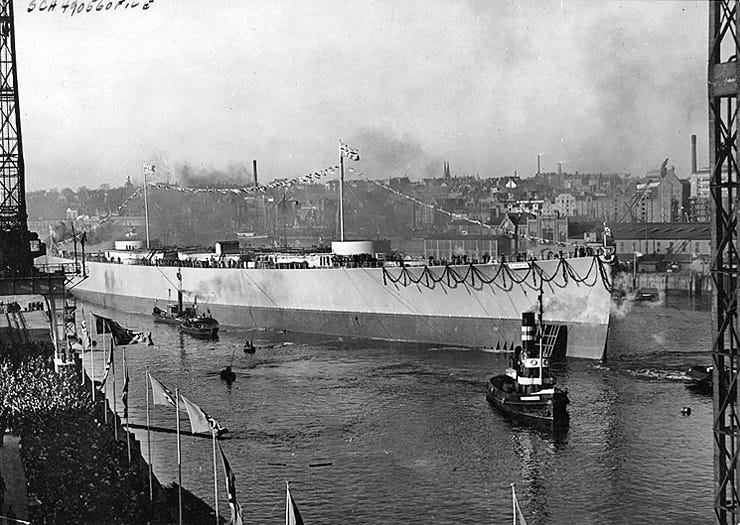
The Bismarck was the largest battleship in the German navy, which was over 50,000 tons. It outstripped all Royal Navy battleships and had a formidable assortment of guns and armor. It could also travel at approximately 29 knots.
The Bismarck, therefore, revived Plan Z, which outlined further surface fleet action with the Royal Navy. In addition, effective surface fleet commerce raiding during Operation Berlin further encouraged German surface fleet action. The commander-in-chief of that operation was Admiral Günther Lütjens, captain of the Bismarck for Operation Rheinübung.
Operation Reinübung was another commerce raid. The operation began on May 18 after the Bismarck and the Prinz Eugen left harbor at Gotenhafen and set sail on the 19th. On May 20, aerial reconnaissance spotted them in Kattegat heading towards the North Sea.
Days later, British ships intercepted the Bismarck in the Denmark Straight. The Hood and the Prince of Wales took on the Bismarck during the Battle of the Denmark Straight, a battle in which the Bismarck emerged victorious. During the battle, the Bismarck set the Hood ablaze, which was enough to sink it.
The Prince of Wales was also hit during the battle, but remained afloat and withdrew. The Germans celebrated the sinking of the Hood while Britain’s Royal Navy despaired as one of their best warships disappeared beneath the sea. However, after the battle, the Bismarck also required repairs and headed towards the port of St. Nazaire.
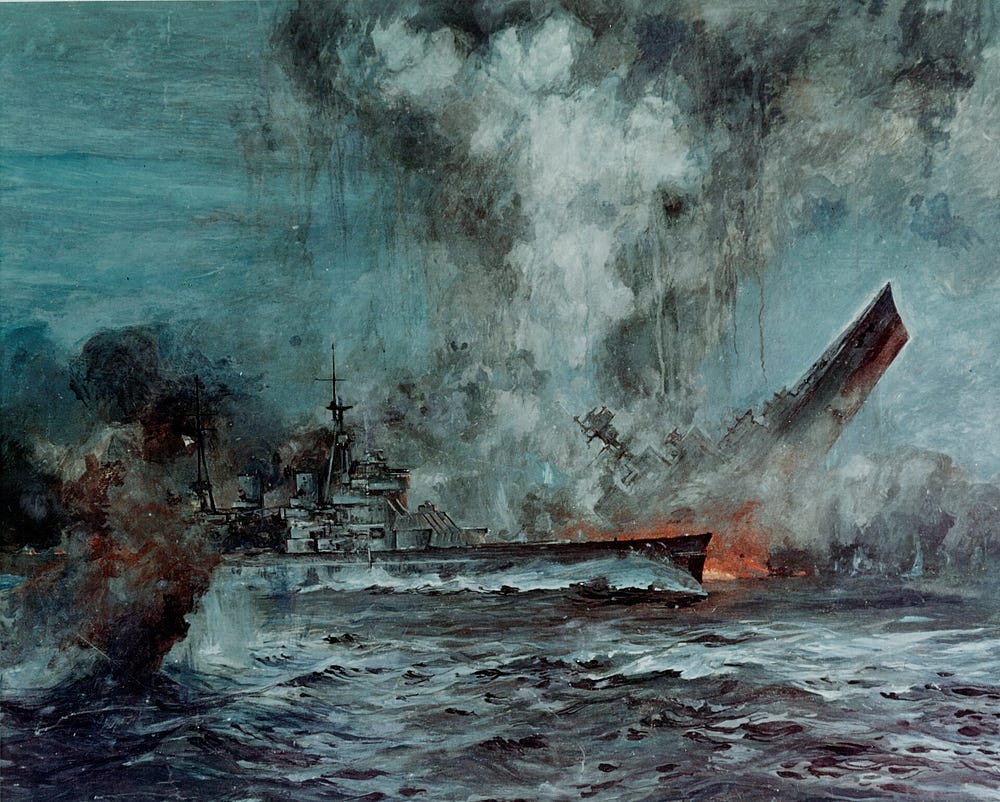
After the loss of the Hood, the Royal Navy called in extensive re-enforcements to sink the Bismarck. Among these re-enforcements were aircraft carriers, which could provide further aerial reconnaissance to locate the Bismarck, with which contact had been lost. On May 26, aerial reconnaissance spotted the Bismarck, and preparations for a massed air strike began.
During the air sorties that followed, torpedoes hit the Bismarck. One of these torpedoes was enough to jam the Bismarck’s rudder, which limited its maneuverability. On May 27, further Royal Navy battleships intercepted the Bismarck and opened fire. The Bismarck fired its last salvos before its gun turrets were taken out. Although the Bismarck did not surrender, with the ship in flames, the captain gave the order to scuttle and abandon ship. Debate remains as to whether the scuttling charges or Royal Navy torpedo firing sank the Bismarck.
Why the Sinking of the Bismarck is Important Today?
The sinking of the Bismarck further inspired deep-sea exploration with forensic marine archaeology. In 1989, oceanographers, who had discovered the wreckage of the Titanic, found the Bismarck. Further research has suggested that the scuttling charges and sabotage by the crew were bigger factors in the Bismarck’s sinking.
World War II battleship and U-boat merchant ship raiding partly influenced the modern commerce disruption tactics we see today. For example, the Strait of Hormuz is a location for maritime seizures and blockades. Modern disruptions in the Gulf try to exert economic force much like the commerce raiding in World War II.
The demise of the Bismarck was also the end of the battleship era, which submarines and aircraft carriers increasingly eclipsed. The German navy effectively dropped Plan Z and began to expand its U-boats to sink more merchant ships. Aircraft carriers would also dominate further naval battles such as the Battle of the Coral Sea, the Battle of Midway, and the Battle of the Philippine Sea in 1944. Today, there are no active battleships in naval service because of the seismic shift in naval warfare that began in the early 1940s.
This article of mine was originally submitted to Medium, where you can read it here.
Read more of my World War II articles on Vocal:
Remembering the Battle of Tarawa in November 1943
A Timeline of the Yamato Battleship from Construction to Sinking
The WW II Pacific Crucible: American Victories and Defeats
Famous Axis and Allied Air Raids of World War II
A Timeline of the Dutch East Indies Campaign in World War II
About the Creator
Matthew A
Matthew is the author of Battles of the Pacific War 1941-1945. Battles of the Pacific War is available on Amazon and Lulu in e-book and paperback formats. Check out the book’s blog at battlesofthepacificwar.blogspot.co.uk.
Enjoyed the story? Support the Creator.
Subscribe for free to receive all their stories in your feed.
Comments
There are no comments for this story
Be the first to respond and start the conversation.