
The Mary Celeste: New theories on why a perfectly good ship was found abandoned in 1872.
The Heresy of the Dry Pump: How invisible vapor and a clogged pipe created history's greatest ghost ship.

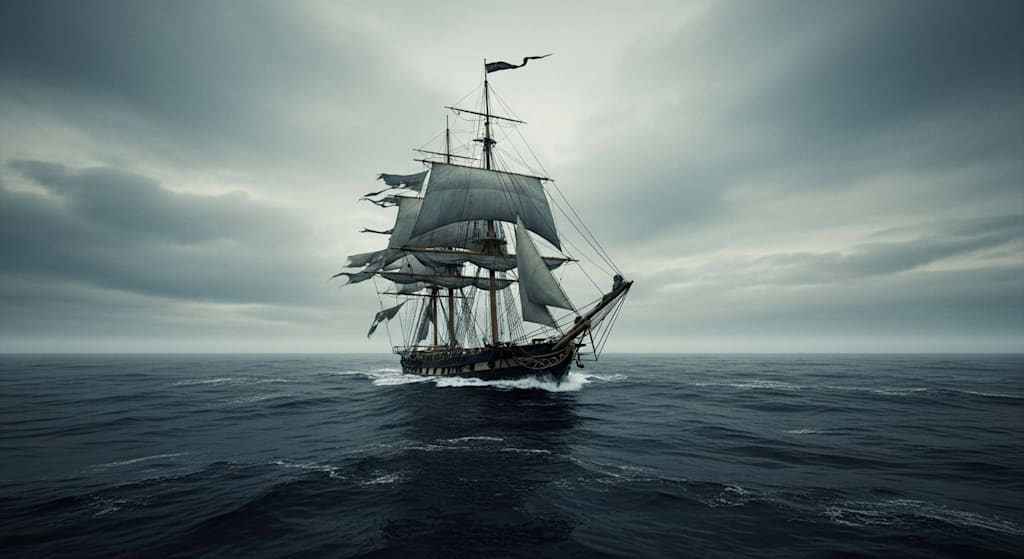
The wet slap of a loose sail against the mast sounded like a gunshot in the stagnant air of the Mid-Atlantic. Oliver Deveau stood on the deck of the Dei Gratia, his squinted eyes fixed on the brigantine drifting two points off their starboard bow. The ship, the Mary Celeste, was moving with a sluggish, drunken gait. No one stood at the wheel. No lookout hailed them from the bow. The silence coming across the water was a heavy, unsettling weight that seemed to dampen the very spray of the sea.
Deveau climbed the side. His hands shook. The wood was slick with salt and neglect. He expected to find blood, or perhaps the signs of a struggle against pirates. He found neither. What he found was a ghost in the shape of a perfectly functional vessel.
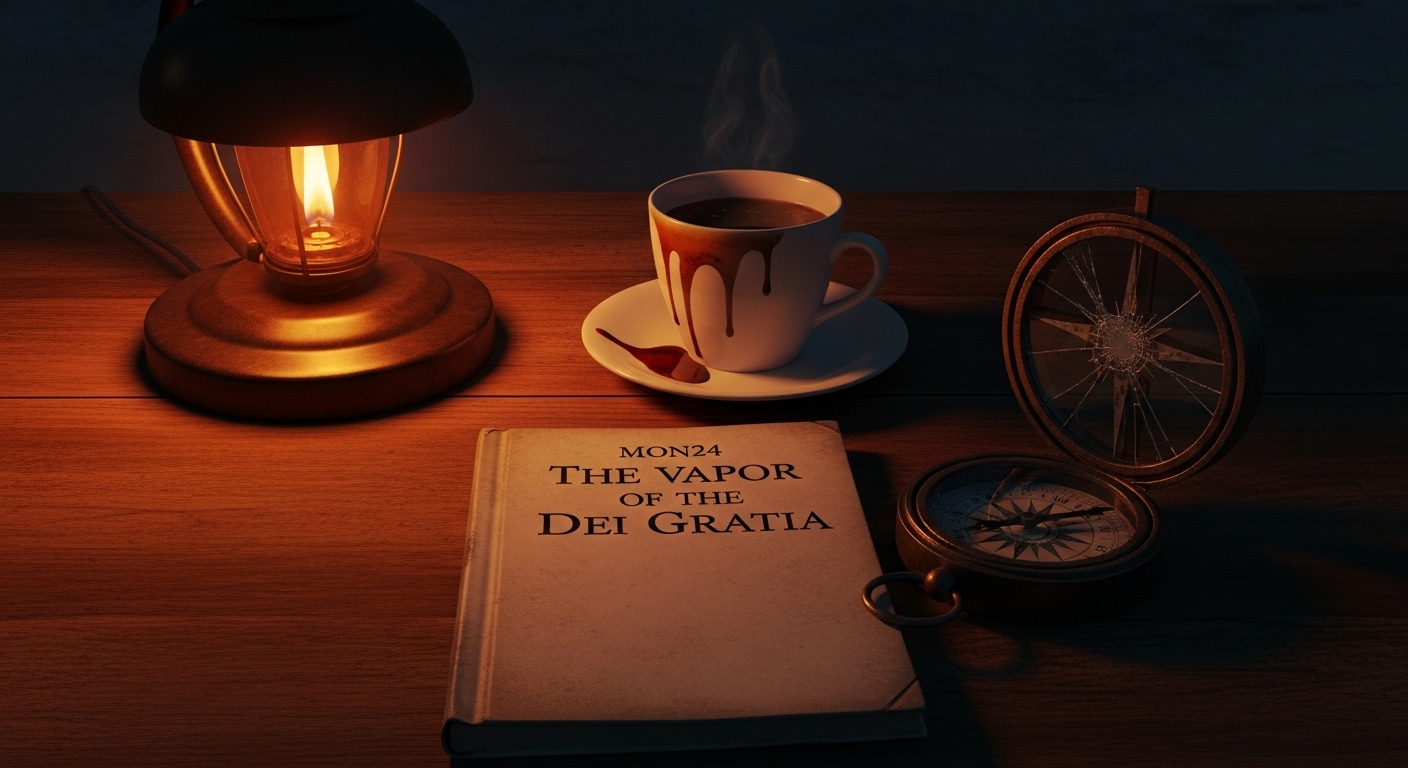
I’m writing this while my desk lamp flickers with a dying buzz, the light straining against the stacks of vellum piled high like a paper fortress around my keyboard. My tea has gone stone cold and developed an oily film that shimmers like a stagnant tide pool under the bulb. If I’m being honest, looking through these old manifests makes my own ribs feel tight. I’ve spent the better part of forty-eight hours buried in Dr. Hemmings’ 1924 report—a dusty, foxed monograph titled The Vapor of the Dei Gratia, found in a box of "unclassified maritime anomalies" in the basement of a London archive. Hemmings was a man who saw the ghosts of the previous century with a clarity that eventually broke him.
He knew that the Mary Celeste wasn't a crime scene. It was a laboratory of terror.
________________________________________
The Ghost in the Rigging
When Deveau stepped onto the deck, he didn't find a dinner table with steaming plates of food. That is a lie told by later novelists to sell magazines. He found a ship that had been abandoned in a hurry. The sails were in poor condition. Some were furled; others hung in tatters. The binnacle—the stand for the ship's compass—had been knocked from its mount. The glass was smashed.
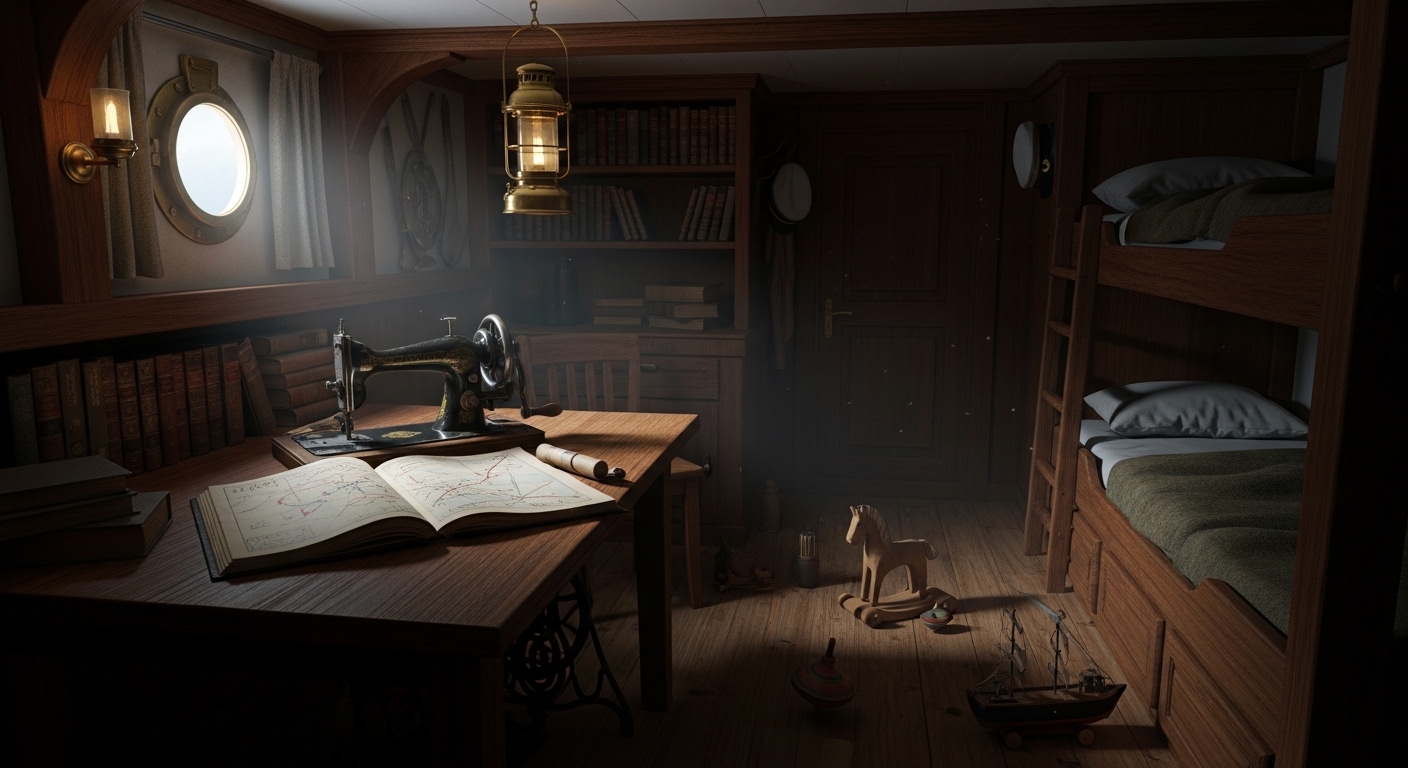
The captain’s cabin was a bizarre tableau of domesticity interrupted. Captain Benjamin Briggs’ clothing was neatly packed in his bureau. His wife’s sewing machine sat on the table. Their daughter Sophia’s toys were scattered on the floor. It felt like they had simply evaporated into the Atlantic mist.
I had to read three 19th-century journals to verify this next part, and it sent a chill through me. There was nearly four feet of water in the hold. That sounds like a lot. To a sailor, it’s a nuisance, not a death sentence. The Mary Celeste was a staunch ship. She was built of cedar and oak. She wasn't sinking. Yet, the lifeboat was gone. One of the two pumps had been dismantled. The internal organs of the ship were strewn across the deck like a visceral warning.
Why leave a dry ship for a tiny boat in the middle of a thousand miles of nothing? It’s a question that makes the mind spiral. Morehouse, the captain of the Dei Gratia, couldn't explain it. The courts in Gibraltar couldn't explain it. They spent months accusing Morehouse of murder, trying to prove he had slaughtered the Briggs family for the salvage money. But there was no blood. There were no marks of violence. There was only the empty, mocking sea.
________________________________________
The Alchemical Panic of the Hold
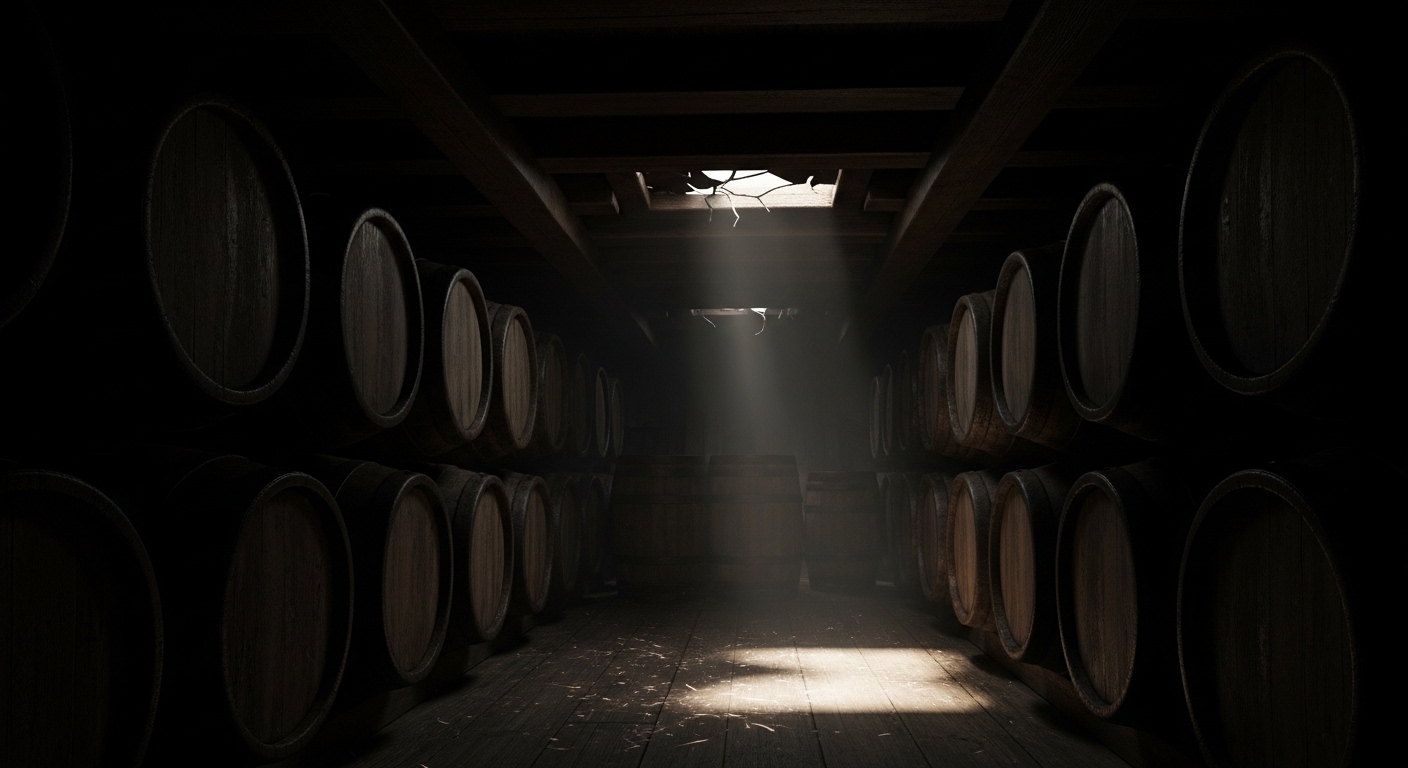
The answer lies beneath the floorboards. In the belly of the Mary Celeste sat 1,701 barrels of industrial alcohol. This wasn't fine wine or whiskey. It was raw, volatile spirit intended for fortifying Italian wines.
Dr. Hemmings’ 1924 report mentions a specific detail that the Gibraltar court ignored: nine of the barrels were found to be empty. They hadn't been drained. They had leaked.
Industrial alcohol in a damp, hot hold undergoes a deranged transformation. It vaporizes. As the ship pitched and rolled in the Atlantic swells, the fumes would have built up in the lightless space below decks. If a sailor had opened the hatch with a lantern, he wouldn't have seen fire. He would have seen a "pressure wave."
Imagine the scene. A low, rhythmic thumping begins to vibrate through the hull. A smell, sharp and metallic, fills the cabins. Captain Briggs, a veteran sailor but a man deeply protective of his wife and child, would have heard the rumbling of a possible explosion. He would have feared a fire that didn't smoke but simply consumed the air.
If I’m being honest, the idea of an invisible fire is what keeps me up at night. You can’t fight what you can’t see. You can’t breathe the vapor without your lungs feeling like they are being scrubbed with lye. Briggs likely ordered the crew into the lifeboat, trailing behind the brigantine on a long towline, waiting for the ship to explode or the fumes to clear. Then, the wind rose. The towline snapped. The Mary Celeste sailed on, ghost-guided, while ten people watched her disappear from the waterline of a small, overcrowded rowing boat.
________________________________________
The Heresy of the Dry Pump
There is a second layer to this nightmare. It involves the "Heresy of the Dry Pump," a theory proposed by modern maritime forensic scientists but hinted at in Hemmings' older notes. The Mary Celeste had recently undergone a massive refit. In the process, coal dust and sawdust had filtered into the bilges.
This debris is a silent killer of ships.
One of the pumps was found dismantled on the deck. This is a crucial, alarming detail. If the pump was clogged, the crew wouldn't know how much water was actually in the hold. They would pump and pump, and nothing would come out. The sounding rod—the tool used to measure the depth of the water—was found lying on the deck.
Briggs was a man of logic, but logic fails when the tools of your trade betray you. He saw four feet of water. He couldn't pump it out. He smelled the alcohol vapor. He felt the ship was a ticking bomb with a flooded basement. It was a perfect storm of false data. He made a decision based on a lie told by his own ship.
I’ve spent the better part of a week looking at the weather patterns for November 1872. The sea wasn't calm. It was a jagged landscape of grey peaks. In that lifeboat, with a wife and a two-year-old girl, Briggs would have realized his mistake within minutes of the line snapping. The ship he thought was dying was actually the only thing keeping them alive.
________________________________________
The Butcher’s Bill in Gibraltar
The aftermath was a different kind of horror. The Vice-Admiralty Court in Gibraltar was led by a man named Frederick Solly-Flood. He was a man of unhinged suspicion. He spent years trying to prove that the crew had gotten drunk on the industrial alcohol and murdered the captain.
He didn't understand the chemistry. You can't drink industrial alcohol; it’s poison. It kills the nerves and blinds the eyes before it ever brings a buzz.
Solly-Flood pointed to "bloodstains" on a sword found under Briggs’ bed. He pointed to "claw marks" on the railings. Later analysis proved the blood was just rust and the claw marks were simple tool abrasions from the ship's construction. But the damage was done. The Mary Celeste was branded a cursed vessel. She changed hands seventeen times over the next decade. Each owner suffered a misfortune. One ran her aground for insurance fraud. Another died shortly after purchase.
If I’m being honest, I think the ship wanted to be left alone. She had witnessed a moment of pure, human panic that she couldn't reconcile with her own sturdy wood. She carried the scent of that alcohol and that fear in her grain until she finally broke apart on a reef off the coast of Haiti in 1885.
I sat in the archive yesterday, touching a piece of a 19th-century logbook from a similar vessel. The paper felt like dead skin. We want there to be a monster. We want there to be a giant squid or a rift in time. But the truth is much more visceral. It’s the story of a father trying to save his family from a danger that didn't exist, using tools that didn't work, in a sea that didn't care.
The Dei Gratia crew eventually got their salvage money, but it was a pittance. Morehouse never spoke of the ship again. He spent the rest of his life looking over his shoulder at the horizon.
My tea is a cold, dark mirror now. I can see my own eyes in the oily film. The Mary Celeste is still out there, in a way. Not the wood, but the silence she left behind. Every time a gauge fails or a sensor glitches in a modern cockpit, the ghost of Benjamin Briggs is there, reaching for a lifeboat that isn't there.
The sea is a very big place to be wrong.
About the Creator
The Chaos Cabinet
A collection of fragments—stories, essays, and ideas stitched together like constellations. A little of everything, for the curious mind.
Enjoyed the story? Support the Creator.
Subscribe for free to receive all their stories in your feed.
Comments
There are no comments for this story
Be the first to respond and start the conversation.