
The Defiance of Poet Gaspara Stampa
The woman who sang her own wounds.

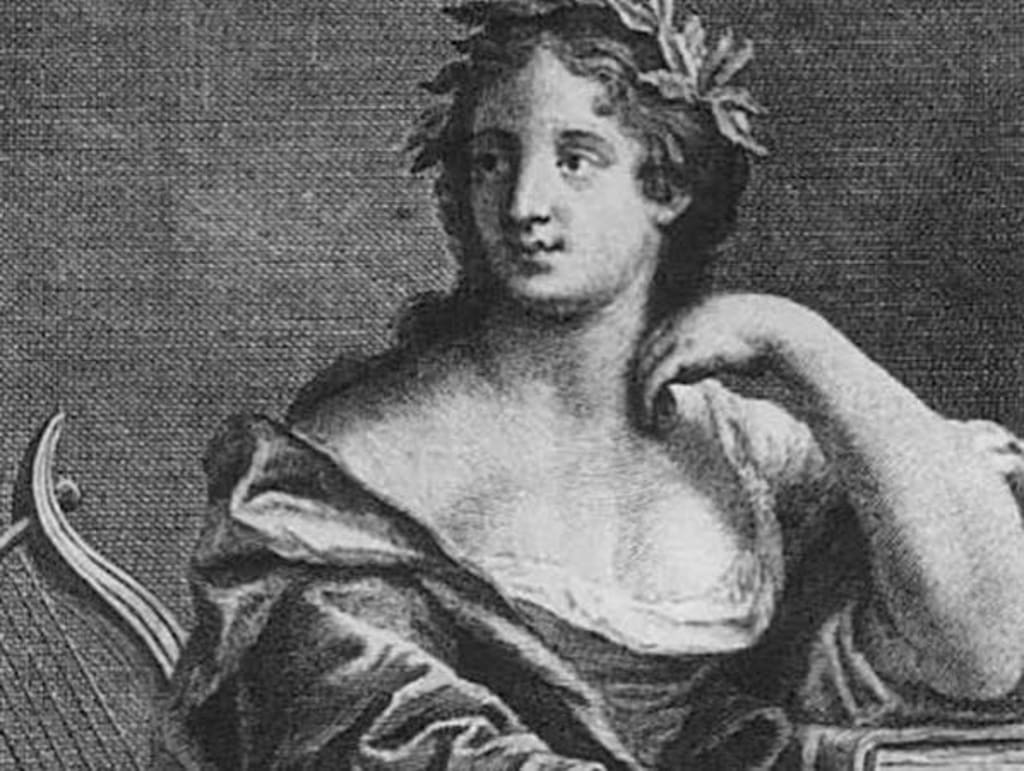
In the winter of 1548, Gaspara Stampa met a man who would spend the next three years systematically ruining her life. In doing so, he accidentally gave Western literature some of its most terrifyingly honest love poetry.
Before the heartbreak, Stampa’s existence was already a striking anomaly for a middle-class woman in Renaissance Venice. Born around 1523 in Padua to a jewel merchant, she was only eight when her father died. Her mother packed up the family and moved to Venice, a city where social boundaries were fluid for anyone with enough talent. The Stampa sisters received an elite classical education usually reserved for noblemen’s sons, mastering Latin verse, philosophy, and music.
But this early momentum was nearly crushed by a sudden family tragedy. In 1544, her beloved brother Baldassarre died. He was the golden child of the family and a promising poet himself. Stampa was so utterly consumed by grief that she abandoned music, withdrew from society, and seriously prepared to enter a convent to become a cloistered nun. It took a year of isolating silence before she chose life—and art—again.
When she returned to the world, her family's home became a ridotto—a crowded, candle-lit literary salon where Venetian intellectuals gathered to drink, argue, and listen to music. Stampa was the central attraction. She did not just write poetry; she performed it, singing her raw lyric verses aloud while playing the lute. Guests compared her to Sappho, not just for her talent, but because it was shocking to hear a woman broadcast her interior life so publicly. Her reputation grew until she was officially elected into the Accademia dei Dubbiosi, a prestigious, male-dominated literary society. Because it was still unseemly for a woman to publish under her own name, she adopted a pastoral alter ego for her poetry: Anaxilla.
Then came Count Collaltino di Collalto. He was an aristocratic soldier, arrogant, emotionally distant, and entirely wrong for her. Their three-year affair was completely lopsided. Stampa lived in a state of absolute hyper-fixation, while Collaltino drifted in and out of Venice for military campaigns and estate business. Months of agonizing silence were punctured by brief, chaotic reunions. By 1551, the Count grew bored and abandoned her completely.
The rejection physically broke her, triggering a deep depression, but it also sparked her sharpest work. To understand why her poems caused a stir, one must look at what love poetry was at the time. For two centuries, writers had rigidly copied Petrarch, a style where men wept over silent, bloodless, untouchable women. Stampa flipped the dynamic entirely. She wrote as an active agent of desire, detailing physical longing, sexual frustration, and psychological torment. She did not apologize for her desperation; she argued that her capacity to feel pain gave her more artistic authority than any man in Venice.
Just as she began to heal and regain her footing, Collaltino inflicted a final, psychological cruelty. He sent her an unexpected invitation to visit his country estate, dangling the hope of a true reconciliation. Stampa went, hoping to piece their love back together, only for the Count to treat her coldly and humiliate her in front of his peers. This specific, calculated betrayal inspired her darkest, most bitter poems.
She eventually moved on, finding a quiet companionship with a nobleman named Bartolomeo Zen. But the toll of those earlier years lived permanently in her frame, a debt her body continued paying long after her heart had moved on. In 1554, after traveling to Florence for a change of climate, she returned to Venice and caught a violent fever. She died within fifteen days at age thirty-one.
Because her heartbreak was so famous and her health so shattered, rumors aggressively swirled through Venice that she had poisoned herself out of despair. While modern historians lean toward a physical illness like intestinal poisoning or a severe flu, the suicide rumor added to her tragic mystique for centuries.
Stampa only saw three of her poems published during her life. After her death, her sister Cassandra hunted down her scattered, loose papers, tear-stained and half-forgotten, and published a single volume of 311 poems. For generations, male critics dismissed the book as the hysterical diary of a lovesick girl. It took modern readers to see what Venice’s salons actually witnessed: a woman who claimed her own grief, centuries before history were ready to let her keep it.
One of her translated poems below:
Ladies, who of my lord would fain be told
By Gaspara Stampa
Ladies, who of my lord would fain be told,
Picture a gentle knight, full sweet to see,
Though young in years, in wisdom passing old,
Model of glory and of valiancy;
Fair-haired, bright colour glowing in his face,
Tall and well-set, broad-shouldered, finally,
In all his parts a paragon of grace
Except in loving wantonly, ah me!
Who'd know myself, picture a woman wrought
In passion and in presence after pain's
And death's own bitter images, a port
Of safety where untroubled rest remains;
One who with neither tears, nor sighs, nor zest
Wakes pity in her cruel lover's breast.
About the Creator
Tim Carmichael
Let your becoming be louder than your fear, and your smallest steps become the road you once thought impossible to walk. An Appalachian poet and cookbook author my book Beautiful and Brutal Things is on Amazon, Link 👇
Enjoyed the story? Support the Creator.
Subscribe for free to receive all their stories in your feed. You could also become a paid subscriber, letting them know you appreciate their work.
Comments
There are no comments for this story
Be the first to respond and start the conversation.