
The complete history of the U.S -IRAN conflict explained
how the USA and IRAN became worse enemies

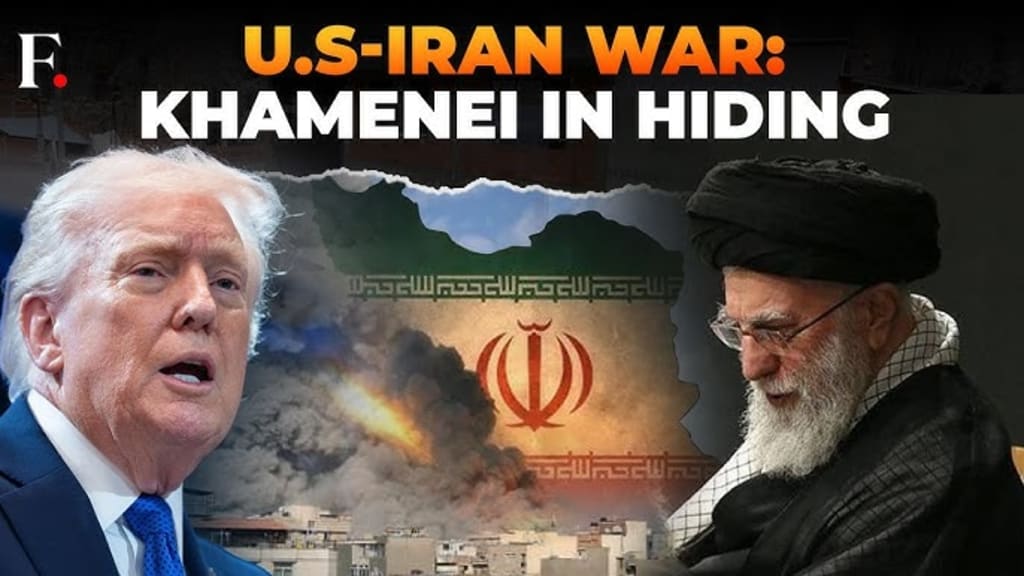
The United States is going around creating conflict with every nation in the world. It started with full-scale sanction wars in 2025 and as soon as the calendar flipped on 2026, it's captured Venezuela's president, threatened to acquire Greenland, and is now contemplating a regime change in Iran. Over the last 73 years, the US and Iran have had an incredibly rocky relationship. It's not just about nuclear weapons or about military power or terrorism or even about religion because you can look at Saudi and Pakistan. America has a better relation with them. So why has the US spent over 45 years sanctioning Iran, threatening them, and treating them like an arch nemesis? When did America's obsession with Iran really begin? Let's dive in. Iran in the 1950s looked like this. Women walked the streets of Thran in western clothing. They were studying in universities for higher education. The country was democratic and held elections. It was modern, progressive, completely different from the Iran we know today. It was not a country that needed any saving.
But Iran had something that made it both the luckiest and the unluckiest country in the world. Oil. Look at this chart. Apart from the US and Russia, Venezuela and Iran were the top oil producers in the world and Great Britain was fully leveraging this. Since 1914, British government bought 51% of Anglo-Iranian oil company. So, the Royal Navy ran on Iranian oil and they barely paid Iran even a fraction in return. Look at this. From 1914 to 1950, Anglo Iranian Oil Company paid 90.8 8 million in corporate taxes to the British government. The Iranian government received a total of £35.23 million in those same years in royalties and taxes. That's merely onethird of the taxes to the government, not even the total revenue. During the World War II, they took it a step further and invaded and occupied Iran alongside the Soviet Union to secure the oil fields. But after the second world war, as nationalism swept the developing world, colonized nations were demanding independence and control over their own economies. And in Iran, their primary focus was taking back their oil. And then in 1950, something happened that sparked a major change. The American-owned Arabian-American oil company agreed to do a 50/50 profit split with Saudi Arabia.
The British Foreign Office rejected any idea of a similar deal for Iran. This was the breaking point. By 1951, a 69-year-old lawyer and politician named Muhammad Mosade was leading Iran's political scene. He was a western educated secular and a fiercely nationalist leader. He simply believed that Iran should control its own natural resources and he had massive public support. So when he got democratically elected into the Iranian government in 1951, the first thing he did was nationalize Iran's oil. He proposed a compromise which would divide the profits 50/50 between Iran and Britain. But Britain refused because if Iran successfully nationalized its oil, what would stop Egypt from nationalizing the Suez Canal? What would stop other colonies from taking back their resources? And keep in mind, this was a time post World War II where Britain's global empire was in steep decline. So they tried every game in the book to prevent this loss. They threatened Iran that their oil would not be accepted on the world market. They imposed a naval blockade in the Persian Gulf. They froze Iran's currency accounts in British banks. And they even banned exports to Iran of key commodities like sugar and steel. But Prime Minister Mosed refused to back down. So Britain went to the United States. At first, President Truman rejected British demands for American support. He saw the Iranian nationalization of oil as legitimate. But just 2 years later in 1953, the government changed and Dwight Eisenhower became president. Britain was smarter this time around. Instead of making a pitch about oil, they started talking about communism. If US didn't remove Mosade from power, Iran would turn to communism and come under the influence of Soviet Union, they claimed.
Now, keep in mind that the US had just seen China fall to communists and Korea erupt into war. So, they bought this narrative and went ahead with something they called Operation Ajax. Here's how it worked. In 1953, CIA officers arrived in Thran, the capital of Iran, with suitcases full of cash. They then bribed newspaper editors to print anti-mosed propaganda. They also recruited street thugs to create chaos. They even hired people to pretend to be communists and threaten religious leaders, making it seem like Mosad was cracking down on Islam. And on August 19th, 1953, it worked. Street violence erupted. Tanks rolled into the fighting resulted in the deaths of around 300 people. Mosave and his government were overthrown and a pro-western monarch Muhammad Raza Palawi was put in place. Mosave was arrested, imprisoned for 3 years and then spent the rest of his life under house arrest until his death in 1967. The nationalization of oil was reversed.
Now alongside British companies, even American companies like the Standard Oil entered Iran and now Iran got just about 50% of the revenue. The sha bought American weapons. He opened Iran up to Western influence. For the US, it was a win. Iran was their ally in the Middle East. But for many Iranians, the Sha was a puppet who followed the West, tortured political opponents, and lived in absurd luxury while ordinary Iranians struggled. For the next 25 odd years, he also ruled with increasing brutality. His secret police, Sawak, trained by the CIA, imprisoned, tortured, and executed thousands of people who disagreed with him. Resentment grew amongst the masses. In 1979, Iranians had had enough. Millions took to the streets demanding that Sha step down. Protests and anti-government demonstrations were seen all across the country. And when protesters were massacred by the government, it led to an even wider outrage. Finally in 1979 the sha left Iran and Ayatah Kumeni a religious leader who had been exiled by the sha came to power. Iran went from a pro-western monarchy to an anti-western theocracy almost overnight. And it was at this time that the sha of Iran went to the US for cancer treatment. Now what seemed like a completely innocent act seemed to the Iranians as proof that America was planning to reinstall him just like in 1953. So in 1979, Iranian students stormed the US embassy in Thran and took 52 Americans hostage for 444 days. Taken over the embassy. Iran has been occupied by demonstrators. Iranians finally overran the embassy compound, but they made no attempt to harm him. From the American perspective, this was shocking, lawless terrorism. But from the Iranian perspective, they saw the US embassy in Iran as a CIA command post and a planning center for regime change. So what they did felt not only justified, but a retaliation for 1953. Now, this hostage crisis destroyed Jimmy Carter's presidency and humiliated the United States. Even the rescue attempt failed disastrously with American helicopters crashing in the Iranian desert. The hostages were finally released in January 1981, minutes after Jimmy Carter's presidency ended and Ronald Reagan's began. Like a humiliation for Jimmy Carter. But more importantly, now the relationship between the US and Iran became one of permanent hostility. The American embassy was gone. Diplomatic relations were severed. And both countries saw each other as enemies.
But this was just the beginning. The United States wanted revenge. And the perfect opportunity existed in Saddam Hussein. He had come to power in the neighboring Iraq just a year ago. and in 1980 entered what ended up an 8-year war with Iran. Now, while this was not influenced directly by the US, they saw this as the perfect opportunity to leverage. In geopolitics, there are no permanent friends or enemies, only interests. And at this point, Saddam Hussein was fighting USA's nemesis. So, it constituted an ally. So, the US decided to provide it with assistance. The US gave Iraq satellite intelligence showing Iranian troop positions. They sold Iraq helicopters that were used in combat.
They gave Iraq dual use technology that helped them build weapon systems and even turned a blind eye when Iraq started using chemical weapons against Iran. This went so far that when Iran tried to bring evidence of the Iraqi chemical weapons use to the United Nations, the United States lobbied against condemning Iraq. To Iranians, this sent a clear message. America's opposition to Iran wasn't about human rights or international law. It was about maintaining dominance in the Middle East no matter the cost. After the Iran Iraq war ended, the hostility continued because now Iran had started taking nuclear seriously and this frightened the US. Iran argued that the nuclear program was for peaceful energy purposes which is their right under the nuclear non-prololiferation treaty. But American and Israeli intelligence believed Iran was pursuing nuclear weapons and that became unacceptable. You see, the Middle East runs on deterrence. Gulf states rely on US protection. Israel is the only one with nuclear weapons, although undeclared, and Iran was so far contained.
But now, if Iran acquired a nuclear weapon or even just nuclear power, it would neutralize US military presence, shield terrorist militias like Hezbollah, Houthis, etc. It would also directly threaten Israel, USA's ally. But worst of all, force Saudi Arabia, Turkey, even Egypt to consider nuclear programs. They might hypothetically not need US military support much thereafter. This might even have cascading effects on the petro dollar since Saudi and USA have made the deal to use dollars for all oil sold by OPEC based on USA's military support for them. And all this would start with Iran's nuclear program. So the US spent years escalating sanctions on Iran to prevent them from starting a nuclear program and this went on till 2015 when the Obama administration brokered the JCPOA, the Iran nuclear deal. It was a landmark agreement. Iran would dismantle much of its nuclear infrastructure, submit to extensive inspection, and in exchange get sanctions relief. For a moment, it looked like deescalation was possible. Iranian oil exports increased.
The economy stabilized. Iran was complying with the deal according to international inspectors. But then Trump won the presidency and in 2018 he withdrew the United States from the JCPOA. Instead, he reimposed sanctions and added over 1,500 new ones targeting Iran's economy. The goal was to force Iran to negotiate a better deal that would also restrict its missile program and regional activities. Iran's economy collapsed. Its currency lost twothirds of its value. Oil exports plummeted and then Iran retaliated. It began ignoring the nuclear deal's restrictions, enriching uranium to even higher levels and moving closer to breakout capacity for a nuclear weapon. Which brings us back to today. Iran in 2026 is a country in crisis. Its economy is devastated by sanctions. Its nuclear facilities have been bombed. And now thousands of its own citizens are being killed in the streets for demanding change.
The Trump administration has restored maximum pressure, signing directives aimed at driving Iran's oil exports to zero. Trump has openly discussed military strikes while also saying he's willing to make a deal with Iran. But here's what makes this moment so tragic. America doesn't see itself as the villain in this story. From Washington's perspective, Iran isn't a victim with a legitimate grudge. Iran is a problem state. It's a country that through Hezbollah in Lebanon, Houthis in Yemen, and allied militias in Iraq and Syria, actively destabilizes the entire region. It's a nation standing at the edge of becoming a nuclear power, which would fundamentally alter the balance of power in the Middle East. It's a risk to global oil routes through the straight of Hormuz through which 21% of world's petroleum passes every single day and a direct threat to US allies. Not just Israel, but Saudi Arabia, the UAE, and others who see Iran's expanding influence as a threat to their survival. For American policy makers, this isn't just about holding a 73-year-old grudge. It's about prevention.
They believe that if Iran is not stopped today, tomorrow there will be a nuclear Iran and then stopping it will become impossible. So the window to act, they argue, is closing. So who's right? That depends entirely on where you are standing. For Iran, they're defending themselves against a superpower that overthrew their democracy in 1953, supported a brutal dictator for 25 years, backed their enemy with chemical weapons, and has spent decades trying to destroy their economy and isolate them from the world. Every American threat confirms what they already believe, that Washington will never accept an independent Iran. For America, they're containing a dangerous theocratic regime that took their people hostage. Chant's death to America funds terrorist organizations and is racing towards nuclear weapons while destabilizing the world's most volatile region.
They believe that Thran cannot be trusted and must be stopped. And so the cycle continues and caught in the middle are millions of ordinary Iranians who just want to live normal lives, have economic opportunity, and choose their own government. They're being crushed by their own regime's brutality and by American sanctions that, however targeted, make daily life unbearable. Until one side is willing to truly break the cycle, we'll forever be stuck in the same loop.
About the Creator
Francis Osei
“Tom bele has been working with writing challenged clients for over four years. He provides ghost writing, coaching and ghost editing services.
Enjoyed the story? Support the Creator.
Subscribe for free to receive all their stories in your feed.
Comments
There are no comments for this story
Be the first to respond and start the conversation.