
The $20 million spy cat that got instantly flattened by a cabso back in the 60s during the cold war, the guys at the cia were completely losing their minds over soviet spies.
They wanted to bug russian diplomats so bad that they came up with the dumbest idea in history.
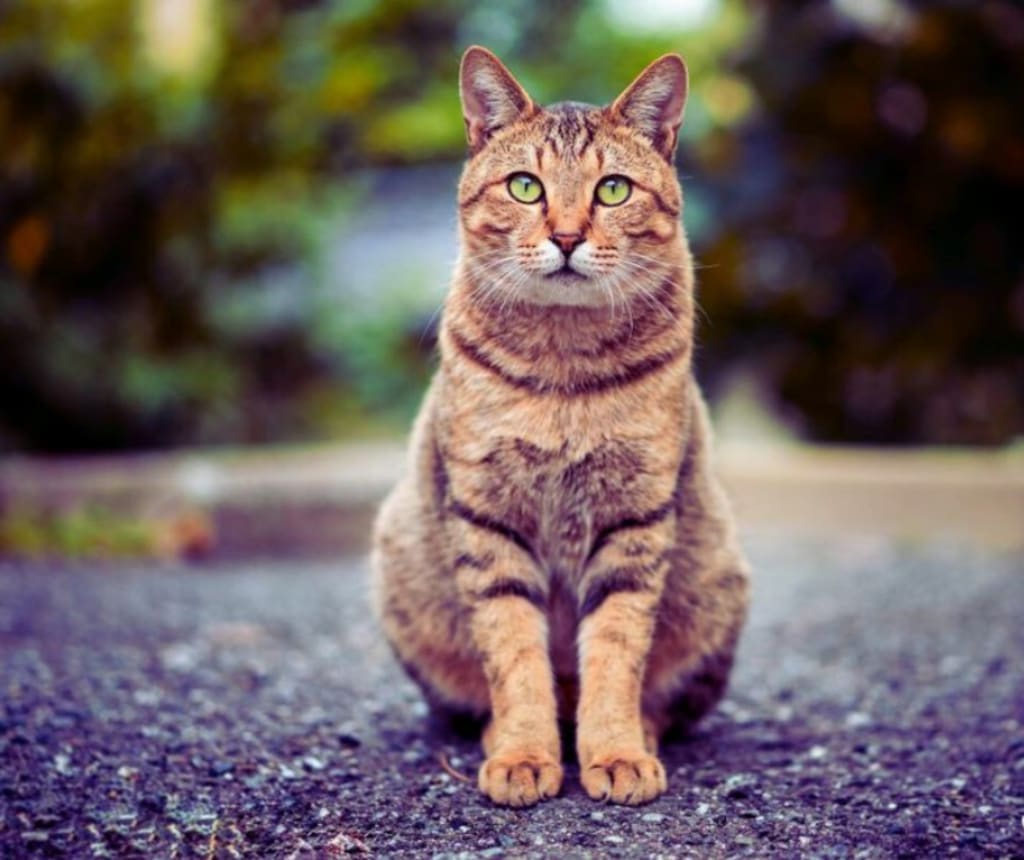
There are some stories from the history of secret services which sound so crazy that you almost don't believe they really happened.
One of them was called Acoustic Kitty.
Yes, really. The CIA once tried to use a cat as a living spy.
The idea actually made some sense. A cat can walk almost anywhere without attracting much attention. People usually don't care if a cat is sitting nearby, walking through a park or hanging around a building. So the CIA wondered if they could turn an ordinary cat into a tiny mobile listening device.
The project started in the 1960s, during the Cold War.
The technology was obviously much more primitive than what we have today, so hiding a transmitter and microphone inside a cat was not exactly an easy job. CIA technicians worked on a system which could be implanted into the animal's body.
A microphone was placed in the area of the cat's ear. A transmitter and battery were hidden inside its body, and an antenna was designed to run along the animal toward the tail.
The plan was quite simple.
The cat would be trained to walk close to a person whose conversation the CIA wanted to hear. Agents could then sit in a surveillance vehicle nearby and listen to the conversation through the equipment hidden inside the cat.
On paper, it was brilliant.
There was just one small problem.
The cat didn't know it was working for the CIA.
And apparently cats are not very interested in American national security.
During the training, the animal could become distracted by practically anything. Food, another animal, a noise, something moving in the grass… or simply the desire to go somewhere else.
A human agent can be told where to go.
A cat can not.
The CIA spent a lot of money trying to solve this problem. The animals went through training and repeated procedures designed to make the equipment work and to control the cat's behaviour as much as possible.
One of the problems was hunger. A hungry cat was naturally more interested in finding food than in sitting quietly near two potential intelligence targets.
So the people behind the project tried to reduce this distraction as well.
It sounds completely absurd today, but at the time the CIA was seriously trying to find out if an animal could be used for covert surveillance.
Eventually came the moment when Acoustic Kitty was supposed to prove itself in a real operation.
According to the story that became public after the documents were declassified, agents had positioned themselves near a park in Washington, D.C. Two Soviet targets were reportedly sitting on a bench and talking.
The cat was released.
The people inside the surveillance vehicle waited.
The whole expensive project was now depending on one very unpredictable little animal.
The cat started walking.
And then it went toward the street.
A passing car hit it.
And just like that, the great feline spy mission was over.
There was no secret conversation successfully recorded. No dramatic Cold War intelligence breakthrough. No legendary cat agent returning triumphantly to the surveillance van.
Just a dead cat and a very expensive experiment which had suddenly become completely useless.
The CIA eventually cancelled the Acoustic Kitty project in 1967.
The story might have disappeared into the enormous collection of strange Cold War experiments, but years later documents about the project were declassified. They showed that the idea was not simply an internet joke invented many decades later. The CIA really had spent time and resources investigating whether a cat could be turned into a surveillance device.
And honestly, the story says something quite interesting about technology.
People can design an incredibly complicated machine. They can calculate frequencies, build transmitters, hide microphones and spend years improving the system.
But sometimes the biggest problem isn't the technology.
Sometimes the problem has four legs, a tail and absolutely no interest in following instructions.
Acoustic Kitty is therefore remembered as one of the strangest experiments of the Cold War.
The CIA managed to put surveillance equipment into a cat.
What they never managed to do was make the cat understand that it had a job to do.
And perhaps that was the most important lesson of the whole project:
you can control technology. You can't always control a cat.
Official and declassified government sources for this case:
The National Security Archive (GWU): The actual declassified 1967 CIA final memorandum titled "Views on Trained Cats" (released under the FOIA act in 2001).
The Smithsonian Magazine: Official report by the US national research institute detailing the surgery, the hunger-nerve cutting, and the taxi incident.
The Guardian: Original 2001 investigative journalism piece published right after the documents were officially unsealed in Washington.
History Central: Documented historical breakdown of the "Acoustic Kitty" espionage project failure.
AI Disclosure
AI was used to assist with the English translation and language editing of this article. The original article was written by the author in Czech. The English version was reviewed, edited and adapted by the author before publication.
About the Creator
Enjoyed the story? Support the Creator.
Subscribe for free to receive all their stories in your feed.
Comments
There are no comments for this story
Be the first to respond and start the conversation.