World History
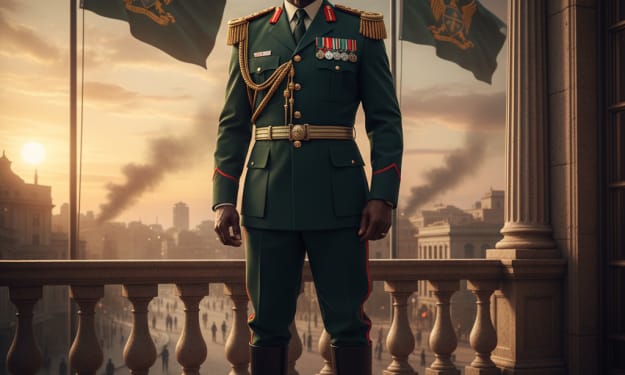
The Iron Fist of Karanja: Rise and Fall of General Nyota. AI-Generated.
In the dusty hills of Karanja, a small East African nation, Samuel Nyota was born in 1948 into a poor farming family. His father toiled in the fields, his mother raised him and his siblings under the unforgiving sun, and from an early age, Samuel learned that life rewarded the strong and punished the weak. Tall, imposing, and fiercely intelligent, he quickly realized that survival required more than hard work — it demanded cunning, strategy, and ruthlessness.
By shakir hamid12 months ago in History
Rumors, Roses, and a Quiet Promise: The Legend of DiMaggio and Monroe
Rumors, Roses, and a Quiet Promise: The Legend of DiMaggio and Monroe When a public romance shined as bright as Marilyn Monroe’s glow on a Hollywood stage, the afterglow can outlive the headlines. Over the years, stories about Joe DiMaggio and Marilyn Monroe have settled into the realm of myth and memory—the kind of legends that fans retell with a knowing smile, even when every detail isn’t verifiably true. Among those tales, one persists with stubborn tenderness: the idea that DiMaggio, devastated by Monroe’s death, sent red roses to her crypt three times a week for two decades, never remarried, and allegedly uttered his final words, “I’ll finally get to see Marilyn.”
By Story silver book 12 months ago in History
Amman Citadel: Layers of History and Civilization in Jordan
The Amman Citadel, perched on Jabal al-Qal’a, offers a living chronicle of civilizations stacked across time. From the Ammonites of the 9th century BCE, whose inscriptions to Milkom survive, to Roman temples, Byzantine churches, and Umayyad palaces, the site reflects continual reconstitution. The Temple of Hercules, colossal ruins, Byzantine adaptations, and Umayyad architecture illustrate layers of cultural inheritance, interrupted by earthquakes and restored in modern times. The Archaeological Museum, once home to the Dead Sea Scrolls, deepens the story. Visiting reveals more than ruins—it is a lesson in how civilizations adapt, recycle, and endure, while raising questions about humanity’s future.
By Scott Douglas Jacobsen12 months ago in History
How Constantine XI Faced the Fall of Constantinople
📖 The Last Emperor’s Choice The night of May 28, 1453, was heavy with silence inside Constantinople. The once-great capital of the Byzantine Empire stood on the edge of ruin. For nearly two months, Sultan Mehmed’s army had encircled the city, hammering its ancient walls with cannons and cutting off every hope of rescue. By dawn, the final assault would begin.
By Muhammad Anas 12 months ago in History
CROATOAN: The Word That Still Terrifies Historians. AI-Generated.
On a warm summer evening in 1590, English explorer John White stepped off his ship and gazed at the shoreline of Roanoke Island. The place where he had left behind more than one hundred men, women, and children three years earlier was silent. The colony that was supposed to be England’s first permanent settlement in the New World now stood eerily deserted. No smoke rose from the chimneys. No children ran along the dirt paths. The air carried only the sound of wind rustling through abandoned houses. White’s heart pounded as he searched desperately for signs of life. But there were no bodies, no blood, no evidence of an attack. Just emptiness… and one haunting clue carved into a wooden palisade: “CROATOAN.” The Birth of a Colony: In July 1587, John White had set sail from England with about 120 settlers, including his daughter, son-in-law, and newborn granddaughter—Virginia Dare, the first English child born on American soil. The settlers landed on Roanoke Island, off the coast of present-day North Carolina, full of hope. They built homes, planted crops, and dreamed of a thriving future. But supplies quickly dwindled, tensions with local Native tribes grew, and survival became uncertain. By the end of that year, White was forced to return to England to gather desperately needed provisions. He promised his family he would come back soon. No one knew that “soon” would mean three long years. The Mysterious Return: England was caught up in a war with Spain, delaying White’s return until 1590. When he finally reached Roanoke, excitement gave way to dread. The colony was deserted. Houses had been dismantled, not destroyed, suggesting an organized departure. On a tree, the letters “CRO” were carved. On a nearby post, the full word “CROATOAN” appeared. White immediately believed the colonists had relocated to Croatoan Island (modern-day Hatteras Island), where a friendly Native tribe lived. But fate intervened. A violent storm prevented his ships from reaching the island. With limited resources and no support from England, White was forced to abandon the search. He never saw his family or the colonists again. Theories Behind the Vanishing: Over the centuries, the fate of the Lost Colony has fueled endless speculation. Let’s explore the most chilling possibilities: 1. Assimilation with Native Tribes Some historians believe the colonists sought refuge with nearby tribes to survive. The Croatoan people may have welcomed them, and over generations, the settlers blended in, leaving no separate trace of their existence. Reports of Native Americans with gray eyes and European features seemed to support this theory. 2. Attack by Hostile Tribes Another theory suggests the colonists were killed by the powerful Powhatan Confederacy. Chief Powhatan later claimed he had executed some settlers to prevent them from joining rival tribes. Yet, archaeological evidence to confirm this has never been found. 3. Spanish Intervention At the time, Spain and England were bitter enemies. Some believe Spanish forces, patrolling from Florida, discovered the English outpost and wiped it out. However, no Spanish records mention such an event. 4. Starvation and Disease Life in the New World was brutal. Lack of food, harsh winters, and outbreaks of disease may have slowly wiped out the settlers. Their bodies could have been buried in shallow graves that nature quickly reclaimed. 5. A Supernatural Disappearance For lovers of mystery and legend, Roanoke carries a darker possibility: that the colonists simply vanished into thin air. Stories of curses, vengeful spirits, or forces beyond human understanding have been passed down, adding a chilling, almost ghostly layer to the tale. The Haunting Legacy of CROATOAN: The word “CROATOAN” itself became a symbol of unsolved mysteries. Over the centuries, it has reappeared in eerie contexts. Famous writer Edgar Allan Poe reportedly whispered the word before his mysterious death. It was also found scrawled in abandoned places connected to unexplained vanishings. Coincidence—or curse? No one knows. Why the Mystery Endures: The Lost Colony of Roanoke endures because it is more than just a historical puzzle—it is a story of human hope, fear, and survival against impossible odds. Imagine the settlers’ desperation as supplies ran out, or John White’s heartbreak as he returned to an empty settlement. Imagine carving a single word, “CROATOAN,” as a desperate clue for those who might one day come searching. And imagine standing where White once stood—alone, surrounded by silence—wondering where everyone had gone. Conclusion: More than 400 years later, the fate of the Roanoke colonists remains America’s greatest unsolved mystery. Archaeologists continue to dig, historians continue to theorize, and storytellers continue to haunt readers with the chilling disappearance. Perhaps one day, science will uncover the truth. Until then, Roanoke remains a place where history and legend blur together—a reminder that sometimes, entire communities can vanish, leaving behind only whispers and a single word carved in wood. CROATOAN.
By Mr. Jackie12 months ago in History
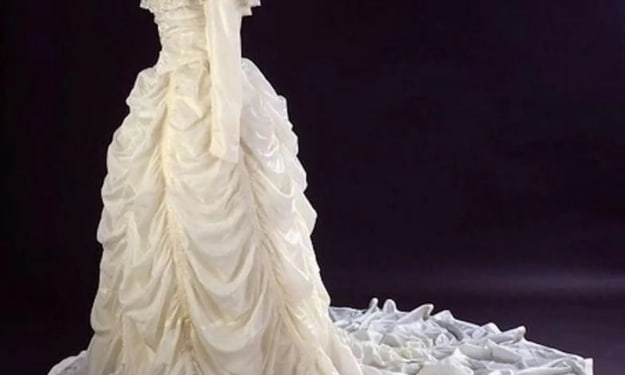
The Parachute Wedding Dress: How Ruth Hensinger Turned WWII Survival Silk into Bridal Magic
The Parachute Wedding Dress: How Ruth Hensinger Turned WWII Survival Silk into Bridal Magic Imagine a pilot drifting down from a burning plane, his parachute the only thing between him and certain death. That same parachute, once a tool of survival in World War II, becomes the fabric of a bride's dream gown. In 1947, Ruth Hensinger sewed her wedding dress by hand from the nylon parachute that saved her fiancé's life, turning a symbol of war into one of love and hope.
By Story silver book 12 months ago in History
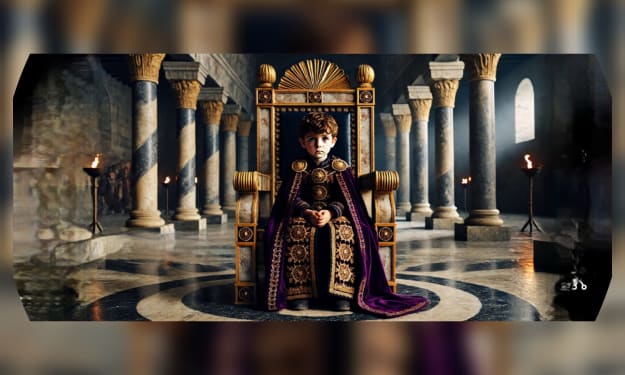
📖 The Forgotten Prince: The Story of Alexander IV
Son of the man who conquered half the known world, Alexander IV often wondered, “Will I too command empires? Will the shadow of my father ever fade, or will I forever walk beneath it?” History promised him greatness, but fate had written a harsher truth. For in the ruthless game of power, crowns are heavy, and even a child of destiny can be crushed before his time.
By Muhammad Anas 12 months ago in History
The World Mourns Jane Goodall: The Woman Who Redefined Humanity Through the Eyes of Chimpanzees
The Passing of a Giant in Science On October 1, 2025, the world awoke to heartbreaking news: Dame Jane Goodall, the legendary primatologist, ethologist, and conservationist, had died at age 91. According to a statement released by the Jane Goodall Institute, she passed away of natural causes while in California, where she had been continuing her tireless speaking engagements even in her ninth decade.
By Lynn Myers12 months ago in History
The Cola Wars: How America Fizzed, Fought, and Foamed From the 50s to the 90s
There are few battles in history that were waged not with bullets, but with bubbles. While empires rose and fell, while presidents debated policy and kids memorized baseball stats, a different kind of war rumbled quietly beneath the surface of American life. It was fought in grocery aisles, TV commercials, vending machines, and lunchboxes. It was Coke versus Pepsi... two titans of taste locked in a struggle for the soul of America.
By The Iron Lighthouse12 months ago in History
Politics Didn’t Fail Us—We Failed Ourselves
I remember the first time I ever voted. I was twenty years old, and I walked into the polling station with a strange mix of excitement and nervousness. The room smelled faintly of paper and disinfectant, and the air buzzed with the quiet seriousness of people doing something important.
By @HiddenHistory12 months ago in History