World History
House and Palestine
After two years, finally, through a still-blurred horizon, I can glimpse my country again. Italy had always been the most pro-Palestinian of European countries. Much depended on the fact that the old Italian Communist Party — which, at the time, was the largest in Western Europe — placed solidarity with oppressed peoples at the center of its vision. Palestine had become something of a flag of international solidarity.
By claudia esposito11 months ago in History
The Titanic’s Sister Ship: The Disaster Nobody Talks About
Everyone knows the story of the Titanic — the unsinkable ship that sank. But almost no one talks about her older sister, the Britannic, a ship built with the same luxury, the same pride, and the same destiny.
By OWOYELE JEREMIAH11 months ago in History
“The Night the Empire Fell”
They said the thunder that night was the sound of heaven cursing Bengal. Rain hammered the tents, lightning tore open the sky — and in the heart of the storm, Nawab Siraj-ud-Daulah learned that a throne can fall not by war, but by betrayal.
By Muhammad Anas 11 months ago in History
Plague Doctor’s Journal
The journal was found in a wooden chest beneath the floorboards of an old house in Venice. Its pages were brittle, its ink faded, but the handwriting was elegant and precise. On the first page was a single line written in Latin: “To heal the living, one must walk with the dying.” No one knew who had written it at first. But the following pages revealed the name of its owner — Dr. Matteo Bellini, a plague doctor who had lived during the great outbreak of 1630. His words began simply. “The city is quiet now,” he wrote. “Not with peace, but with fear. The bells ring for the dead, and the living no longer open their windows.” Matteo had been a young physician, full of hope when the disease first reached Venice. He believed in reason, in science, in the power of medicine to overcome darkness. When the plague arrived, he donned the long black coat, gloves, and the mask shaped like a bird’s beak. The people called him “the raven of mercy.” At first, he treated the sick in noble houses and monasteries. He tried herbs, oils, prayers — anything that could ease their pain. But soon, the number of the dying grew so large that the streets became rivers of silence. He wrote, “I no longer remember the sound of laughter. The only sound that remains is coughing and the scrape of the death cart.” Each night, he would sit by a candle and record what he had seen. “Today I saw a mother holding her child as if warmth could stop death. I saw a man sing as he died, perhaps to make peace with God. I saw the canals carry flowers thrown for funerals that never came.” But as the weeks passed, Matteo’s words began to change. The lines grew shorter, the handwriting unsteady. “I begin to feel the weight of every breath I save and every one I cannot. My hands no longer feel like mine.” In one entry, dated June 14, 1630, he wrote something different. “Today a boy handed me a white lily. He said it was for courage. I placed it in my mask. For a moment, I remembered that beauty can live even among death.” The journal continued, page after page of quiet humanity. He wrote about how he began to visit the poorest parts of the city when others refused to go. He tended to fishermen, servants, and beggars — those who had no coin for doctors. He shared his food, his herbs, and his time. Then came an entry marked with only one word: “Exposed.” After that, his writing grew faint, almost fragile. “The fever comes in waves. I feel as though I am dissolving into air. Yet I must keep writing. If I die, let it not be in silence. Let these words live for those who remain.” The final page carried only a few lines. “If anyone should find this journal, know that I did not fear death. I feared forgetting what it means to be human. To heal is not only to cure, but to care. Remember that.” The last line was signed simply, “Matteo.” Centuries later, the journal found its way into the hands of a museum curator named Elena Rossi. She spent months translating and restoring it. When she read Matteo’s final words, she felt something shift inside her. The world had changed — the plague was long gone — but the fear, the isolation, and the need for kindness were timeless. Elena decided to create an exhibition around his journal. She called it “The Hands That Healed.” The mask, coat, and candle were displayed alongside the fragile pages. People came from all over Europe to read the doctor’s words, to see how courage had looked in the face of despair. One visitor wrote in the guest book, “He wore a mask to protect others, not himself. Perhaps that is what love truly means.” That night, as Elena locked the museum, she paused in front of the display. The candle beside the journal flickered slightly, though there was no wind. She smiled, whispering into the quiet room, “Rest now, Matteo. Your words still heal.” Outside, the bells of Venice rang once again — not for mourning this time, but as if to honor the man who had written through the darkness so that others might remember the light.
By LUNA EDITH11 months ago in History
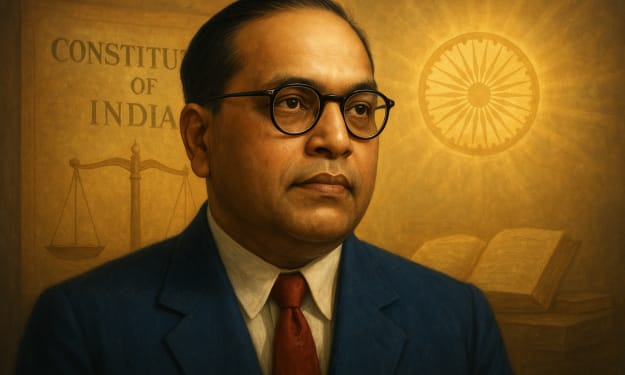
Dr. B. R. Ambedkar: Beyond Politics -The Civilizational Architect Who Rewrote the Destiny of Humanity
In the vast chronicle of human history, few individuals have transcended the boundaries of time, ideology, and politics. Among them stands Dr. Bhimrao Ramji Ambedkar, a name that cannot be confined to the narrow frame of a “politician.” To call Ambedkar merely a political figure is to diminish the cosmic scale of his thought and the transformative depth of his mission. He was not a seeker of power_ he was a creator of conscience, a builder of civilization, and a philosopher of equality whose words still echo as moral thunder across the world.
By Arjun. S. Gaikwad11 months ago in History
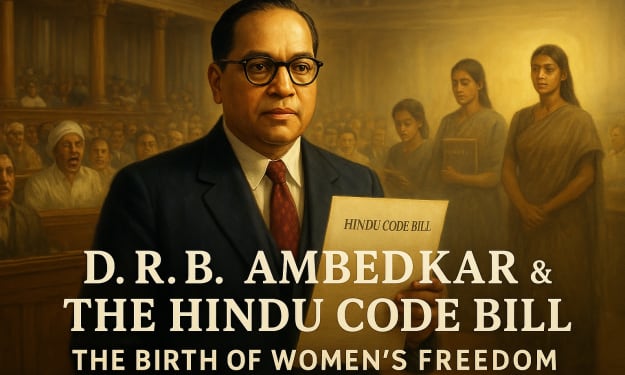
✍️ Dr. B. R. Ambedkar’s Hindu Code Bill: The Revolution the Nation Feared, but Women Deserved
When Dr. Bhimrao Ramji Ambedkar introduced the Hindu Code Bill in the Indian Parliament in the late 1940s, he was not merely reforming a set of laws he was attempting to reform the soul of a civilization.
By Arjun. S. Gaikwad11 months ago in History
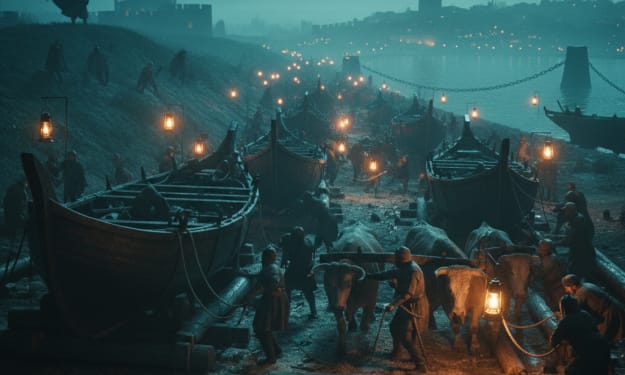
Over Mountains and Chains: Sultan Mehmed II’s Impossible Conquest
In the dead of night, under a sky pierced by flickering torches, 70 colossal warships—each a behemoth of timber and iron—groaned like wounded giants. Not on waves, but on rollers of greased logs, dragged by 10,000 sweating men over a mile of rugged hills. This was no myth. This was 1453. This was the moment a 21-year-old sultan turned the impossible into legend, sailing an armada across dry land to shatter an empire's heart.
By Muhammad Anas 11 months ago in History