World History
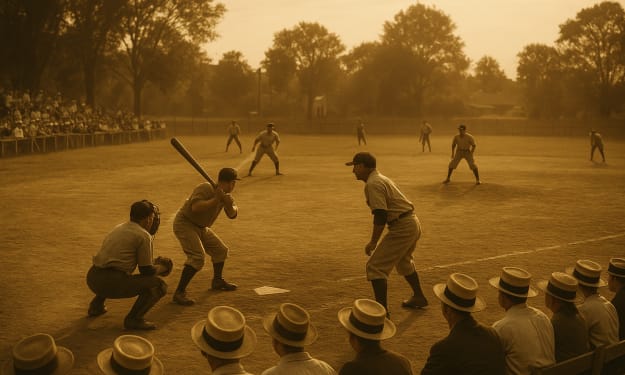
The Forgotten Fields: Part I – Baseball
If you stand on a quiet summer field somewhere in the Midwest, you can still hear it... The faint echo of leather against leather, the soft thud of a ball in a glove, the ghostly cheer of a crowd that has long since gone home. The weeds have grown over the baselines, the scoreboard has lost its numbers, and the bleachers sag beneath decades of rain. But the sound remains. It drifts on the wind like a hymn.
By The Iron Lighthouse11 months ago in History
The Beginnings of the Ottoman Empire
The Ottoman Empire originated in the late 13th century in Anatolia (Asia Minor), where various Turkic emirates emerged after the decline of the Seljuk Sultanate of Rum. The tribe led by Osman I (hence the name "Ottoman") began to expand, taking advantage of the weakness of its Byzantine neighbors and the lack of cohesion among other Turkic tribes.Under successors like Orhan I and Murad I, the Ottomans crossed from Asia into Europe, conquering vast territories in the Balkans. They developed a formidable army, including the famous elite unit of the Janissaries, soldiers recruited from Christian children in conquered provinces, raised and trained to serve only the Sultan. This army was modern, well-disciplined, and effectively used artillery, long before many European armies.
By alin butuc11 months ago in History
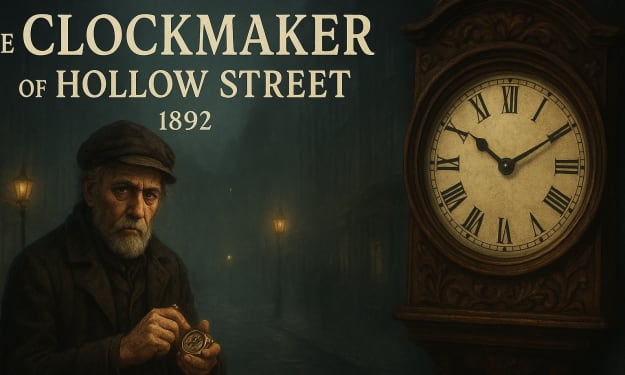
The Clockmaker of Hollow Street
London, 1892. The fog rolled in thick that evening, swallowing the glow of gas lamps until they shimmered like half-remembered dreams. Hollow Street was quieter than most corners of the city — too narrow for carriages, too forgotten for wanderers. Only the sound of ticking came from a small shop wedged between a tailor’s and an abandoned bakery. “Pendleton & Sons — Clockmakers Since 1841,” the sign read, though there had never been any sons. Inside, beneath the soft gleam of brass and glass, sat Arthur Pendleton, a man of sixty, his fingers still steady as he adjusted the gears of a golden pocket watch. Around him hung hundreds of clocks — wall clocks, mantle clocks, even a tall grandfather that wheezed like an old soldier. Each ticked in harmony, except one. It was a small wooden clock by the window, carved with vines and cherubs, but its hands refused to move. Arthur had repaired it countless times, yet it always stopped at 11:47. He often wondered why. That night, as he was preparing to close the shop, the doorbell chimed. A woman stepped in, her cloak dripping from the fog. She removed her gloves with deliberate grace, revealing pale hands that trembled slightly. “Are you Mr. Pendleton?” she asked. Arthur nodded, brushing metal dust from his sleeves. “Aye, miss. What can I do for you?” She reached into her bag and brought out a small pocket watch. “It belonged to my late father,” she said softly. “He passed last winter, and it hasn’t worked since.” Arthur took it carefully. It was silver, engraved with initials E.M., and beautifully made. “A fine piece,” he murmured. “French mechanism. Shouldn’t be too hard to fix.” She smiled faintly. “He always said it held more than time.” Arthur looked up, curious, but she was already turning toward the door. “Come back tomorrow at this hour,” he said. “I’ll have it ready.” When she left, he could still smell the faint trace of lavender on the air. He worked late, disassembling the watch with the care of a surgeon. Inside was a hidden compartment, and within it, a small folded paper. On it was written: > “At 11:47 Arthur frowned. A strange message — poetic, but unsettling. He placed the note aside and examined the gears again. Everything seemed normal, but when he wound it, all the clocks in his shop suddenly stopped. Every single one. The air grew heavy. The silence was unbearable. Then, from the mirror across the room, he saw something move — a flicker of shadow that was not his own. “Who’s there?” he demanded. No reply. The ticking resumed all at once, frantic and uneven. --- The next evening, the woman returned, as promised. She looked more nervous this time, her eyes darting to the clocks. “Your watch is repaired,” Arthur said, handing it to her. “Though it came with a mystery. A message inside.” Her expression froze. “You read it?” “I did,” he admitted. She hesitated, then sighed. “My father was an inventor. Obsessed with stopping time — not in the poetic sense, but literally. He believed he could build a clock that controlled life and death.” Arthur chuckled uneasily. “An interesting fancy.” She met his gaze. “He wasn’t mad. The night he died, every clock in our house stopped at 11:47. I was holding that very watch.” Arthur felt a chill. “And you think… it’s connected?” She nodded. “I need to know if it’s true. If time can… stop.” He hesitated. “Time doesn’t stop, Miss…” “Mara,” she said. “Mara Moreland.” “Well, Miss Moreland,” Arthur said gently, “time is stubborn. But it does strange things to those who chase it.” That night, after she left, he couldn’t sleep. The phrase echoed in his mind: At 11:47, the heart stops but time does not. He decided to test it. He wound the clock again and waited. The shop was silent except for the faint hiss of gaslight. The hands crept toward 11:47. When they aligned, the ticking stopped — not only in the wooden clock, but in every clock around him. Arthur gasped. The flame of the lamp froze in mid-flicker. The air itself felt solid. His reflection in the glass did not move. He stood alone in a still world. Then he heard it — the sound of footsteps. Slow, deliberate, behind him. He turned. Standing by the counter was a man — tall, pale, dressed in black, with eyes that seemed to absorb the light. “You fixed the watch,” the man said, his voice calm and hollow. “Good.” “Who are you?” Arthur whispered. “I’m the reason your clock stops,” the man replied. “And the reason you can’t forget 11:47.” Arthur’s heart pounded. “You mean—?” The man nodded. “I was here once before. When your wife died.” Arthur froze. Memories rushed back — his wife, Margaret, collapsing in his arms twenty years ago. He had been fixing that same wooden clock when it happened. The time: 11:47. “You took her,” Arthur said hoarsely. “I take everyone,” the stranger said simply. “But some of you refuse to let go.” Arthur looked around at the hundreds of clocks. Each one, in some way, was his attempt to measure grief. “Can I bring her back?” The man smiled faintly. “Would you stop time forever if it meant you could?” Arthur’s voice trembled. “Yes.” “Then finish what you started,” the man whispered, placing the silver watch on the counter. “Wind it once more. And let go.” Arthur hesitated, then wound the key. The hands spun rapidly — the ticking rose like a storm. Light burst from the watch, flooding the room with blinding brilliance When he opened his eyes, the shop was quiet again. Morning light streamed through the window. The clocks were ticking normally. But something was different. On the counter lay the silver watch, still and lifeless. The note inside had changed. It now read: > “At 11:47, the heart stopped — and so did time.” Arthur’s reflection smiled back at him from the mirror. But it was not him. It was younger. Peaceful. Outside, Hollow Street was bustling — carriages rolling, vendors shouting. The city had moved on. But Pendleton & Sons was no more. In its place stood a dusty window with a single clock inside — hands forever frozen at 11:47. And if you passed by on a foggy London night, you might hear it — just once — the faint ticking of a heart that refused to stop.
By Afriditipszone11 months ago in History
Bahlool and His Friend – The Voice of Wisdom and the Sound of a Donkey
In the bustling streets of ancient Baghdad, during the reign of Caliph Haroun al-Rashid, there lived a man whose name became synonymous with wit, wisdom, and divine madness — Bahlool Dana. He was known throughout the city as the wise fool, a man who spoke in riddles yet revealed profound truths through humor and paradox. People laughed at him, but they also learned from him; even kings respected his insight.
By Amir Husen11 months ago in History
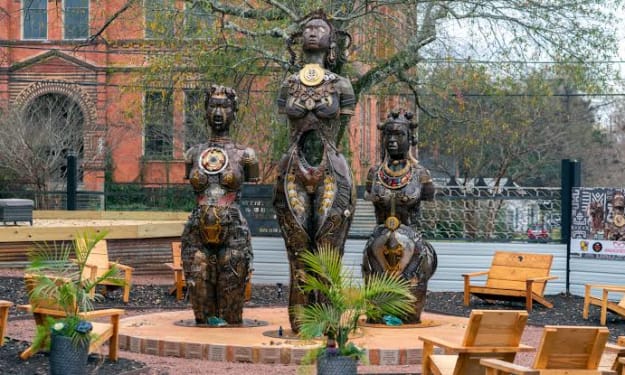
Anarcha Westcott
In the dusty medical archives of the 19th century, the name Anarcha Westcott appears quietly, not in headlines, but buried in surgical reports and footnotes. She was not a doctor. She was not a nurse. She was a young enslaved Black woman on a plantation in Montgomery, Alabama. Her body became the unwilling stage for a series of surgical experiments that would transform the field of medicine, at a devastating human cost. Anarcha suffered from a condition called vesicovaginal fistula, a severe childbirth injury that caused uncontrollable leakage of urine, chronic infections, and deep social stigma. In the 1840s, there was no known cure in America. Enter Dr. James Marion Sims, a physician who would later be celebrated as “the father of modern gynecology.” But before the accolades and fame, there was Anarcha. Sims saw in Anarcha and other enslaved women a chance to experiment and develop new surgical methods. These women had no choice; their bodies were controlled by their owners and by Sims himself. Between 1845 and 1849, Sims performed around 30 experimental surgeries on Anarcha in an effort to treat her fistula. He did this without anesthesia. Although ether anesthesia was already available during that period, Sims chose not to use it, driven by the racist belief that Black women did not feel pain in the same way white women did. The surgeries were brutal. Anarcha was fully conscious as Sims operated on her repeatedly. She screamed in pain while other enslaved women held her down. Surgery after surgery failed, leaving her in agony, but Sims persisted, not for her comfort, but for medical discovery. She wasn’t alone. Sims also experimented on at least ten other enslaved women, including Lucy and Betsy, whose names survive through fragments of historical records. But Anarcha became his most frequent subject, enduring four long years of procedures. Eventually, Sims developed a successful surgical technique to repair the fistula, a technique that would go on to revolutionize women’s healthcare. He published his methods, built a hospital for women, and was honored by the medical community. Statues were raised in his name. But Anarcha’s name was almost erased. Her suffering was the foundation on which Sims built his legacy, yet she received no recognition, no honor, and no freedom for her ordeal. Her body carried the weight of history, and her pain paved the way for modern gynecology. For decades, the world celebrated Sims while forgetting the women whose bodies he used. But history began to reckon with the truth. Activists, historians, and communities brought Anarcha’s story back into the light. In 2018, after public outcry, the statue of Sims in New York’s Central Park was removed. In its place, new voices began to speak the names of Anarcha, Lucy, Betsy, and the other women, acknowledging their pain and their forced contribution to medical history. Anarcha Westcott’s story is not one of medical glory. It is a story of injustice, survival, and truth. She endured unimaginable pain, not by choice but by force. Her body carried the weight of experiments that would go on to save countless lives, yet she remained voiceless for more than a century. Today, the world is beginning to remember her, not as a footnote, but as a central figure in the painful birth of modern gynecology. History remembered the doctor. But the world is finally beginning to remember the woman.
By Stories You Never Heard11 months ago in History
Aba Women's Riot
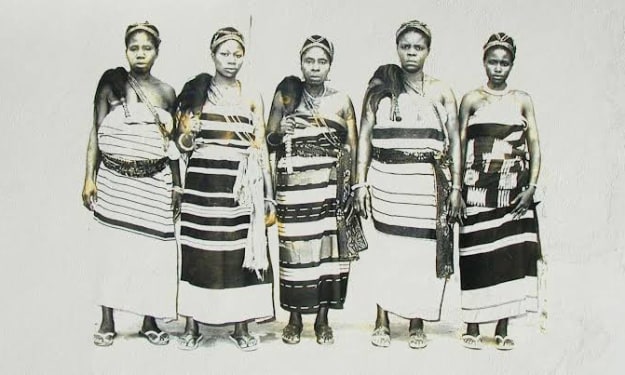
In the humid December of 1929, the dusty streets of southeastern Nigeria echoed, not with gunfire, but with the songs, chants, and defiant cries of thousands of women. They were not armed with weapons. They carried palm fronds, danced in circles, and raised their voices in a way the British colonial administration had never seen before. This was not a minor protest. It was one of the most powerful uprisings in West Africa’s colonial history. It was a movement led entirely by women—market women, mothers, widows, and daughters, who decided they had endured enough. History would remember it as the Aba Women’s Riot, or more rightly, the Aba Women’s War of 1929. By the late 1920s, the British had established their system of indirect rule in Nigeria. They appointed Warrant Chiefs, often ignoring traditional governance structures. These warrant chiefs were mostly men who had been hand-picked, and many were unpopular within their communities. At the same time, the colonial government introduced new forms of taxation. The men were already being taxed, but there were growing fears that women, who played a major role in the local economy through trade and agriculture, would soon be taxed as well. For Igbo and Ibibio women, this was more than economics. They had long held important roles in their communities, including running markets and using collective action to keep leadership in check. The colonial administration had sidelined them from decision-making, and this new tax policy became the final straw. The fire started in the small town of Oloko in the Bende Division. A census official named Mark Emereuwa, working for Warrant Chief Okugo, approached a widow named Nwanyeruwa and instructed her to “count her goats and people” for taxation. Nwanyeruwa was shocked. In Igbo society, women were not usually taxed. She challenged him, asking, "Was your mother counted?" The confrontation grew heated, and she refused to cooperate. This incident spread rapidly. Women in neighboring villages heard what had happened and recognized the danger. They mobilized through their age-old communication networks, spreading palm fronds as signals and passing messages through song and market gatherings. The response was swift and massive. Within days, over 10,000 women from different towns across the Igbo and Ibibio regions gathered in Oloko. These women were not disorganized. They drew on a traditional protest system known as “sitting on a man," a method where women surrounded a man’s house or office, dancing, singing, mocking, and chanting until he was held accountable. They targeted warrant chiefs, local courts, and colonial offices, demanding justice and the reversal of oppressive policies. Their protests spread across towns like Aba, Umuahia, Owerri, and beyond. British colonial authorities were stunned. They had underestimated the organizational power of these women, who moved in coordinated waves from village to village. As the protests grew, the colonial government responded with force. Troops were deployed. In some towns, they opened fire on the protesters. By the end of the uprising, over 50 women were killed and many more were injured. But the British had learned a lesson. The scale and determination of the women forced the colonial administration to abandon plans to tax women and to restructure the warrant chief system. Several unpopular chiefs were removed, and policies were re-examined. The Aba Women’s Riot was not just a tax protest. It was one of the first major anti-colonial uprisings in West Africa, and it was led by women. It challenged both colonial authority and patriarchal structures, showing that women’s voices could shake the pillars of power. These women did not have newspapers or microphones. They did not have social media. But through unity, courage, and cultural intelligence, they shook an empire. Nearly a century later, the Aba Women’s War remains a powerful reminder of how collective action can bring change. It is a story often overlooked in global history books, but its impact continues to echo in Nigeria’s struggle for independence and women’s rights movements today. Their legacy is not just in the changes they forced but in the message they left behind: When ordinary people rise together, history is forced to listen.
By Stories You Never Heard11 months ago in History
The Forgotten Fields - A 10 Part Series
By The Iron Lighthouse If you listen closely on a still summer evening, you can almost hear them... faint echoes carried on the wind. The crack of a wooden bat. The whistle of a coach with more spirit than players. The hum of a crowd huddled on splintered bleachers, wrapped in the kind of excitement that never needed a scoreboard to matter.
By The Iron Lighthouse11 months ago in History
Gone in the Fog
A Christmas Night That Never Ended It was Christmas Eve, 1945, in Fayetteville, West Virginia. The Sodder family home glowed with warmth and laughter. Nine of George and Jennie Sodder’s ten children were awake, wrapping gifts and sharing candy. By midnight, the younger kids had gone to bed while their older siblings lingered by the radio.
By Hassan Jan11 months ago in History
Unbelievable Discoveries of Egypt
If asked to name the most mysterious and impressive building made by humans, the Great Pyramid of Giza would be a top choice. The Sphinx and the pyramids often appear in adventure and horror stories. The Giza pyramids are believed to have been built at least 12,000 years ago. It’s likely they were created by a civilization that existed before the ancient Egyptians. So far, no official answer fully explains the secrets of the pyramids. Among the seven wonders of the ancient world, the Great Pyramid is the only one still standing.
By Anh Thư Võ12 months ago in History
The Rock That Wasn’t a Rock: A Journey Through 724 Million Kilometers of Mystery
When we look up at the night sky, we see twinkling dots that seem calm and distant. But hidden among those stars are travelers ancient, silent wanderers that have been moving through the darkness for billions of years. This is the story of one such wanderer a story that began on Earth but ended 724 million kilometers away, on the surface of something that wasn’t what scientists thought it was.
By Izhar Ullah12 months ago in History
Potawatomi. AI-Generated.
Where the Earth Still Speaks and the Sky Still Listens The morning mist rolled softly across the edge of the forest, carrying with it the quiet songs of the river. The Potawatomi people called this land Bodewadmi, “the Keepers of the Fire,” for they believed that the flame of life and wisdom must never be allowed to die.
By shakir hamid12 months ago in History