World History
Unsolved Mysteries
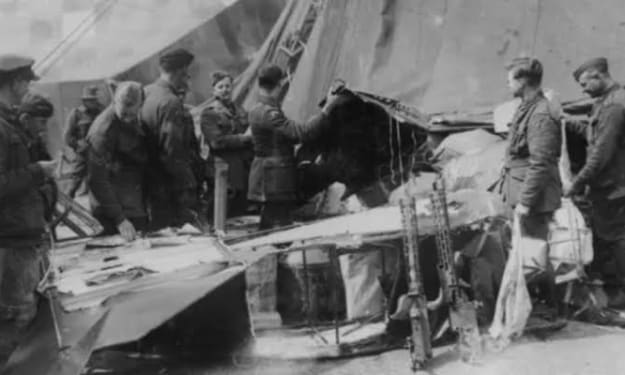
Delve into the annals of history and uncover the secrets and mysteries that have intrigued scholars, treasure hunters, and enthusiasts alike. From symbols of Nazi struggles to vanished treasures and enigmatic disappearances, the following accounts provide a captivating glimpse into the enigmas that history occasionally leaves in its wake. Embark on a journey through the shadows of the past as we explore the stories of the Blood Banner, the Amber Room, the Big Stoop Crew, the D-Day Crossword, Raoul Wallenberg, Rommel’s Gold, Peking Man Fossils, and the persistent legend of a Nazi ghost train. These tales serve as reminders that history’s secrets continue to captivate our imagination, long after the events themselves have faded into the pages of time. 1. The Blood Banner, a poignant emblem of the Nazi party's early struggles, was drenched in the blood spilled during the ill-fated 1923 Beer Hall Putsch. It bore immense significance to the party's followers and was prominently displayed during pivotal Nazi gatherings and events. However, its fate after World War II is veiled in uncertainty; it might have been destroyed or concealed, adding an air of mystery to its post-war existence. 2. The opulent Amber Room, a true masterpiece of artistry and architecture, was a lavish chamber adorned with amber panels, intricate gold leaf, and precious gemstones. Plundered during the chaos of World War II, its whereabouts have eluded investigators for decades. Despite numerous claims and alleged discoveries, the authentic Amber Room remains undiscovered, leaving a trail of intrigue and frustration in its wake. 3. The enigmatic vanishing of the Big Stoop Crew amid the tumult of WWII has generated a cloud of speculation and conspiracy theories. However, the concrete evidence surrounding their fate is scarce, leaving their story shrouded in mystery and their ultimate destiny unresolved, a testament to the mysteries that often accompany wartime events. 4. The captivating puzzle of Leonard Dawe's crossword puzzles, seemingly containing Allied code words ahead of D-Day, initially sparked intrigue about potential espionage. Yet, further investigations have suggested that the correlation was coincidental and not indicative of covert activities. The puzzle serves as a reminder of how historical events can sometimes intertwine in mysterious and unexpected ways. 5. Raoul Wallenberg, a heroic Swedish diplomat celebrated for his courageous efforts to save countless Jewish lives in Hungary during WWII, tragically vanished after Soviet authorities arrested him. His disappearance has given rise to a myriad of conflicting reports and theories about his fate, perpetuating the uncertainty surrounding the end of his extraordinary journey. 6. The allure of General Rommel's rumored hidden treasure in the deserts of North Africa has captivated both treasure hunters and historians. Despite enduring rumors and persistent speculation, the exact location of this elusive cache remains tantalizingly concealed, feeding the ongoing allure of uncovering a historical enigma. 7. The valuable Peking Man fossils, a critical testament to the study of human evolution, were moved to the United States for protection during the tumult of WWII. Regrettably, their fate post-war remains an enigma, as concerted efforts to locate these precious artifacts have yielded no conclusive results, leaving a gap in our understanding of this crucial piece of scientific history. 8. The persistent whispers of a Nazi ghost train, laden with pilfered treasures, continue to capture the public's imagination. Although concrete evidence to substantiate these claims has eluded researchers, the legend endures, particularly in Poland, where the idea of hidden wartime riches has become woven into the cultural fabric, a testament to the lingering mysteries that emerge from the fog of history. As we unravel the threads of these captivating stories, we are reminded that history’s mysteries are as enduring as they are elusive. The artifacts, disappearances, and legends discussed above serve as windows into the complex tapestry of the past, inviting us to ponder the untold narratives that lie hidden within. While the answers to these enigmas may remain just beyond our reach, their allure continues to spark curiosity and fascination, driving us to explore the depths of history in search of the truth. In the quest to decipher these riddles of time, we find ourselves drawn into a world where the past and present intertwine, reminding us that the pursuit of knowledge is a journey without end.
By Serein Reyn3 years ago in History
The Bravest Woman in America; who was she?
Ida Lewis is known as the bravest woman in America, a lighthouse keeper credited with saving numerous lives from drowning. When Ida was twelve her father, Hosea Lewis, was appointed lighthouse keeper in Newport, Rhode Island, unfortunately, Hosea suffered a terrible stroke after only four months. In the wake of her father’s stroke Ida and her mother, Zoraida, began to take over the duties of lighthouse keeper. In addition Ida rowed her three siblings to school everyday, greatly improving her rowing abilities, which would become very important in her many rescues. Along with her rowing skills, Ida’s swimming greatly improved which brought about the societal rumor that this was ‘unladylike.’
By Arie Redson3 years ago in History
The Assassination that changed Pakistan
In some cases everything necessary is one furious moment to steer the set of experiences. One of such moment is the Death of Benazir Bhutto. Benazir Bhutto was born on 21st june 1953 in Karachi. She studied at Harvard University and the University of Oxford, where she was President of the Oxford Union. She was the very first lady to lead the Muslim country, she filled in as the state head of Pakistan not once yet two times. many senior military figures viewed her, like her father, as a threat to their dominant role in Pakistan's political arena. Her initial term was from 1988 to 1990 Bhutto's first cabinet was the largest in Pakistan's history. She appointed herself as the new treasury minister, with her mother as a senior minister without portfolio, and her father-in-law as chairman of the parliamentary public accounts committee and second was from 1994 to 1996 In her second term, she oversaw economic privatisation and attempts to advance women's rights. Her government was damaged by several controversies, including the assassination of her brother Murtaza, a failed 1995 coup d'état, and a further bribery scandal involving her and her husband Asif Ali Zardari; in response, President Farooq Leghari dismissed her government. She was the head of the Pakistani public's party (PPP) and had parcel of allies with her as well as numerous Strong foes. Her dad Zulfikar Bhutto had recently been the top state leader of Pakistan. He was executed in military coup. At the point when she succeeded him a decade after the fact she had to deal with debasement penalties so she went to oust in England in 1984 yet gotten back to Pakistan again in 1986. She had been targeted for assassination previously and she realize that her life was at serious risk. Just a brief time after she got back to Pakistan, a huge bombing almost killed her. Fortunately she survived but bombing took the life of 180 individuals. She attempted to get extra security however neglected to get. On December 27, 2007 when she went to a convention at Rawalpindi and meeting her allies an enormous blast rock the crowd, Bhutto withdrew to her vehicle and ready to drive away when out of nowhere a man with a bomb joined to himself detonated right close to the vehicle, as an assasin discharged various shots. The vehicle drove Bhutto to the medical clinic however she was announced dead there. From the outset, reports were came in that Bhutto had passed on from discharges or sharpnel from the assault, however the interior ministry concocted an astonishing case that she had really kicked the bucket when her head hit the sunroof during the bombing. Many said that didn't seem OK and claimed that Musharraf's Administration try to cover up The truth. The Death was accused on the terrorist organization Al Qaeda, however many thought that Bhutto's numerous foes in the Public authority might have taken part in it. Seemingly Pakistan's most famous lawmaker was dead and that left power vacuum in the country's political framework from that point onward. Bhutto was a controversial figure who stays troublesome. She was frequently scrutinized as being politically unpracticed, was blamed for being bad, and confronted a lot of resistance from Pakistan's Islamist campaign for her secularist and modernizing plan. In the early long stretches of her profession, she was in any case locally famous and furthermore pulled in help from Western countries, for whom she was a boss of a majority rule government. Post mortem, she came to be viewed as a symbol for ladies' privileges because of her political outcome in a male-overwhelmed society.
By Nikhil Jadhav3 years ago in History
Oppenheimer Why He Deserves a Movie
An introduction to J. Robert Oppenheimer and his lasting influence on the world. J. Robert Oppenheimer was a brilliant physicist who changed the world more than most Nobel Prize winners. Under his leadership, the best physicists of the 20th century built the atomic bomb, and this led to World War II and the possibility of another world war.
By Djamila Leite3 years ago in History
Why Titanic didn't had enough lifeboats?
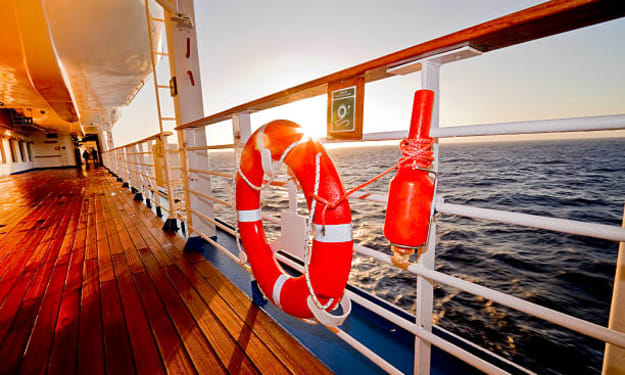
In James Cameron's 1997 blockbuster film, Titanic, there's a memorable moment where Rose, played by Kate Winslet, realizes a critical fact about the lifeboats: "It seems that there are not enough for everyone aboard." The response from Victor Garber's character, Titanic's architect Thomas Andrews, is both confident and poignant: "I have built a good ship, strong and true. She's all the lifeboat you need." Given the foreknowledge of the tragic outcome, this line takes on a bitter irony, embodying the essence of how the Titanic was designed and the fateful errors that unfolded. Interestingly, the Titanic was equipped with more lifeboats than mandated by British law. The Merchant Shipping Act of 1894 stipulated that vessels weighing over 10,000 tons should have at least 16 lifeboats capable of accommodating 990 people. Despite the Titanic's massive size, weighing over 45,000 tons at launch in 1911, it was legally required to carry only 16 lifeboats. Surprisingly, the Titanic had 20 lifeboats, with the potential to hold up to 1,178 individuals at full capacity. Tragically, this fell far short of the approximately 2,240 passengers and crew on board during the ship's ill-fated voyage. From a design perspective, the Titanic's builders believed they had crafted an unparalleled example of maritime safety. The Titanic was intentionally designed to remain afloat even after sustaining significant damage. The ship's lower section was divided into 16 compartments through bulkheads—partitions that could be sealed off using watertight doors in case of a breach. This design aimed to prevent flooding in unaffected sections, ensuring that the Titanic would remain a stable platform for passengers while lifeboats were used to evacuate to rescue vessels. This concept of relying on both bulkheads and lifeboats had been successfully demonstrated before. A few years prior, the RMS Republic had collided with another ship, causing considerable damage and flooding. However, the crew's strategic use of watertight compartments and the newly introduced Marconi Wireless Telegraph system allowed them to send distress signals, leading to a successful evacuation and saving nearly all onboard. The early success of wireless communication and careful ship design fostered optimism that disasters at sea could be minimized. A 1909 news article boldly declared that "the passenger on a well-equipped transatlantic liner is safer than anywhere else in the world." This sentiment prevailed until the ill-fated events of the Titanic altered this perception. However, despite the Titanic's robust design, a sequence of unfortunate events led to its demise. While regulations originally stated that ships should remain afloat with any two adjacent compartments flooded, the Titanic was designed to withstand even more severe damage. Engineer and Titanic researcher Sam Halpern's analysis revealed that the ship could stay afloat even with three or four adjacent compartments flooded. The key was to maintain a level ship to prevent water from spilling over the bulkheads. Tragically, the Titanic's collision with an iceberg deviated from these anticipated scenarios. The ship's side scrape along the iceberg breached multiple compartments, with Boiler Room six being a critical breach point. Flooding of the first five compartments overwhelmed the design's resilience, causing the ship to become increasingly unstable as water flowed over the bulkheads. This eventuality contradicted the Titanic's initial premise of safety through compartmentalization. The Titanic's wireless distress signals were sent out, but the closest ship, SS Californian, failed to receive them due to the radio operator's inactivity. As time passed, the Titanic's desperate messages revealed the dire situation onboard. Without a rescue ship, the only remaining option was to rely on lifeboats. When the RMS Carpathia eventually arrived, the Titanic had already succumbed to the ocean, resulting in the tragic loss of over 1,500 lives. The disaster left an indelible mark on maritime safety regulations. A stark visual comparison between RMS Olympic and her twin Titanic in 1911 and 1912 respectively, highlights the immediate change in lifeboat provisions following the tragedy. The disaster prompted the establishment of the International Convention for the Safety of Life at Sea (SOLAS) in 1914. This international treaty mandated continuous wireless telegraph communication and increased the required number of lifeboats to accommodate everyone on board. In modern times, SOLAS regulations stipulate that cruise ships must have lifeboats capable of accommodating 125% of the ship's capacity in emergencies. The Titanic catastrophe, therefore, precipitated a profound transformation in maritime safety practices and regulations. Ultimately, the Titanic disaster wasn't solely the result of a design flaw, but rather a convergence of circumstances involving early wireless communication, an unforeseen collision scenario, and an overconfidence in the ship's resilience. The iconic "She's all the lifeboat you need" line, whether fictional or not, encapsulates the misguided optimism that surrounded the Titanic's ill-fated journey. The tragedy serves as a somber reminder of the delicate balance between innovation, preparation, and the unpredictable forces of nature.
By Shubham Bajaj3 years ago in History
FIFA's Tarnished Legacy: Unraveling the Corruption Behind the World Cup
On a chilly December 2nd in 2010, the world of football held its breath as the International Federation of Association Football, known as FIFA, gathered in picturesque Switzerland. This momentous gathering was convened to unveil the future hosts of the prestigious 2018 and 2022 World Cup tournaments. An illustrious audience had assembled, reflecting the political might and fervor behind their respective bids. The scene was set with notable figures like former U.S. President Bill Clinton, a vocal advocate for the U.S. bid, and Prince William championing England's cause. The Dutch Prime Minister and former Belgian Prime Minister stood united with a joint bid. In this room pulsating with power, the fate of nations hung in the balance, all hinging on the decisions of a group that held the key to the World Cup's future. These were the 22 FIFA officials vested with the authority to select the host nations, the custodians of destiny steering the course of international football. Yet, as the story unfolds, we'll come to realize that even these guardians of the game were not immune to the allure of abusing their power. The moment arrived, and the announcements echoed through the air like seismic ripples, revealing the chosen hosts. "Ladies and gentlemen, the 2018 FIFA World Cup will be organized in Russia, and the 2022 FIFA World Cup is awarded to Qatar." The room erupted with a mixture of emotions, from jubilation to bewilderment. Little did anyone know that this seemingly triumphant moment would send shockwaves through the world of football, unravelling a tale of corruption and scandal that would mar the very essence of the beautiful game. The journey of FIFA began humbly in the early 20th century when football had already established itself as a beloved sport, particularly in Europe and South America. FIFA was formed in 1904 by officials in France to oversee competitions between national teams and promote the sport. The desire to emulate the success of the Olympics led to the creation of the first World Cup in 1930, hosted by Uruguay. The selection process for the host was veiled in the guise of a democratic vote, concealing the influence of a select few behind closed doors. As the World Cup found its way onto television screens, it underwent a metamorphosis, evolving from a regional event into a global phenomenon. Countries clamored for the prestige and honor that came with hosting the tournament, propelling FIFA into a position of immense wealth and power. The burgeoning profits became the lifeblood of the organization, controlled by a small group known as the Executive Committee (ExCo), who wielded the authority to distribute funds among member nations. However, beneath the surface of the World Cup's success, a culture of corruption began to fester. FIFA leaders started using illicit means to consolidate and extend their influence, culminating in the decision to shift the voting power from the FIFA Congress to the ExCo. This pivotal move concentrated immense power in the hands of a few, creating an environment ripe for corruption to thrive. The turn of the 21st century saw FIFA's bidding process evolve into a high-stakes arena, where nations vying for the opportunity to host the World Cup indulged in a frenzied display of promises and lavish gestures. The 2006 World Cup bid marked the first glaring evidence of under-the-table deals, with Germany's victory marred by allegations of bribery. The trend continued, tainting subsequent bids and eventually culminating in the controversial selection of Russia and Qatar as hosts for 2018 and 2022 respectively. Russia and Qatar emerged as winners not solely based on merit, but rather on their ability to flex political muscle and financial prowess. Russia showcased its formidable resources and influence, while Qatar harnessed its wealth and ambition to embark on a staggering infrastructure overhaul. Both nations exploited the lack of accountability and transparency within FIFA's structure, playing a sophisticated game of power politics to secure their hosting rights. The aftermath of these selections saw FIFA plunge into a whirlpool of scandal and controversy. Arrests, indictments, and investigations laid bare the rampant corruption that had infiltrated the organization's highest echelons. The ensuing chaos culminated in Sepp Blatter's ignominious departure from the presidency of FIFA, symbolizing a pivotal moment in the unraveling of the institution. Amidst the turmoil, FIFA attempted to restore its tarnished reputation by reinstating the Congress's authority in the host selection process. However, the damage was done, and questions lingered about the moral integrity of hosting decisions that had favored wealth and power over principles. The legacy of the 2018 and 2022 World Cup host selections serves as a stark reminder of the darker side of the beautiful game. It highlights the pitfalls of unchecked power, the allure of under-the-table dealings, and the precarious balance between ambition and ethics. As the world tunes in to witness the spectacle of the World Cup in Russia and Qatar, the shadows of controversy loom large, casting a long shadow over an event that was once the epitome of sporting excellence. In retrospect, the 2018 and 2022 World Cup hosting decisions stand as cautionary tales, reminding us of the imperative to safeguard the integrity of the beautiful game. The lessons learned from this tumultuous chapter in FIFA's history serve as a call to action for transparency, accountability, and a renewed commitment to the principles that have made football a unifying force across borders and cultures. The road to redemption may be arduous, but it is a journey that the world of football must undertake to ensure that the spirit of the game remains untarnished for generations to come.
By Shubham Bajaj3 years ago in History