World History
Why queen Elizabeth 2nd was the queen of 15 countries!?
On November 30th, 2021, history was made as Barbados proudly emerged as the world's newest republic. With a resounding declaration, the transformation was solidified: "From this day and forever, declare Barbados a parliamentary republic." This pivotal moment marked the culmination of a journey that saw Barbados unfurl its own flag, symbolizing the end of a colonial era spanning over 350 years and dissolving its ties to the British royal family. What added an intriguing layer to the event was the presence of none other than Prince Charles, who acknowledged, "It was important that I should join you to reaffirm those things which do not change." Prince Charles's words held a deeper significance, encompassing the essence of the transition. Although Barbados had stepped away from being a realm of the British Crown, it chose to maintain its membership in the Commonwealth—a conglomerate of nations primarily composed of former British colonies. A moment of transformation was unfolding, one that required a closer look at the intricate relationship between the British Empire and the Commonwealth of Nations. Travel back to 1926, the year Queen Elizabeth II entered the world stage. At that time, the British Empire exerted dominion over nearly a quarter of the global population through its sprawling colonies. This immense reach was built upon refined systems designed to control and exploit wealth and resources across the colonies. Consider the case of Barbados, where descendants of those kidnapped from Africa were exploited on sugar plantations, or delve into South Africa, where a wealth of diamonds was extracted from local mines. The early 20th century witnessed the initial ripples of change in the colossal British Empire. Countries such as Australia and Canada transformed into British dominions, relinquishing direct rule by Britain while maintaining symbolic allegiance to the Crown—a concept termed the British Commonwealth. This new form would later serve as the blueprint for the empire's evolution. As Queen Elizabeth ascended the throne in the 1950s, the world was in flux. Post-World War II, Britain's economy faltered, and independence movements surged across the empire. Struggles for sovereignty unfolded in places like India, where leaders fought for self-governance, and in Kenya, where millions resisted British rule, even enduring internment camps. Recognizing the inevitability of decolonization, the monarchy shifted its focus toward relevance. While Queen Elizabeth did not personally attend the lowering of the British flag, her family did. Prince Philip participated in ceremonies marking the independence of former colonies, including Kenya. Other royals, such as Lord Mountbatten, were also part of this symbolic transition, as seen in India. India's trajectory took an intriguing turn as it chose to become a republic and sever ties with the monarchy. In response, the British Commonwealth underwent a transformation of its own, rebranding itself as the Commonwealth of Nations. This evolution allowed countries to join as members even if they were no longer under the queen's rule. Meanwhile, newly independent nations opted to retain the queen as their ceremonial head of state, establishing a diverse mix of monarchies and republics, all presided over by the queen. In this intricate landscape, the monarchy adapted and thrived, expanding its reach through royal tours that echoed the imperial tradition. As the British empire decolonized, the monarchy remained a global entity. Fast-forward to today, where approximately a third of the world's population resides in a Commonwealth nation. This intriguing alliance extends beyond former British colonies, as countries find value in the political platform it offers, connecting them to influential diplomatic players like the UK, India, Canada, and even the Crown itself. The transition to the next head of the Commonwealth, King Charles III, carries a hint of irony. While the British empire gave birth to the Commonwealth, the future leadership of the organization is not bound by colonial origins. Anyone has the potential to lead, indicating that the Commonwealth's evolution may be guided by those very colonies it was designed to unify. The recent passing of Queen Elizabeth II triggered periods of mourning across Commonwealth nations. Her remarkable ability to unite diverse nations provided a buffer against the darker chapters of British history, such as slavery. However, the monarchy can no longer evade these discussions, as the collective reckoning with colonial legacies prompts introspection on the monarchy's role within the Commonwealth. These conversations underscore a pivotal shift in power dynamics. Former British colonies now hold considerable influence within the Commonwealth. The question that looms large is the collective vision of these nations. What aspirations and goals will guide the future of this diverse union? The journey from colonialism to republics within the Commonwealth is a complex narrative, one that reflects not just a shift in political landscapes, but also the aspirations of nations bound by shared histories.
By Shubham Bajaj3 years ago in History
APS Peshawar Attack 2014. Content Warning.
The Army Public School attack in Peshawar, which occurred on December 16, 2014, is a tragic event that left a lasting impact on Pakistan and the world. This attack was carried out by the Tehrik-i-Taliban Pakistan (TTP), also known as the Pakistani Taliban, and resulted in the deaths of over 140 individuals, most of whom were schoolchildren. The attack shocked the nation and galvanized public opinion against terrorism and extremism. In this essay, we will delve into the details of the APS Peshawar attack, its aftermath, and its implications for Pakistan's fight against terrorism.
By Fatima Imran3 years ago in History
Ukraine
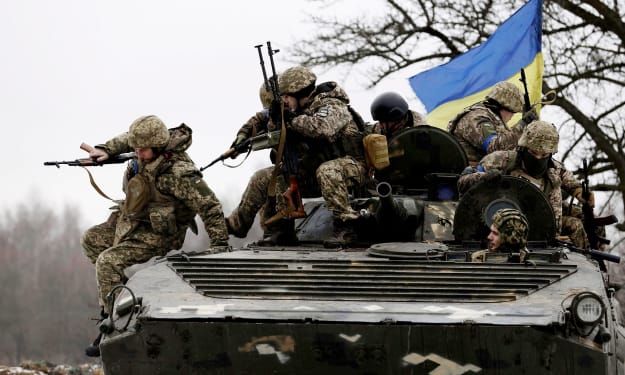
Predicting the exact end date of a war is an intricate and uncertain task, as it involves a multitude of factors that are often unpredictable and subject to change. In the case of the war in Ukraine, several dynamics come into play that can influence the timeline for its resolution. These include political negotiations, military strategies, international involvement, public sentiment, economic pressures, and more. While I can't provide a definitive answer, I can discuss some of the key factors that might impact when the war in Ukraine could potentially end.
By Malik Oduntan3 years ago in History
The Remarkable Discovery of the Lost Tombs of the Pharaohs
In the heart of the scorching Egyptian desert, an international team of archaeologists embarked on an audacious expedition to unravel one of history's greatest mysteries: the elusive tombs of the Pharaohs that had eluded discovery for centuries. Armed with cutting-edge technology and unwavering determination, they set out on a journey that would rewrite history books and capture the world's imagination.
By mostafa ali3 years ago in History
How the 'lost cities' of amazon were finally found
Meet Percy Fawcett, the intrepid British explorer whose journey into the heart of the Amazon rainforest in 1925 marked the last known communication from him. This was his eighth expedition into the Amazon, driven by a singular objective: the pursuit of a fabled lost city, dubbed "Z". This quest was fueled by age-old rumors that whispered of sprawling cities nestled deep within the dense rainforest, a notion that captured Fawcett's imagination. Yet, despite his unwavering determination, Fawcett's search for "Z" and other mythical cities remained unfruitful, leaving many to believe that the Amazon's untamed wilds were incompatible with the existence of urban centers. Recently, however, groundbreaking discoveries have altered our perception of the Amazon's past. Inconspicuous ditches and mounds, scattered across the rainforest, have piqued the interest of archaeologists. These seemingly natural formations have been unmasked as evidence of human engineering. These revelations spark a renewed understanding of an ancient enigma: the whereabouts of the long-lost cities of the Amazon. Travel back to the 16th century, a time when European colonizers surged into the territories of Central and South America, accompanied by soldiers, diseases, and visions of conquest. As they encountered diverse indigenous groups, they stumbled upon remarkable cities, like Tenochtitlan, founded by the Mexica people around 1325 AD, and Cusco, established by the Incas around 1200 AD. These urban centers boasted intricate stone structures, well-planned streets, and bustling neighborhoods. However, the European dominion over these cities masked their potential to hold yet another marvel. The colonizers, amidst tales of "A great Lord... covered in gold dust" and the allure of the legendary El Dorado, failed in their quests to find the fabled city of gold. While their expeditions resulted in hardship and disillusionment, they bore witness to signs that hinted at the existence of thriving civilizations. Accounts from Spanish explorers spoke of gleaming cities, abundant crops, and significant towns that seemed to defy the rainforest's perceived hostility. Over two centuries, these explorations took place, yet the legend of El Dorado was eventually relegated to the realm of myth by the 19th century. Fast forward to the early 20th century, when Percy Fawcett rekindled the search for these elusive cities. His relentless efforts spanned decades, targeting two Amazonian regions: the western reaches of Bolivia and the southern expanses of Brazil. Fawcett encountered indigenous communities, described as living in modest groups within simple villages. The absence of stone ruins seemed to bolster the consensus among experts that the rainforest was inherently unsuited for supporting intricate societies, let alone cities. Experts of the time leaned toward the belief that the indigenous people lacked the sophistication to construct cities, attributing their livelihoods to the rainforest's limited fertility. In the face of skepticism, Fawcett clung to his conviction, penning a final letter to his wife assuring her, "You need have no fear of any failure." His departure from camp marked his vanishing, plunging him into the realm of mystery. Decades passed, and the Amazon continued to be seen as a realm of emptiness. Yet, Fawcett had been on the right trail, albeit chasing the wrong quarry. The crucial clue that had eluded him lay within the soil itself. In the 1960s, scientists stumbled upon pockets of extraordinarily fertile earth, named terra preta or black earth. This rich soil, enriched by human waste or controlled forest fires, hinted at the possibility of large-scale agriculture within the rainforest. The 1990s then brought another revelation, as archaeologists studying the Xingu river region discovered intricate ditches, remnants of carefully designed settlements. These ditches marked out walls, a central plaza, and interconnected roads, revealing a network of settlements that could have harbored up to 50,000 people between 1250 and 1650 AD. These settlements followed a sustainable blueprint, making the most of the rainforest's resources without exhausting them. Orchards and gardens were carefully demarcated, while the forested areas remained sanctuaries for animals and medicinal plants. These, it seems, were the hidden cities that had captivated Fawcett's imagination. As time passed, evidence of these lost cities burgeoned, revealing a complex tapestry of settlements across the Amazon. Trench networks that date back to 200 - 1200 AD suggested a population of up to 60,000 people, rivalling many European cities of the era. Satellite technology even uncovered U-shaped structures atop 22-meter pyramids in Bolivia, fueling the consensus that these Amazonian cities once played host to millions. Fawcett's failure to encounter these lost cities can be attributed to a multitude of factors. The devastating impact of diseases brought by European colonizers had already decimated an estimated 80-95% of the indigenous population, particularly from smallpox and measles. Furthermore, the construction materials used by Amazonian indigenous people, primarily wood and earth, led to the gradual decay of their architectural achievements, leaving little behind but dense vegetation and seemingly untouched soil. The revelation of these lost cities shatters our preconceptions and unveils an ancient harmony between humans and the rainforest. The intricate relationships between settlements, their inhabitants, and the bounties of nature paint a picture of a civilization that once thrived amidst the dense foliage. These discoveries propel us toward a deeper comprehension of the intricate dance that humans and the rainforest shared, an enduring partnership that is only beginning to unravel before our eyes.
By Shubham Bajaj3 years ago in History
Fueling Dependence: Germany's Reliance on Russian Gas
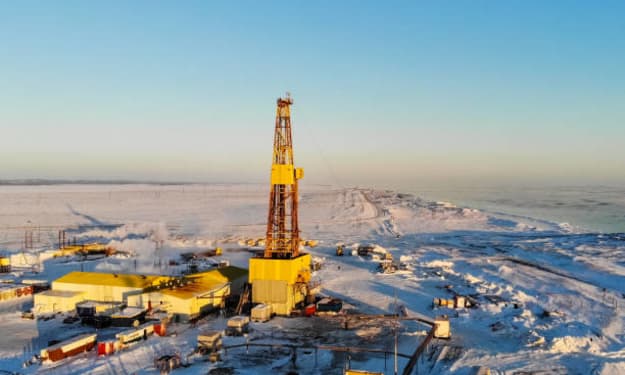
On April 8th, 2022, a significant event unfolded in the realm of international relations as the European Union (EU) took a decisive step by imposing its fifth round of sanctions against Russia. This marked a notable development in a complex web of diplomatic interactions. A notable quote emerged amidst this decision, capturing attention: "And, ladies and gentlemen, I think that measures on oil, and even gas, will also be needed sooner or later." This seemingly cryptic statement, "even gas will also be needed sooner or later," was carefully noted for its implications – suggesting a potential course of action in the future while hinting at the timing being not quite immediate. This move was part of a series of actions taken by the EU in response to the ongoing conflict in Ukraine. Over the course of this period, sanctions had been artfully designed to restrict the flow of Russian money and goods. Various segments of the Russian economy felt the impact, with the EU targeting not just banks and companies, but also specific individuals who were instrumental in shaping the nation's policies. It was a chess game played out on the global stage. However, a striking aspect of these sanctions was their restraint when it came to the realm of natural gas, a vital resource. The European Union relied on gas for almost a quarter of its energy needs, and nearly half of that gas came from Russia – a country renowned as the world's leading gas exporter. The intricate network of pipelines facilitating this exchange formed a vital link in the energy chain. Notably, Germany, boasting the EU's largest economy, stood as a primary recipient of Russian gas. As the gears of diplomacy turned, Germany found itself in a unique position. Despite the geopolitical tensions and the economic sanctions being imposed, the country continued to forge an energy relationship with Russia. This was particularly evident in the staggering sum of approximately 220 million euros per day that Germany paid Russia for its gas supply, a sum that could support various facets of a nation's infrastructure. Germany's reliance on Russian gas was borne from a historic trajectory that found its roots in the aftermath of World War II. In the mid-20th century, West Germany embarked on a remarkable journey of recovery and growth. Amidst this ascent, an insatiable demand for energy emerged, a need that was met by the vast natural gas reserves discovered in the heart of western Siberia, part of the erstwhile Soviet Union. The late 1960s witnessed a pivotal shift in West Germany's foreign policy, characterized by a doctrine known as Ostpolitik. This doctrine emphasized dialogue and cooperation with the Eastern Bloc, a policy that paved the way for a monumental energy agreement between West Germany and the Soviet Union. In this historic pact, the Soviet Union promised to supply natural gas to West Germany, while West Germany reciprocated by providing high-quality steel pipes to extend the gas pipelines – a classic example of the proverbial "you scratch my back, I'll scratch yours." It's important to comprehend the unique dynamics of piped natural gas – a regional commodity with transportation intricacies. Unlike its fossil fuel counterparts, coal and oil, which can traverse oceans, piped natural gas's movement is tied to the geography of pipelines. These pipelines are not ephemeral conduits; they are substantial, long-term investments that shape energy landscapes for decades. Hence, gas agreements became more than transactions; they were pathways that bound nations together. The 1980s saw the Soviet Union establishing a comprehensive network of pipelines, solidifying its position as a significant gas supplier to Europe. By the 1990s, Germany was receiving 40% of its gas from Russia, a statistic that bore testimony to the effectiveness of the agreement. However, the geopolitical landscape underwent tectonic shifts with the collapse of the Soviet Union. Russia, emerging as the successor state, took over the extensive pipeline network, but the new configuration meant that gas routes ran through newly independent Ukraine. To safeguard against potential disruptions in supply routes, Russia embarked on an ambitious endeavor – building alternative pipelines. By 1999, a pipeline running through Belarus was operational. In 2005, the Nord Stream pipeline, meandering along the Baltic Sea, was initiated, providing a direct route to Germany. These infrastructural marvels were supplemented by pipelines within German territory and the establishment of gas storage facilities, such as the impressive storage site that ranked among the largest in Western Europe. The intricate gas network underscored Russia's energy influence over Europe, a fact that manifested vividly in the gas price negotiations of 2008. An impasse led to a gas cutoff to Ukraine, which inadvertently impacted the flow of gas to multiple European nations. This episode illuminated the extent to which gas flows could be wielded as a geopolitical tool. The subsequent years brought forth another ambitious project – Nord Stream 2. An investment exceeding 11 billion dollars, this pipeline aimed to mirror the original Nord Stream, doubling the capacity of gas transport to Germany. As this project took shape, 2014 ushered in another seismic shift – Russia's annexation of Crimea and its intervention in Eastern Ukraine. In response, the EU responded with sanctions, leading certain countries to distance themselves from Russian gas. In contrast, Germany continued to bolster its gas imports, thereby emphasizing its energy reliance on Russia. Fast-forward to the present, and the situation has gained a heightened sense of urgency. As Russia's actions in Ukraine stir global outrage, Germany finds itself in a conundrum. The clamor for a change in energy dependency has grown louder, yet the path forward is riddled with complexities. Piped gas, woven into the fabric of German infrastructure, presents a formidable challenge to replace. While renewables remain the ultimate goal, the transition to such alternatives demands substantial time and resources, with an estimated completion date far into the future. In this intricate dance of geopolitics and energy, Germany stands at a crossroads. Public sentiment urges action against Russian gas, yet economic realities loom large. A potential boycott could ripple through the economy, with potential job losses numbering in the hundreds of thousands. Despite this, Germany has begun taking cautious steps. The once-proposed Nord Stream 2 pipeline has been abandoned, and measures to reduce dependence on Russian gas have yielded a modest 15% reduction. Germany has even taken control of a subsidiary of Russia's Gazprom, signaling a more assertive stance. However, the complexities persist. Germany's intertwined energy relationship with Russia isn't one easily untangled. The nation finds itself ensnared in a web spun from decades of energy agreements, geopolitical considerations, and economic pragmatism. As the world watches, the story unfolds with implications that extend beyond energy – a tale of diplomacy, resilience, and the intricate balance between power and dependence.
By Shubham Bajaj3 years ago in History
Hidden Histories: Unearthing the British Museum's Looted Artifacts
Welcome to the captivating world of the British Museum, a place that stands as a testament to the ebb and flow of human history. As you step through its grand entrance, you are greeted by a treasure trove of knowledge spanning an impressive two million years. This colossal repository of culture and heritage draws in countless visitors, earning its title as the world's largest museum dedicated to world history. Behold, within these hallowed halls, an awe-inspiring collection of over eight million artifacts from lands near and far, each whispering tales of civilizations long past. Among the stars of this illustrious museum are the time-honored relics that beckon from the museum's must-see list. Imagine gazing upon the enigmatic Easter Island sculpture, a venerable thousand-year-old artifact, or marveling at the intricate bronze sculpture depicting the Hindu deity Shiva. These treasures are only the beginning of an enchanting journey that lies ahead. However, as you traverse the museum's labyrinthine corridors, a shadow of contention emerges. A conundrum comes to light, epitomized by the pathway you tread. A stark revelation emerges—almost half of the dozen exhibited pieces along this route are mired in disputed ownership. The British Museum, in its earnest pursuit to showcase the diversity of humanity's heritage, finds itself entangled in a web of controversy. Indeed, a poignant debate has risen, casting a spotlight on the question of whether cultural artifacts should remain ensconced within the halls of Western museums or return to the embrace of their home countries. The discourse surrounding the rightful ownership of these treasures has ignited a fervent discussion, where perspectives clash and passions run deep. To better understand this narrative, let us delve into the historical tapestry of the British Empire, which, in the late 1600s, embarked on an unprecedented expansion across continents. It soared to majestic heights, becoming the unparalleled dominion that spanned a quarter of the globe's landmass and population. As the empire extended its reach, it harvested not only resources and wealth but also cultural heirlooms from lands far and wide. In 1753, the British Museum was founded, a sanctuary to house these marvels, a true embodiment of human endeavor. The collection flourished with each passing decade, embracing new acquisitions, legal and undisputed, like the venerable two-thousand-year-old Roman base, a relic of ancient grandeur bequeathed to the museum by a noble duke in the year 1945. Yet, the heart of the matter resides in the pieces shrouded in ambiguity and dispute. As you step through the museum's entrance, your gaze falls upon the Rosetta Stone, a relic entwined with intrigue. Acquired by British troops from the French in Egypt, this ancient slab serves as a bridge to deciphering the enigmatic script of the past. A few paces onward, the Parthenon sculptures beckon, extracted from the Acropolis in Athens by a British lord and carried across continents to their present abode. Venture further, and you encounter the enigmatic Benin bronzes, captivating in their diversity. These treasures, hailing from the Kingdom of Benin in present-day Nigeria, encompass a spectrum of artistic expression, from engraved ivory tusks to resplendent brass sculptures and intricate plaques. This once-thriving kingdom thrived in the 1500s, its artistry a mirror reflecting its political and social narrative. Professor Chika Okekeyagulu, an art historian hailing from Nigeria and a professor at Princeton University, unravels the story of these bronzes, attesting to their role as visual chronicles of a society that lacked a conventional written script. However, a somber chapter unfurled in 1897. European colonial powers, fueled by a feverish quest for dominion, cast their gaze upon Africa. The "Scramble for Africa" saw these powers partition the continent into spheres of influence, with Benin falling under the British domain. A tragic turn of events led to the "Benin Disaster," a collision of cultures and interests that claimed lives and loyalties. In response, a punitive expedition ensued, leading to the pillaging of Benin's treasures, a calculated endeavor that saw the British soldiers claim thousands of artifacts as their spoils. Photographs from that epoch capture the systematic dismantling of palace plaques, a chilling testament to a civilization erased. The aftermath bore witness to a once-thriving kingdom reduced to ruins, as the echoes of a colonial conquest reverberated through time. The indomitable spirit of the Benin people endured, culminating in Nigeria's eventual independence in 1960. Yet, the echoes of the past endured, as the artifacts that bore testament to Benin's legacy remained dispersed across the globe, locked within the vaults of Western institutions. Flash forward to the year 1995, a poignant moment where firsthand encounters with these artifacts evoke a sense of pride and longing. Dr. Chika Okeke-Agulu reminisces about his inaugural visit to the British Museum, a journey that spanned continents and emotions. The magnificence of these artifacts is juxtaposed against the bittersweet reality—while a privileged few traverse oceans to bear witness, countless others are denied this privilege, forever distanced from their heritage. March of 2000 marked a pivotal juncture as Benin's royal family voiced their plea for the return of unlawfully taken cultural property. A symbolic gesture, an olive branch extended across time, and yet the response remained incomplete. The British Museum, restrained by a governmental act, stood steadfast in its stance, refusing to relinquish its hold. The essence of their commitment reverberated in their words—"We don't restitute, but we are absolutely committed to lending as widely as possible." A glimmer of change emerged in the form of a grandson's noble gesture, as artifacts from the 1897 expedition were returned to the Benin royal family. The year 2007 bore witness to the birth of the Benin Dialogue Group, a consortium embarking on a complex journey toward reconciliation. Western museums that housed the bronzes and representatives from the Nigerian government engaged in earnest conversations, seeking a resolution that remains elusive to this day. But this narrative extends beyond the walls of the British Museum. It is a tale interwoven with threads of colonial power that stretch across epochs and continents. These contested artifacts symbolize more than just physical objects; they represent the intangible essence of cultural and historical identity. The quest for restitution is a testament to the enduring spirit of nations, demanding recognition, and a reclaiming of what was lost. In the words of Dr. Chika Okeke-Agulu, this endeavor is a long-term project, a pursuit that stretches beyond individual lifetimes. The time has come to embark on the arduous journey of cultural reconstitution, a journey that commences in the present, with an unwavering commitment to forging a path toward reconciliation. As we contemplate the stories encapsulated within these artifacts, let us collectively embrace the responsibility to honor their origins and the vibrant legacies they encapsulate. In conclusion, the British Museum stands as a microcosm of a global narrative, a place where history converges, and voices echo through time. Its vast halls hold not only artifacts but also echoes of debates, passion, and the longing for justice.
By Shubham Bajaj3 years ago in History
Why America's police looks like soldiers?
On a balmy June 1st, a protest surged near the iconic White House, brimming with voices raised in peaceful unity. Yet, the scene shifted swiftly as a formidable contingent, adorned in helmets, riot shields, rifles, and even tear gas canisters, moved to confront the demonstrators. The figures in this mix of authoritative presence included a fusion of police and military personnel - Secret Service agents, vigilant Park Police, the steadfast National Guard, the specialized forces of the Prison system, and the vigilant local law enforcement from a neighboring county. The intriguing aspect here is discerning who among these figures represents the police force. This task, however, is made perplexing due to an evolving and unsettling resemblance between America's police officers and its armed forces. Taking a stroll back to the 1980s, the appearance of American police officers was notably distinct. The United States' crime rate danced through fluctuations, with President Reagan's call to arms against drug-related issues. An initiative was launched to bridge the military and police forces, particularly in the context of the War on Drugs. The sentiment was echoed through Congress, paving the way for a series of legislative acts. These acts aimed at granting police access to military installations and equipment, National Guard support in drug-related operations, joint training of military and police personnel, and ultimately, the provision of surplus military equipment to police departments, free of charge - an initiative soon christened as the 1033 program. Through this program, police departments acquired an array of resources - from assault rifles resembling M16s to imposing armored trucks, even venturing into grenade launchers. These changes, however, did not merely affect the inventory of police arsenals; they catalyzed a transformation in the very essence of how police operated. A striking shift was observable in the frequency of SWAT team deployments. In a telling contrast, departments that called upon these specialized units around once a month during the 1980s found themselves engaging them more than 80 times annually by 1995. The majority of these deployments centered on drug-related search warrants, often employing forceful entry strategies commonly referred to as "no knock warrants." As a consequence, the image of the police force began to morph into that of an occupying military presence - a shift highlighted in a 1997 article likening the police to an "occupying army." A pivotal moment unfolded in 1997 when a bank robbery in North Hollywood thrust the limitations of the police's armament into stark relief. Two armed robbers had automatic rifles and protective body armor, whereas the police officers responding did not. The outcome was a harrowing confrontation that left a dozen officers injured. The aftermath of this incident sparked a fervent demand for improved weaponry, most notably the inclusion of assault rifles like the AR-15. This plea resonated not only in California but reverberated across the nation from Florida to Connecticut. Simultaneously, the 1033 program was broadened, eliminating the prerequisite for equipment to be used solely in drug enforcement operations. Consequently, even university police departments gained access to surplus military armament, for any purpose they deemed necessary. A former Connecticut police chief recollected being offered an astonishing array of equipment, including tanks and bazookas. Regrettably, the precise extent of these equipment loans remains elusive due to inadequate record-keeping until 2015. However, data regarding the equipment retained by police departments each year it was provided reveals a steady expansion throughout the 1990s and 2000s. A notable inflection point coincided with the winding down of the Iraq War in 2011. With the military's vast inventory of equipment suddenly available, police departments had access to a surplus of armament, even acquiring Mine Resistant Ambush Protected Vehicles (MRAPs) - equipment that would soon attract substantial scrutiny. In the summer of 2014, the 1033 Program burst into the national spotlight following the tragic shooting of Michael Brown, an unarmed black teenager, by a police officer in Ferguson, Missouri. The ensuing protests were met with a heavily militarized response, triggering widespread concern. Amidst this turmoil, then-President Obama issued an executive order aimed at curbing the 1033 Program. However, this attempt at reform was short-lived, as the subsequent administration under President Trump rolled back these changes, albeit at a time when the program's significance had already begun to wane. A closer examination reveals that by 2016, the program's focus had shifted. Smaller police departments emerged as the primary beneficiaries of MRAPs, indicating a trend toward independent procurement. Today, the adoption of military gear by police is no longer tethered to a single government program; it has become a fundamental aspect of their self-identity. Arthur Rizer, a former military and civilian police officer turned researcher, delves into the psychological impact of such a transition. A poll he conducted among police officers unveiled that while the majority had no qualms about using military-grade equipment, they did acknowledge that it altered their mindset and behavior, often resulting in heightened aggression and assertiveness. While there have been instances where the deployment of such equipment proved advantageous, such as the Orlando police's use of an armored vehicle during the Pulse Nightclub shooting in 2016, these instances are the exception rather than the norm. Today, a substantial portion of this military equipment is relegated to the domain of SWAT teams executing drug-related search warrants. Notably, many of these operations employ no-knock warrants - the same approach that led to the tragic death of Breonna Taylor in Louisville. In contemplating this issue, the confluence of military and police roles raises disconcerting questions. A military force is tasked with safeguarding the collective "us" from perceived external threats, while a police officer should ideally represent a reassuring presence within the "us." Yet, as law enforcement officers increasingly embrace the mantle of soldiers, this distinction blurs. In this context, a poignant question emerges: what purpose does an assault rifle serve in the face of a protest? The analogy of providing a hammer to someone and then expecting them not to view everything as a nail becomes eerily relevant. In essence, the transformation of America's police officers into a militarized force is a multifaceted narrative that intertwines political initiatives, shifting ideologies, and societal perceptions. It underscores the intricate dance between maintaining public safety and preserving the essential fabric of a community. As the nation grapples with this evolving paradigm, the need for a delicate equilibrium becomes ever more pronounced.
By Shubham Bajaj3 years ago in History
Impeachment saga: Edo PDP flays Shaibu, passes vote of confidence on Obaseki. Content Warning.
As the break between Lead representative Godwin Obaseki and his debuty, Philip Shaibu, proceeds, the initiative of the Edo State People groups Leftist faction (PDP), over the course of the end of the week passed a demonstration of positive support on Lead representative Obaseki, similarly as it reprimanded the agent lead representative for hauling his head to court over a hypothesized prosecution process without depleting the party's inner question goal instrument.
By Great Bright3 years ago in History
The story of Adolf Hitler
Adolf Hitler is perhaps the most scandalous figure in world history, referred to for his job as the head of Nazi Germany during The Second Great War and his obligations regarding the decimation of millions of Jews and other minority gatherings. Brought into the world in Austria in 1889, Hitler grew up with areas of strength for patriotism and a hostile attitude toward Semitism that would shape his perspective and political belief system.
By olufemi alabi3 years ago in History
The Evolution of Anesthesia in Medical History
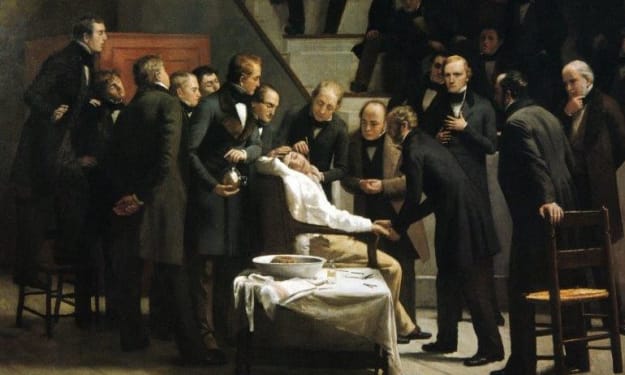
Imagine a time when medical procedures were performed without the comfort of numbing or unconsciousness. It was a time of great suffering, as patients had to endure excruciating pain while doctors hurried to complete their work. In the 1830s, a notable example was Scottish surgeon Robert Liston, celebrated for his incredible speed in the operating room. Picture this: a patient lying on the table, medical students holding them down, and curious onlookers awaiting the surgeon's skilled hands. With swift and precise movements, Liston cut through flesh, sawed through bones, and within mere minutes, an amputation was done. This scene captures the harsh reality of pre-anaesthesia surgeries. Patients had to remain fully conscious throughout the procedure, experiencing every sensation, every cut, and every stitch.
By Anita Nelima3 years ago in History
Al-Qa'ida
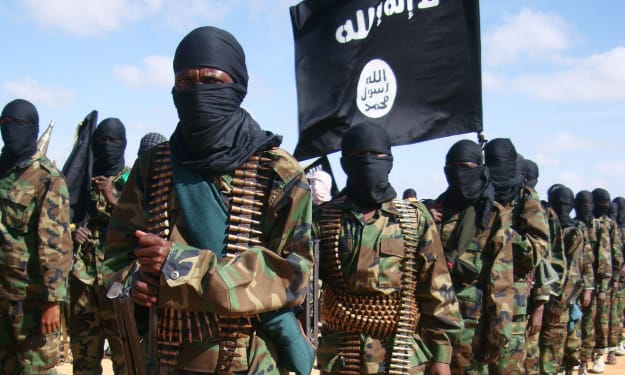
Usama bin Ladin and Muhammad Atef, a/k/a "Abu Hafs al Masry," shaped al-Qa'ida in 1988 with Middle Easterners who battled in Afghanistan against the Soviet Association, and proclaimed its objective as the foundation of an Islamic caliphate all through the Muslim world.From 1989 until in or around 1991, the group was settled in Afghanistan and Peshawar, Pakistan.In 1991, the leadership of al Qaeda, Usama bin ladin, migrated to the Sudan. Bin Ladin and al Qaeda viciously went against the US because of multiple factors. In the first place, the US was viewed as an "infidel" since it was not represented in a way reliable with the gathering's fanatic translation of Islam. Second, the US was seen as offering fundamental help for other "infidel" state run administrations and establishments, especially the legislatures of Saudi Arabia and Egypt, the country of Israel, and the UnitedNationsorganization, which were viewed as enemies of the group. Third, al Qaed aopposed the involvement of the United States armed forces in the Gulf War in 1991 and in Operation Restore Hope in Somalia in 1992 and 1993. Specifically, al Qaeda went against the proceeded with presence of American military powers in Saudi Arabia following the Gulf War. Fourth, al Qaeda went against the US Government as a result of the capture, conviction and detainment of people having a place with al Qaeda or its affiliated terrorist groups or those with whom it worked. For these and different reasons, Bin Ladin proclaimed a jihad, against the US. One of the primary objectives of al Qaeda was to drive the US military out of Saudi Arabia and Somalia by viciousness. Individuals from al Qaeda gave fatwahs (decisions on Islamic regulation) it were both appropriate and important to demonstrate that such assaults. Since 1989, until the recording of this Prosecution, Usama bin Ladin and the terrorist group al Qaeda supported and oversaw instructional courses in Afghanistan, which camps were utilized to train individuals and partners of al Qaeda and its subsidiary affiliated militant groups in the utilization of guns, explosives, Chemical weapons, and different weapons of mass annihilation. Al-Qa'ida gave an assertion in February 1998 under the flag of "the World Islamic Front for Jihad Against the Jews and Crusaders" saying it was the duty of all Muslims to kill US citizens—civilian and military—and their allies everywhere. The gathering merged with the Egyptian Islamic Jihad (al-Jihad) in June 2001. On 11 September 2001, 19 al-Qa'ida suicide attackers captured and crashed four US business jets — two into the World Trade Center New York City, one into the Pentagon close to Washington, D.C., and a fourth into a field in Shanksville, Pennsylvania — leaving almost 3,000 individuals dead. Al-Qa'ida likewise coordinated the 12 October 2000 assault on the USS Cole in the port of Aden, Yemen, which killed 17 US mariners and harmed another 39, and led the bombings in August 1998 of the US consulates in Nairobi, Kenya, and Dar es Salaam, Tanzania, killing 224 individuals and harming more than 5,000. Starting around 2002, al-Qa'ida and subsidiary gatherings have led assaults around the world, including Europe, North Africa, South Asia, Southeast Asia, and the Middle East. In 2005, Ayman al-Zawahiri, then Bin Ladin's deputy, openly asserted al-Qa'ida's association in the 7 July 2005 Bus bombings in the United Kingdom. In 2006, English security services thwarted an al-Qa'ida plot to explode explosives on up to 10 transoceanic flights beginning from London's Heathrow air terminal. During that time, the quantities of al-Qa'ida-partnered groups expanded. Following Bin Ladin's demise in 2011, al-Qa'ida pioneers moved rapidly to name al-Zawahiri as his replacement. However, by 2019, the U.S.- lead alliance drove the caliphate underground. The group actually dispatches assaults in Iraq and Syria and has huge number of contenders there, yet like numerous al Qaeda partners, it seems zeroed in on the nationwide conflict it is battling, not worldwide psychological warfare.
By Nikhil Jadhav3 years ago in History