World History
2023 Women's World Cup
In the summer of 2023, the world held its breath as anticipation for the Women's World Cup reached its crescendo. The stage was set, and nations from every corner of the globe converged in a celebration of unity and competition. This tournament wasn't just about soccer; it was about breaking barriers, shattering glass ceilings, and inspiring generations to come. The opening ceremony was a dazzling spectacle of color, culture, and music, reflecting the diversity of the participating nations. As the national anthems echoed through the stadium, a sense of camaraderie and fierce determination emanated from the players. Each team had a unique story, a narrative woven with dedication and passion. Among them was Maya Rodriguez, the captain of the underdog team from a small South American nation. With fiery determination in her eyes and a heart full of dreams, she led her team onto the field with grace and humility. Maya's journey was a testament to the power of perseverance. Growing up in a neighborhood where soccer was seen as a "boys' game," she had faced numerous challenges. But Maya never let the world's expectations define her. Through her grit and relentless pursuit of excellence, she had become a role model for young girls everywhere. As the tournament unfolded, the world watched in awe as underdogs triumphed over giants and thrilling comebacks left stadiums echoing with cheers. The passion of the players was palpable, transcending language barriers and cultural differences. The tournament was a canvas upon which tales of strength, resilience, and unity were painted with every pass, every goal, and every victory. In the knockout stages, the intensity heightened. The air was electric with anticipation as the quarterfinals approached. Maya's team had defied all odds to reach this stage, and the world held its breath as they faced off against a perennial powerhouse. The match was a rollercoaster of emotions, with Maya's team displaying unwavering resolve. In the final minutes of the game, Maya herself launched a free-kick into the net, securing a historic victory that sent shockwaves across the soccer world. But the Women's World Cup was about more than just the game; it was about breaking down barriers that had confined women in sports. The stands were a sea of colorful flags, faces painted in solidarity, and chants echoing gender equality. The stands were filled with young girls who saw their heroes on the field, and in their hearts, they knew that no dream was too big to pursue. As the tournament approached its climax, the final match was a breathtaking showdown between two teams that had earned their spot on the grandest stage. The world watched as the players poured their hearts onto the field, leaving nothing behind. The match was a masterpiece of skill, determination, and teamwork. When the final whistle blew, confetti rained down, and tears of joy flowed freely. The trophy was lifted, but it wasn't just a piece of metal; it was a symbol of triumph, unity, and empowerment. The Women's World Cup of 2023 had etched its place in history, not only for the soccer played but for the legacy it had created. And as the sun set on the tournament, Maya Rodriguez stood proudly, her team beside her, watching the fireworks light up the night sky. The journey had been long and challenging, but they had left an indelible mark on the world. The passion, dedication, and unwavering spirit displayed by these women had transcended the boundaries of the game, inspiring a generation to believe in the power of their dreams.
By Haryourmiedey Abdulsamad3 years ago in History
Yes Really – Your Gut Health Can Affect ADHD Symptoms
Yes Really – Your Gut Health Can Affect ADHD SymptomsThe health of our gut can determine the health of other areas in our bodies. Feeling constipated, it’s time to clear your gut. Been experiencing brain fog? It could mean that you have a poor gut imbalance. Noticed that your ADHD symptoms are out of control? Your gut could be to blame for that as well in some circumstances.
By Muhammad Fahad3 years ago in History
USWNT at the Women's World Cup
In a world where the roar of the crowd resonates with a fervor unlike any other, a group of warriors clad in red, white, and blue stepped onto the hallowed grounds of the Women's World Cup. Their mission was not just to win, but to ignite a fire in the hearts of millions and pave a path for the dreams of countless young girls. This is the emotional tale of the US Women's National Soccer Team at the Women's World Cup. Amidst the sea of cheering fans and fluttering flags, these fierce athletes carried the dreams of a nation on their shoulders. As the tournament unfolded, each match became a battleground of skill, determination, and unity. A sisterhood forged in the crucible of passion and perseverance, the team stood resolute against every challenge that came their way. In the quarterfinals, facing a formidable opponent known for their strength, the US Women's National Soccer Team themselves pushed to their limits. Amidst swirling winds and pouring rain, they fought valiantly, trading goals and breaking barriers. Their spirit was unbreakable, their resolve unwavering. As the final whistle blew, they emerged victorious, tears of triumph mingling with raindrops on their cheeks. But it wasn't just the victories that defined this journey. In the face of adversity, they demonstrated resilience. A key player sidelined by injury, a last-minute goal that shattered hopes—these moments tested their mettle. Yet, in their tears and moments of vulnerability, they found a wellspring of strength that extended beyond the confines of the field. As they moved towards the championship match, the anticipation was palpable. The air crackled with electricity, a symphony of cheers and chants echoing through the stadium. The final battle was a clash of titans, each team giving their all in pursuit of glory. With every pass, every save, every leap towards the heavens, the USWNT showcased their indomitable spirit. And then, in a breathtaking moment that would etch itself into history, a goal was scored—a single thread that connected the past to the present, and the present to the future. As the ball found the back of the net, a collective roar erupted, carrying the dreams of generations past and the hopes of generations yet to come. When the final whistle blew, the USWNT stood as champions once again, their eyes shimmering with tears of joy. Medals draped around their necks, they clutched the coveted trophy—a symbol of their unwavering commitment, their unity, and their enduring love for the beautiful game. The Women's World Cup had come to a close, but the story of the USWNT would echo through time. Their journey wasn't just about winning titles; it was about rewriting the narrative, challenging norms, and inspiring a movement. They had proved that passion knows no bounds, that strength is found in unity, and that a team can become a beacon of hope for an entire generation. And as the sun set on that fateful day, the echoes of their triumph carried on, whispered in the wind, etched in the annals of history, and forever etched in the hearts of those who witnessed their remarkable journey.
By Haryourmiedey Abdulsamad3 years ago in History
African History
A being with ethereal beginnings by the name of Oduduwa lived in the distant past, before the creation of the modern world. They arose as a symphony of creation and destiny, the result of the interaction of cosmic forces. They were given access to cosmic secrets, and the winds carried ages-spanning prophecies of greatness.
By Aji Oyeniyi3 years ago in History
World War II
World War II, likewise called Second World War, was a contention that elaborate basically all aspects of the world during the years 1939-45. The important belligerents were the Axis powers — Germany, Italy, and Japan — and the Allies — France, Great Britain, the US, the Soviet Union, and, less significantly, China. It was the greatest clash in history that had endured very nearly six years. Almost nearly 100 million individuals had been militarised, and 50 million had been killed. Reasons for War Following The first World War, the triumphant Associated Powers met to choose Germany's future. Germany had to sign the Treaty of Versailles. Under this treaty, Germany needed to accept the guilt for the conflict and to pay repayments. Germany lost region and was restricted from having an enormous military. The embarrassment looked by Germany under this deal, prepared for the spread of Ultra-Patriotism in Germany. The League of Nations was a global association set up in 1919 to keep world harmony. It was expected that all nations would be individuals and that assuming there were debates between nations, they could be settled by discussion as opposed to forcibly. The League of Nations was smart approach, but at the end of the day a disappointment, as not all nations joined the association. Additionally, the Association had no military to forestall military animosity like Italy's attack of Ethiopia in Africa or Japan's attack of Manchuria in China. postwar Germany was made to embrace a democratic constitution, as did a large portion of different states reestablished or made after the conflict. During the 1920s, be that as it may, the influx of nationalistic, strategic despotism known by its Italian name, fascism. It vowed to pastor to people groups' needs more actually than a majority rule government and introduced itself as the one sure protection against socialism. Benito Mussolini laid out the principal Extremist, European tyranny during the interwar period in Italy in 1922. Adolf Hitler, the Head of the German National Socialist (Nazi) party, taught a bigoted brand of despotism. Hitler vowed to upset the Versailles Settlement, reestablish German riches and magnificence and secure extra living space for the German public, who he battled merit more as individuals from a predominant race. In 1933 Hitler turned into the German Chancellor, and in a progression of resulting moves laid down a good foundation for himself as tyrant. Besides, in 1941 the Nazi system released a conflict of eradication against Slavs, Jews, and different components considered mediocre by Hitler's philosophy. Hitler straightforwardly criticized the Deal of Versailles and started furtively developing Germany's military and weapons. Despite the fact that England and France knew about Hitler's activities, they figured a more grounded Germany would prevent the spread of Socialism from Russia. An illustration of conciliation was the Munich Agreement of September 1938. In the Agreement, England and France permitted Germany to add-on regions in Czechoslovakia where German-speakers resided. Germany made a deal to avoid attacking the remainder of Czechoslovakia or some other country. Notwithstanding, in Walk 1939, Germany broke its commitment and attacked the remainder of Czechoslovakia. And still, at the end of the day, neither England nor France was ready to make a tactical move. The Beginning the German intrusion of Poland on 1 September 1939 and accordingly two days after the fact, England and France proclaimed battle on Germany. This noticeable the start of The Second world War. By the early piece of 1939 the German despot Adolf Hitler not entirely set in stone to attack and possess Poland. Poland, as far as concerns its, had certifications of French and English military help would it be a good idea for it be gone after by Germany. Hitler planned to attack Poland at any rate, yet first he needed to kill the likelihood that the Soviet Union would oppose the intrusion of its western neighbor. Secret discussions in August 1939, prompted the marking of the German-Soviet Peace Settlement in Moscow. After battle with scandenavian nations moved past, Germany attacked France, Belgium and Holland. During this stage, the western Europe experienced the Blitzkrieg - or 'lightning war'. Regardless of more prominent quantities of air and armed force staff in Partnered powers, they demonstrated no counterpart for German Powers. In France a peace negotiation was endorsed with Germany, with the puppet French Vichy government. Having vanquished France, Hitler directed his concentration toward England, and started arrangements for an attack. Enduring from July to September 1940, it was the main conflict to be battled exclusively in the air. German took choices to go after from runways and plants to the significant urban communities, yet some way or another the Royal Air Force figured out how to squeak a tight triumph. After facing defeat in Britain, Hitler invaded Russia. The initial advance was swift, The bitter Russian winter, however, like the one that Napoleon had experienced a century and a half earlier, crippled the Germans. The Soviets counterattacked in December and the Eastern Front stagnated until the spring. The Japanese, burnt out on American exchange bans, mounted an unexpected assault on the US Naval force base of Pearl Harbor, in Hawaii, on 7 December 1941. Through the Clash of Halfway 1942, the US entered The Second world War. the insight about mass killings of Jewish individuals by the Nazis arrived at the Allies, and the US promised to retaliate for these violations. By the second half of 1942, Russian powers counterattacked at Stalingrad.In February 1943, Germany gave up at Stalingrad to Soviet Association. This was the main significant loss of Hitler's militaries. As the Russian development on the Eastern Front accumulated pace, recovering Kharkiv and Kiev from Germany. Also, Associated planes started to go after German urban communities in huge sunshine air assaults. The Russians arrived at Berlin (capital of Germany) on 21 April 1945. Hitler committed suicide on the 30th, two days after Mussolini had been caught and hanged by Italian sectarians. Germany gave up genuinely on 7 May, and the next day was commended as VE (victory in Europe) day. The conflict in Europe was finished. Harry Truman - the new American president to authorize the utilization of a nuclear bomb against Japan. Such bombs had been being developed starting around 1942, and on 6 August 1945 one of them was dropped on the Japanese city of Hiroshima. After three days one more was dropped on Nagasaki. No nation could have endure such assaults, and the Japanese gave up on 14 August. With the acquiescence of Japan, The Second Great War was at long last finished.
By Nikhil Jadhav3 years ago in History
Israeli settlements, explained!
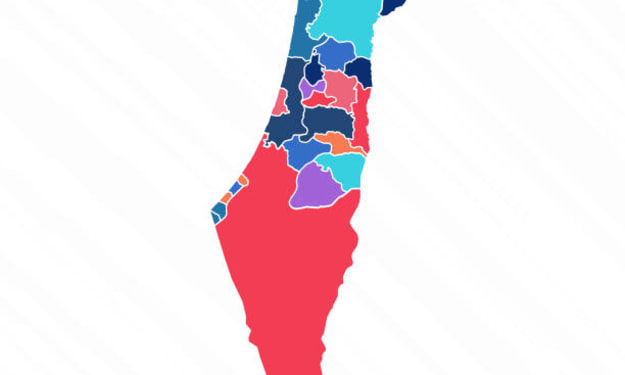
Driving through what might be one of the world's most peculiar landscapes, I find myself traversing the border between Israel and the West Bank. A glance at the map reveals a puzzle of Palestinian towns painted in green and Israeli settlements in blue. This region is often thought of as Palestine, yet what's intriguing is that almost a fifth of the three million inhabitants here are Jewish Israeli citizens. These Israelis, known as settlers, call the West Bank home while holding Israeli citizenship. As I journey along, I am witnessing the juxtaposition of two distinct nations intertwined by decades of conflict. Embarking on a quest to understand this complex panorama, I explored 15 settlements scattered across the West Bank, engaging with individuals who made the bold decision to relocate to this disputed territory. To unravel the origins of this intricate scenario, we must turn back the clock to 1948, a time when the land appeared markedly different. In those days, Great Britain held sway over this expanse. Faced with mounting tensions between Jews and Arabs, the United Nations collaborated with Britain to partition the land into separate states - Israel for Jews and Palestine for Arabs. The Jewish population embraced the proposal, heralding their independence. However, the Arab nations viewed this plan as another manifestation of European colonialism, rejecting it and subsequently engaging in war with Israel. Emerging victorious from the conflict, Israel exceeded the borders outlined by the UN. Amid peace negotiations, a ceasefire line materialized, etched in green ink and soon known as the Green Line. This demarcation was not a formal border, but rather a line separating Israel from the section now controlled by Jordan, which had seized it during the war. The land west of the Jordan River, thus acquired, earned the moniker "West Bank." The fragility of the ceasefire endured until 1967, when Israel found itself embroiled in another war with its Arab neighbors. While territorial expansion was not the objective, Israel rapidly advanced beyond the Green Line, capturing significant tracts of land, including the entirety of the West Bank. This victory posed a crucial question: should Israel incorporate the West Bank, extending Israeli citizenship and voting rights to its 1.1 million Arab inhabitants? Alternatively, should the land be returned to Jordan or given to the Palestinian people to establish their own state? This quandary ignited fervent debates within Israeli political circles. For many, the recent military triumph was perceived as a divine indication that Jews were destined to return to the land brimming with ancient Jewish heritage, the hills of ancient Judea and Samaria, encompassing the entire West Bank. While the government deliberated, Israeli civilians embarked on a bold initiative, establishing homes within the West Bank without official authorization. This grassroots movement planted the seeds of the settler movement, reshaping the dynamics of the region. However, this initiative was met with international disapproval. As settler numbers swelled, the UN issued a resolution decrying the settlements as an impediment to achieving lasting peace in the Middle East. The world witnessed the emergence of two narratives: one emphasizing Jewish civilians populating largely vacant plots of land infused with historical and spiritual significance, and the other, the predominant perspective, portraying settlers as expanding their nation through colonization. Despite global condemnation, the settler population burgeoned. Over ensuing decades, various factions within the Israeli government rallied behind the movement, channeling public resources and authorizing construction. Aiding the expansion of settlements, the Israeli housing ministry and military devised blueprints for West Bank development. Roads traversing the region facilitated movement between settlements and mainland Israel. Construction permits multiplied, and planned communities sprouted across the West Bank. From a fringe movement, settlers evolved into an integral facet of Israeli society, backed by state support. In the 1980s and 1990s, settlement activity surged, weaving these settlements around existing Palestinian towns, sparking tensions and protests. Recognizing the unsustainable nature of the situation, President Bill Clinton, Prime Minister Yitzhak Rabin, and Palestinian leader Yasser Arafat brokered the Oslo Accords in the mid-1990s. These agreements divided the West Bank into three areas: Area A granted Palestinians control over security and governance, Area B yielded Palestinian administrative power but retained Israeli security presence, and Area C remained under complete Israeli control, housing the settlements. These developments have given rise to the current state of affairs. Israelis enjoy convenient access between mainland Israel and the West Bank, traversing well-maintained roads known as "flyovers" that bypass Palestinian villages. Palestinians, on the other hand, often encounter roadblocks and checkpoints, hampering their movement. Yet, a more substantial challenge confronting Palestinians is the impact of fragmented land on their economy. The fertile agricultural land, water, and mineral resources concentrated in Area C sustain the majority of the West Bank's economy. Limited access to these resources has stifled Palestinian businesses and economic growth. An event in 2005, where Israeli Prime Minister Ariel Sharon uprooted 8,500 settlers from the Gaza Strip, reignited settler fervor. Witnessing fellow Israelis evicted from their homes galvanized the settler community, prompting further expansion efforts in the West Bank. Today, these settlers reside in established communities complete with schools, hospitals, and even a university. As thoughts turn towards resolving this intricate conflict, the idea of a two-state solution, granting Palestinians their own state within the West Bank region, emerges as a common proposal. However, the evolving settlement landscape, particularly within Area C, complicates this path. These settlements, far from being temporary encampments, have evolved into thriving communities. In conclusion, the West Bank's unique tapestry of settlements and Palestinian towns stands as a testament to the enduring complexities of the Israeli-Palestinian conflict. It is a landscape where historical narratives, religious ties, and contemporary political considerations converge, yielding a remarkable tableau that continues to shape the destiny of this region.
By Shubham Bajaj3 years ago in History
Exploring Enigmatic Histories:
In the distant southern reaches of our planet lies the frozen expanse of Antarctica, a land known for its extreme cold and unforgiving conditions. Spanning over 5 million square miles, it's the coldest and most inhospitable continent on Earth, covered by ice sheets that plunge more than a mile deep. Here, the average daily temperature plummets to a bone-chilling negative 49 degrees Fahrenheit, with winds capable of reaching speeds over 100 miles per hour. Today, the sole inhabitants of this stark landscape are the scientists stationed in scattered research outposts across the continent.
By Ahmad kant3 years ago in History
The Rise Of The Hitler
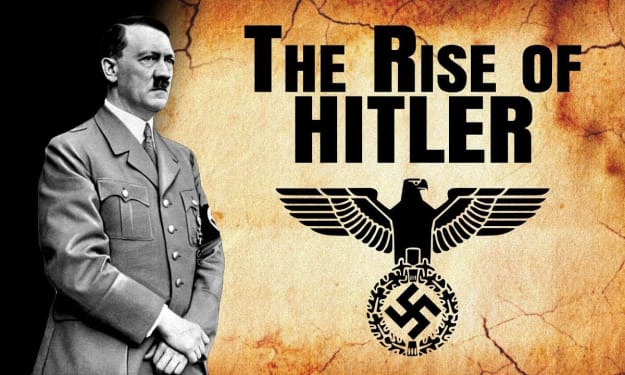
Adolf Hitler was the head of the Nazi Party and chancellor and Führer of Germany. Adolf Hitler burned through the majority of his life as a youngster in Linz, the capital of Upper Austria. It remained his number one city all through his life, and he communicated his desire to be buried there. In 1913 Hitler moved to Munich. Screened for Austrian military in February 1914, he was named unsuitable as a result of deficient actual power; however when The First world War broke out, he requested of Bavarian Ruler Louis III to be permitted to serve, and on one occasion subsequent to presenting that solicitation, he was told that he would be allowed to join the sixteenth Bavarian Reserve Infantry Regiment. After nearly two months of preparing, Hitler was sent in October 1914 to Belgium, where he partook in the First Battle of Ypres. He served all through the conflict, was injured in October 1916, and was gassed two years close to Ypres. He was hospitalized when the contention finished. During the conflict, he was persistently in the forefront as a central command sprinter; his dauntlessness in real life was compensated with the Iron Cross, Second Class, in December 1914, and the Iron Cross, First Class in August 1918. He welcomed the conflict with energy, as an extraordinary help from the disappointment and aimlessness of regular citizen life. He found discipline and comradeship fulfilling and was affirmed in his faith in the chivalrous temperances of war. In the midst of the social confusion that followed Germany's loss, Hitler took up political work in Munich in May-June 1919. As a military political specialist, he joined the little German Laborers' Party in Munich in September 1919. which in year 1920 was renamed the Public sozialistische Deutsche Arbeiterpartei (Nazi). Conditions were great for the development of the little party, and Hitler was adequately sharp to make the most of them. His own aspiration caused grating with different heads of the party. Hitler countered their endeavors to check him by undermining abdication, and on the grounds that the eventual fate of the party relied upon his ability to arrange exposure and to get reserves, his adversaries yielded. In July 1921 he turned into their chief with practically limitless powers. The peak of this quick development of the Nazi Party in Bavaria arrived trying to hold onto influence in the Munich Putsch of November 1923 when Hitler and General Erich Ludendorff attempted to exploit the common disarray and resistance to the Weimar Republic to compel the heads of the Bavarian government and the nearby armed force leader to broadcast a public upset. In the scuffle that came about, the police and the military terminated at the propelling marchers, killing a couple of them. Hitler was harmed, and four cops were killed. He was condemned to jail for a very long time however served just nine months. Hitler utilized an opportunity to direct the first volume of Mein Kampf, his political autobiography. Hitler's thoughts included disparity among races, countries, and people as a component of an unchangeable regular request that lifted up the "Aryan race" as the inventive component of humankind. As per Hitler, the regular unit of humanity was the Volk ("individuals"), of which the German public was the best. Besides, he accepted that the state existed to serve the Volk — a mission that to him the Weimar German Republic deceived. After his release, Hitler confronted challenges that had not existed before 1923. Monetary solidness had been accomplished by a money change and the Dawes Plan had downsized Germany's The first world War repayments. The republic appeared to have become more good. Hitler was forbidden to make speeches, first in Bavaria and then in other parts as well. The advent of the Depression in 1929, however, led to a new period of political instability. Unremitting propaganda, set against failure of the government to improve conditions during the Depression it delivered a consistently mounting discretionary strength for the Nazis. The party turned into the second biggest in the nation, ascending from 2.6 percent of the vote in the public appointment of 1928 to in excess of 18% in September 1930. On January 30, 1933 Hitler turned into the Chancellor of Germany.
By Nikhil Jadhav3 years ago in History