World History
The Untold History of Ghana Must Go In 1983
In the annals of West African history, the year 1983 marks a somber chapter known as the "Ghana Must Go" tragedy, a harrowing saga that unfolded against the backdrop of political intrigue, economic upheaval, and the indomitable human spirit.
By X One Media 3 years ago in History
The Subsequent Coming: Accounts of the Advanced Savior
The Subsequent Coming: Accounts of the Advanced Savior By DAVID MCDAVEO In the year 2023, a curiously sweltering summer gave way to a weird and unexpected cooling. The skies turned energetic, shifting back and forth between shades of blue and gold. Countries all over the planet looked into wonderment. These peculiarities were only the scenery for a more inconceivable occasion: the return of Jesus Christ.
By Mcdaveo Brand3 years ago in History
Disclosing the Washington Leaders: A Victory of Personality Reevaluation
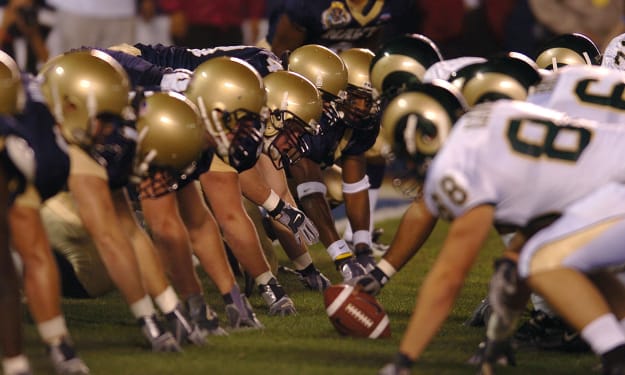
Presentation: In a weighty move that has caught the consideration of sports fans and social eyewitnesses the same, the previous Washington Football Crew has risen up out of its case of discussion to uncover its new symbol: the Washington Leaders. This seismic shift marks an adjustment of terminology, however a significant change addressing a new section in the group's set of experiences. This article sets out on an excursion through the rebranding of the Washington Commandants, investigating the reasoning behind the change, the imagery installed inside the new personality, and the more extensive ramifications for the domain of sports.
By Lonely King3 years ago in History
Hunt for Saddam
Saddam Hussein was an Iraqi dictator and revolutionary who was the fifth leader of Iraq from 1979 to 2003. He likewise filled in as Prime minister of Iraq on two distinct events. Saddam was born in Al - Awja. He became the member of Arab Socialist Ba'ath party in 1957. He assumed conspicuous part in seventeenth July revolution ( 17 July revolution was Coup in Iraq in 1968 that lead to the formation of Legislature of Ba'ath party in Iraq). Because of his significant Commitment in Overthrow Saddam was selected as Vice President of Iraq. In 1979 Saddam turned into the President of Iraq. In September 1980, Saddam repealed the Algiers Agreement and attacked Iran, denoting the beginning of the Iran-Iraq War which came about in a truce. Afterward, Saddam blamed its partner Kuwait for incline penetrating Iraqi oil fields and involved Kuwait, starting the Gulf War. Iraq was crushed by a 39-country alliance drove by the United States. A short time later, Saddam took on an enemy of American position and laid out the Faith Campaign, pursuing an Islamist agenda in Iraq. Saddam's standard was set apart by various human rights abuses, including an expected 250,000 passings and vanishings. In the face of widespread controversy, with many questioning whether Saddam even possessed any weapons of mass destructionNotwithstanding far reaching contention, the US-lead attack of Iraq went on in 2003. Iraqi powers were quickly squashed. In no time, the heartless rule of Saddam Hussein, which had endured very nearly a quarter of the century, had been finished up. The issue was, Saddam himself was mysteriously gone. In 2003, The American military marked saddam as "High Value Target Number One". Among July and December 2003, JSOC's Team 121 did twelve ineffective attacks to track down Saddam Hussein. A massive capture was Mohammed Ibrahim al-Muslit, a nearby partner of the Saddam who was in the long run captured in a strike directed in Baghdad. Mohammed Ibrahim al-Muslit was the enormous break they frantically required. He consented to coordinate, and uncovered that the previous tyrant was concealing in an area near his old neighborhood of Tikrit. The mission to catch Saddam Hussein was named Operation Red Dawn. Operation Red Dawn was sent off subsequent to acquiring significant knowledge distinguishing two likely areas of Saddam's whereabouts code-named Wolverine 1 and Wolverine 2, close to the town of ad-Dawr. The operation was named after the 1984 film of a similar name featuring Patrick Swayze. The site names "Wolverine 1" and "Wolverine 2" are likewise a reference to the American guerilla bunch in the film The Wolverines. The Powers engaged with the activity comprised of roughly 600 troopers including rangers, gunnery, flying, engineers, and Special operations forces. The powers cleared the two goals yet at first didn't track down the objective. Then, at that point, as the administrators were getting done and the helicopters brought in to extricate them, one warrior kicked a piece of deck aside, uncovering a Spider hole; he arranged to toss a fragmentation grenade into it - on the off chance that it prompted a radical passage framework when unexpectedly Hussein showed up. Hussein gave up and offered no obstruction; The news was discussed back over the radio with single word: 'Jackpot'. he was taken to the Tikrit Mission Backing Site where he was appropriately recognized. He was then arrested from Tikrit to Baghdad and at Baghdad Global Air terminal. The actual procedures were both ludicrous and heartbreaking - the Chief judge resigned, one of Saddam's co-litigants had to be removed subsequent to calling the court the 'girl of a Whore', and Saddam's own attorney was killed. Eventually, the one-time strongman of Iraq was condemned to death. Numerous noticeable figures objected - Amnesty International condemned the 'defective course's of the trial, and even Tony Blair told columnists 'We're against capital punishment, whether it is Saddam or any other individual.' To numerous others, passing by hanging was all Saddam Hussein merited for the ruthlessness he had brought to his own kin for such countless years.
By Nikhil Jadhav3 years ago in History
The Unsung Heroes of war
World War II is frequently remembered for its devastation and the unparalleled atrocities of the Holocaust. As we reflect upon the millions of Jews and others who were persecuted and murdered by the Nazis, it's equally crucial to remember the stories of hope, resilience, and survival, especially those of children. These are the stories of children who, against all odds, survived the dark confines of concentration camps.
By louie østergaard3 years ago in History
Echoes of Desolation
In the midst of a world that had already borne witness to countless conflicts, the Russia-Ukraine conflict emerged as a stark reminder of the fragility of peace and the devastating toll of political ambitions. The story of this tumultuous period is not just one of geopolitical maneuvering; it is a tale of shattered dreams, torn families, and the enduring spirit of a nation determined to rebuild amidst the ruins.
By Atagana Philip 3 years ago in History
Baba Vanga predictions for 2023
Baba Vanga was a blind Bulgarian mystic who is said to have predicted many world events, such as the 9/11 attacks, the Brexit, the Chernobyl disaster, and more. She died in 1996, but left behind a list of prophecies for the future until the year 5079. Some of her predictions for 2023 are:
By Robinson Victorraj3 years ago in History
The national museum of Brazil is live again
National Museum of Brazil in Rio de Janeiro - was the largest and oldest natural history museum in Latin America. It had just celebrated its 200th anniversary in 2018 when, in the evening on September 2nd, an electrical fire started on the ground floor of the museum. As the night progressed, it grew into an inferno that devastated the building and destroyed almost all of the collections it preserved. Within 10 hours, it was clear the destruction was immense: an estimated 18 million objects and specimens were turned to smoke and ash. Among the items lost were 30,000 artifacts from indigenous Brazilian communities, along with recordings of languages that no longer have living speakers. The entire entomology collection was destroyed when the floor it was stored on collapsed. It contained 5 million specimens, including a number of holotypes, which are the single individual animal on which its entire species is based. Without holotypes, future specimen identifications become all but impossible. The Museum had also contained dozens of the best-preserved pterosaur fossils in the world, and a wealth of other fossil discoveries from the last two centuries. Other losses have begun to be quantified, but in many ways, the destruction was, and is, immeasurable. I was devastated to hear the news of the fire. The loss of the collections in Rio isn’t only felt by Brazilians or those who work in museums today: for anyone with a curiosity about the world, its histories, cultures, and the life it has supported -- the fire represents an entire robbery of the global knowledge that was amassed over hundreds of years by just as many people. This loss - what we learn, and how we recover from it - is something I’ve been trying to understand in the months since that fire first broke out -- so, I wanted to talk with someone directly impacted by these events. Paleontologist Beatriz Hörmanseder was a master’s student working in the museum at the time of the fire. She was in the process of describing a new species of extinct crocodile, known from a single specimen, that was among those items destroyed. Beatriz: I study fossil crocodiles and i was studying one species that was from the Ceará region and this particular crocodile was really different from the others in this region. So it probably was a really important species for this, for my study, and I lost it. I even saw where it was when it came out and it was just dirt and nothing was there. Emily: Do you remember your first thoughts upon hearing that there was a fire in the National Museum? Beatriz: Well, I was at home, all of the sudden somebody said:"the museum is on fire."I can remember, I stand for something like three hours in front of the television watching fire enter every room - in the entomology collection, and now the fire got into the archaeology and the mummies and my department, the paleontology department, was the last one to burn. Emily:Do you remember some of the thoughts that were going through your head? Beatriz: At first we couldn't believe it, the fire, it felt like a movie or something like that. Then we started to, with all the museum community, we started talking all together. In the next morning of the fire we were just: hmm -- what's left? In the days after the fire, the burned remains of books, field notes, and stories floated down near the museum, acting as a constant reminder of the catastrophe. Many people felt compelled to collect the larger scraps as tokens of their relationship to the museum. A hashtag emerged on social media as a means of allowing Brazilians to follow the response and recovery process: “Museu Nacional Vive,” or “The National Museum is Alive.” An exhibition with the same name was created to remind the nation that, although much had been lost, not everything was gone: some of the museum’s collections were stored in an annex offsite and had been unharmed. Alongside items from the remaining collections were the artifacts that had been salvaged from the community, as a reminder that there still exists a foundation for future research at the museum. And, hope began emerging elsewhere: Luzia was one of the oldest human skeleton ever found in Latin America and of huge importance to the museum. These remains were thought to have been destroyed in the fire but in the following months news of Luzia’s recovery spread across social media and conservation work on the remains are underway. Today, museum staff continue sharing updates on newly published research as well as photos and stories of the museum’s recovery to keep the community informed of all progress. The losses the Museu Nacional suffered triggered an outpouring of international support. Germany pledged 1 million euros, and resources secured by the Brazilian authorities for reconstruction amount to more than $15 million US dollars. Other countries have donated materials: France gifted close to a thousand books allowing the museum’s library, which had held the most important social sciences collection in Latin America, to begin restocking their shelves. But some researchers, like Bea - whose primary specimen was destroyed - were confronted with not only the obstacle of recovering from a national tragedy, but also tasked with reimagining their entire areas of research. An emergency program was developed by the Museum, in partnership with the Smithsonian Institution to help students like her. Beatriz:Passing by, we got some support from other institutions and then Smithsonian came and I got to see the paleontology collection there and the American Museum collection and Yale Peabody Museum. It was -- it saved my thesis, it absolutely saved it and I'm really grateful for them. After the fire - wanting to address her feeling of loss - Bea got a tattoo of the museum’s facade on her arm. It sparked interest in her colleagues. Without meaning to, she had created a movement among those directly impacted by the fire, and through body art, strengthened the bond of their shared experience. Emily: You've got a pretty awesome tattoo. Bea:Thank you. Emily:Do you think this has been a really important part of that healing process? Bea: For everybody who is impacted.. the National Museum of Brazil, it's like a tradition when you're from Rio, and you're a small kid, just to go there at least once in your life so everyone in Rio had gone to the Museum. Everybody was a little bit happier. I could feel it and wasn't so afraid of what they lost. The tattoo project helped me to pass time and heal, some, Idon't know what, to have just keep moving and get in touch with somebody. "Your tattoo is next week, okay?" or something like that. The Museu Nacional disaster had an impact in many ways, ranging from personal to global expressions of loss. The inability to go back in time - to recreate collections, or to take preventative actions against a disaster of this nature - is a reality that’s difficult to come to terms with for many people, myself included. On an individual scale dozens of people like Bea, having lost their objects of research, changed the course of their careers, their lives, and the ways in which they participate in their local and scientific communities. On a global scale, we lost materials that held knowledge important for all of humanity, and stories precious to our identities as people. So while there is no way to recover all that was destroyed - we can continue to make conscious decisions about what we preserve today. Bea: It's not easy to talk about the museum. Emily: No. Bea:It's - it's a long time ago, but it's, it's still there. And it will forever be here.
By Jack Reigns 3 years ago in History