World History
White Phosphorus as a Weapon: Uses, Effects, and Controversy. AI-Generated.
White Phosphorus as a Weapon: Uses, Effects, and Controversy White phosphorus (WP) is a awful reactive, damaging actuality acclimated in aggressive settings for several purposes. Known for its appropriate ablaze yellowish-white afterglow back apparent to oxygen and its adeptness to bake aloft acquaintance with air, white phosphorus can actualize smoke screens, mark targets, and brighten areas during combat. However, its use as a weapon has sparked cogent altercation due to its astringent and generally aimless furnishings on animal health, as able-bodied as its abeyant violations of all-embracing law.
By Say the truth 2 years ago in History
The Fascinating History of Old London Bridge: Europe’s Longest Inhabited Bridge
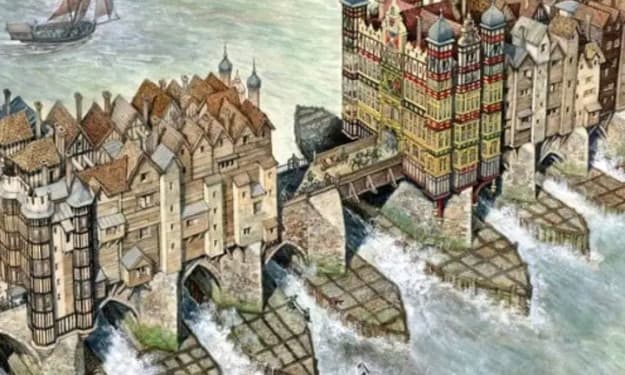
Few structures in history have captivated the imagination quite like the Old London Bridge. Completed in 1209, this remarkable bridge was the longest inhabited bridge in Europe and stood proudly across the Thames River for over 600 years. Unlike modern bridges designed solely for crossing, London Bridge was a vibrant hub, bustling with shops, homes, and churches. For centuries, it was both a vital crossing point and a city within a city, serving as an architectural wonder that attracted visitors from far and wide. The Vision Behind London Bridge In the 12th century, London had a population of around 18,000, and connecting both sides of the Thames was crucial for trade, governance, and religion. Although various wooden bridges had spanned the Thames at London since Roman times, they frequently succumbed to floods and fires. In 1176, the idea of a more durable stone bridge emerged, with King Henry II appointing priest and architect Peter de Colechurch to oversee the project. Peter's vision wasn’t just about functionality; he imagined a bridge that would be a community in itself, lined with shops and residences that would make London Bridge not just a crossing, but a destination. The Building Process and Challenges Constructing a bridge of this magnitude in the 12th century was no easy feat. The project took over three decades, costing thousands of pounds and involving hundreds of workers. Using medieval engineering techniques, Peter de Colechurch’s team drove massive timber piles into the riverbed to support stone piers. When it was finally completed in 1209, the bridge stretched 300 meters (984 feet), supported by 19 arches and a drawbridge to allow large ships to pass. One of the unique architectural features was its uneven arches, designed to control the force of the Thames River. However, this design had unintended consequences, as water flow through the narrow arches created dangerous rapids, making the bridge crossing treacherous for smaller boats. Despite these risks, the bridge stood tall, withstanding centuries of natural elements and evolving into one of medieval London’s most recognizable landmarks. A Bridge of Unusual Inhabitants What truly set Old London Bridge apart was the 138 buildings that adorned it, making it a hybrid of urban living and structural engineering that had never been seen before. By the 14th century, the bridge was lined with houses, shops, churches, and gatehouses that transformed it into a thriving neighborhood. Narrow walkways allowed pedestrians to navigate through the tightly packed buildings, which leaned precariously over the river due to limited space. Businesses and trades of all kinds set up shop on the bridge. It housed butchers, bakers, and even goldsmiths, all vying for the steady stream of customers and the prime riverside location. The bridge’s high real estate value meant that only wealthier merchants could afford shops here, turning it into a fashionable shopping district. The bridge's location was ideal, as it connected the affluent areas of Southwark and the City of London, allowing merchants to attract customers from both sides of the river. Living on the bridge, however, had its downsides. With its narrow streets and dense buildings, Old London Bridge was notoriously crowded and noisy. Fires, which were common in medieval London, posed a serious threat, and in 1212, a massive fire broke out, killing an estimated 3,000 people. The lack of access to proper sanitation added to the discomfort, with waste often ending up in the river below. Yet, despite these challenges, people flocked to the bridge, eager to be part of its unique community. The Political and Social Hub of London In addition to its economic significance, Old London Bridge played a crucial role in the political and social life of London. Its strategic location made it a popular site for royal processions, religious ceremonies, and even executions. The bridge's drawbridge gatehouse displayed the heads of traitors on spikes as a public warning, with the heads of famous rebels like William Wallace and Jack Cade among its grisly displays. The bridge’s association with power was further cemented in the 17th century when King Charles I commissioned the construction of Nonsuch House, an elaborate Dutch-style mansion that stood prominently on the bridge. This grand building, constructed without nails, was assembled piece-by-piece in the Netherlands before being shipped and rebuilt on the bridge, further adding to its mystique. The Decline and Demolition of Old London Bridge Despite its glory days, Old London Bridge eventually became a victim of its own success. The sheer weight of the buildings put immense strain on the structure, and by the 18th century, the bridge began to deteriorate. Repairs and renovations were frequent but costly, and as London’s population grew, the narrow bridge could no longer handle the increased traffic. By the early 19th century, the decision was made to replace Old London Bridge with a new structure. In 1831, after over six centuries, the old bridge was demolished to make way for a modern, functional bridge that would better serve the rapidly expanding city. The bridge's demolition marked the end of an era, but its legacy as a unique inhabited bridge and a historic landmark was forever etched into London’s identity. A Legacy That Lives On The Old London Bridge left an indelible mark on the history of London and urban planning. Its innovative blend of architecture and commerce influenced bridge design across Europe, with other cities attempting to replicate the success of a bridge as a bustling community hub. Today, remnants of the Old London Bridge, such as its foundation stones, can still be seen along the Thames, reminding visitors of a time when bridges were more than just structures but thriving neighborhoods in their own right. For over 600 years, Old London Bridge stood as a testament to human ingenuity, endurance, and the spirit of community. Its story is a powerful reminder of the importance of preserving history and architecture, not only for their aesthetic and structural value but also for the way they enrich and connect communities across generations.
By Deji Akomolafe2 years ago in History
Mansa Musa: The Wealthiest King in History
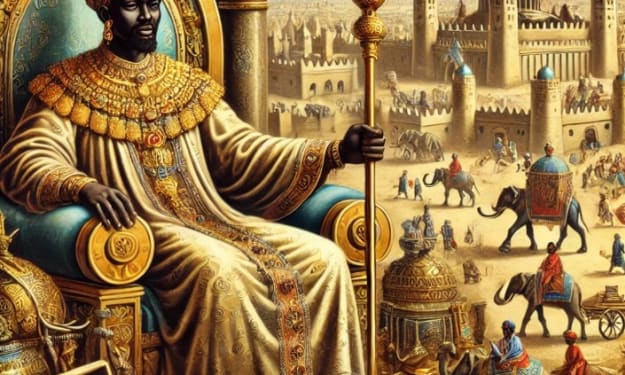
Mansa Musa: The Wealthiest King in History Mansa Musa I, the 14th-century emperor of the Mali Empire, is generally admired as the wealthiest being in recorded history. His reign, which lasted from 1312 to 1337, not alone saw the amplification of one of Africa's greatest empires but additionally showcased his allegorical abundance and cultural influence. Mansa Musa's adventure is one of amazing riches, unparalleled generosity, and a abiding bequest that still resonates today.
By Say the truth 2 years ago in History
The Fall of the Visigothic Kingdom in the Iberian Peninsula
The Visigothic Kingdom, which reigned as a formidable power over the Iberian Peninsula for almost three hundred years, experienced a sudden and dramatic decline in the early 8th century. The dissolution of this kingdom represented a crucial turning point in European history, paving the way for the Islamic expansion into Europe and initiating a lengthy and intricate narrative for the Iberian Peninsula, ultimately leading to the Reconquista many centuries later. This article explores the circumstances that contributed to the downfall of the Visigothic Kingdom, the significant figures involved, and the enduring impact of this historical event.
By A História2 years ago in History
The Hanging Area of Babylon: Age-old Admiration or Myth?
The Hanging Area of Babylon: Age-old Admiration or Myth? The Hanging Area of Babylon are one of the best acclaimed and abstruse wonders of the age-old world. Said to accept been amid in the burghal of Babylon, abreast abreast Baghdad in Iraq, they are declared as an amazing accomplishment of engineering and beauty. These area accept captivated the acuteness of historians, poets, and travelers for centuries, but abundant about them charcoal active in mystery. Were they a absolute admiration of the age-old world, or aloof a allegory built-in out of the abundant imaginations of age-old writers?
By Say the truth 2 years ago in History
The Aftermath of the Hiroshima Nuclear Strike: A Historical Tragedy. AI-Generated.
The Aftermath of the Hiroshima Nuclear Strike: A Historical Tragedy On August 6, 1945, the world witnessed one of the most devastating events in history when the United States dropped an atomic bomb on the Japanese city of Hiroshima. This marked the first use of nuclear weapons in warfare, forever altering the course of history. The bomb, named "Little Boy," unleashed unimaginable destruction and marked the beginning of the end for World War II. However, the impact on Hiroshima and its people was profound, long-lasting, and horrific.
By Say the truth 2 years ago in History
The Nagasaki Nuclear Strike: A Tragic Chapter in History. AI-Generated.
The Nagasaki Nuclear Strike: A Tragic Chapter in History On August 9, 1945, just three days after the bombing of Hiroshima, the United States dropped a second atomic bomb on the Japanese city of Nagasaki. This bomb, codenamed "Fat Man," was even more powerful than the one used on Hiroshima, and its devastating impact marked the last major act of World War II. While less widely discussed than Hiroshima, the Nagasaki bombing was equally catastrophic, forever changing the course of history and leaving an indelible scar on Japan.
By Say the truth 2 years ago in History
Newport Arch: A Living Legacy of Roman Britain
Tucked away in the historic city of Lincoln, England, stands a remarkable relic from Roman times: Newport Arch. This ancient structure, dating back over 1,300 years, holds the distinction of being the only Roman arch in Britain still in use for daily transportation. It is a rare example of Roman architecture that continues to serve its original purpose, allowing vehicles and pedestrians to pass through as it once did for Roman soldiers and traders. Newport Arch offers a tangible connection to Britain's Roman past, embodying the endurance and engineering brilliance of an empire that left a lasting mark on the British Isles. A Gateway to the Roman World Newport Arch was constructed in the 3rd century AD as part of the city walls of Lindum Colonia, the Roman name for what is now Lincoln. At the time, Lindum Colonia was an important settlement in Roman Britain, a bustling hub of military and civilian activity. The arch was one of the northern gateways to the city, providing access to the Roman road known as Ermine Street, which led from London to York. This road was a major artery of the Roman Empire’s infrastructure in Britain, facilitating trade, communication, and the movement of troops across the province. The Romans were master builders, and Newport Arch is a testament to their skill in architecture and engineering. Constructed from local limestone, the arch was designed to be both functional and imposing. It originally served as a grand entrance to the city, symbolizing Roman power and the strength of the empire. For centuries, travelers and traders would have passed beneath the arch as they made their way along the Roman roads that crisscrossed the country, linking Britain to the far-flung territories of the empire. The Endurance of Roman Engineering What makes Newport Arch truly remarkable is not only its age but its continued use. Despite being more than 1,300 years old, the arch still functions as a gateway, allowing vehicles and pedestrians to pass through it on a daily basis. While many Roman structures in Britain have crumbled or been repurposed over the centuries, Newport Arch has withstood the test of time, thanks in large part to the Romans' meticulous construction techniques. The Roman approach to building involved the use of durable materials and advanced engineering methods. Newport Arch was constructed with heavy limestone blocks, fitted together with precision and without the use of mortar. The weight of the stones and their careful placement ensured that the arch could support itself and bear the load of the city wall above it. This self-supporting design is one of the reasons why the arch has survived for so long and continues to function as a transportation route today. In the centuries following the collapse of the Roman Empire, Newport Arch was incorporated into the medieval city of Lincoln, where it remained a vital part of the city's infrastructure. Although parts of the original structure have been lost over time, particularly during the medieval period, the arch has been preserved and maintained. In fact, Newport Arch has undergone several restoration efforts over the years to ensure its survival, including repairs after it was damaged by a lorry in 1964. Despite these challenges, the arch remains one of the best-preserved examples of Roman engineering in Britain. A Window Into Roman Britain Newport Arch not only serves as a functional structure but also as a window into the life and times of Roman Britain. It stands as a reminder of the influence the Roman Empire had on Britain’s development—its cities, roads, and infrastructure. When walking through Newport Arch, one can almost imagine what life would have been like for the Roman citizens, soldiers, and merchants who passed through its gate nearly 2,000 years ago. The arch also reflects the Roman emphasis on practical infrastructure. The Roman road system was one of the most advanced in the ancient world, and Ermine Street, the road connected to Newport Arch, was part of that vast network. These roads were straight, well-constructed, and designed to allow for the rapid movement of troops, goods, and information. Ermine Street linked key Roman cities such as London, Lincoln, and York, serving as a crucial trade route and military highway. Newport Arch was a gateway to this world of commerce and conquest. The Legacy of Newport Arch Today, Newport Arch is more than just an ancient gateway; it is a symbol of Lincoln’s rich history and a reminder of the legacy of Roman Britain. It continues to play an active role in the daily life of the city, much as it did in Roman times. The arch also draws visitors from around the world who come to marvel at its longevity and to experience a piece of living history. As the only Roman arch in Britain still in use for transportation, Newport Arch occupies a unique place in the nation’s architectural heritage. Its survival speaks not only to the durability of Roman engineering but also to the efforts of those who have worked to preserve it for future generations. For residents of Lincoln and visitors alike, Newport Arch serves as a bridge between the past and the present, a tangible connection to a world long gone but not forgotten. Conclusion Newport Arch is a true marvel of Roman engineering and a lasting symbol of the endurance of Roman influence in Britain. For over 1,300 years, it has stood as a gateway to the city of Lincoln, witnessing centuries of history unfold around it. From the bustling days of Roman Britain to the modern era, Newport Arch has remained a vital part of the city's landscape, serving as both a functional structure and a monument to the past. As one of the few surviving Roman arches in Britain—and the only one still in use for daily transportation—Newport Arch holds a special place in the country’s historical and architectural legacy. It is a reminder of the ingenuity and skill of the Roman builders, whose work continues to shape the world we live in today. For those who pass through its ancient stone gate, Newport Arch offers a glimpse into the distant past and a connection to the rich history that defines the city of Lincoln.
By Deji Akomolafe2 years ago in History
The Most Incredible Tiny Homes Around The World, Ranked
Tiny homes have become global, offering sustainable, affordable, and minimalist living. From cosy cabins in the woods to modern urban dwellings, the creativity behind these small spaces is extraordinary. Here are some of the most incredible tiny homes worldwide, ranked for their innovation, beauty, and uniqueness.
By Zinnat ara Begum2 years ago in History
The Legend of Boitatá
Brazilian folklore encompasses a wealth of captivating narratives, featuring mythical beings and extraordinary occurrences that embody the nation’s vibrant cultural diversity. Among these stories, the legend of the Boitatá emerges as particularly enigmatic and compelling. Referred to as a serpent of fire, the Boitatá is thought to protect forests, rivers, and the environment from danger. This article will delve into the origins of this fiery entity, its symbolic meaning, and the cultural importance it represents in Brazil.
By A História2 years ago in History
The King of All Nuclear Bombs: The Story of the Tsar Bomba . AI-Generated.
The King of All Nuclear Bombs: The Story of the Tsar Bomba Nuclear weapons represent the best annihilative force altruism has anytime created, and amid them, one bomb stands out as the better and best able anytime detonated: the Tsar Bomba. Tested by the Soviet Union during the Cold War, this bomb’s aberrant adeptness becoming it the appellation "King of Bombs," and it charcoal a air-conditioned admonition of the abeyant for confusion that nuclear weapons hold.
By Say the truth 2 years ago in History
Changes Made to Solar Farm Proposal: A Step Toward Clean Energy
As the world moves toward cleaner, renewable energy sources, solar power has become a significant player in the transition. Solar farms, which harness energy from the sun to generate electricity, are being proposed and developed across the globe. Recently, changes were made to a solar farm proposal aimed at addressing environmental, community, and logistical concerns. These revisions reflect a balance between sustainable energy development and the needs of local stakeholders.
By Zinnat ara Begum2 years ago in History