World History
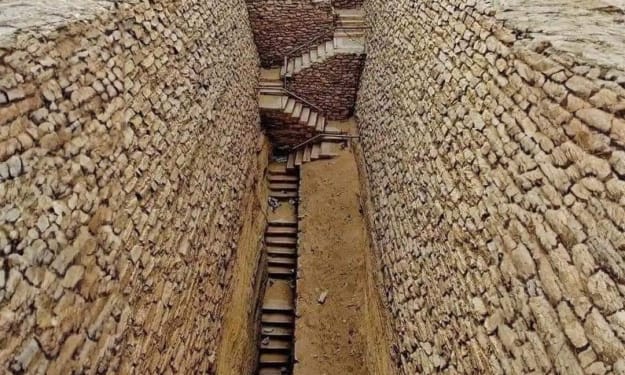
Steps Through Time: The Secrets of Pharaoh Djoser’s Tomb in Saqqara
The ancient Egyptian civilization remains one of the most mysterious and fascinating periods in history. With its monumental structures, intricate beliefs about life and the afterlife, and astounding advances in art, architecture, and science, this civilization still captivates our imaginations. Among the most impressive relics of ancient Egypt is the 4,800-year-old staircase leading to the southern tomb of Pharaoh Djoser in Saqqara, Egypt. These steps, which descend into the earth, do not merely represent a pathway; they are a window into a lost world of architectural genius, religious rituals, and beliefs that helped shape one of history's most influential cultures.
By Taimur Kazmi2 years ago in History
"Shadows and Reflections: The Myth of the Black Taj Mahal Across the Yamuna"
The Fable of the Atramentous Taj Mahal: Fact or Fiction? The Taj Mahal, an unparalleled attribute of love, stands as a marble curiosity forth the Yamuna River in Agra, India. Commissioned by the Mughal emperor Shah Jahan in anamnesis of his admired wife Mumtaz Mahal, this catacomb is accepted common for its beauty, symmetry, and intricate craftsmanship. Yet abaft its aboriginal white domes lies a arresting abstruseness that has absorbed historians, tourists, and locals for centuries—the fable of the "Black Taj Mahal."
By Say the truth 2 years ago in History
The world's first wooden satellite launched into space
In a groundbreaking move for space exploration and sustainability, the world’s first wooden satellite was successfully launched into space. This remarkable achievement marks a significant milestone in both the field of aerospace engineering and the drive toward greener space technologies. The innovative satellite, known as WISA Woodsat, is a symbol of how sustainable materials can shape the future of space exploration.
By Zinnat ara Begum2 years ago in History
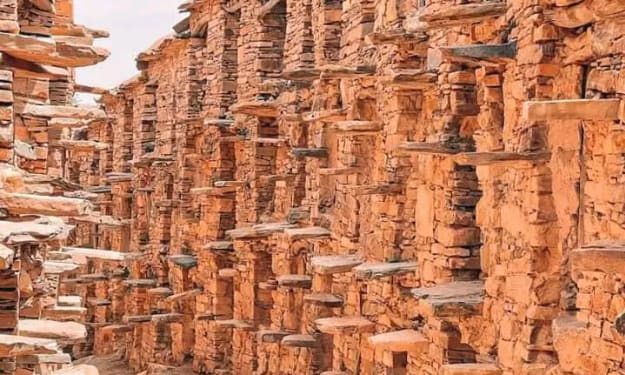
Igudar: Morocco’s Ancient Banking System and the Story of Communal Trust
In the rugged landscape of Agadir, Morocco, one can find the remains of a fascinating and ancient form of banking—structures known as “Igudar” (plural for "agadir"). These communal granaries, built by the Amazigh (Berber) people, are much more than simple storage spaces. With their fortified designs, elevated locations, and the sense of collective responsibility that sustained them, Igudar represent an early example of communal wealth management and trust, acting as one of the oldest banking systems in the world. The Purpose and Importance of Igudar For the Amazigh communities of Morocco, the Igudar served a crucial role in preserving both wealth and resources. In an era before banks and vaults, the Igudar were established as places to safeguard essential goods such as grains, olive oil, seeds, and other food items. However, they didn’t stop at agricultural products; these granaries also held jewelry, important family documents, and anything else of significant value. In many ways, the Igudar were designed as communal safety deposits where families entrusted their most important possessions. Each family or individual had a designated section within the granary, allowing them to store personal wealth in a secure place. By protecting resources from both natural and human threats, these granaries helped communities survive challenging times and plan for the future. Architectural Marvels Built for Security What makes the Igudar even more impressive is their thoughtful, strategic architecture. Typically, these granaries were built on elevated or otherwise inaccessible locations—hills, cliffs, or high rock outcroppings—making it difficult for would-be raiders or thieves to approach unnoticed. The structures themselves were fortified with thick walls and often included watchtowers or lookout points to provide an additional layer of security. The doors to these granaries were reinforced and locked, usually made of thick wood or metal that could withstand attempts at forced entry. Each section within an Igudar was sealed off, sometimes with wooden planks and locks, and often marked to indicate the owner. This compartmentalized design offered each family a private, protected area for their goods while contributing to the structure’s overall security. The Amazigh people’s understanding of protection and defense is evident in the Igudar’s design. These granaries weren’t merely storage areas but were built to withstand siege-like conditions if necessary. In essence, they were early fortresses dedicated to the preservation of communal resources, a precursor to the vaults and bank safes of today. How the Igudar Fostered Community Trust Perhaps the most remarkable aspect of the Igudar is the level of trust and cooperation they required. Unlike a modern bank, the Igudar did not have guards or paid overseers. Instead, these granaries relied on a sense of collective responsibility that was shared by all members of the community. Each family respected the others’ spaces, and the trust extended to allowing every family to safely store and access their valuables. The Amazigh people, who have a rich cultural heritage rooted in values of solidarity and mutual respect, ensured that the Igudar were maintained and respected as shared spaces. By pooling resources and creating a collective place for storage, the community was better protected against theft or raids. It’s a system based not just on physical security, but on the cultural principle of amghar—a respected community leader or elder who would act as a custodian and mediator. The amghar might help manage disputes, reinforce community rules, and ensure fair use of resources within the Igudar. This system of cooperation and trust shows an incredible level of social organization. It highlights how the Amazigh valued the welfare of the community above individual gain, with a belief that shared safety was a collective responsibility. Igudar: An Early Model of Wealth Preservation One of the most striking things about the Igudar is how they foreshadowed modern banking practices. At a time when most societies lacked sophisticated systems for securing wealth, the Amazigh people had already created a decentralized, secure way to preserve resources. In this sense, Igudar can be seen as an early example of a shared financial institution, with each family’s portion acting like a deposit in a communal bank. Moreover, the Igudar were more than just physical spaces; they were symbols of resilience and continuity. In communities often impacted by drought, famine, or conflict, these granaries ensured that essential goods were preserved and accessible when needed. Families could rely on their stored grain during lean seasons, or access valuables in times of crisis. This system provided a sense of financial security, which was vital for the survival of rural Amazigh communities. The Enduring Legacy of Igudar Today, many Igudar have fallen into disuse, replaced by more modern infrastructure. However, these ancient structures remain an integral part of Morocco’s heritage. Some Igudar are preserved as historical sites, drawing visitors interested in learning about the unique architectural and social systems of the Amazigh people. They are monuments to an ancient way of life and a testament to the Amazigh values of trust, community, and ingenuity. The Igudar’s legacy continues to inspire scholars and historians, as they represent a form of early wealth management that operated without money or formal banking systems. They illustrate how communities can organize and protect resources collectively, a lesson that remains relevant in today’s world. The trust-based system of the Igudar challenges us to think about modern finance in a new way, highlighting the importance of communal responsibility and cooperation in wealth preservation. Rediscovering the Igudar As more people become aware of the Igudar, there’s a renewed appreciation for these structures and the principles they represent. The Igudar are not only a marvel of historical architecture but also a reminder of how deeply rooted trust and cooperation can sustain communities. In an age where wealth preservation often comes with strict individual ownership, the Igudar reveal a different story—one where shared responsibility and mutual respect create a legacy that lasts. By visiting the Igudar or studying their history, we gain insight into the Amazigh people’s approach to community and self-reliance. The story of the Igudar invites us to reflect on the importance of community and trust, values that remain essential in any society, past or present.
By Deji Akomolafe2 years ago in History
The Taj Mahal: A Monument of Love and Architectural Wonder
The Taj Mahal: A Cairn of Adulation and Architectural Wonder The Taj Mahal, generally alleged a “teardrop on the audacity of time,” stands as one of the world’s best iconic structures and a attribute of abiding love.
By Say the truth 2 years ago in History
Amaran movie review
Amaran movie review Here’s a detailed review of *Amaran*, the Tamil biographical drama directed by Rajkumar Periasamy and starring Sivakarthikeyan and Sai Pallavi. Based on the life of Major Mukund Varadarajan, the film is an emotionally charged tribute to a real-life hero, blending romance, bravery, and duty. Here’s a breakdown of the film’s various elements:
By Mahalakshmi2 years ago in History
Major Mukund Varadarajan: A Hero’s Legacy
Major Mukund Varadarajan: A Hero’s Legacy **Introduction** Major Mukund Varadarajan, often celebrated as a symbol of courage and selflessness, was an officer of the Indian Army who sacrificed his life in the line of duty. Known for his bravery, tactical acumen, and deep sense of responsibility toward his country, Major Varadarajan’s story is an inspiration to millions across India. His life, career, and ultimate sacrifice exemplify the dedication and valor of Indian soldiers, who put their lives on the line to ensure the safety and sovereignty of the nation.
By Mahalakshmi2 years ago in History
"The Great Emu War of 1932: When Australia Took on Its Feathered Foes"
The Great Emu War: Australia’s Unlikely Action Adjoin Birds In 1932, in one of the added abnormal capacity of Australian history, the nation begin itself in a atrocious struggle—not adjoin an army of soldiers but adjoin bags of large, flightless birds accepted as emus.
By Say the truth 2 years ago in History
The Rivalry Between The Romans And The Persians.
The rivalry between the Romans and the Persians is one of the most significant and prolonged conflicts in ancient history, spanning several centuries and marked by a series of wars, diplomatic maneuvers, and cultural exchanges. This epic struggle not only shaped the political landscape of the ancient Near East but also had lasting impacts on the cultures and societies of both empires.
By Mohamed Hassan2 years ago in History
The 2024 Melbourne Cup
The 2024 Melbourne Cup, taking place on November 5 at Flemington Racecourse, is set to showcase an exciting blend of international and Australian talent, with top horses competing in Australia’s most prestigious race. Known as "the race that stops a nation," this year’s event brings together a unique lineup of highly skilled runners, each with distinct strengths and impressive backgrounds, promising an unforgettable day for racing enthusiasts worldwide.
By arun singhwal2 years ago in History
Insane moment woman jumps into zoo enclosure 'to swim' with polar bears. Content Warning.
The cheerful atmosphere at Berlin Zoo was suddenly shattered when cries of alarm and a loud splash pierced the air or something had fallen into the moat surrounding the polar bear exhibit. To the disbelief of bystanders, the source of this commotion was a 32-year-old woman who had climbed into the enclosure and was now swimming towards the polar bears. It was a Friday in the spring of 2009, with Easter just around the corner, and the zoo was filled with locals and tourists alike. Many had gathered to witness Berlin Zoo's famous polar bear family during their feeding time, a popular attraction that typically drew large, excited crowds. Given the danger posed by these powerful predators, zookeepers always remained outside the enclosure while the bears were fed.
By Lynn Myers2 years ago in History