World History
"Leonardo da Vinci: The Genius Behind the Masterpieces"
Leonardo da Vinci: The Polymath Who Redefined the Renaissance Leonardo da Vinci, built-in on April 15, 1452, in the baby boondocks of Vinci, Italy, is acclaimed as the quintessential Renaissance man. His access transcends art, science, and engineering, authoritative him one of history’s best admired figures. Accepted for his great concern and adroit mind, Leonardo's bequest continues to affect bodies above disciplines, from artists and architects to scientists and inventors. This commodity delves into the life, works, and constant appulse of this arresting genius.
By Say the truth 2 years ago in History
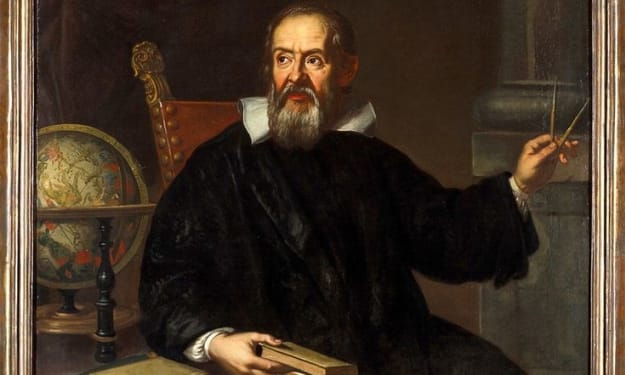
Galileo Galilei: The Journey of a Revolutionary Mind
Galileo Galilei: The Journey of a Revolutionary Mind Introduction Galileo Galilei, known as the "Father of Modern Science," reshaped our understanding of the cosmos through his revolutionary ideas and relentless pursuit of knowledge. Born in Pisa, Italy, in 1564, Galileo was a physicist, mathematician, and astronomer whose discoveries laid the groundwork for modern physics and astronomy. His story is one of intellectual courage, scientific advancement, and profound curiosity.
By Mahalakshmi2 years ago in History
Who Were the Aryans?
Embark on an exploration of the historical narrative surrounding the Aryans, an ancient linguistic community that has significantly influenced civilization, spanning from the Central Asian steppes to contemporary regions. This article aims to investigate the origins, migrations, and cultural contributions of the Aryans, while also addressing the ancient history and the misconceptions that have obscured their legacy throughout the ages.
By A História2 years ago in History
"Engineering Marvels of the Past: The Construction of Angkor Wat"
The Magnificent Architectonics of Angkor Temple: An Architectural Wonder of the Age-old World The Angkor temple complex, amid in abreast Cambodia, stands as one of the best amazing examples of architectural accomplishment and adherence in animal history. The architectonics of Angkor Wat, the best acclaimed of the temples aural the complex, reflects the adeptness and assurance of the Khmer Authority at its zenith. This commodity delves into the techniques, resources, cultural significance, and actual ambience abaft the architectonics of these temples.
By Say the truth 2 years ago in History
She Was This World
In a small village nestled between vast fields and towering mountains, lived an old woman named Meera. The villagers lovingly called her “Mother Meera.” Her eyes sparkled with wisdom, her face lined with years of laughter and sorrow. Despite her age, Meera held an unbreakable bond with nature. She knew every tree, every river, and every bird that nested in the area. For the villagers, she was as much a part of their world as the land itself. Youngsters would visit her often, curious about the stories she told. They’d sit by the river as she spoke of how everything was interconnected. “The world,” she would say, “breathes and lives just as we do. She feels, she hurts, and she loves.” One summer, as the land faced an unbearable drought, the rivers dried up, and the fields turned barren. The villagers struggled, crops withered, and even the birds stopped singing. Fear spread throughout the village. People began to despair, and their usual bright spirits dimmed. They approached Meera, hoping she could bring them some solace or guidance. Meera observed the worried faces around her. “There is a way to save this land, but you must trust me,” she said softly. The villagers listened intently as she explained, “The world, this land, has always protected and nurtured us. Now, it is time for us to give back.” Meera then shared a ritual—an ancient one she had learned from her ancestors. Each family was to offer a small sacrifice, a token of gratitude, back to the land. It didn’t have to be much; a handful of seeds, a flower, a cup of water—something simple, yet sincere. While some villagers were skeptical, others were desperate enough to try. So, each night, they gathered at the heart of the village, where Meera led them in the ritual. Families would offer their little gifts, burying them in the ground with a silent prayer. Over time, the villagers began to see changes—not in the land, but in themselves. The despair started to lift, replaced by a sense of unity, hope, and gratitude. One night, during one of these gatherings, a young girl named Asha approached Meera with tears in her eyes. “Mother Meera, will this really work? Can we save our world?” Meera knelt beside her and placed a gentle hand on Asha’s shoulder. “My dear,” she whispered, “She was this world. She lives within each of us, in every breath and every heartbeat. The love we give will eventually be returned.” The ritual continued, and over the weeks, the land itself seemed to respond. Small patches of green began appearing around the village, little springs of water bubbled from hidden sources, and birds returned to the trees. The villagers’ spirits soared, feeling as if the land was coming back to life. One evening, as the villagers prepared for their nightly ritual, they noticed Meera wasn’t there. Concerned, a few villagers went to her small hut and found her lying peacefully on her bed, a gentle smile on her face. Meera had passed away that evening, her last breath leaving just as the sun set. The villagers mourned, yet they knew she had given them something eternal. As they buried her near the heart of the village, they felt her presence lingering around them. They realized that she was no longer just a part of their memories but a part of their world, living on in every blade of grass, every drop of water, every breath of air. From that day on, the villagers continued the ritual, not out of desperation, but out of love. They understood now that the world was not just something outside them but something within them. Meera had become the world she always loved, the spirit of the land that would forever guide and protect them. And whenever the wind whispered through the village or the river flowed gently by, the villagers felt Meera’s spirit—always there, always watching, as the eternal mother of their world.
By Hridoy Hasan2 years ago in History
Donald Trump and his cabinet picks
Donald Trump is currently celebrating his electoral victory, spending quality time with family and engaging with leaders at his luxurious Mar-a-Lago resort in Florida. While he enjoys this moment of triumph, his team is diligently preparing for the transition of power. Intensive meetings are underway, focusing on the crucial task of selecting candidates for key cabinet positions. Although the vetting process for these candidates is now under scrutiny, it actually began well before election day as Trump and his team anticipated the possibility of a win.
By FRANCIS IKEGBUNAM2 years ago in History
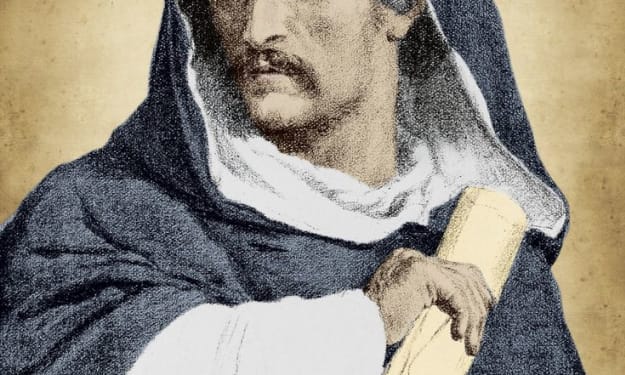
Giordano Bruno: The Visionary Monk
Giordano Bruno: The Visionary Monk Introduction: A Man Beyond His Time In a world where the Earth sat immovable at the center of the universe, Giordano Bruno dared to imagine otherwise. Born in 1548 in the Kingdom of Naples, Bruno grew up in an age of intellectual suppression, where the Catholic Church held tight reins on thought and knowledge. But Bruno was a visionary, and his radical ideas about the universe would not only challenge the Church’s doctrines but also cost him his life. His story is one of courage, imagination, and the price of unyielding conviction.
By Mahalakshmi2 years ago in History