World History
"The Hidden Tomb of Alexander the Great"
"The Hidden Tomb of Alexander the Great: The Abstruseness of His Final Comatose Abode and Absent Treasures" Alexander the Great, the allegorical Macedonian baron and aggressive commander, carved his name into history with his unparalleled conquests that continued from Greece to India. Despite his absurd legacy, one of the greatest mysteries surrounding Alexander is the area of his final comatose place. The tomb of Alexander the Great has captivated historians, archaeologists, and abundance hunters for centuries, as no absolute affirmation of its area has been discovered. This commodity delves into the abstruseness of Alexander’s hidden tomb, the treasures believed to be active with him, and the cultural and actual acceptation of this ambiguous puzzle. Alexander’s Afterlife and the Journey of His Body In 323 BCE, Alexander the Great died below abstruse affairs in Babylon at the age of 32. His death, attributed abnormally to accustomed causes, poisoning, or fever, beatific shockwaves throughout his all-inclusive empire. Following his death, Alexander’s anatomy became a attribute of political ability and legitimacy. Initially, his generals planned to carriage his charcoal to Aegae (modern-day Vergina in Greece), the acceptable burying armpit of Macedonian kings. However, Ptolemy, one of Alexander’s generals, intercepted the burying advance and redirected the anatomy to Egypt. This act caked Ptolemy’s ascendancy over Egypt and apparent the alpha of the Ptolemaic dynasty. The Tomb in Alexandria Ptolemy active Alexander in Memphis, but his anatomy was afterwards confused to Alexandria, the burghal he founded and called afterwards himself. According to actual accounts, Alexander’s tomb became a admirable mausoleum, alluring visitors and dignitaries from beyond the age-old world. Roman emperors such as Julius Caesar and Augustus reportedly visited the tomb, which was declared as a arresting anatomy adorned with treasures, gold, and a bottle sarcophagus.
By Say the truth 2 years ago in History
Trump signs executive order to release more JFK, RFK, MLK assassination files.
Trump signs executive order to release more JFK, RFK, MLK assassination files. Donald Trump signed an executive order on Thursday to release additional documents related to the assassinations of John F. Kennedy Robert F. Kennedy and Martin Luther King Jr. This is a big step. People have been waiting for this for a long time for decades Trump stated while signing the order in the Oval Office.
By Adnan Rasheed2 years ago in History
"The Cataclysm of Tunguska"
"The Tunguska Event: The Greatest Mystery of the Sky" The Tunguska Event, one of the best abstruse and able explosions in recorded history, occurred on the morning of June 30, 1908, in the conflicting Siberian arena abreast the Tunguska River. Despite its amazing scale, the account of the accident charcoal a affair of agitation and belief amid scientists and historians. With no arresting appulse atrium and a all-inclusive breadth of devastation, the Tunguska Accident continues to allure the acuteness of advisers and the accessible alike. This commodity delves into the capacity of the event, its accessible causes, and its implications for science and humanity. The Access and Its Impact On June 30, 1908, a massive access occurred over the sparsely busy backwoods of Siberia, flattening about 2,150 aboveboard kilometers (830 aboveboard miles) of forest. The force of the access is estimated to accept been amid 10 and 15 megatons of TNT, agnate to 1,000 times the ability of the diminutive bomb alone on Hiroshima. Immediate Effects: Shockwaves: The access beatific shockwaves beyond the region, ballyhoo windows and animadversion bodies off their anxiety hundreds of kilometers away.
By Say the truth 2 years ago in History
Why Do We Celebrate Republic Day
Republic Day, celebrated on 26th January, is one of India’s most significant national holidays. It marks the day when the Constitution of India came into effect in 1950, replacing the Government of India Act, 1935 as the governing document of the country. This day symbolizes the transition of India into a sovereign, secular, and democratic republic.
By The Content Crafter2 years ago in History
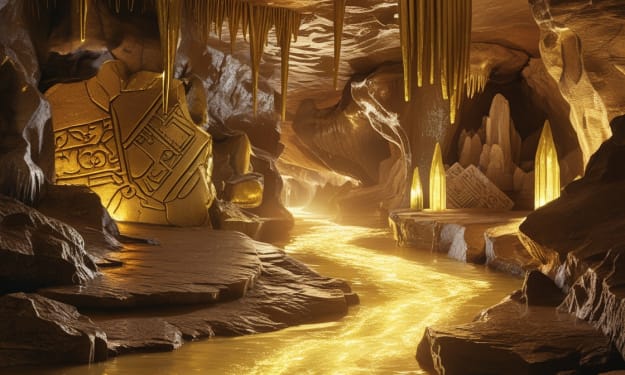
"The Mythical Underground Gold River"
"The Underground Gold River: Allegory or Hidden Abundance in History?" Throughout history, tales of underground rivers of gold accept absorbed civilizations. These legends arm-twist images of ablaze gold coursing through hidden cavern channels, cat-and-mouse to be apparent by the advantageous or the brave. While these accounts are generally captivated in myth, they are ashore in the animal following of wealth, adventure, and mystery. This commodity delves into the history, geography, and believability of underground gold rivers, exploring both allegorical acceptance and accurate realities. The Origins of the Myth The abstraction of an underground gold river dates aback to age-old times. Acceptance of hidden streams abounding with gold were generally angry to affluent civilizations and their wealth. Some of the ancient mentions appear from: Greek Mythology: The adventure of King Midas, who could about-face aggregate he affected into gold, aggressive tales of accustomed sources of gold. South American Legends: The aboriginal tribes of South America, decidedly the Inca and Muisca, believed in hidden aureate rivers and lakes. Lake Guatavita, for example, was anticipation to be abounding with gold offerings. Indian Folklore: Age-old Indian texts call rivers accustomed gold dust, decidedly in regions like the Himalayas and Karnataka. The Subarnarekha River, acceptation "streak of gold," is one such archetype area traces of gold were historically found. Historical Accounts of Underground Gold Rivers Several campaign and travelers accept claimed to attestant underground rivers of gold: The Eldorado Connection: The fable of Eldorado describes a allegorical burghal of gold in South America. Campaign like Sir Walter Raleigh searched for this treasure, and abounding believed it was affiliated to a aureate river hidden below the Andes mountains.
By Say the truth 2 years ago in History
Queen Nzinga: The Fierce Warrior Queen Who Defied Empires
Great! Here’s a captivating and attention-grabbing article on **Queen Nzinga** ### **The Untold Story of Queen Nzinga: The Warrior Queen Who Defied Empires** In the annals of history, there are countless tales of kings and queens whose names are etched in gold, celebrated for their power and legacy. However, few stories are as gripping, powerful, and as intriguing as that of **Queen Nzinga** of Ndongo and Matamba. A fierce warrior, a brilliant strategist, and an exceptional diplomat, Nzinga’s life is a tale of defiance, resilience, and undying strength in the face of colonial oppression. Yet, her story remains largely untold, even though her influence and courage rival that of some of history's most renowned leaders. ### **The Rise of Nzinga: From Princess to Queen** Born in 1583 in the Kingdom of Ndongo, located in present-day Angola, Nzinga was the daughter of King Kiluanji and was raised in the heart of African royalty. Even as a young girl, she was known for her striking intelligence, beauty, and bravery. But it was not just her royal bloodline that made her stand out. Nzinga’s keen political and military mind set her apart from other leaders, laying the foundation for her rise to power. The Portuguese were entrenched in Angola during her time, and they had long been exploiting the people for their vast slave trade. Nzinga’s kingdom, Ndongo, was one of the many African territories being undermined by the Portuguese colonial efforts. However, it was Nzinga who would become the unyielding force that would stand against these foreign invaders. When her brother, King Ngola Mbandi, died, Nzinga assumed the throne in 1624. But her ascension was not smooth. She inherited a kingdom that was already weakened by decades of Portuguese aggression and internal strife. The situation demanded not just a ruler but a revolutionary—a leader who could challenge the Portuguese empire and defend her people. And that’s exactly what Nzinga did. ### **The Defiant Diplomat: The Famous Encounter with the Portuguese** One of the most famous chapters in Queen Nzinga’s life came in 1624 when she was summoned to negotiate peace with the Portuguese colonial governor, João Correia de Souza. The Portuguese, ever so confident in their power, thought they could easily manipulate the young queen into submission. However, Nzinga’s quick thinking would soon shatter their assumptions. At the meeting, Nzinga was confronted with a humiliating situation. The Portuguese governor, aware of her importance and status, set up a chair for himself, but none for the queen. Rather than accepting this insult, Nzinga did something remarkable—she ordered one of her servants to kneel, using the servant’s back as a chair to sit on. This act was not just about physical endurance—it was a clear statement of defiance. Nzinga was telling the Portuguese that she would not bend to their will, nor would she accept their colonial dominance. Her resourcefulness and unyielding spirit made a lasting impression. The meeting ended with the Portuguese agreeing to a temporary ceasefire, but it was not to be the last encounter between the two. Nzinga’s diplomacy was no mere concession; it was a strategic move to buy time for her forces, to gather strength, and to prepare for the coming battle. ### **The Warrior Queen: Leading Her People to War** Nzinga’s greatest strength, however, was her ability to balance diplomacy with military prowess. When the Portuguese broke their ceasefire, she knew it was time to take up arms. She led her people in a long and brutal war, refusing to back down, even in the face of overwhelming odds. Nzinga’s leadership was unparalleled. She commanded armies with precision, employing unconventional guerrilla tactics to outsmart the Portuguese. Her forces included not only warriors but also women, who fought bravely alongside men. Under Nzinga’s leadership, the kingdom of Ndongo became a force to be reckoned with, and the Portuguese were forced into a prolonged struggle that they had not anticipated. Nzinga’s legendary military strategies included attacking Portuguese supply lines, using the difficult terrain to her advantage, and employing a network of alliances with neighboring kingdoms. She was known to recruit and train formidable female warriors, who were highly skilled in combat. Her personal bravery on the battlefield inspired her troops, and her ability to withstand the pressures of war earned her respect even from her enemies. ### **The Legacy of Queen Nzinga: A Symbol of Resistance** Queen Nzinga’s defiance of the Portuguese lasted for decades, and while the Portuguese ultimately did not relinquish their hold on Angola, Nzinga’s legacy as a symbol of resistance remains strong. She was not only a warrior queen but also a visionary who sought to protect her people from the brutalities of colonialism. Her courage and leadership inspired future generations of Africans to stand up for their rights and sovereignty. Nzinga’s commitment to the preservation of her kingdom and her people extended beyond military conquest. She also sought to maintain her kingdom’s economic strength, fostering trade routes that bypassed Portuguese influence and ensuring that her people had the resources they needed to survive and thrive. Queen Nzinga died in 1663, but her influence did not fade. Her story continued to inspire anti-colonial movements in Africa, and her name became synonymous with bravery, resilience, and the unyielding will to protect one's homeland. In the centuries that followed, leaders like Nelson Mandela and Amílcar Cabral would draw on Nzinga’s example when fighting against colonial oppression in their own struggles. ### **Conclusion: The Legacy That Still Echoes** The story of Queen Nzinga is one that deserves to be told—loudly and proudly. It’s a story of a woman who fought against an empire, led her people with unwavering courage, and became a beacon of hope for those seeking to reclaim their land and their dignity. Nzinga may not have been crowned with the same accolades as other historical rulers, but her strength, intelligence, and unyielding resistance to colonialism stand as a testament to the power of the human spirit. Queen Nzinga’s story is not just the story of a queen; it is the story of every individual who has ever fought against injustice. It is the story of resilience, empowerment, and the unbreakable will to stand up for what is right. In every corner of the world where people are oppressed, Queen Nzinga’s spirit still lives on, reminding us that true power lies not in submission but in resistance and strength.
By Nora Ariana2 years ago in History
Home from War at last. Content Warning. AI-Generated.
Home from War ( The Twenty Two) “I walked most of the way home, there was a train from Portsmouth up to Cardiff but that was it. I started walking up past the Castle, Cardiff Castle, it starting pissing down, at least no one will see the tears running down my face. I cried all the way up to Whitchurch Rd, Smithy's Dad was buying wheat he was going to give us a lift back to Swansea”
By David Aleman2 years ago in History
The Terrifying Beast of Kenya
Deep in the shadowy woodlands and rolling savannas of Kenya lurks a creature that has haunted the nightmares of locals and intrigued cryptozoologists worldwide. Known as the Nandi Bear, this mysterious beast—a blend of legend and terror—has been whispered about for centuries, leaving behind chilling tales of its fearsome presence. Is it merely folklore, or does the Nandi Bear truly stalk the wilds of East Africa?
By A História2 years ago in History
Wind Warnings
Wind warnings are issued when strong winds are expected to occur, posing risks to people, property, and transportation. These warnings help individuals prepare and stay safe during extreme weather. Understanding what a wind warning means and how to respond can make a significant difference in reducing damage and staying protected.
By Farhan Sayed2 years ago in History
The Most Beautiful Naini Lake in the World
Nestled amidst the picturesque hills of Nainital in Uttarakhand, India, Naini Lake is one of the world's most beautiful and enchanting freshwater lakes. Surrounded by lush green hills and adorned with clear blue waters, this natural wonder is the heart and soul of the charming hill station of Nainital. In this article, we’ll explore the captivating beauty, historical significance, and tourist attractions of Naini Lake.
By Zinnat ara Begum2 years ago in History