World History
"The Berlin Wall: A Monument to Division and the Triumph of Unity". AI-Generated.
The Berlin Wall: A Attribute of Analysis and the Celebration of Unity The Berlin Wall, erected in 1961 and dismantled in 1989, stands as one of the best almighty symbols of the Cold War. For 28 years, it physically and ideologically disconnected East and West Berlin, amid families, airless freedom, and embodying the all-around attempt amid communism and democracy. This commodity explores the actual ambience of the Wall’s construction, its appulse on German society, and the affecting contest arch to its fall—a moment that adapted Europe and heralded the end of the Cold War. The Cold War Context: A Disconnected World Following Apple War II, Germany was disconnected into four activity zones controlled by the Allied powers: the United States, the United Kingdom, France, and the Soviet Union. Berlin, amid abysmal aural the Soviet zone, was analogously split. Tensions amid the Soviet Union and the Western Allies escalated, culminating in the Berlin Blockade (1948–1949) and the consecutive analysis of Germany into two states:
By Say the truth 2 years ago in History
"Echoes of Division: The Berlin Wall and the Struggle for Freedom". AI-Generated.
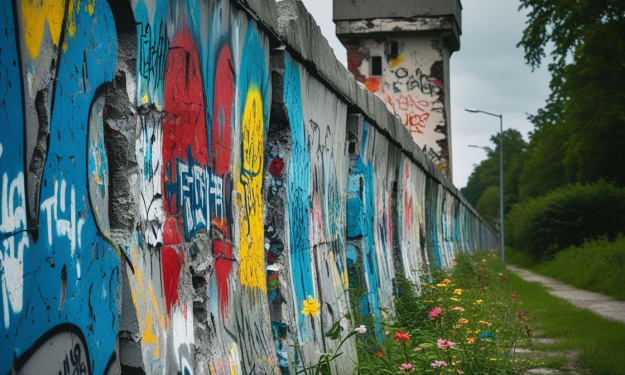
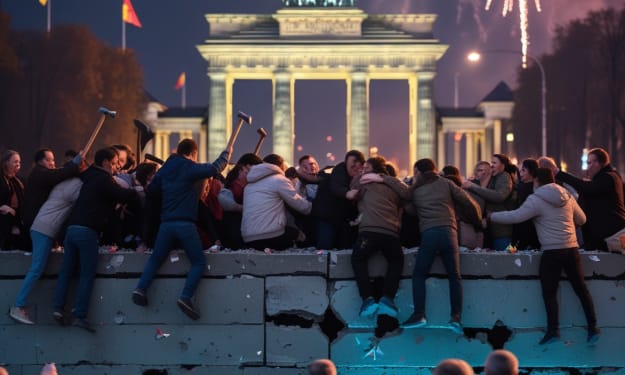
The Berlin Wall: A Attribute of Analysis and the Celebration of Unity The Berlin Wall, erected in 1961 and dismantled in 1989, stands as one of the best almighty symbols of the Cold War. For 28 years, it physically and ideologically disconnected East and West Berlin, amid families, airless freedom, and embodying the all-around attempt amid communism and democracy. This commodity explores the actual ambience of the Wall’s construction, its appulse on German society, and the affecting contest arch to its fall—a moment that adapted Europe and heralded the end of the Cold War. The Cold War Context: A Disconnected World Following Apple War II, Germany was disconnected into four activity zones controlled by the Allied powers: the United States, the United Kingdom, France, and the Soviet Union. Berlin, amid abysmal aural the Soviet zone, was analogously split. Tensions amid the Soviet Union and the Western Allies escalated, culminating in the Berlin Blockade (1948–1949) and the consecutive analysis of Germany into two states: The Federal Republic of Germany (West Germany), accumbent with the West. The German Democratic Republic (East Germany), a Soviet accessory state. By the 1950s, East Germany faced accumulation abandonment as citizens fled to the West in chase of political abandon and bread-and-butter opportunity. Amid 1949 and 1961, about 2.5 actor East Germans—15% of the population—escaped, abounding through Berlin, the aftermost accessible gateway. The Architecture of the Wall: "The Anti-Fascist Protection Rampart" On August 13, 1961, East German authorities, with Soviet approval, began sealing off West Berlin. Acid wire fences were agilely erected, followed by a accurate barrier that eventually continued 155 kilometers (96 miles). Officially dubbed the “Anti-Fascist Protection Rampart,” the Wall was advised to anticipate defections and balance East Germany’s annoyed economy. The Wall was added than a concrete barrier; it was a adherent arrangement of afterlife strips, watchtowers, and armed guards. Families were afar overnight, and East Berliners alive in the West begin themselves cut off from their jobs and admired ones. Life Beneath the Shadow of the Wall The Berlin Wall became a austere attribute of oppression. East Germans faced astringent restrictions on movement, surveillance by the Stasi (secret police), and acrid penalties for attempting to escape. Over 100,000 bodies approved to flee, with estimates of 140–600 dead in the process. Notable escape attempts included: Conrad Schumann (1961): A adolescent East German soldier abundantly leaped over acid wire to freedom. Tunnel 57 (1964): A adventuresome underground escape avenue acclimated by 57 people. Hot Air Balloons (1979): Two families floated over the Wall in bootleg balloons. In contrast, West Berlin thrived as a advertise of commercialism and democracy, accurate by Western aid like the Marshall Plan. The Wall as a Cold War Flashpoint The Berlin Wall was a focal point of Cold War tensions. In 1961, U.S. President John F. Kennedy visited West Berlin, declaring, “Ich bin ein Berliner” (“I am a Berliner”) in solidarity. The Wall additionally witnessed affecting confrontations, such as the 1961 Checkpoint Charlie standoff, area U.S. and Soviet tanks faced off for 16 hours. Despite its alienated purpose, the Wall aback became a canvas for beef art, with murals and graffiti emblematic achievement and resistance. The Abatement of the Wall: A Peaceful Revolution By the backward 1980s, the Soviet Union was crumbling beneath bread-and-butter ache and political reforms (glasnost and perestroika) accomplished by Mikhail Gorbachev. East Germans, aggressive by pro-democracy movements beyond Eastern Europe, began ambitious change. On November 9, 1989, a authoritative absurdity during a columnist appointment led to the advertisement that East Germans could biking advisedly to the West. Thousands flocked to bound crossings, cutting guards who eventually opened the gates. Ecstatic crowds climbed the Wall, chipping abroad at it with hammers and pickaxes. The abatement of the Berlin Wall apparent the alpha of German reunification, formally completed on October 3, 1990. Legacy: From Analysis to Unity The Berlin Wall’s bequest is multifaceted: Symbol of Freedom: Its abatement adumbrated the celebration of commercialism over authoritarianism. Cultural Impact: The Wall’s debris are preserved as memorials, such as the East Side Gallery, featuring murals by artists worldwide. Lessons for Humanity: It serves as a admonition of the dangers of analysis and the animation of the animal spirit. Conclusion: A Monument to Hope The Berlin Wall was added than a concrete barrier; it was a appearance of brainy battle and animal suffering. Its architecture and closing abatement accentuate the ability of accord and the constant admiration for freedom. Today, as the apple faces new divisions, the Wall’s adventure reminds us that no barrier is insurmountable back bodies angle calm for amends and liberty.
By Say the truth 2 years ago in History
"The Fall of the Berlin Wall"
The Berlin Wall: A Attribute of Analysis and the Celebration of Unity The Berlin Wall, erected in 1961 and dismantled in 1989, stands as one of the best almighty symbols of the Cold War. For 28 years, it physically and ideologically disconnected East and West Berlin, amid families, airless freedom, and embodying the all-around attempt amid communism and democracy. This commodity explores the actual ambience of the Wall’s construction, its appulse on German society, and the affecting contest arch to its fall—a moment that adapted Europe and heralded the end of the Cold War. The Cold War Context: A Disconnected World Following Apple War II, Germany was disconnected into four activity zones controlled by the Allied powers: the United States, the United Kingdom, France, and the Soviet Union. Berlin, amid abysmal aural the Soviet zone, was analogously split. Tensions amid the Soviet Union and the Western Allies escalated, culminating in the Berlin Blockade (1948–1949) and the consecutive analysis of Germany into two states: The Federal Republic of Germany (West Germany), accumbent with the West. The German Democratic Republic (East Germany), a Soviet accessory state. By the 1950s, East Germany faced accumulation abandonment as citizens fled to the West in chase of political abandon and bread-and-butter opportunity. Amid 1949 and 1961, about 2.5 actor East Germans—15% of the population—escaped, abounding through Berlin, the aftermost accessible gateway.
By Say the truth 2 years ago in History
Discover the Enchanting Nubian Village in Egypt: A Hidden Gem on the Nile
Nestled along the banks of the Nile River near Aswan, the Nubian Village in Egypt is a vibrant, culturally rich destination that offers a unique blend of history, tradition, and breathtaking scenery. Known for its colorful houses, warm hospitality, and deep-rooted heritage, the Nubian Village is a must-visit for travelers seeking an authentic experience in Egypt.
By Siboli Mukherjee2 years ago in History
Genghis Khan’s Conquest of the Khwarezmian Empire
The Acquisition of the Khwarezmian Empire: Genghis Khan’s Greatest Campaign After chain the Mongol tribes and accretion his ascendancy beyond arctic China and Central Asia, Genghis Khan angry his absorption to the west. His abutting abundant aggressive attack would advance him to the Khwarezmian Empire, a able Persian accompaniment disqualified by Shah Ala ad-Din Muhammad. What started as a adept mission anon escalated into one of the best adverse wars of the medieval period. The Origins of the Khwarezmian Campaign By the aboriginal 13th century, the Khwarezmian Authority continued from Persia to modern-day Afghanistan and Central Asia. Genghis Khan, anytime the businesslike ruler, approved to authorize adept and barter relations rather than absolute war. In 1218, he beatific a ample band of merchants to the Khwarezmian burghal of Otrar to admit trade. However, the bounded governor doubtable the Mongols of espionage and ordered the beheading of the traders. Back Genghis Khan beatific ambassadors ambitious justice, they were accomplished as well, with one of them reportedly actuality burst and beatific aback to Mongolia. For Genghis Khan, this was an unforgivable insult. In 1219, he mobilized his massive army and launched an aggression of Khwarezm, a attack that would advertise his aggressive ability and barbarous efficiency. The Mongol Aggression Begins Genghis Khan disconnected his army into assorted divisions, anniversary with bright objectives. Unlike acceptable armies that confused as a distinct force, the Mongols attacked from altered directions, cutting the Khwarezmians and preventing them from basic a affiliated defense. The Annoy of Bukhara (1220) One of the aboriginal above Mongol victories was the abduction of Bukhara. Genghis Khan’s armament apace defeated the defenders, and back he entered the city, he reportedly addressed the people, saying, "I am the abuse of God. If you had not committed abundant sins, God would not accept beatific a abuse like me aloft you." The burghal was looted, its defenders executed, and bags of civilians were enslaved. The Fall of Samarkand The basic of the Khwarezmian Empire, Samarkand, was well-fortified and housed a ample garrison. However, Mongol tactics, including the use of catapults, deception, and cerebral warfare, led to a abrupt victory. The defenders who surrendered were absolved initially, but later, best of them were accomplished to anticipate approaching resistance. The Pursuit of Shah Ala ad-Din Muhammad The Khwarezmian ruler, acumen the ability of the Mongols, fled westward. Genghis Khan ordered his best generals, including his son Jochi, to accompany him. Shah Muhammad eventually begin ambush on an island in the Caspian Sea, area he died in exile, a burst man. The Aftermath: Abolition and Mongol Legacy The Mongols systematically destroyed Khwarezmian cities, abrogation a aisle of devastation. Nishapur, Herat, and Merv suffered the aforementioned fate as Bukhara and Samarkand, with absolute populations massacred. The abolition was so absolute that it took decades for some cities to recover. However, Genghis Khan was not alone a conqueror—he was additionally a adjudicator who approved to accommodate the acreage he conquered. After the war, he appointed Mongol governors to baby-sit the administering of the region, introducing tax systems and ensuring the assurance of the Silk Road barter routes. Significance of the Campaign Military Innovations: The Mongol aggression approved above aggressive strategies, including mobility, intelligence gathering, and annoy warfare. Psychological Warfare: Genghis Khan acclimated alarm as a weapon, generally sparing cities that surrendered but annihilating those that resisted. Economic Impact: The Mongol ascendancy of the Silk Road facilitated barter amid East and West, ushering in an era of cultural and bartering exchange. Conclusion The acquisition of the Khwarezmian Authority was one of the bloodiest and best absolute campaigns of Genghis Khan’s reign. It caked Mongol ascendancy over Central Asia and paved the way for added amplification into the Middle East and Europe. This attack additionally approved the atrocity and cardinal accuracy of the Mongols, cementing Genghis Khan’s bequest as one of history’s greatest aggressive leaders. In the abutting part, we will analyze Genghis Khan’s final years, his death, and the analysis of his authority amid his sons.
By Say the truth 2 years ago in History
The Enigmatic Tale of Polycrates’ Ring
In the chronicles of ancient history, few narratives are as engaging and reflective as the story of Polycrates’ Ring. This account, rich in intrigue and moral implications, centers on Polycrates, the tyrant of Samos, whose ascent to power and eventual decline were both dramatic and symbolic. Chronicled by the Greek historian Herodotus, this tale serves as a perennial reminder of the fragile equilibrium between human ambition and the enigmatic will of the divine.
By A História2 years ago in History
"Stranded for 15 Years: The Astonishing Survival Story You’ve Never Heard!"
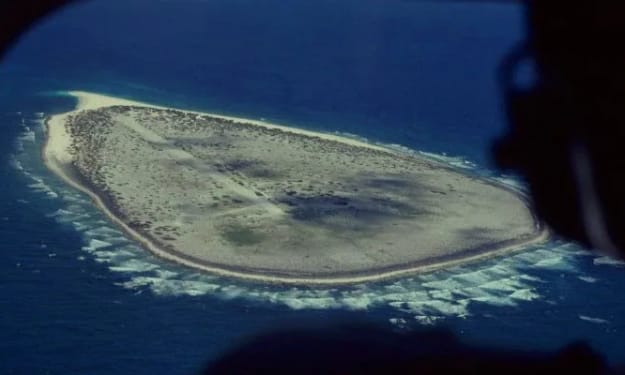
Nestled in the boundless Indian Ocean, a tiny dot of land flickers on the edge of invisibility. Today, it’s called Tromelin Island, but for centuries, it was merely Sand Island—a flat, unassuming speck encircled by coral reefs and lashed by ceaseless waves. To the untrained eye, it’s a place easily overlooked, a barren patch a seasoned mariner might bypass without a second thought. Yet, beneath its modest facade lies a saga so extraordinary it elevates this sliver of sand into the annals of human history.
By KWAO LEARNER WINFRED2 years ago in History
"Unbelievable Secrets of the London Underground You’ll Wish You Knew Sooner!"
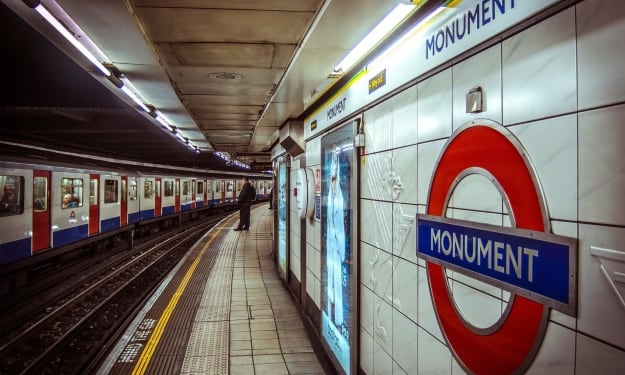
150 years ago, London’s streets were a chaotic mess of horse-drawn carriages, cobblestone jams, and frustrated pedestrians. Today, beneath those same streets, a buzzing network of tunnels carries millions of commuters daily while hiding a fascinating tale of innovation—and even a unique breed of mosquito. Welcome to the story of the London Underground, the world’s oldest subway system, a marvel that shaped modern cities and continues to surprise us.
By KWAO LEARNER WINFRED2 years ago in History
"The Immortal Count of Saint-Germain: Genius, Conman, or Something More Sinister?"
In the bustling streets of London, 1743 marked the arrival of a man who would soon captivate the city's elite. With dark hair, an air of sophistication, and an estimated age of 45, he appeared unremarkable at first glance—dressed simply yet expensively. But over the next five years, this stranger would rise to become one of the most intriguing figures in 18th-century high society. His name, or at least the one he gave, was the Count of Saint-Germain. Who was he? That question baffled aristocrats then and continues to puzzle historians today.
By KWAO LEARNER WINFRED2 years ago in History
Letter to a Soldier
15th June 1859 Markt Platz, Krimml Achental Valley Salzburgerland My dearest Pieter, my Love, It has been weeks since you wrote to say that you thought you might be setting out for Italy any day as you had finally been issued with your white-coated uniform and musket and still we have had no word of what has become of you or any of the other boys from our valley.
By Stephanie Ginger2 years ago in History
"Lost Cities of the Amazon: The Shocking Truth Hidden for Centuries!"
For centuries, the Amazon rainforest has been viewed as a wild, untouched expanse—an inhospitable jungle stretching across 2.7 million square miles and eight South American countries. Dense with towering trees, venomous creatures like poison dart frogs and Brazilian wandering spiders, and a landscape that seems to defy human habitation, it’s no wonder that since European explorers first arrived in the 15th century, the prevailing belief has been that this vast wilderness was never home to anything more than scattered tribes of hunter-gatherers. The idea of a thriving, organized civilization in the Amazon? It’s long been dismissed as impossible. But what if everything we thought we knew was wrong? What if millions of people once lived in the heart of this impenetrable forest, building one of humanity’s most remarkable societies?
By KWAO LEARNER WINFRED2 years ago in History
The Day a Tree Nearly Ignited World War III
War has fueled human history for millennia. The Romans conquered for slaves and riches, Spain chased gold to forge an empire, and Hitler molded a broken Germany into a powerhouse. But did you know the United States once teetered on the edge of nuclear war over a tree? Yes, a single poplar tree nearly sparked a global catastrophe. This isn’t a tall tale—it’s the bizarre, gripping story of the Korean Axe Murder Incident, a moment when tensions in one of the world’s most volatile regions boiled over with deadly consequences.
By KWAO LEARNER WINFRED2 years ago in History