World History
The Timeless Relevance of Ancient Subjects in Modern Education
Introduction In the rapidly evolving world of education, where new disciplines emerge to address contemporary challenges, certain ancient subjects have withstood the test of time. These millennia-old disciplines continue to be integral components of modern curricula, offering invaluable insights into human civilization and the natural world. This article delves into the enduring significance of these ancient subjects, exploring their historical roots and their relevance in today's academic landscape.
By TechyByGaurav 2 years ago in History
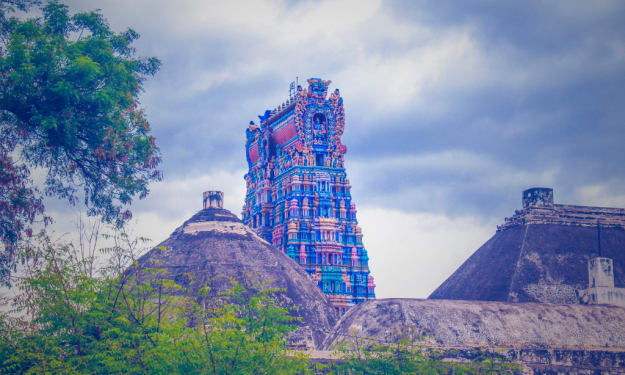
Temples Through Time: From Ancient Reverence to Modern Worship
The Evolution of Temples: From Ancient Reverence to Modern-Day Worship Temples have always held a special place in the cultural and spiritual fabric of India. In ancient times, temples were not just places of worship; they were centers of community life, education, and culture. They were treated with the highest reverence and were often seen as the abode of the divine, where both the spiritual and material worlds converged. Over the centuries, the treatment and significance of temples have evolved, reflecting changes in society, technology, and spirituality.
By Sri Kamakshi Ambal Temple2 years ago in History
The History of Nation-Building and the Formation of Countries
The History of Nation-Building and the Formation of Countries The formation of countries is a complex and fascinating process that has evolved over centuries. From ancient kingdoms to modern nation-states, the idea of countries has been shaped by wars, revolutions, diplomacy, and culture. Let’s explore the history of how countries are made and how the concept of the "nation-state" emerged. 1. Early Human Societies and Tribal Structures In the earliest stages of human civilization, there were no "countries" as we understand them today. Instead, people lived in small groups such as tribes or clans, often organized around kinship ties, shared languages, and religious beliefs. Hunter-gatherer societies (around 10,000 BCE) depended on cooperation for survival. As agriculture developed (Neolithic Revolution), people settled in one place, leading to the formation of villages and towns. These early settlements laid the foundation for future political organization, as leaders began to emerge to manage resources, resolve conflicts, and defend their communities. 2. The Rise of Kingdoms and Empires As populations grew, so did the complexity of societies. Larger settlements turned into city-states — independent political entities like those in Mesopotamia (Sumer, Babylon) or Ancient Greece (Athens, Sparta). Empires emerged when powerful rulers expanded their territories by conquering neighboring lands. Notable ancient empires include the Egyptian Empire, the Roman Empire, the Persian Empire, and the Chinese dynasties. These empires were often ruled by monarchs, and their borders were shaped by military conquest rather than the will of the people. Loyalty was often tied to a ruler rather than a shared national identity. 3. The Medieval Period and Feudalism After the fall of the Roman Empire in 476 CE, Europe entered the medieval period, marked by feudalism — a system where kings granted land to nobles in exchange for military service. Territories were fragmented, with lords and vassals holding power over regions, but there was little sense of a unified "nation." Religious institutions, especially the Catholic Church, held immense influence over political life. During this period, the concept of a "country" was still vague, and people often identified more with their local lord or religion than with a larger political entity. 4. The Emergence of Nation-States The idea of the nation-state — a sovereign entity where the population shares a common identity, language, and culture — began to take shape in Europe between the 15th and 18th centuries. Key developments included: The Treaty of Westphalia (1648): This series of treaties ended the Thirty Years’ War in Europe and established the principle of sovereignty — the idea that states have authority over their territory and domestic affairs without external interference. Consolidation of power: Monarchs in countries like France, England, and Spain centralized their authority, reducing the power of feudal lords. National Identity: The Renaissance and the Enlightenment encouraged people to think about their shared language, history, and culture — planting the seeds of nationalism. By the 18th century, countries like France, England, and Russia resembled early versions of modern nation-states, with defined borders and centralized governments. 5. The Age of Revolutions and Nationalism The 18th and 19th centuries saw a wave of revolutions that reshaped the political map of the world: The American Revolution (1775–1783): The United States became the first modern democracy, declaring independence from British rule and establishing a government based on popular sovereignty. The French Revolution (1789–1799): Overthrew the monarchy and promoted ideals of liberty, equality, and fraternity — reinforcing the concept of national identity. Latin American Independence Movements: Inspired by these revolutions, countries like Mexico, Brazil, and Argentina fought for independence from European colonial powers in the early 19th century. These events fueled the rise of nationalism — the belief that people with shared language, culture, and history should form their own independent nations. 6. Colonization and the Creation of Artificial Borders During the 19th and early 20th centuries, European powers colonized vast regions of Africa, Asia, and the Americas. Colonizers often drew arbitrary borders, ignoring ethnic, linguistic, and cultural divisions. The Berlin Conference (1884–1885), for example, saw European powers carve up Africa without African input, leading to future conflicts. When these colonies gained independence in the mid-20th century (after World War II), many new countries faced challenges because their borders didn’t reflect the natural divisions of their populations, contributing to ethnic conflicts and political instability. 7. Post-World War II and the Modern Era The end of World War II (1945) accelerated the formation of new countries: The United Nations (UN) was founded in 1945 to promote global cooperation and support the self-determination of nations. Decolonization saw countries in Africa, Asia, and the Caribbean achieve independence from European rule, forming new states like India (1947), Ghana (1957), and Algeria (1962). The Cold War (1947–1991) also influenced nation-building, as the US and Soviet Union backed different governments and independence movements worldwide. The collapse of the Soviet Union (1991) led to the formation of 15 new countries, including Russia, Ukraine, and the Baltic states. 8. Modern Nation-Building Challenges Today, countries continue to evolve due to globalization, conflict, and technological change. Some challenges include: State-building: Establishing effective governments in post-conflict regions (like Iraq or Afghanistan). Ethnic tensions: Countries with diverse populations (like South Sudan) struggle to balance unity and representation. Globalization: While countries remain sovereign, they are increasingly interconnected through trade, technology, and international law. Conclusion The history of how countries are formed is a story of conquest, revolution, diplomacy, and identity. From ancient tribes to modern nation-states, the concept of a "country" has evolved alongside human societies. While the idea of national borders and sovereignty is now firmly established, ongoing conflicts, globalization, and technological advances will continue to reshape the map of the world in the years to come.
By Budhirai Tripura2 years ago in History
The History of Financial Services
The History of Financial Services Financial services have played a crucial role in the development of economies and societies throughout history. From ancient trade systems to the complex global financial markets we see today, these services have evolved significantly. Let’s explore their journey — how they started, evolved, and shaped the modern financial landscape. Ancient Financial Systems The roots of financial services date back to ancient civilizations, where basic forms of finance emerged to support trade and economic activities: Mesopotamia (3000–2000 BCE): The earliest financial practices were seen in Mesopotamia, where temples and palaces acted as banks, offering loans to farmers and merchants. Clay tablets recorded financial transactions like loans and interest rates. Ancient Egypt and Greece: In Egypt, grain banks stored harvests and facilitated trade by issuing grain receipts — a primitive form of currency. Ancient Greece introduced money lending, currency exchange, and rudimentary forms of insurance, especially for maritime trade. The Roman Empire: The Romans advanced financial services by establishing formal banks that accepted deposits, offered loans, and facilitated money transfers across their vast empire. They also developed public financing methods, including the sale of public debt. Medieval Banking and the Rise of Commerce The Middle Ages (500–1500 AD) saw the revival of financial systems, driven by growing trade networks: Italian City-States: By the 12th century, powerful Italian families in cities like Florence, Venice, and Genoa established the first modern banks. The Medici Bank (founded in 1397) revolutionized finance by introducing double-entry bookkeeping and bills of exchange — early forms of credit instruments that allowed merchants to trade without carrying large sums of cash. Islamic Finance: During the Islamic Golden Age (8th–14th centuries), Islamic finance emerged, based on Sharia law principles. It forbade interest (riba) but promoted profit-sharing, establishing early concepts of ethical finance and partnership-based investments. Merchant Banking: Merchant banks arose in Europe as wealthy merchants diversified their businesses into lending money to governments and financing trade. These banks laid the foundation for modern investment banking. The Birth of Modern Financial Institutions (16th–18th Centuries) The foundations of today’s financial services were laid during the Renaissance and early modern period: Stock Exchanges: The world’s first stock exchange was established in Amsterdam in 1602 to trade shares of the Dutch East India Company (VOC). This innovation allowed companies to raise capital from the public, paving the way for modern equity markets. Central Banking: The Bank of England was founded in 1694, becoming the first central bank. It was created to manage national debt and stabilize the currency, setting a model for future central banks worldwide. Insurance: Modern insurance practices emerged in 17th-century London. The Lloyd's of London marketplace began as a coffeehouse where shipowners, merchants, and insurers gathered to discuss maritime risks — forming the basis of modern insurance companies. Industrial Revolution and Financial Innovation (18th–19th Centuries) The Industrial Revolution (1760–1840) spurred massive financial innovation to support growing industries and infrastructure: Commercial Banking: Banks like Barclays and J.P. Morgan expanded their services, offering corporate loans, accepting deposits, and managing wealth for industrialists. Securities Markets: Stock exchanges flourished in London, New York, and Paris, allowing businesses to raise funds for railways, factories, and canals. The New York Stock Exchange (NYSE) was founded in 1792, becoming a dominant global market. Modern Insurance: Life insurance gained popularity, helping families secure financial protection. Fire and property insurance also grew, especially after events like the Great Fire of London (1666). 20th Century: The Rise of Global Finance The 20th century saw financial services become more sophisticated and interconnected: Great Depression and Regulation: The 1929 Wall Street Crash triggered the Great Depression, leading to severe economic hardship worldwide. In response, governments imposed regulations like the Glass-Steagall Act (1933) in the US, separating commercial and investment banking to prevent risky practices. Bretton Woods System (1944): After World War II, the Bretton Woods Agreement established a global monetary system, linking currencies to the US dollar (which was backed by gold). This created institutions like the International Monetary Fund (IMF) and the World Bank to promote economic stability. Credit Cards and Consumer Finance: The first credit card — the Diners Club Card — was launched in 1950, revolutionizing consumer finance by enabling cashless transactions. This era also saw the growth of personal banking, mortgages, and small-business loans. Deregulation and Globalization (1980s–90s): Financial deregulation allowed banks to expand into new areas like investment banking and derivatives trading. Technological advances facilitated global financial markets, with electronic trading platforms transforming stock exchanges. 21st Century: Digital Transformation and Challenges The financial landscape has continued evolving dramatically in the 21st century: 2008 Global Financial Crisis: Triggered by risky mortgage lending and complex financial instruments (like mortgage-backed securities), the 2008 crisis caused a global recession. Governments intervened with bailouts and stricter regulations like the Dodd-Frank Act (2010) to prevent future collapses. Fintech Revolution: Financial technology (fintech) has disrupted traditional banking. Innovations include: Mobile banking and digital wallets (like PayPal and Apple Pay) Cryptocurrencies (Bitcoin, Ethereum) offering decentralized financial systems Peer-to-peer lending platforms bypassing traditional banks Sustainable Finance: There’s growing focus on ESG (Environmental, Social, and Governance) investing, with financial institutions funding projects that support clean energy, social equality, and corporate responsibility. Conclusion The history of financial services reflects humanity's evolving economic needs — from simple trade loans in ancient Mesopotamia to complex global markets driven by technology. These services have not only facilitated commerce but have also shaped economies, influenced global events, and driven innovation. As we move forward, digital transformation, sustainable investing, and global connectivity will continue to redefine the financial landscape, ensuring that finance remains a cornerstone of modern life.
By Budhirai Tripura2 years ago in History
The History of the Second World War
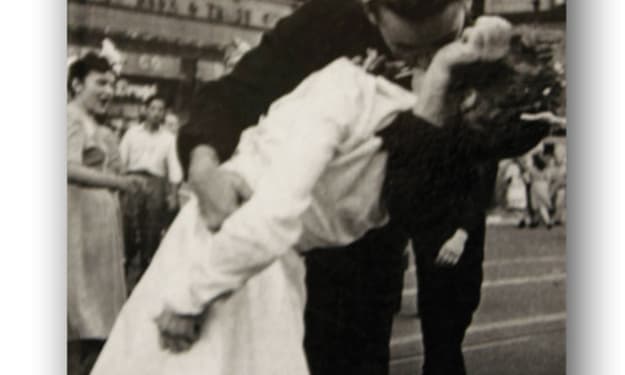
The History of the Second World War The Second World War (1939–1945) was the deadliest and most widespread conflict in human history, involving over 100 million people from more than 30 countries. It resulted in the deaths of an estimated 70–85 million people, around 3% of the world’s population at the time. The war fundamentally reshaped global politics, economics, and societies, ultimately leading to the emergence of the United States and the Soviet Union as superpowers and the establishment of the United Nations. Causes of the Second World War The roots of the Second World War can be traced back to the aftermath of World War I and the Treaty of Versailles (1919). Several interconnected factors led to the outbreak of war: The Treaty of Versailles: The treaty imposed severe reparations and territorial losses on Germany, creating economic hardship and national humiliation. The German people, embittered by these terms, were receptive to radical ideologies that promised revenge and restoration of their nation’s power. Rise of Totalitarian Regimes: The economic crisis of the 1930s, triggered by the Great Depression, allowed extremist leaders like Adolf Hitler in Germany, Benito Mussolini in Italy, and militarist factions in Japan to rise to power. These regimes promoted aggressive nationalism, military expansion, and the rejection of democratic values. Expansionist Policies: Germany: Hitler sought to overturn the Treaty of Versailles, expand German territory (Lebensraum), and create a "Greater Germany." Italy: Mussolini aimed to build a new Roman Empire by invading Ethiopia in 1935. Japan: Seeking dominance in Asia, Japan invaded Manchuria in 1931 and later China in 1937, committing atrocities like the Nanjing Massacre. Failure of the League of Nations: The League, established to prevent conflicts, proved ineffective due to its lack of authority and the absence of key powers like the US. It failed to stop aggression from Germany, Italy, and Japan. Appeasement: Britain and France followed a policy of appeasement, allowing Hitler to annex Austria (Anschluss) in 1938 and the Sudetenland (Czechoslovakia) through the Munich Agreement. This only emboldened Hitler, who saw the West as weak. The Nazi-Soviet Pact (1939): In a shocking move, Germany and the Soviet Union signed a non-aggression pact, agreeing to divide Eastern Europe between them. This freed Hitler to invade Poland without fear of Soviet intervention. The Outbreak of War On September 1, 1939, Germany invaded Poland, using a new military tactic called Blitzkrieg (lightning war) — a swift, coordinated attack using tanks, aircraft, and infantry. In response, Britain and France declared war on Germany on September 3, 1939, marking the start of the Second World War. Major Theaters of the War The war unfolded across several major fronts: The European Front: Germany quickly overran Poland, and by mid-1940, had conquered Denmark, Norway, Belgium, the Netherlands, and France. The Battle of Britain (1940) saw the German Luftwaffe fail to subdue Britain’s Royal Air Force, forcing Hitler to abandon plans for invasion. The Eastern Front: In June 1941, Hitler launched Operation Barbarossa, a massive invasion of the Soviet Union, breaking the Nazi-Soviet Pact. The war in the East became the largest and bloodiest front, with battles like Stalingrad (1942–43), where the German advance was finally halted. The Pacific Theater: Tensions in Asia exploded when Japan attacked Pearl Harbor on December 7, 1941, bringing the United States into the war. Japan rapidly seized territory across Southeast Asia and the Pacific, but key battles like Midway (1942) turned the tide in favor of the Allies. North Africa and Italy: The Allies fought German and Italian forces in North Africa, winning decisive battles like El Alamein (1942). They invaded Sicily and Italy in 1943, leading to Mussolini’s downfall. Turning Points of the War Several critical battles and events shifted momentum toward the Allies: Battle of Stalingrad (1942–43): The Soviet Red Army encircled and defeated the German 6th Army, marking a turning point on the Eastern Front. D-Day (June 6, 1944): The Allies launched Operation Overlord, landing in Normandy, France. This opened a Western Front and began the liberation of Nazi-occupied Europe. Battle of Midway (1942): The US Navy inflicted a devastating blow on Japan’s fleet, halting its expansion in the Pacific. The End of the War Germany’s Defeat: The Allies advanced from both East and West. The Soviets captured Berlin in May 1945, and Hitler committed suicide on April 30, 1945. Germany surrendered on May 7, 1945 — V-E Day (Victory in Europe). Japan’s Surrender: Despite fierce resistance, the US island-hopping strategy brought them closer to Japan. In August 1945, the US dropped atomic bombs on Hiroshima (August 6) and Nagasaki (August 9). Facing total destruction, Japan surrendered on August 15, 1945 — V-J Day (Victory over Japan). Aftermath and Consequences The war's aftermath reshaped the world: Human Cost: An estimated 70–85 million people died, including 6 million Jews in the Holocaust — Nazi Germany’s systematic genocide. Political Changes: Germany was divided into East and West. The United Nations was established in 1945 to prevent future conflicts. The Cold War: The US and Soviet Union emerged as superpowers, locked in ideological rivalry — capitalism vs. communism — sparking the Cold War. Decolonization: The war weakened European empires, accelerating independence movements in Africa and Asia. Nuclear Age: The atomic bomb’s use marked the beginning of the nuclear age, fundamentally altering global security. Conclusion The Second World War was a devastating conflict driven by extreme ideologies, expansionist ambitions, and global rivalries. It not only redrew the world map but also laid the groundwork for modern international relations. The war’s legacy — from the Holocaust’s horrors to the atomic bomb’s shadow — continues to shape the world today. The sacrifices of millions remind us of the catastrophic consequences of unchecked aggression and the importance of striving for peace and cooperation.
By Budhirai Tripura2 years ago in History
The History of the First World War
The History of the First World War The First World War, often referred to as World War I (WWI), was one of the deadliest and most transformative conflicts in modern history. Lasting from 1914 to 1918, it involved many of the world's great powers and fundamentally altered the political, cultural, and economic landscape of Europe and beyond. This war marked the end of empires and the reshaping of borders, leading to major geopolitical changes that set the stage for the Second World War two decades later. The Causes of World War I The origins of WWI are complex, rooted in a combination of long-term factors and immediate events. The key causes of the war include militarism, alliances, imperialism, nationalism, and the assassination of Archduke Franz Ferdinand. Militarism: By the early 20th century, European powers had built up large, sophisticated military forces. The arms race between Germany, Britain, and France led to a climate of tension. Military leaders believed in the inevitability of war, and military plans were often made in anticipation of conflict. Alliances: European powers formed complex networks of alliances to protect their interests. The two main alliance systems were the Triple Alliance (Germany, Austria-Hungary, and Italy) and the Triple Entente (France, Russia, and Britain). These alliances meant that any localized conflict could quickly escalate into a wider war, as countries honored their commitments to defend one another. Imperialism: The competition for colonies, especially in Africa and Asia, intensified rivalries between European powers. Nations sought to expand their empires and gain economic and strategic advantages, leading to heightened tensions. Nationalism: Nationalist movements were particularly strong in Eastern and Southeastern Europe, where various ethnic groups sought independence from empires like Austria-Hungary and the Ottoman Empire. Nationalism also contributed to the desire for territorial expansion, particularly in areas like the Balkans. The Assassination of Archduke Franz Ferdinand: The immediate cause of the war was the assassination of Archduke Franz Ferdinand, heir to the Austro-Hungarian throne, by Gavrilo Princip, a Serbian nationalist, on June 28, 1914, in Sarajevo. Austria-Hungary blamed Serbia for the assassination and issued an ultimatum, which, after being partly rejected, led to the declaration of war on Serbia on July 28, 1914. The Outbreak of War Following the assassination, Europe quickly descended into war. Russia, allied with Serbia, mobilized its forces in defense of Serbia. Germany, a key ally of Austria-Hungary, declared war on Russia on August 1, 1914. France, allied with Russia, was drawn into the conflict when Germany declared war on France on August 3. Germany’s invasion of Belgium to reach France led Britain to declare war on Germany on August 4. The war spread rapidly, with nations across Europe, and later the world, drawn into the conflict due to the network of alliances and treaties. Within weeks, major powers were at war, and a conflict that was initially expected to be brief turned into a protracted, global struggle. The Nature of the War The First World War was characterized by trench warfare, particularly on the Western Front. Both sides dug elaborate systems of trenches, stretching from the English Channel to Switzerland, where soldiers lived and fought in horrific conditions. These trenches were often flooded, infested with lice, and subjected to constant bombardment. The no-man’s-land between the opposing trenches was a deadly zone, with soldiers attempting to cross it under heavy fire. The war on the Eastern Front between Germany, Austria-Hungary, and Russia was more mobile, but equally brutal. In the Middle East, the war also spread, with the Ottoman Empire joining the Central Powers and fighting against Britain and France in campaigns like Gallipoli and Mesopotamia. Technological advances played a key role in shaping the conflict. New weapons such as machine guns, poison gas, tanks, and aircraft made warfare more deadly. The war also saw the first large-scale use of air power and naval battles, though the primary focus remained on the trenches. Key Battles and Turning Points Some of the most significant battles of WWI included: The Battle of the Marne (1914): This was one of the first major battles of the war, where French and British forces halted the German advance into France. The battle marked the end of Germany’s hope for a quick victory and led to the establishment of trench warfare on the Western Front. The Battle of Verdun (1916): One of the longest and bloodiest battles of the war, Verdun symbolized the brutality of trench warfare. French forces, determined to hold the city, suffered over 700,000 casualties. The Battle of the Somme (1916): This battle is infamous for its high casualties, with over a million men killed or wounded. The British and French forces sought to break through German defenses but achieved limited success. The Russian Revolution (1917): The war took a major turn in 1917 when the Russian Empire collapsed due to internal revolution. The Bolsheviks, led by Vladimir Lenin, seized power and withdrew Russia from the war, allowing Germany to focus more resources on the Western Front. The United States Enters the War Initially, the United States maintained a policy of neutrality, but several factors led to its entry into the war in 1917. These included Germany’s unrestricted submarine warfare, which targeted American ships, and the interception of the Zimmermann Telegram, in which Germany proposed a military alliance with Mexico against the U.S. With the U.S. joining the Allies, fresh troops and resources helped turn the tide in favor of the Entente powers. The End of the War By late 1918, the Central Powers were exhausted. The Allies launched successful offensives, and Germany, facing internal unrest and military defeat, asked for an armistice. On November 11, 1918, the armistice was signed, effectively ending the war. The Aftermath The Treaty of Versailles, signed in 1919, formally ended the war. The treaty imposed harsh penalties on Germany, including territorial losses, military restrictions, and reparations. The war’s aftermath saw the collapse of several empires: the Austro-Hungarian Empire, the Ottoman Empire, the Russian Empire, and the German Empire. New nations were created, and the map of Europe was redrawn. The League of Nations was established in an attempt to prevent future conflicts, though it ultimately failed to maintain peace. The First World War had profound effects on global politics, economies, and societies. It led to the rise of fascism, communism, and the seeds of World War II. It also left a deep psychological impact on those who lived through it, as soldiers and civilians alike endured unimaginable hardships and trauma. In conclusion, the First World War was a catastrophic event that reshaped the world. Its complex causes, devastating battles, and far-reaching consequences make it a pivotal moment in history, marking the end of the old world order and the beginning of a new and uncertain era.
By Budhirai Tripura2 years ago in History
A secret for me to keep and you bury deep
15 January 1940Narvik, Norway My dearest Carl, I know from your last letter that you did not wish for me to write again. With a heavy heart, I shall disregard your wishes just this once. If I am to make you unhappy, let it be of my own choosing, for I would rather face your anger than the silence that separates us. I shall be brief, for paper is scarce.
By Em Everheart2 years ago in History
Waiting in Germany
December 26th, 1990 Hello, My Love, I am writing the day after Christmas, so I know you won't receive the letter for a while. I am so mad - the Army assured us our soldiers would have time with their families before deploying to Iraq for Desert Storm. We barely saw you from the beginning of November until you left Christmas week!!
By Andrea Corwin 2 years ago in History