World History
The History of Sea Conquests: A Journey Through the Waves of Power and Exploration
Introduction The sea has been a vital part of human history, serving as both a pathway and a battleground for power, exploration, and conquest. From ancient naval battles to global explorations and the establishment of vast empires, sea conquests have played a critical role in shaping civilizations and world history. This historical journey highlights the most remarkable sea conquests that defined nations and changed the course of history.
By Digital Home Library by Masud Rana2 years ago in History
The Rise and Reign of Joshua Norton: America’s Self-Made Emperor
They say you have to take risks to win big, and Joshua Norton was a man who lived that truth-until it all came crashing down. A once-thriving San Francisco businessman, Norton’s tale is a rollercoaster of ambition, misfortune, and an audacious reinvention that turned him into a legend. After losing everything in a disastrous gamble on rice, he didn’t just fade into obscurity. Instead, he dusted off his dignity, strode into the spotlight, and declared himself Emperor of the United States. What followed was a 21-year saga so bizarre, yet so endearing, it’s hard to believe it’s true. This is the story of Joshua Norton-America’s first, last, and most unforgettable emperor.
By KWAO LEARNER WINFRED2 years ago in History
The Dawn of Humanity: A Glimpse into the Lives and Times of Ancient People
The term "ancient people" encompasses a vast and diverse range of human societies spanning millennia, from the earliest hominids to the complex civilizations of the ancient world. Defining precise temporal and geographical boundaries is challenging, but broadly, we can consider this period to extend from the emergence of Homo habilis roughly 2.8 million years ago to the decline of the Roman Empire in 476 CE, and even later in some regions. To understand the lives and times of these ancient people, we must delve into their origins, adaptations, social structures, beliefs, and technological advancements, recognizing the incredible diversity that existed across different continents and ecological niches. The Paleolithic Era: Survival and Adaptation The Paleolithic Era, also known as the Old Stone Age, constitutes the longest period in human history, accounting for over 99% of our species' existence. This era is characterized by the use of crude stone tools and a hunter-gatherer lifestyle. Early hominids, such as Homo habilis and Homo erectus, faced immense challenges in surviving in a harsh environment. Early Hominids: These early ancestors relied on scavenging, gathering edible plants, and hunting small animals. Their survival depended on their ability to adapt to changing environments and develop rudimentary tools. The discovery of fire was a pivotal moment, providing warmth, protection from predators, and the ability to cook food, improving its digestibility and nutritional value. Hunter-Gatherer Societies: As Homo sapiens emerged, they perfected hunting techniques, developing more sophisticated tools like spear points, bows and arrows, and traps. They lived in small, nomadic bands, following migratory animal herds and seasonal plant growth. Cooperation and social bonds were crucial for survival, as individuals relied on each other for hunting, gathering, and protection. Material Culture and Art: While survival was paramount, Paleolithic people also possessed a rich cultural life. Cave paintings, such as those found in Lascaux and Altamira, depict animals, humans, and abstract symbols, offering insights into their beliefs, rituals, and artistic expression. These artistic endeavors suggest a capacity for symbolic thought and abstract reasoning, marking a significant step in human cognitive development. The Neolithic Revolution: The Dawn of Agriculture and Sedentary Life The Neolithic Revolution, beginning around 10,000 BCE, marked a profound turning point in human history. The development of agriculture and animal domestication led to a settled lifestyle, transforming human societies in unprecedented ways. The Neolithic Revolution: Seeds of Change The shift from nomadic hunter-gatherers to settled agricultural societies, known as the Neolithic Revolution, irrevocably altered the course of human history. Although the precise origins of agriculture are debated, it's widely accepted that farming arose independently in various regions around the globe, including the Fertile Crescent, China, and Mesoamerica. Early farmers cultivated wild plants – ancestors of modern wheat, barley, and rice – and domesticated animals such as sheep, goats, and cattle. This revolutionary transformation ensured a more reliable and plentiful food supply, the very foundation of settled existence. From Nomadism to Villages: A Sedentary Transformation With the security of a consistent food source, the need for constant wandering diminished. People began to establish permanent settlements, constructing dwellings that evolved into villages. As these villages flourished, they developed increasingly complex social structures, setting the stage for the eventual rise of urban centers. Social Reorganization and the Division of Labor The advent of agriculture also triggered profound changes in social organization. The concept of land ownership emerged, leading to the accumulation of wealth. This, in turn, fostered the development of social hierarchies, where certain individuals or families gained more power and influence within the community. Furthermore, the surplus of food freed up individuals to pursue specialized skills, giving rise to artisans, traders, religious leaders, and other specialized professions. Technological Flourishing in the New Stone Age The Neolithic Era was a period of intense technological innovation. Essential inventions like pottery for storing food and liquids emerged, along with weaving for producing clothing and textiles. New and improved tools and implements were developed to support agricultural practices, further enhancing productivity and efficiency. Thriving Urban Centers: Large, densely populated cities served as hubs of commerce, governance, and cultural exchange, acting as magnets for people and ideas. Intricate Social Structures: Civilizations exhibited hierarchical social systems with specialized labor, a privileged ruling class, and varying degrees of social mobility. Formalized Governance: Centralized political institutions, equipped with the power to enact and enforce laws, levy taxes, and wage war, maintained order and ensured the stability of the civilization. Organized Religious Systems: Elaborate religious beliefs, practices, and institutions, including priests, temples, and formalized rituals, played a vital role in shaping the cultural and moral landscape. Systems of Writing: The development of writing allowed for the recording and preservation of knowledge, the communication of complex ideas, and the creation of lasting historical records. Monumental Architecture: Grand-scale construction projects, such as temples, palaces, and pyramids, served as powerful symbols of the civilization's power, wealth, and ingenuity. Early Seeds of Civilization: A Global Tapestry Some of the earliest civilizations emerged in Mesopotamia, Egypt, the Indus Valley, and China. These pioneering societies developed distinct cultural and political systems that have profoundly shaped the course of human history. Mesopotamia: The Cradle of Civilization: Situated between the Tigris and Euphrates rivers, Mesopotamia witnessed the rise of Sumer, Akkad, Babylon, and Assyria. These civilizations gifted the world with cuneiform writing, sophisticated irrigation techniques, and pioneering legal codes, such as the renowned Code of Hammurabi. Egypt: Gift of the Nile: The fertile banks of the Nile River nurtured the civilization of ancient Egypt. Renowned for their hieroglyphic writing, colossal pyramids, and the powerful dynasties of the pharaohs, the Egyptians left an indelible mark on the ancient world. The Indus Valley Civilization: Urban Planning and Mystery: Located in what is now Pakistan and northwest India, the Indus Valley civilization (also known as the Harappan civilization) was notable for its meticulously planned cities, advanced sanitation systems, and a unique, as-yet undeciphered script. China: From Dynasty to Empire: In the Yellow River valley, the Shang and Zhou dynasties laid the foundation for Chinese civilization. They pioneered bronze metallurgy, developed a writing system based on pictographs, and introduced the concept of the Mandate of Heaven, which legitimized the rule of emperors and shaped Chinese political thought for millennia. Daily Life: A Spectrum of Experiences Life within these ancient civilizations was far from uniform. The daily experiences of individuals varied dramatically depending on their social class, occupation, and geographic location. While the ruling elite enjoyed lives of luxury and privilege, the vast majority of the population consisted of farmers, artisans, and laborers who toiled tirelessly to produce the food and goods that sustained the civilization. Social mobility was often limited, with many individuals destined to remain in the social stratum into which they were born. The Sacred Sphere: Religion and Belief in the Ancient World Religion permeated every aspect of life for ancient peoples. Their world was populated by a vast pantheon of gods and goddesses, believed to control the forces of nature and directly influence human destiny. To honor these powerful deities, magnificent temples were erected, and priests diligently performed rituals intended to appease the divine and ensure the well-being and prosperity of the entire community. The Classical World: A Beacon of Innovation The Classical World, encompassing the civilizations of ancient Greece and Rome, stands as a landmark epoch in human history, renowned for its groundbreaking intellectual advancements, bold political experiments, and enduring artistic creations. Ancient Greece: A Tapestry of City-States: Ancient Greece comprised a collection of independent city-states, each with its own unique form of government and distinctive cultural identity. Athens, celebrated for its democratic ideals, profound philosophical inquiries, and unparalleled artistic achievements, contrasted sharply with Sparta, famed for its rigorous militaristic society. The seminal work of Greek philosophers like Socrates, Plato, and Aristotle laid the very foundation of Western thought, probing fundamental questions of ethics, politics, and metaphysics. Furthermore, Greek playwrights such as Sophocles and Euripides produced timeless tragedies and comedies that continue to resonate with audiences worldwide. The Roman Empire: From Republic to Dominance: Beginning as a modest city-state in Italy, the Roman Empire expanded to encompass a vast territory spanning from Britain to North Africa and the Middle East. The Romans were masterful engineers, constructing an intricate network of roads, impressive aqueducts, and monumental public buildings that transformed the landscapes they conquered. Roman law, based on principles of justice and fairness, exerted a profound influence on legal systems across the globe. Moreover, the Roman Empire facilitated the spread of Christianity, which ultimately became the dominant religion of Europe. Society and Daily Life: Life in ancient Greece and Rome was profoundly shaped by social class and gender. While citizens enjoyed certain rights and privileges, slaves, who constituted a substantial segment of the population, were cruelly deprived of their freedom and subjected to harsh treatment. Women's participation in public life was generally limited, although they wielded considerable influence within the domestic sphere. Decline and Transformation: The decline of the Roman Empire was a multifaceted and gradual process, driven by a complex interplay of factors, including political instability, economic decline, and relentless external pressures. The empire eventually fractured into two distinct halves, with the Western Roman Empire collapsing in 476 CE. However, the Eastern Roman Empire, also known as the Byzantine Empire, persevered for another thousand years, preserving and transforming Roman traditions. Conclusion: An Enduring Legacy The lives and times of ancient peoples offer an extraordinary glimpse into the very origins of humanity and the remarkable development of civilization. From the early hominids struggling for survival during the Paleolithic Era to the sophisticated societies of ancient Greece and Rome, these ancestors demonstrated incredible resilience, remarkable adaptability, and unwavering innovation. They forged the tools, languages, and social structures that paved the way for human progress. Their artistic and intellectual achievements continue to inspire and enlighten us today. While their world may have been vastly different from our own, the challenges and triumphs of ancient peoples continue to resonate across the millennia, reminding us of the enduring power of the human spirit and the importance of understanding our shared past. While their world was vastly different from our own, the challenges and triumphs of ancient people resonate across the millennia. By studying their history, we can gain a deeper understanding of ourselves and the forces that have shaped our world. The legacy of ancient people lives on in our languages, laws, art, architecture, and ideas, reminding us of the enduring power of the human spirit. As we look to the future, it is essential to learn from the past and draw inspiration from the ingenuity and perseverance of those who came before us. The study of ancient history is not just about understanding the past; it is about understanding the present and shaping a better future for all.
By Digital Home Library by Masud Rana2 years ago in History
The Lost Dinar
In the bustling city of Baghdad, during the Golden Age of Islam, there lived a humble merchant named Umar. Though his shop was small, his honesty and kindness made him beloved by all. He never cheated his customers, always weighed goods fairly, and treated both rich and poor with equal respect. People trusted him because they knew he feared Allah and followed the teachings of the Prophet Muhammad (ﷺ).
By S M Shahriar2 years ago in History
Marvin vettori Issues a statement following the UFC Fight Night 254 defeat
Marvin Vettori, an Italian middleweight contender, suffered a devastating defeat on March 15, 2025, at UFC Fight Night 254, when he lost to Roman Dolidze in their highly anticipated rematch. After a break of 20 months, Vettori returned to the ring for the fight, but despite his resilience, he was unable to win.
By Md masum rana 2 years ago in History
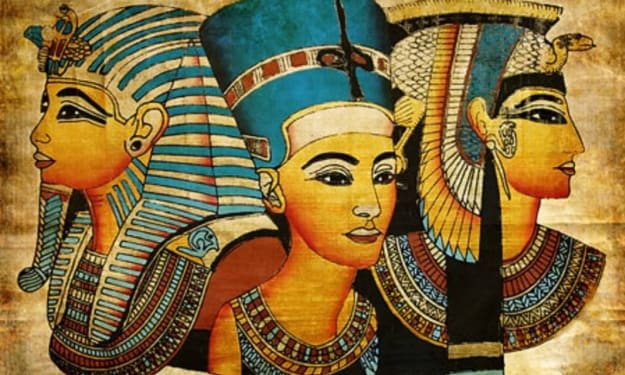
The Forgotten Queens of Ancient Egypt
What if history only told you half the story? Growing up in Egypt, I was surrounded by stories of great pharaohs — but they were men 98% of the time. Ramses II, Tutankhamun, Akhenaten. Their names were etched in my mind, carved into stone, and taught in classrooms.
By Jana Odette2 years ago in History
The Majestic Yellow Sapphire (Pukhraj) – A Treasure of Radiance
The Fourth Navaratna Gem: Chicken Sapphire (Pukhraj) Yellow Sapphire, additionally accepted as Pukhraj, is one of the best admired and admired gemstones in the Navaratna collection. It is associated with Jupiter, the better planet in the solar system, and is accepted for its abstruse significance, bread-and-butter value, and absolute applications. This commodity explores the extraction, demand, value, and uses of Chicken Sapphire, forth with its cultural importance. 1. Abstraction of Chicken Sapphire Yellow Sapphire is primarily mined from Sri Lanka, Thailand, Madagascar, Australia, Tanzania, and Myanmar. Amid these, Sri Lanka is accepted for bearing the accomplished affection Chicken Sapphires with aberrant accuracy and affluent aureate hues. Mining Locations: Sri Lanka (Ceylon Sapphires): The Ratnapura mines are acclaimed for their fine-quality Chicken Sapphires, advised the best in the world. Thailand: Sapphires from Thailand generally accept added chicken tones due to college adamant content. Madagascar: A cogent supplier in contempo years, bearing bright, active stones. Australia: Australian sapphires are darker in hue and accommodate added inclusions. Myanmar and Tanzania: These regions aftermath a abate but notable bulk of Chicken Sapphires. The mining action involves open-pit mining and alluvial mining area gemstones are extracted from riverbeds. The asperous stones abide acid and cutting to enhance their accuracy afore extensive the market. 2. Address and Bazaar Bulk of Chicken Sapphire The address for Chicken Sapphire has been consistently aerial due to its abstruse importance, rarity, and artful appeal. In Vedic astrology, it is believed to accompany prosperity, wisdom, and conjugal happiness, authoritative it awful approved afterwards in India and added South Asian countries. Factors Affecting Demand: Astrological Significance: Jupiter, the cardinal planet of Chicken Sapphire, is associated with acceptable fortune, education, and success. This acceptance fuels its address in countries like India, Nepal, and Thailand. Jewelry Industry: Chicken Sapphires are frequently acclimated in rings, pendants, and bracelets, authoritative them a admired amid adornment designers. Rarity and Purity: The beneath inclusions a gemstone has, the added admired it becomes. Untreated Chicken Sapphires with accustomed accuracy command aerial prices. Growing International Interest: The Western bazaar is more acquainted the bulk of Chicken Sapphires as an another to diamonds. Market Value: Low-Quality Stones: $100 - $500 per carat Medium-Quality Stones: $600 - $2,500 per carat High-Quality Sri Lankan Sapphires: $3,000 - $10,000 per carat Ultra-Premium Chicken Sapphires: Rare specimens can ability $50,000 per carat The estimated all-around bazaar admeasurement for Chicken Sapphire exceeds $500 actor annually, with India actuality the better consumer. 3. Uses of Chicken Sapphire Yellow Sapphire is acclimated in assorted applications, from adornment to automated and abstract purposes. Jewelry Industry: Used in assurance rings, bells bands, pendants, earrings, and bracelets. Preferred for its backbone (9 on the Mohs acerbity scale), authoritative it aggressive to scratches and accustomed wear. Often set in gold, as it complements the stone’s chicken hue and enhances its vibrancy. Astrological and Airy Benefits: Worn to allure wealth, wisdom, and success. Believed to accompany accord in relationships and conjugal bliss. Considered a bean for teachers, scholars, and airy leaders. Used in ayurvedic healing practices for convalescent brainy accuracy and digestion. Industrial Applications: Yellow Sapphire’s acerbity makes it advantageous in watchmaking, accurate instruments, and laser technologies. High-quality constructed sapphires are acclimated in LED lights and semiconductors. 4. Cultural and Historical Significance Yellow Sapphire has been admired for centuries in Hindu, Buddhist, and Western traditions. Hindu and Vedic Astrology: Associated with Brihaspati (Jupiter), the authority of the gods. Prescribed by astrologers to be beat on Thursday (Guruvar) for best benefits. Yellow Sapphire rings and pendants are frequently set in gold, acceptable their absolute energy. Buddhist Traditions: Used in airy rituals and temple offerings. Considered a bean that enhances brainwork and enlightenment. European Influence: In medieval Europe, Chicken Sapphire was believed to accompany aegis and insight. Used by ability and clergy as a attribute of acumen and all-powerful connection. 5. Comparison with Added Navaratna Gems Each Navaratna gem has different properties, and Chicken Sapphire is generally compared with added gemstones: Gemstone Planet Primary Benefit Color Price Range per Carat Ruby Sun Power & Vitality Red $500 - $50,000 Pearl Moon Calmness & Emotion White $50 - $5,000 Coral Mars Courage & Strength Red/Orange $50 - $3,000 Yellow Sapphire Jupiter Prosperity & Wisdom Yellow $100 - $50,000 Diamond Venus Luxury & Beauty White $1,000 - $1M Blue Sapphire Saturn Discipline & Success Blue $500 - $100,000 Hessonite Garnet Rahu Protection & Wealth Brown/Orange $100 - $5,000 Cat’s Eye Ketu Spiritual Growth Green/Yellow $100 - $10,000 Conclusion
By Say the truth 2 years ago in History
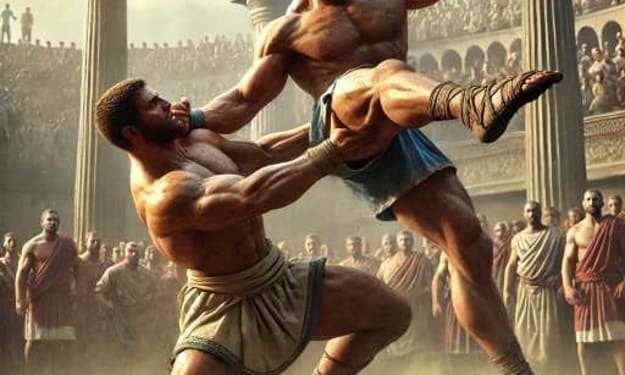
Ancient Greek Martial Art ‘Pankration’ and Its Influence on MMA
Ancient Greek Martial Art ‘Pankration’ and Its Influence on MMA Pankration was one of the most intense and revered sports of ancient Greece combining elements of boxing and wrestling with an almost unrestricted set of rules. It was a sport that truly embodied the Greek ideal of arete a term that signified excellence in all aspects of life including physical and mental prowess. Much like modern Mixed Martial Arts (MMA) pankration was a brutal yet highly respected competition that tested an athlete’s strength skill intelligence and endurance. The origins of pankration can be traced back to 648 BCE when it was introduced into the Olympic Games. However historians believe that its roots go even further back as Greeks had long practiced various forms of unarmed combat. The sport was said to have been created by the legendary heroes Hercules and Theseus who were believed to have used its techniques in their mythical battles. This connection to mythology only increased its appeal, as pankration was seen as a test of both physical power and divine favor.
By Adnan Rasheed2 years ago in History
10 Unbelievable Facts from History That Will Shock You
10 Unbelievable Facts from History That Will Shock You History is filled with astonishing events—some hidden in plain sight, others buried in time. From unexpected war durations to ancient scientific discoveries, these 10 mind-blowing historical facts will change the way you see history! 1. Napoleon Wasn’t Actually Short Many believe that Napoleon Bonaparte was a short man with an oversized ego. However, this is actually a misconception. His recorded height was 1.58 meters, measured using the French system. In modern measurements, this translates to approximately 1.73 meters (5.68 ft) which was an average height for his time. The myth of his short stature was a product of British propaganda, intended to mock him and weaken his image as a strong leader. 2. The Great Fire of London Helped End a Plague The year 1665 was one of the darkest in London's history, as the bubonic plague swept through the city, killing nearly 100,000 people. The very next year, in 1666, a massive fire broke out in Pudding Lane, spreading rapidly through London. Although the fire destroyed thousands of homes and businesses, it unexpectedly helped stop the plague by burning down areas infested with disease-carrying rats and fleas. 3. The Eiffel Tower Was Almost Demolished Today, the Eiffel Tower is one of the most iconic structures in the world, but did you know that it was originally meant to be temporary? Built in 1889, many Parisians hated the structure, calling it ugly and unnecessary. The French government planned to dismantle it after 20 years. However, its importance for radio transmissions during military operations helped it survive, securing its place as a permanent symbol of French culture. 4. The CIA Used Cats as Spies During the Cold War, the CIA came up with an unconventional espionage method—training cats to be spies! Through Project Acoustic Kitty, they implanted microphones and antennas inside cats, hoping they could eavesdrop on Soviet officials. Unfortunately, the first "spy cat" was hit by a taxi almost immediately after being released on its mission, causing the $20 million project to fail spectacularly. 5. Ancient Egyptians Had a Primitive Pregnancy Test The Ancient Egyptians were far ahead of their time in medical knowledge. Over 3,500 years ago, they developed an early pregnancy test using wheat and barley seeds. A woman would urinate on the seeds, and if the seeds sprouted quickly, she was considered pregnant. Surprisingly, modern experiments have shown this method was about 70% accurate, making it one of the earliest forms of pregnancy detection! 6. The Shortest War in History, Lasted Just 38 Minutes Wars often last years or even decades, but the Anglo-Zanzibar War in 1896 holds the record for the shortest war in history. When the British demanded that Zanzibar's new sultan step down, he refused. As a result, the British navy bombarded his palace, forcing Zanzibar to surrender in just 38 minutes! It remains one of the fastest military defeats ever recorded. 7. Vikings Discovered America Before Columbus Many people believe Christopher Columbus was the first European to reach America in 1492, but historical evidence suggests otherwise. Around the year 1000 AD, Leif Erikson, a Viking explorer from Norway, landed in what is now Newfoundland, Canada—almost 500 years before Columbus. Archaeologists have even discovered Viking settlements in North America, proving they arrived long before the Spanish explorers. 8. The Statue of Liberty Was Originally a Lighthouse The Statue of Liberty, one of the most famous symbols of freedom, was not only a gift from France but also served a practical purpose. When it was completed in 1886, it was used as a lighthouse to help guide ships into New York Harbor. However, due to insufficient lighting technology, it was too dim to be effective, and the lighthouse function was discontinued in 1902. 9. A Gladiator Became a Roman Emperor The Roman Empire was known for its elite ruling class, but one of its emperors, Maximinus Thorax, had a very unusual origin. He was born into a poor family and spent his early years as a shepherd. Later, he trained as a gladiator and joined the Roman army, where his incredible strength and combat skills caught the attention of the emperor. Over time, he climbed the ranks and eventually became one of Rome’s most powerful leaders, proving that even a gladiator could rise to power in ancient times. 10. Cleopatra Lived Closer to the Moon Landing Than to the PyramidsWhen we think of Ancient Egypt, we often assume Cleopatra was closely linked to the era of pyramid construction. However, Cleopatra VII, the last queen of Egypt, lived around 30 BC—whereas the Great Pyramid of Giza was built around 2560 BC. That means Cleopatra lived closer in time to the 1969 moon landing than to the construction of the pyramids, which had already stood for over 2,500 years by her time! This astonishing fact highlights the immense longevity of Egyptian civilization. By Cleopatra’s era, the pyramids were already considered ancient wonders, much like how we perceive the ruins of Rome or Greece today. Despite their age, they continued to inspire awe, standing as silent witnesses to millennia of history, culture, and innovation.
By MystiTech Hub2 years ago in History
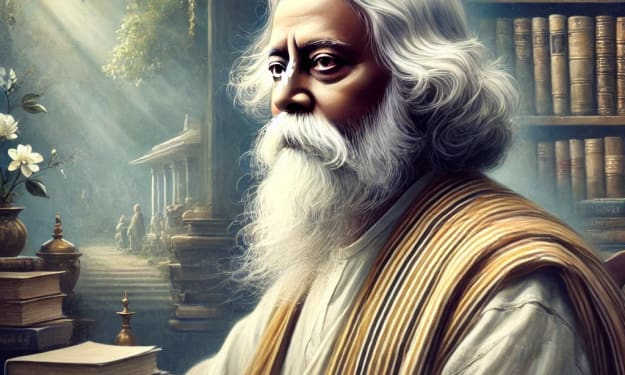
Rabindranath Tagore: The Timeless Bard of Bengal
Introduction Rabindranath Tagore, one of the greatest literary figures of the 19th and 20th centuries, was not just a poet but a philosopher, playwright, novelist, musician, painter, and social reformer. Known as "Gurudev", Tagore became the first non-European to win the Nobel Prize in Literature in 1913 for his world-renowned work "Gitanjali" (Song Offerings). His literary genius, humanitarian vision, and artistic endeavors have left an indelible mark on the cultural and intellectual landscape of not only India but the entire world. Early Life and Family Background Rabindranath Tagore was born on May 7, 1861, in Kolkata (then Calcutta), India, at the Jorasanko Thakur Bari, the ancestral home of the Tagore family. The youngest son of Debendranath Tagore and Sarada Devi, he grew up in a prominent aristocratic household renowned for its intellectual and cultural leadership in Bengal. The Tagores were pivotal figures in the Brahmo Samaj, a progressive socio-religious reform movement that sought to modernize Hindu traditions and champion social justice. This environment of artistic, spiritual, and philosophical discourse deeply influenced Tagore’s upbringing and worldview. Education and Early Writings At the age of 17, Tagore was sent to London to study law at University College London, but he soon left his studies and returned to India. His passion lay in literature, music, and art, not in the rigid structure of law. Tagore’s first poem was published when he was only eight years old, and by the age of 16, he published his first collection of poems titled "Bhanusimha Thakur" (Sun Lion) under a pseudonym. His early works reflected the rich cultural heritage of Bengal, infused with deep spiritual and philosophical themes. Literary Career and Major Works Tagore’s literary journey spans over 60 years, during which he wrote thousands of poems, songs, plays, novels, essays, and short stories. His writing was deeply rooted in the Bengali tradition, yet it carried a universal message of humanism, love, and harmony. 1. Gitanjali (Song Offerings) Tagore’s most famous work, "Gitanjali", a collection of spiritual and devotional poems, earned him the Nobel Prize in Literature in 1913. Originally written in Bengali, Tagore himself translated it into English, which gained international recognition. 2. Rabindra Sangeet (Tagore Songs) Tagore was also a prolific composer and created more than 2,000 songs, collectively known as "Rabindra Sangeet". His songs are deeply emotional, reflecting themes of love, nature, and spirituality. Two of his compositions became national anthems: "Jana Gana Mana" (National Anthem of India) "Amar Sonar Bangla" (National Anthem of Bangladesh) 3. Novels and Short Stories Tagore was a master storyteller. His novels like "Gora", "Ghare Baire" (The Home and the World), and "Chokher Bali" explored themes of social justice, women's rights, and nationalism. His short stories like "Kabuliwala", "Postmaster", and "The Hungry Stones" reflect the struggles of ordinary people and their emotions. 4. Plays and Dramas Tagore’s plays like "Dak Ghar" (The Post Office), "Raktakarabi" (Red Oleanders), and "Chandalika" tackled social and philosophical issues, challenging the caste system and advocating for freedom and equality. Contribution to Education In 1901, Tagore founded the Visva-Bharati University in Shantiniketan, West Bengal. His vision was to create a place where students could learn in harmony with nature and Indian traditions, blending Western and Eastern philosophies. This institution became a center for art, culture, and education, attracting scholars and artists from around the world. Political and Social Influence Though Tagore was not directly involved in politics, he was a strong advocate for freedom, equality, and social justice. He criticized the British colonial rule in India and returned the Knighthood awarded to him by the British government in 1919, as a protest against the Jallianwala Bagh Massacre. Tagore’s philosophy of universal humanism and international brotherhood influenced leaders like Mahatma Gandhi and Subhas Chandra Bose. He believed in unity beyond caste, religion, and nationality. Artistic Career In his later years, Tagore also became a painter and created over 2,000 paintings and sketches. His unique and abstract style was ahead of its time and reflected his deep understanding of human emotions and nature. Personal Life and Tragedies Tagore’s personal life was marked by several tragedies. He lost his mother at an early age, followed by the deaths of his wife Mrinalini Devi, two daughters, and his youngest son. These losses deeply affected him and were reflected in his melancholic and philosophical writings. Nobel Prize and International Recognition In 1913, Rabindranath Tagore became the first Asian and non-European to win the Nobel Prize in Literature. This brought global recognition to Indian literature and culture. He traveled extensively to countries like Japan, the United States, Europe, and China, spreading his message of peace, unity, and humanism. Death and Legacy Rabindranath Tagore passed away on August 7, 1941, at the age of 80, in Kolkata. His death marked the end of an era, but his legacy continues to inspire millions worldwide. Legacy and Impact 1. Literary Influence: Tagore’s works have been translated into multiple languages and are studied worldwide. 2. Social Reformer: He worked for women's empowerment, abolition of the caste system, and rural development. 3. Global Inspiration: His philosophy of universalism and peace influenced world leaders like Albert Einstein, Mahatma Gandhi, and Jawaharlal Nehru. 4. Cultural Icon: His songs, plays, and paintings continue to be celebrated in Indian and Bengali culture. Conclusion Rabindranath Tagore was not just a poet but a visionary, philosopher, and social reformer who bridged the gap between Eastern and Western thought. His contribution to literature, music, art, and education remains unparalleled. His works continue to inspire people to seek peace, harmony, and unity in a world divided by boundaries. --- Famous Quotes by Rabindranath Tagore
By Digital Home Library by Masud Rana2 years ago in History