World History
9/11. Content Warning.
9/11 It was the morning of September 11, 2001 when a horrific terrorist attack shook the world. Nineteen Al-Qaeda terrorists hijacked four American passenger planes crashing two into the Twin Towers of the World Trade Center in New York one into the Pentagon and the fourth into a field in Pennsylvania after passengers resisted the hijackers. Nearly 3,000 people were killed in these attacks leading to long term economic and political consequences for the United States and the world. The U.S. government immediately held Al-Qaeda responsible for the attacks and made capturing or killing its leader Osama bin Laden a top priority. This led to the invasion of Afghanistan where the Taliban government had granted Osama bin Laden refuge. Although the U.S military successfully ousted the Taliban from power bin Laden managed to escape and disappeared. Initially intelligence agencies believed he was hiding in the Tora Bora mountains where he and his associates had taken shelter. However he somehow evaded capture and relocated to an unknown location.
By Adnan Rasheed2 years ago in History
9/11 Attack
9/11 Attack It was the morning of September 11, 2001 when a horrific terrorist attack shook the world. Nineteen Al-Qaeda terrorists hijacked four American passenger planes crashing two into the Twin Towers of the World Trade Center in New York one into the Pentagon and the fourth into a field in Pennsylvania after passengers resisted the hijackers. Nearly 3,000 people were killed in these attacks leading to long term economic and political consequences for the United States and the world. The U.S. government immediately held Al-Qaeda responsible for the attacks and made capturing or killing its leader Osama bin Laden a top priority. This led to the invasion of Afghanistan where the Taliban government had granted Osama bin Laden refuge. Although the U.S military successfully ousted the Taliban from power bin Laden managed to escape and disappeared. Initially intelligence agencies believed he was hiding in the Tora Bora mountains where he and his associates had taken shelter. However he somehow evaded capture and relocated to an unknown location.
By Adnan Rasheed2 years ago in History
Ford Mustang: A Timeless American Icon
The Ford Mustang is not just a car; it’s a symbol of freedom, power, and American automotive history. The Mustang has won over car enthusiasts all over the world ever since it was introduced in 1964. From its iconic design to its thrilling performance, the Ford Mustang has solidified its position as a cultural and automotive icon. This article will explore the history, evolution, and significance of the Ford Mustang, delving into why it remains one of the most celebrated vehicles in automotive history.
By MD Alhaz Hossen2 years ago in History
What If You Could Time Travel to a Gladiator Fight? Here’s What You’d See. Content Warning.
Imagine stepping into a time machine, setting the dial to ancient Rome, and arriving at the peak of the Colosseum’s glory. The year? 80 AD. The event? A gladiator fight so intense it makes modern sports look like child’s play. Here’s what you’d experience as you witness the blood-soaked spectacle firsthand.
By Marveline Merab2 years ago in History
Illuminating Spaces: The Interplay of Light and Shadow in Architecture
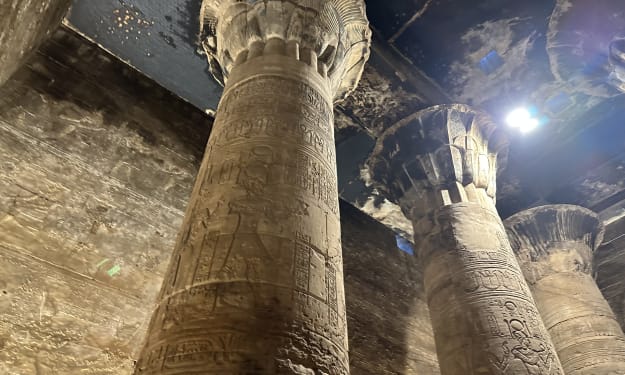
Throughout history, ancient architects harnessed the interplay of light and shadow to create structures that were not only functional but also imbued with aesthetic beauty and spiritual significance. By aligning buildings with celestial events, selecting materials that interacted with sunlight, and employing architectural techniques to manipulate illumination, these builders crafted dynamic spaces that continue to captivate us today.
By Siboli Mukherjee2 years ago in History
Echoes of Pindorama
In the extensive narrative of human history, few elements are as rich and lasting as those contributed by the Tupi people. Their journey, which spans thousands of years, exemplifies the resilience and creativity of humanity, serving as a poignant reminder of our transient nature on this planet. The Tupi, one of the most prominent indigenous groups in South America, have left a profound impact on the continent, especially in present-day Brazil. Although their legacy has often been eclipsed by the forces of colonization, it continues to influence the language, culture, and traditions of contemporary Brazil.
By A História2 years ago in History
Vow of the Voidspire
In the shadow of Mount Vyrthas, where the sky bled crimson at dusk, the Unsacshece were born not of flesh, but of betrayal. Once, they were the Sacrosanct—holy warriors sworn to protect the theocracy of Illysium. But when the High Pontiff declared their sacred oaths “tainted” by a lie, they were branded heretics, stripped of their titles, and hunted like beasts. Their name became a curse: Unsacshece—the Unhallowed. Now, they lurked in the Withering Wastes, a sun-scorched desert where the sands whispered secrets of the dead. Their leader, Kael Voryn, a man whose eyes held the storm of a thousand battles, clung to a single truth: the Unsacshece were no traitors. The Pontiff’s accusation was a ruse to bury the discovery they’d made—a discovery that could unravel Illysium’s divine facade. The Bleeding Dunes The sandstorm came at noon. Kael crouched behind a jagged outcrop, his tattered cloak whipping like a wounded bird. Beside him, Jerek, a wiry archer with a venomous tongue, spat grit from his mouth. “Another patrol. They’re getting bold.” Through the haze, Kael counted six Illysian riders, their silver armor gleaming despite the dust. The Pontiff’s crest—a serpent coiled around a sun—adorned their banners. “They’re not hunting us,” Kael muttered. “They’re herding us. Toward the Blackspire.” Jerek’s hand tightened on his bow. “That cursed tower? Why?” “Because whatever’s inside terrifies the Pontiff more than we do.” The Unsacshece had heard the tales: the Blackspire was a relic from the Age of Ashes, a prison for entities even the gods feared. But three nights prior, Kael had dreamt of it—a pulsing, obsidian monolith, its gates groaning open. A voice, cold as forgotten stars, had whispered: “Bring me the Key, and I will unmake your chains.” The Key. The reason the Unsacshece had been purged. A secret etched into Kael’s very bones. The Ghosts of Illysium They reached the Blackspire at twilight. Its spire clawed at the heavens, and the air reeked of iron and rot. Kael’s hand drifted to the scar on his chest—a mark left by the Pontiff’s dagger the night he’d stolen the Key. The Key was not an object but a soul, fused with his own during a forbidden ritual. He’d been meant to die, but the Unsacshece had dragged him back from the void. “This is madness,” hissed Lira, their healer, her face pale beneath her hood. “The Blackspire’s a tomb.” “No,” Kael said. “It’s a door. And we’re the key.” As they crossed the threshold, the walls shuddered. Torches flared to life, revealing murals of ancient wars—armies of men and monsters, and a hooded figure wielding a blade of shadow. Jerek traced the carvings. “That’s… you.” Kael froze. The mural’s warrior bore his face, his sword identical to the one strapped to Kael’s back. Beneath it, runes glowed: “The Unbound shall return when the spire bleeds.” A roar echoed above. The Illysian patrol had found them. The Pact They fled upward, the spire’s stairs coiling like a serpent’s spine. Behind them, steel clashed as the Unsacshece rearguard fought the Illysians. Kael burst into the summit chamber—a cavernous space dominated by a throne of bones. Upon it sat a figure shrouded in smoke, its eyes twin voids. “Kael Voryn.” The voice was the one from his dreams. “You carry my Key.” “What are you?” Kael demanded. “The First Betrayed. The one your Pontiff entombed here when I refused to kneel.” The smoke coalesced into a man-shaped void, a crown of thorns floating above its head. “Free me, and I will grant you the power to burn Illysium to ash.” Lira grabbed Kael’s arm. “It’s a demon! Don’t listen—” “You call me demon?” The entity laughed. “Your Pontiff butchered thousands to hide the truth. The ‘gods’ he worships are parasites, feeding on your fear. The Key in your soul is their bane. Break my chains, and we will end this.” Kael hesitated. The Unsacshece had vowed never to become the monsters Illysium accused them of being. But the patrol’s footsteps pounded closer. Jerek nocked an arrow. “Choose, Kael. Now.” The Unhallowed Ascendant Kael stepped forward. “What must I do?” “Die.” The entity struck faster than thought. A tendril of smoke speared Kael’s chest, searing the scar. He screamed as the Key—his soul—was ripped free, a shard of liquid darkness. The throne shattered. The entity absorbed the Key, its form solidifying into a towering warlord with skin like cracked obsidian. Illysian soldiers flooded the chamber. The warlord gestured, and shadows erupted, reducing the men to ash. Jerek loosed an arrow at the creature. “Kael, what have you done?!” But Kael was gone, his body a lifeless husk. The warlord turned to the Unsacshece. “You are free. Run, if you wish. Or stand with me and reclaim your world.” Lira knelt beside Kael’s corpse, her tears falling on his face. Then, she saw it—a flicker beneath his eyelids. The scar on his chest glowed, threads of shadow knitting his flesh. The warlord paused. “Impossible. The Key is mine.” Kael’s eyes snapped open—now pools of endless night. “You stole a fragment,” he rasped, rising. “But the Key is mine.” The Eclipse The chamber trembled as two forces collided: Kael, fused with the remnant Key, and the warlord, thirsting for vengeance. The Unsacshece stood torn, but Jerek fired at the warlord. “For Kael!” The battle spilled onto the spire’s roof beneath a blood-red moon. Kael wrested control of the shadows, hurling the warlord into the abyss. But the victory was hollow. The Key’s power was corrupting him, his veins blackening. Lira gripped his face. “Fight it, Kael! Don’t let it consume you!” He gasped. “The Pontiff… He knew this would happen. The Key’s a poison. It needs a host… or it unleashes hell.” Jerek’s voice was raw. “So we kill the Pontiff first.” Kael smiled faintly. “Take the others. Go to Illysium. Tell them… the Unsacshece are coming.” “And you?” He gazed at the horizon, where dawn cracked like a whip. “I’ll buy you time.” Epilogue: The Dawn of Unbound The Unsacshece marched west, their ranks swollen with deserters and rebels. Behind them, the Blackspire collapsed, a pillar of shadow swallowing the sky. At its heart, a figure knelt, his body crumbling to ash. But in Kael’s final moments, he felt no fear. The Key was silent, its hunger sated. In Illysium, the Pontiff stared at the darkening horizon and whispered a prayer. But the gods did not answer. They never had.
By Digital Home Library by Masud Rana2 years ago in History
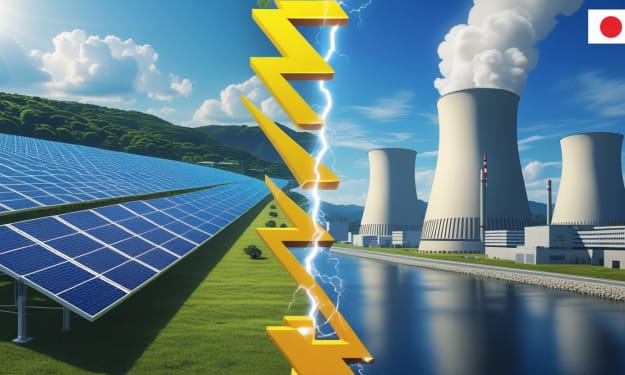
Japan’s Energy Revolution: Balancing Solar and Nuclear Power for a Sustainable Future
Japan’s Energy Revolution: Balancing Solar and Nuclear Power for a Sustainable FutureJapan, a global leader in technology and innovation, is undergoing a significant energy transformation. As the world shifts towards sustainability, Japan is making strategic moves to reduce its dependence on fossil fuels. But how is the country balancing its energy needs between solar power and nuclear energy?In this video, we explore Japan’s ambitious energy revolution—the rise of solar power, the revival of nuclear energy, and what it means for the future of clean energy.Japan’s Energy Crisis and Policy ShiftFor decades, Japan relied heavily on imported fossil fuels, fueling its rapid industrial growth. However, the 2011 Fukushima Daiichi nuclear disaster forced the nation to rethink its energy strategy.Before Fukushima, nuclear power supplied 30% of Japan’s electricity.In the aftermath, all nuclear reactors were shut down for safety inspections.This led to a 50% increase in fossil fuel imports, driving up energy costs.Rising electricity prices and growing climate concerns pushed the government to seek alternatives. Japan introduced aggressive policies promoting renewable energy, particularly solar power, with subsidies and feed-in tariffs to encourage investment.As a result, Japan became one of the world’s top five solar energy producers. However, despite this progress, challenges remained. Solar power’s dependence on weather conditions and the high cost of fossil fuel imports made energy stability a pressing issue. This led policymakers to reconsider nuclear energy as part of Japan’s long-term energy strategy.The Rise of Solar Power in JapanJapan’s commitment to solar energy is evident in its large-scale adoption across cities, rural areas, and even on floating solar farms.Key Developments in Japan’s Solar Energy:• Floating Solar Farms: Given Japan’s limited land availability, floating solar farms on reservoirs and lakes maximize energy production while minimizing land-use conflicts.• Residential Solar Panels: Government incentives have encouraged millions of households to install solar panels, reducing reliance on the national grid.• Advanced Solar Technology: Companies like Sharp and Panasonic have developed high-efficiency solar panels capable of generating power even in low sunlight.Challenges of Solar Energy in Japan:• Intermittency Issue: Solar power is weather-dependent, making energy storage crucial.• High Initial Costs: While subsidies help, installing solar panels still requires significant investment.• Grid Stability: The national grid struggles to manage large fluctuations in solar energy production.Despite these challenges, Japan continues to innovate with battery storage and smart grid technologies, ensuring a more reliable solar energy system.Japan’s Nuclear Power RevivalFollowing the Fukushima disaster, Japan shut down all 54 nuclear reactors, leading to strong public opposition. However, over time, the government has implemented some of the world’s strictest nuclear safety regulations and gradually restarted several reactors under enhanced security measures.Why is Japan Reviving Nuclear Power?🔹 Energy Security: Unlike solar and wind, nuclear energy provides a stable and continuous power supply.🔹 Lower Carbon Emissions: Nuclear power is carbon-free, helping Japan achieve its climate goals.🔹 Economic Stability: Restarting reactors reduces dependence on costly fossil fuel imports.How Safe Are Japan’s Nuclear Reactors Today?• New Safety Standards: Post-Fukushima, Japan has introduced some of the strictest nuclear regulations in the world.• Advanced Reactor Technology: Development of Small Modular Reactors (SMRs) and next-generation nuclear plants enhances safety.• Improved Cooling Systems: Modern reactors now feature passive cooling mechanisms to prevent meltdowns.However, nuclear power remains a controversial topic. Surveys indicate that over 50% of the Japanese population still opposes nuclear energy, citing safety concerns. Despite this, economic and environmental pressures continue to drive the government’s nuclear policies.Balancing Solar and Nuclear for a Sustainable FutureJapan’s energy transition isn’t about choosing between solar and nuclear—it’s about finding the right balance. The government’s energy roadmap includes:🔹 Expanding solar capacity while investing in advanced energy storage solutions like lithium-ion and hydrogen batteries.🔹 Using nuclear power as a stable backup to ensure energy security.🔹 Developing other renewables, including offshore wind farms and hydrogen energy.By integrating multiple energy sources, Japan aims to build a resilient, stable, and low-carbon energy future.Japan’s Energy Goals for 2050To become carbon neutral by 2050, Japan has set ambitious targets:• 50-60% renewable energy (solar, wind, hydro).• 20-25% nuclear energy as a stable backup.• Minimal fossil fuel use, primarily for emergency reserves.To achieve these goals, Japan is investing in AI-driven smart grids, energy-efficient infrastructure, and next-generation nuclear technology.ConclusionJapan’s energy transformation is a testament to resilience, innovation, and sustainability. The country is proving that solar and nuclear power can coexist, creating a cleaner and greener future.But what do you think? Should Japan rely more on solar energy, or is nuclear power essential for energy stability?Share your thoughts in the comments!👉 Don’t forget to like, share, and subscribe for more in-depth content on global innovations!
By MystiTech Hub2 years ago in History
Cox's Bazaar: The Unparalleled Beauty of the World's Longest Sea Beach
In the southeast of Bangladesh is the coastal town of Cox's Bazaar. It boasts the longest natural sandy sea beach in the world, measuring approximately 120 kilometers long. Known for its scenic beauty, golden sands, blue waters, and captivating natural views, Cox's Bazaar is a popular tourist destination.
By MD Alhaz Hossen2 years ago in History
St. Patrick’s Day 2025: Celebrating the Legacy and Traditions of March 17
St. Patrick’s Day is one of the most widely celebrated holidays in the world, marked by parades, festivals, feasts, and, of course, the iconic color green. The holiday, which falls on March 17, honors St. Patrick, the patron saint of Ireland, but the celebrations have grown far beyond the Emerald Isle, with events taking place in cities across the globe. In 2025, St. Patrick’s Day will be celebrated with a mix of traditional and modern festivities, and it’s a time to reflect on the rich history of the holiday and the enduring legacy of St. Patrick himself.
By Aneeq Zaheer2 years ago in History
Why History Matters How It Influences Our Future
What if I told you that your smartphone's existence was influenced by a war that happened over 70 years ago? The technological advances from World War II laid the groundwork for many modern innovations we take for granted today. This is just one example of how the past
By Ravi Patel2 years ago in History