World History
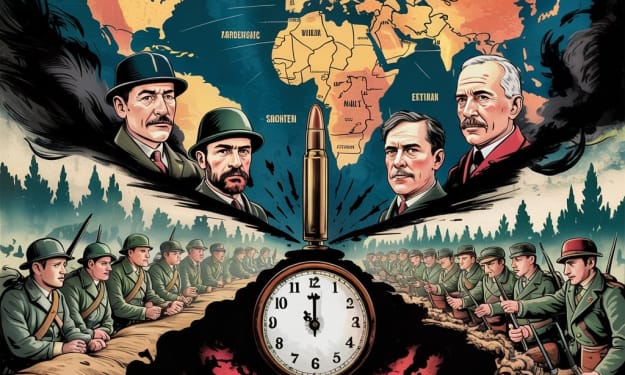
“The Six Major Causes of World War I: Understanding the Roots of a Global Conflict”
Six Major Causes of World War I World War I, also known as the Great War, began in the summer of 1914 and lasted until 1918. It was one of the deadliest conflicts in history, with more than 20 million soldiers losing their lives and another 21 million wounded. The war was mainly fought in Europe, but its effects were felt across the world.
By Muhammad yaqoobabout a year ago in History
Why Japanese Education Became a Role Model for the World
How Discipline, Innovation, and Cultural Values Shaped Japan’s Exceptional Learning System When the world thinks of educational excellence, Japan often stands out. With high-performing students, orderly classrooms, and impressive literacy rates, Japan’s education system is widely admired. But what lies behind this success? The answer is a powerful blend of cultural tradition, post-war reform, and an unwavering commitment to continuous improvement.
By MystiTech Hubabout a year ago in History
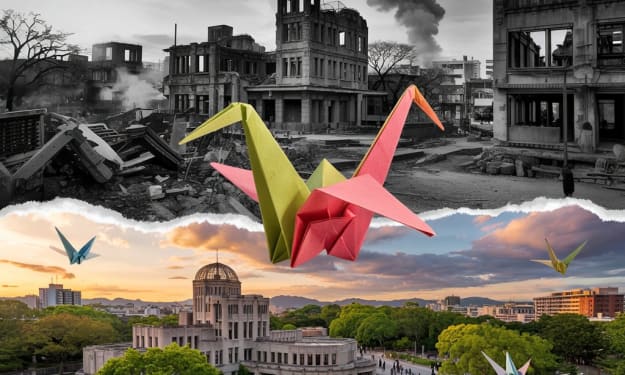
From Destruction to Peace: The Story of Hiroshima
In the quiet of a summer morning, Hiroshima stirred to life. It was August 6, 1945, and the city had already endured years of war. But beneath the tension, life persisted—vendors opened their stalls, children played in the streets, and mothers prepared breakfast for their families.
By Mohammad Tariq Sideeqiabout a year ago in History
NASA Curiosity Rover Finds Largest Organic Molecules on Mars Major Breakthrough in Search for Life.
NASA Curiosity Rover Finds Largest Organic Molecules on Mars Major Breakthrough in Search for Life. In a groundbreaking discovery that reignites the question of life beyond Earth NASA's Curiosity rover has detected the largest organic molecules ever found on Mars. These complex carbon based compounds considered essential building blocks of life were discovered in rock samples analyzed by Curiosity’s onboard instruments in the Gale Crater an area long suspected to have once hosted liquid water.
By Adnan Rasheedabout a year ago in History
How Japan Rose from the Ashes: The Post-War Miracle
How Japan Rose from the Ashes: The Post-War Miracle In 1945, Japan stood at the edge of complete devastation. The end of World War II had left the country in ruins — cities flattened by bombings, millions homeless, industries destroyed, and a society gripped by hunger, fear, and despair. The land of the rising sun had set into darkness.
By MystiTech Hubabout a year ago in History
“Bacha Khan Baba: A Champion of Non-Violence and a Great Leader of the Pashtuns”. Content Warning. AI-Generated.
In the heart of the rugged mountains of the Indian subcontinent, where the winds whispered tales of bravery and honor, a leader emerged who would dedicate his life to peace, education, and the upliftment of his people. Khan Abdul Ghaffar Khan, fondly known as Bacha Khan Baba, was not just a political figure but a symbol of resilience, wisdom, and non-violence. His story is one of unwavering dedication to justice and his people, the Pashtuns.
By Muhammad yaqoobabout a year ago in History
Houston Stuns Duke in Final Four Comeback to Reach NCAA Championship
SAN ANTONIO — In a thrilling Final Four showdown, Houston pulled off an incredible comeback to defeat Duke 70-67, overcoming a 14-point deficit in the final eight minutes. With this stunning victory, the Cougars are now set to face Florida in the NCAA Championship game on Monday night.
By Muhammad Hayatabout a year ago in History
Whispers from the Lighthouse
The first time I saw him, I thought he was a ghost. To be fair, that assumption wasn’t too far off. I had just moved to the coastal town of Eastmere—an old fishing village with more seagulls than cell service. The kind of place people came to disappear, or to find themselves, depending on how you saw it. I was there for both.
By Muhammad Ullahabout a year ago in History
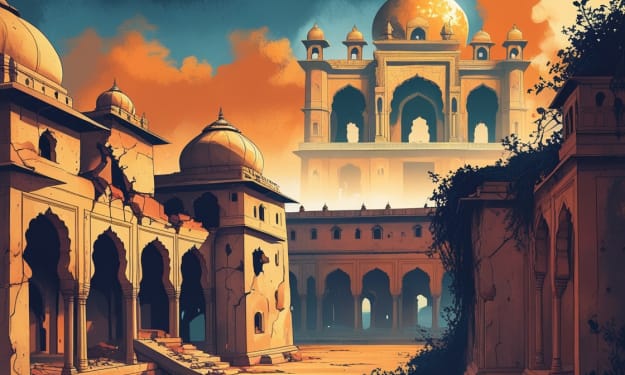
The Forgotten Fortunes: Rajasthan’s Vanishing Palaces and Their Lost Legacy
Whispers in the Sand: The Forgotten Palaces of Rajasthan Rajasthan—literally meaning “Land of Kings”—is often celebrated for its grand forts, regal culture, and tales of valiant warriors. Cities like Jaipur, Udaipur, and Jodhpur boast world-renowned palaces such as the City Palace, Hawa Mahal, and Mehrangarh Fort. However, beyond the popular tourist trail lies another Rajasthan—one composed of forgotten palaces, crumbling mansions, and vanishing architectural wonders. These structures, once the pride of princely estates and merchant kingdoms, now lie in ruins, hidden under layers of dust and silence, their stories fading with each passing year. This article explores the fascinating, overlooked world of Rajasthan’s vanishing palaces, their historical importance, and the urgency of preserving this disappearing legacy. 1. The Legacy of Forgotten Royalty Rajasthan was once divided into numerous princely states, or thikanas, each ruled by powerful feudal lords under the larger umbrella of Rajput dynasties. While the capital cities boasted palaces that remain preserved and visited today, hundreds of lesser-known palaces in remote districts like Karauli, Barmer, Shekhawati, Bundi, and Tonk are in disrepair. These estates were not just royal residences but also centers of political power, art, culture, and wealth. From ornate mirror work and hand-painted murals to secret courtyards and underground chambers, they were a testament to the region’s architectural brilliance. Many of these palaces were even grander than some of today’s iconic buildings. Yet after the end of princely rule in 1947 and the eventual abolition of royal privileges in 1971, many of these thikanas were left without adequate income or recognition. Over time, the families moved out, and the palaces fell into decay. 2. Shekhawati – The Fading Open-Air Museum Nowhere is the decline more visible than in Shekhawati, a region once called the "open-air art gallery of Rajasthan." It was home to some of India’s wealthiest merchant families during the 18th and 19th centuries, who built lavish havelis (mansions) adorned with frescoes, gold leaf work, and intricate carvings. Today, most of these havelis—particularly in towns like Mandawa, Nawalgarh, and Fatehpur—are crumbling. Many have broken roofs, faded murals, and are used as storage barns or have been completely abandoned. Historians estimate that more than 2,000 such structures exist, many of them worthy of World Heritage recognition, but less than 10% are maintained. 3. The Royal Estates of Forgotten Forts Beyond Shekhawati, several other thikanas hold palaces that are fading into obscurity: Bundi Palace: Though renowned for its wall paintings, much of the structure remains unrestored. Entire chambers with priceless murals have been left to rot. Karauli Palace: Home to the Yaduvanshi kings, this palace has intricate stonework and halls once gilded with gold. However, tourism is minimal, and preservation efforts are limited. Kuchaman Fort: Perched atop a steep hill, this fort-palace is mostly unknown outside local circles. While a section has been converted into a heritage hotel, vast areas are abandoned. These forts once housed libraries, treasuries, weapon stores, and artworks—many of which have been stolen, lost, or deteriorated due to lack of care. 4. What Was Lost: Treasure, Culture, and Identity Rajasthan’s forgotten palaces weren’t just about stone and mortar. They held: Historical Manuscripts: Genealogies, treaties, and philosophical texts. Treasure Rooms: Coins, jewelry, gold-plated furniture. Royal Paintings: Many now looted or held in private collections abroad. Local Art Forms: Wall art like Pichhwai, Miniature, and Phad paintings, which are vanishing. The cultural identity of many small towns was tied to their palace. As the buildings collapsed, so did traditional crafts, festivals, and a sense of communal pride. 5. Why the Palaces Vanished Several factors have contributed to this decline: Neglect after Independence: Many royal families were left without adequate funds to maintain their properties. Urban Migration: Heirs moved to bigger cities, abandoning ancestral homes. Lack of Government Support: ASI and state bodies often prioritize well-known sites, leaving smaller palaces undocumented. Looting and Encroachment: Several properties have been vandalized, illegally occupied, or stripped for building materials. 6. The Path Forward: Restoring a Legacy Not all hope is lost. A few passionate individuals and NGOs are working to restore forgotten palaces and promote them through heritage tourism. For example: The Neemrana Group has restored several old palaces into boutique hotels.
By Say the truth about a year ago in History
Musk Says He Hopes Europe and U.S. Move to a ‘Zero-Tariff Situation’
Tesla CEO Elon Musk has once again made headlines, this time by advocating for a “zero-tariff situation” between the United States and Europe. Speaking during a recent press engagement, Musk emphasized the need for fair and reciprocal trade policies across both sides of the Atlantic. His comments come at a time when international trade relations, especially in the electric vehicle (EV) sector, are increasingly under scrutiny.
By Md polash Aliabout a year ago in History
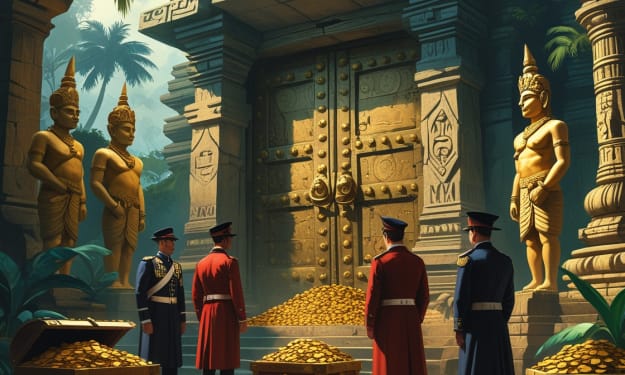
“The Fortune That Escaped the Empire: British Colonialism’s Greatest Missed Treasures”
The Lost Riches: The Biggest Treasure Missed by the British Empire Throughout the era of colonial expansion, the British Empire plundered immense wealth from its colonies across Asia, Africa, and the Americas. From India's diamonds and spices to Africa’s gold and minerals, Britain amassed unprecedented fortunes. However, history also holds fascinating accounts of enormous treasures that evaded British grasp—treasures buried, lost, or hidden in plain sight, never to be seized by the crown. Among these, one of the most legendary missed fortunes lies in India: the hidden treasures of the Maratha Empire and Tipu Sultan’s lost wealth.
By Say the truth about a year ago in History