World History
Ctésias of Cnidus
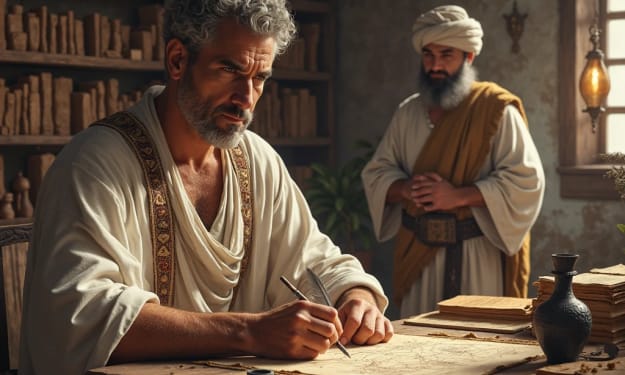
Ctésias of Cnidus was an intriguing personality from antiquity—a Greek doctor, historian, and author who thrived during the 5th and 4th centuries BCE. Renowned for his accounts of Persia and India, Ctésias dedicated many years to the Persian court, acquiring direct insights into Eastern civilizations. Although his works have faced criticism for their inaccuracies and exaggerations, they continue to be significant for their distinctive viewpoint on the Achaemenid Empire and far-off regions.
By A Históriaabout a year ago in History
The 9/11 Attack on the World Trade Center
On the morning of September 11, 2001, the sky over New York City was a clear blue. People were going about their normal routines—commuting to work, grabbing coffee, and settling into another busy day in the city that never sleeps. No one knew that the next few hours would change the world forever.
By karimullahabout a year ago in History
Historical Artifacts That Still Puzzle Archaeologists Today
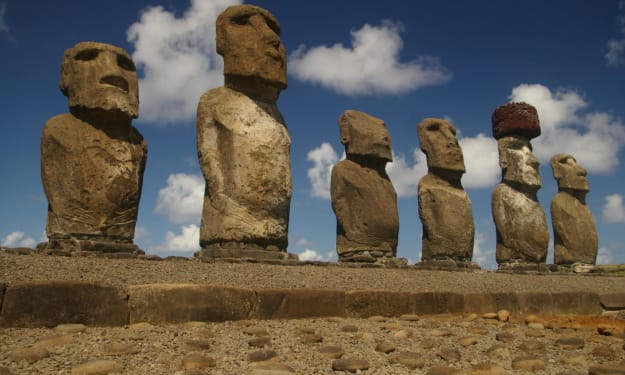
Historical Artifacts That Still Puzzle Archaeologists Today Throughout history archaeologists have unearthed countless relics from ancient civilizations some of which have provided valuable insights into our past. However there are several artifacts that continue to defy explanation. These mysterious objects challenge conventional historical understanding and raise intriguing questions about the knowledge technology and capabilities of ancient cultures. Here are some of the most puzzling historical artifacts that remain unsolved mysteries to this day.
By Adnan Rasheedabout a year ago in History
Morocco's Kalaat M'Gouna Rose Season
Morocco's Kalaat M'Gouna Rose Season: Introduction: Kalaat M'Gouna, a charming town in southeastern Morocco, lies at the foot of the stunning High Atlas Mountains. Known as the "Valley of Roses," it captivates visitors each spring with a spectacular bloom that transforms the landscape into a vibrant tapestry of pink and green. The Rose Season here is not only a feast for the eyes but also a rich blend of history, culture, economy, and community spirit.
By Usa Nationabout a year ago in History
The Lost Treasures of Cambodia: Secrets of the Angkor Temples
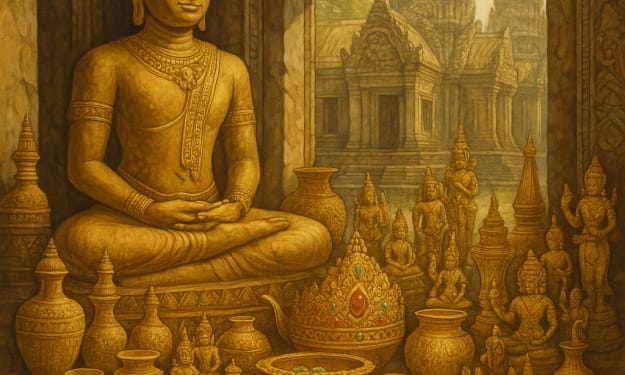
The Forgotten Riches of Cambodia’s Ancient Shrines: From Angkor's Splendor to Global Exploitation Cambodia’s ancient temple complexes, particularly Angkor Wat and its adjacent cities, are not only significant architectural feats but once housed some of the most remarkable treasures of the Khmer Empire. These valuables, lost through conflict, colonization, and plundering, have ignited international interest and initiatives for cultural restitution. This article explores the history of the Cambodian temple treasureswhat they encompassed, how they vanished, and the ongoing pursuit to retrieve them. When individuals envision Cambodia, the grand spires of Angkor Wat frequently come to minda representation of spiritual commitment and imperial magnificence. However, what many may not be aware of is that the temple complexes of the ancient Khmer Empire once encompassed vast treasures: gilded statues of Hindu and Buddhist deities, ceremonial adornments, intricately carved artifacts, and royal offerings. These were not merely tokens of affluencethey embodied the cosmic authority and divine connection of the Khmer monarchs. At its zenith between the 9th and 15th centuries, the Khmer Empire extended across present-day Cambodia, Thailand, Laos, and Vietnam. Its capital, Angkor, evolved into a spiritual and political hub, housing hundreds of temples, including Angkor Wat, Bayon, Ta Prohm, and Banteay Srei. The Function of Temples in Khmer Affluence In contrast to numerous empires where wealth was accumulated in treasuries or palaces, in Cambodia, a significant portion of the royal and religious riches resided within temples. These hallowed edifices served not only as sites of worship but also as repositories for offerings from monarchs, nobles, and pilgrims. Temple inscriptions from Angkor indicate that temples like Preah Khan once possessed thousands of gold and silver artifacts, including over 100,000 pearls and gemstones. The Lolei inscription makes reference to land grants and endowments of gold for the maintenance of temple functions and rituals. Gold statues of Vishnu, Shiva, and the Buddha were prevalent within the sanctuaries. Each temple operated its own "economy"farmlands, laborers, and artisansthat supported the priests and preserved the treasures. This close association between affluence and religious purpose made temples prime targets during incursions. Conflict, Invasion, and the Vanishing of Temple Riches The decline of Angkor in the 15th century signaled the onset of the disappearance of Cambodia’s temple treasures. The city was invaded by the Ayutthaya Kingdom of Siam (modern-day Thailand) in 1431, leading to the plundering of much of Angkor’s wealth. Some historians assert that golden statues and relics were transported to Siamese temples. The ensuing centuries were marked by unrest, resulting in the abandonment of numerous temples to the jungle. Left unprotected, they became targets for local looters and treasure seekers. By the 19th century, when French explorers re-encountered Angkor, many temples had already been deprived of numerous valuable artifacts. The French colonization of Cambodia (1863–1953) initiated another phase of cultural extraction. While some French archaeologists endeavored to preserve Khmer heritage, others dispatched temple sculptures, lintels, and statues to European museumsoften without consent. Entire temple doors, columns, and altars were removed. The Guimet Museum in Paris and other Western institutions continue to retain Khmer artifacts that were extracted during the colonial era. Numerous treasures represent not merely artistic creationsthey are sacred elements that once formed part of living temples. Modern Exploitation: The Khmer Rouge and Black Market Trafficking In the 20th century, Cambodia experienced another catastrophic erosion of its temple heritage during the regime of the Khmer Rouge (1975–1979) and the subsequent decades of civil conflict. During this epoch, extensive looting of temples became prevalent. Archaeological sites were blasted, and statues were severed from their bases and sold to international collectors. Some artifacts found their way into private collections, while others were housed in global museums. The Ta Prohm and Banteay Chhmar temples sustained considerable damage during this time. By the 1990s, a thriving black market for Southeast Asian antiquities was firmly established. Cambodia’s temple relics were among the most coveted. Statues weighing several hundred kilograms were illicitly transported out of the country, occasionally with the assistance of corrupt officials or insurgent soldiers. Repatriation and Ongoing Recovery Initiatives In recent years, Cambodia has undertaken substantial endeavors to reclaim its cultural legacy. The government, supported by UNESCO and various international entities, has initiated legal actions and negotiations aimed at returning looted artifacts. In 2023, several significant sculptures were repatriated from the United States, including from the Metropolitan Museum of Art and private collections. Some of these items had been unlawfully taken decades earlier from temples such as Koh Ker and Prasat Chen. The case of Douglas Latchford, a British art dealer accused of trafficking stolen Cambodian artifacts, garnered global attention. Following his passing, his estate began the process of returning numerous invaluable Khmer sculptures to Cambodia. Although thousands of items remain absent or held in foreign collections, the momentum is increasing. Each returned artifact represents a stride toward healing Cambodia’s cultural wounds and reestablishing the connection between the people and their ancestral heritage. Conclusion: Treasures Beyond Wealth The narrative of Cambodia’s temple treasures transcends mere riches and jewelsit embodies a saga of identity, resilience, and remembrance. While many treasures have been lost to conflict and avarice, the spiritual significance of these artifacts endures. As Cambodia endeavors to restore its past, its temples continue to evoke wonder and optimism for a future where history is preserved, and justice is achieved.
By Say the truth about a year ago in History
The Mountain of Light and the Throne of Glory: The Greatest Treasures of the Mughal Empire
The Koh-i-Noor and the Peacock Throne: The Supreme Treasures of the Mughal Empire The Mughal Empire, one of the most influential and affluent dynasties in Indian history, accumulated unimaginable riches over the centuries. Among its most renowned treasures were the legendary Koh-i-Noor diamond and the Peacock Throne, both emblems of imperial magnificence and global intrigue. This article delves into the history of these iconic gems, their role in defining Mughal opulence, and how they were ultimately lost to invaders and colonizers, becoming subjects of dispute and yearning in contemporary times.
By Say the truth about a year ago in History
India-Pakistan Tensions or the Prelude to a Third World War?
The enduring rivalry between India and Pakistan has become a crucial issue not just for the subcontinent but for the entire world. Stemming from historical grievances, territorial disagreements, and religious differences, this hostility has frequently escalated into military confrontations, skirmishes, and rhetoric that imply the possibility of a larger conflict. With nuclear capabilities coming into play increasingly since the late 1990s, the stakes have significantly heightened. This essay examines the current state of India-Pakistan tensions and interrogates whether they might indicate a more serious global conflict—a Third World War—or if they are simply isolated disputes that can be managed through diplomacy and negotiation.
By EMRANUZZAMANabout a year ago in History
"Flight 27: Lost and Found"
The sky had been calm when Flight 908 left New York, bound for Buenos Aires. It was the kind of flight that lulled passengers into false security—soft lighting, a smooth ascent, and quiet conversations among strangers who would never speak again. At 37,000 feet, serenity held like a delicate thread.
By Hamdan Khanabout a year ago in History
Israel Launches Airstrike in Syria, Targeting Group Accused of Attacking Druze Community. AI-Generated.
Jerusalem — The Israeli military said it carried out airstrikes in southern Syria on Tuesday night, targeting what it described as a militant group responsible for a recent cross-border attack on the Druze community in northern Israel. The strike marks a significant escalation amid already rising tensions in the region.
By Lnd Alaminabout a year ago in History
The Lost Treasure of the Ottoman Empire: A Legacy Shrouded in Mystery
The Ottoman Empire, a global power that lasted from 1299 until the early 20th century, was a complex tapestry of culture, politics, and opulence. Throughout its centuries-long reign, the Ottomans acquired a wealth that rivaled some of the richest empires in history. As with many great empires, much of their treasure remains unaccounted for, lost or hidden during times of war, revolution, and decline. The Treasure of the Sultans The Ottoman Sultans were known for their extravagant palaces, vast collection of art, and precious items, some of which were considered invaluable. The Topkapi Palace in Istanbul, for example, housed treasures beyond imagination: intricate jewels, gilded artifacts, and rare manuscripts that represented the empire’s glory. However, as the empire weakened during the 19th and early 20th centuries, the wealth of the Ottoman rulers began to dissipate. One of the most intriguing mysteries surrounding the Ottoman treasure is the fabled “Sultan’s Lost Diamond”, a massive diamond believed to have been hidden away at the fall of the empire. This diamond, which was said to have once belonged to Sultan Abdulhamid II, disappeared after his dethronement in 1909. Some believe it was secreted away to avoid being plundered, while others think it was sold off or lost in the chaos that surrounded the end of the Ottoman reign. Another significant item in the Ottoman treasure trove was the “Golden Throne of Suleiman the Magnificent.” This magnificent throne, which once symbolized the grandeur of the empire, was rumored to have been hidden by the royal family before they fled Istanbul as the empire’s fall loomed closer. To this day, no one has ever uncovered its location, and it remains one of the greatest unsolved mysteries of the Ottoman era. The Search for Hidden Caches In addition to these royal treasures, there are stories of hidden caches of gold, jewels, and other valuables secreted away throughout the empire. During World War I and the eventual collapse of the empire, numerous treasure hoards were hidden by military leaders and high-ranking officials to prevent them from being looted or seized by foreign forces. One of the most well-known legends is the story of “The Lost Gold of the Ottomans”. As the Ottoman Empire crumbled, it is believed that the government, fearing invasion, took great measures to hide its wealth. The gold was supposedly buried in various locations, including the Bosporus Strait, Anatolia’s mountains, and even the vast underground tunnels beneath Istanbul. Despite numerous attempts by treasure hunters and historians, no definitive evidence of these gold reserves has ever been found. The Final Days of the Empire As the Ottoman Empire neared its end, the fate of many treasures became more uncertain. In 1922, after the abolition of the Ottoman Sultanate, much of the royal collection and personal wealth was scattered. The newly-formed Turkish Republic did its best to preserve historical artifacts, but countless precious items were either lost during the subsequent upheaval or sold off to private collectors. One particularly famous treasure is said to have been part of the Imperial Treasury of the Harem. The treasure, hidden deep within the walls of Topkapi Palace, allegedly consisted of thousands of priceless gems, including emeralds, rubies, and diamonds. The fate of this collection is still unknown, with many speculating it was either stolen during the Republic’s early days or buried to avoid detection. The Legacy of Ottoman Treasures While many of the Ottoman treasures remain lost to time, their legacy lives on in the rich cultural artifacts that have been preserved in museums around the world. The jewels and gold that once adorned the sultans’ palaces, the exquisite manuscripts, and the priceless art are remnants of an empire that once commanded the attention of the world. Today, archaeologists and treasure hunters continue to seek out clues that might lead them to the lost riches of the Ottoman Empire. Whether through the meticulous study of old maps, historical records, or deep-sea explorations, the allure of these hidden treasures remains strong. The Ottoman Empire may be long gone, but its wealth, both in material and cultural terms, is still a tantalizing puzzle. Conclusion The lost treasure of the Ottoman Empire represents more than just the search for wealth. It embodies the mystery, the power, and the intrigue of an empire that once ruled over a vast portion of the world. As historians and adventurers continue to unearth new clues, the possibility of finding these hidden treasures remains alive, a testament to the empire’s enduring legacy. I’ll generate a relevant image for you next. Image created Rate this image The article and the image have been completed! Let me know if you need any further edits or assistance.
By Say the truth about a year ago in History