World History
The Lost Riches of Anatolia: Unveiling Turkey’s Greatest Treasure
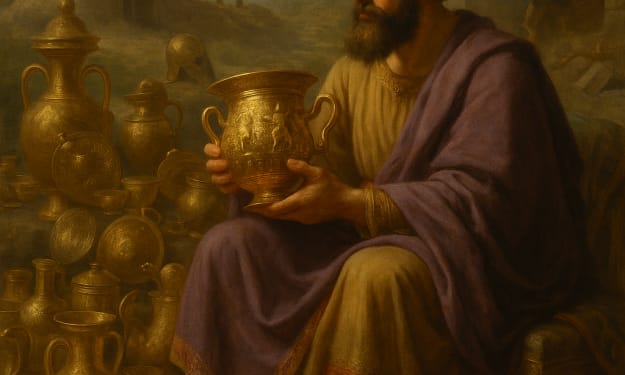
“The Lydian Hoard: Uncovering Turkey’s Hidden Wealth of Monarchs” Deep within the core of western Anatolia, a revelation in the late 20th century unveiled one of Turkey’s most significant ancient treasuresthe Lydian Hoard. Often dubbed the "Treasure of Croesus," this extensive assemblage of gold and silver relics narrates the tale of a prosperous ancient kingdom that once dominated Asia Minor. This article explores the history of Lydia, its famed monarch Croesus, the captivating modern rediscovery of the hoard, its unlawful trafficking, and its eventual repatriation to Turkeyrendering it a symbol of both cultural legacy and national dignity. Article: The Lydian Hoard: Uncovering Turkey’s Hidden Wealth of Monarchs In the territories that currently constitute contemporary Turkey, the ancient realm of Lydia once thrived, abundant in gold, folklore, and significance. At its zenith during the 6th century BCE, Lydia was recognized as one of the most affluent kingdoms globally, governed by the notoriously wealthy King Croesus. Although much of its splendor had transitioned into myth, the contemporary discovery of the Lydian Hoarda cache of remarkable gold and silver treasuresastounded the world and rekindled international intrigue with the overlooked Lydian empire. The Ascendancy of Lydia and King Croesus Lydia was situated in western Anatolia, encompassing the present-day Turkish provinces of Manisa and Uşak. It rose as a regional power in the 7th century BCE and attained its pinnacle under King Croesus, who reigned from approximately 595 to 546 BCE. Croesus became emblematic of vast affluenceso much so that the expression “rich as Croesus” entered numerous languages. Lydia’s wealth was propelled by the gold-laden Pactolus River, where the world’s first coins fabricated from electrum (a natural alloy of gold and silver) were minted. Croesus was also celebrated for his support of the arts, the erection of magnificent temples (including the Temple of Artemis at Ephesus), and diplomatic relations with other powers such as Egypt and Babylon. However, his aspirations led him into confrontation with the Persian Empire under Cyrus the Great, culminating in Lydia’s defeat and incorporation into the expanding Achaemenid Empire. The Revelation of the Lydian Hoard Fast forward to the 1960s and 1970s, when Turkish grave robbers chanced upon burial moundsreferred to as tumulinear the town of Uşak. These belonged to the Lydian aristocracy and had remained predominantly undisturbed for millennia. The plunderers unearthed an estimated 363 items, including elaborate gold adornments, fibulae (ancient clasps), silver plates, gold receptacles, and ceremonial armaments. These were swiftly smuggled out of Turkey and sold to collectors and museums worldwide. Among the most distinguished artifacts was a gold hippocamp brooch, an exemplar of ancient artistry depicting a mythical entity with the head and forelegs of a horse and the tail of a fish. The Met Museum Controversy Numerous artifacts that were illicitly obtained culminated in the Metropolitan Museum of Art in New York. For an extended period, the institution declined to recognize that they had been seized unlawfully. Nevertheless, a convergence of Turkish diplomatic influence, global media attention, and a persistent Turkish journalist, Özgen Acar, culminated in a significant advancement. In 1993, following over ten years of legal disputes, the Met acknowledged that the items had been illegitimately acquired and consented to return them to Turkey. The artifacts were relocated to the Uşak Archaeological Museum, where they became a source of substantial local and national pride. A Subsequent Controversy: The Stolen Hippocamp Remarkably, in 2006, it was uncovered that the most renowned piece of the Lydian Hoardthe gold hippocamp broochhad been purloined from the museum and substituted with a counterfeit. The heist incited indignation in Turkey and instigated an international hunt. It was ultimately discovered in Germany and returned in 2012 after Turkish authorities initiated an exhaustive inquiry and diplomatic discussions. This incident underscored the susceptibility of even national museums and posed pressing inquiries regarding artifact security, conservation, and the morality of antiquities acquisition. Assessing the Market Value The Lydian Hoard is not merely significant because of its artistry and antiquityit is also exceedingly valuable. Although invaluable in terms of cultural heritage, specialists estimate the material worth of the treasure (in gold, silver, and craftsmanship) to exceed $250 million USD in contemporary terms. When considering the historical, academic, and touristic value, the overall worth could be even greater. Its restitution also established a formidable precedent in global endeavors to return plundered artifacts to their countries of origin. Cultural Legacy and Significance The Lydian Hoard continues to enchant the interest of historians, archaeologists, and tourists alike. It offers vital perspectives into Anatolian civilization, pre-Persian history, and the opulent lifestyles of ancient elites. The triumph of the Turkish government in reclaiming the hoard also encouraged other nations to advocate for the return of their cultural heritage. Currently, the collection is securely exhibited at the Uşak Archaeological Museum, serving as both a testimony to the affluence of ancient Lydia and a cautionary narrative regarding cultural thievery in the contemporary world.
By Say the truth about a year ago in History
"The Siege of Troy: Where Legend and History Collide"
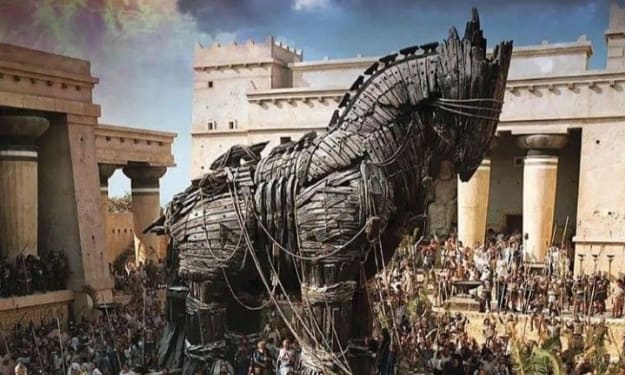
The Conflict of Troy remains one of the most distinguished military occurrences in both historical and literary heritage. Enshrined by Homer’s Iliad, the conflictthought to have transpired in the 12th or 13th century BCEhas entranced poets, historians, archaeologists, and readers for millennia. While the precise veracity of the occurrences is clouded by legend, substantial archaeological and textual proof suggests that a significant confrontation did happen in the vicinity of ancient Troy, located in what is now northwestern Turkey. The Legendary Tale In Homer’s account, the Trojan War commenced when Paris, a prince of Troy, kidnapped (or eloped with) Helen, the spouse of Menelaus, king of Sparta. In reprisal, Menelaus, along with his brother Agamemnon and other Greek leaders such as Odysseus, Achilles, Ajax, and Nestor, assembled a coalition fleet of a thousand ships to besiege Troy. For a decade, the Greeks camped outside the city’s fortifications, as a fierce and dramatic war ensued. Significant incidents included the dispute between Achilles and Agamemnon, the demise of Hector, and ultimately, the conquest of Troy through the cunning use of the Trojan Horse. Although these occurrences present a vivid storyline, they are mainly regarded as mythological embellishments. Nevertheless, scholars propose they may be grounded in a kernel of reality, symbolizing an authentic historical conflict that was subsequently mythologized by Greek poets. Historical and Archaeological Findings The site believed to be ancient Troy was uncovered by Heinrich Schliemann in the 19th century near the contemporary town of Hisarlik in Turkey. Excavations uncovered the remnants of several ancient cities constructed atop one another, dating back as far as 3000 BCE. One layer, designated as Troy VI or VIIa, exhibits evidence of destruction around 1250 BCEa timeframe that corresponds with the projected period of the Trojan War. Moreover, Hittite documentation mentions a city referred to as “Wilusa,” which many scholars associate with “Ilios,” another designation for Troy. The Hittites also allude to a figure named “Alaksandu,” potentially connected to Paris (Alexander), indicating possible diplomatic or military engagements between the Mycenaeans and the city of Troy. Political Landscape and Incentives Historically, the conflict may have been less about a romantic abduction and more about authority, trade, and dominion over strategic maritime routes. Troy’s strategic placement near the Dardanellesa crucial nautical passagewould have rendered it a valuable and contested city for ancient realms dependent on commerce with the East. The Mycenaean Greeks, a formidable civilization during the late Bronze Age, may have aimed to assert control over this region. Hostilities with a rival Anatolian power like Troy could have arisen from commercial competition, piracy, or regional alliances. In this regard, the war might reflect a far more pragmatic geopolitical struggle than the myth implies.
By Say the truth about a year ago in History
"The Few Who Conquered: History’s Greatest Victory with the Smallest Army"
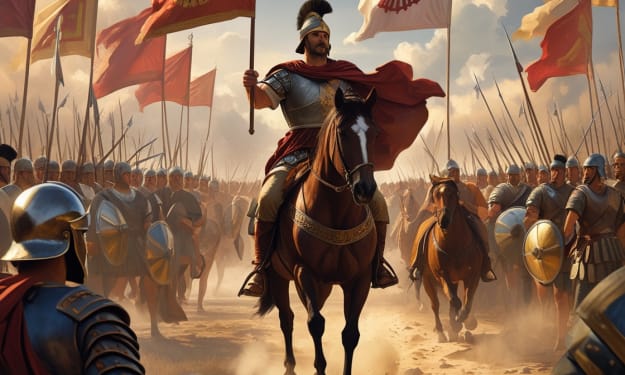
The Ascension of the Macedonian Empire: From Margins to Dominance The Macedonian Empire, one of the most formidable entities of the ancient era, emerged from the rugged, mountainous landscape of northern Greece to command a significant portion of the known world by the 4th century BCE. While it resided on the outskirts of classical Greek civilization for centuries, the aspirations of two crucial monarchsPhilip II and his progeny, Alexander the Greattransformed Macedonia from a divided kingdom into an empire extending from the Adriatic Sea to the Indus River. This article examines the intricate and impactful ascent of the Macedonian Empire, scrutinizing its political underpinnings, military advancements, and cultural influence. The Early Kingdom Macedonia was historically perceived by southern Greek city-states as a semi-barbaric territory, culturally and politically distinct from polities such as Athens and Sparta. The Macedonian aristocracy traced their heritage to the Argead dynasty, believed to descend from Heracles. Their political organization was less sophisticated than the democratic or oligarchic systems of the south, with authority concentrated in the hands of warrior-kings who governed over tribal regions. In the early 5th century BCE, Macedonia was a minor entity, often ensnared between conflicting Greek states and Persian interests. Nevertheless, its populace was resilient, adept in horseback riding, and proficient in guerrilla tactics. In spite of internal discord and external pressures from neighboring Illyrians, Thracians, and Greeks, the foundations for unity and expansion were being established.
By Say the truth about a year ago in History
Small Paws, Mighty Deeds
1. The King of the Savannah In the heart of the Great Savannah, where the tall grass danced in the wind and the sky stretched endlessly overhead, lived a lion named Barafu. With a mane as thick and dark as the night sky and eyes that gleamed like the sun, Barafu was the undisputed King of Beasts.
By Sabirkhan171about a year ago in History
Archaeologists Unearth 5,000-Year-Old Noblewoman in Peru's Ancient Coastal Town. AI-Generated.
Archaeologists Unearth 5,000-Year-Old Noblewoman in Peru's Ancient Coastal Town April 30, 2025 In a remarkable archaeological discovery, researchers in Peru have unearthed the remarkably well-preserved remains of a 5,000-year-old noblewoman in the ancient coastal town of Aspero, shedding new light on the Caral civilization—one of the oldest known urban societies in the Americas.
By Adnan Rasheedabout a year ago in History
Rethinking Labour in the Modern World
Rethinking Labour in the Modern World Introduction: Labour Day represents an annual commemoration of both worker success and fighting history through marches coupled with labor unions as well as the pursuit of equitable compensation and workplace safety while upholding worker dignity. How will we define someone who works in the year 2025?
By nusrat jahanabout a year ago in History
Australia to force Meta, Google to pay for news
Australia has taken a significant step toward regulating tech giants by introducing a groundbreaking News Media Bargaining Code, which aims to force companies like Meta (Facebook) and Google to pay Australian news publishers for their content.
By Samsul Arefin.about a year ago in History
The Utopian Dream: A Future Shaped by Innovation. AI-Generated.
## **The Utopian Dream: A Future Shaped by Innovation** In the year 2150, humanity had transcended the problems that once seemed insurmountable. Poverty, war, and hunger were distant memories. The world had united under a single banner of progress and innovation. This was the era of the *New Dawn*—an era where technology had woven itself into every fabric of life, eliminating the inefficiencies of the past.
By MD Abdur Razzakabout a year ago in History
The Great Chicken Crisis of Colonial Java: When Feathers Ruffled More Than Just Feelings
History is often told in terms of grand battles, royal intrigue, and political revolutions. But sometimes, it's the small, clucking details that bring a whole era to life.
By Diah Dewi Rahmawati Utamiabout a year ago in History