World History
Letters from the Underground Railroad
Letter 1 – May 5, 1852 To my dearest Mama, The day has come, and I am leaving. It is hard to write this without tears staining the paper, but I must be strong. Tonight, I will leave behind the plantation, the only life I have ever known, to seek the promise of freedom. The conductor, a kind man I’ve never met before, told me the route would be long and dangerous, but the risk is worth it. I overheard Mr. Turner, the overseer, say that there is talk of selling me to the South. They want to send me to a place where no one ever comes back. I won’t let that happen.
By Haseeb Mujaddidiabout a year ago in History
Exploring the Timeless Beauty of Goa
Goa, often synonymous with sparkling beaches and vibrant nightlife, holds within its borders more than just sun-soaked shores and music festivals. Beyond the popular attractions lies a rich tapestry of history and culture, waiting to be explored. Recognizing the yearning of many travelers to connect with Goa's heritage GOA TOURS Guided Tour service brings forth an immersive experience, guiding tourists through the state's most renowned historical sites.
By Nitin Petkarabout a year ago in History
The Moonlight’s Mother"
--- "The Moonlight’s Mother" Chandni was only five when her father died in a tragic accident. Her mother, Salma, was just 27 years old at the time. With the responsibility of two young children—Chandni and her little brother Ahmed—and a world that showed no mercy, Salma was left alone. But no one ever saw a trace of sorrow on her face. Every day, her eyes carried a soft, moon-like glow of a smile. People used to say, “This woman must have a heart of stone. After all that she has been through, she never cries.”
By Real life 🧬 stories about a year ago in History
"Whispers of the Forgotten Empire"
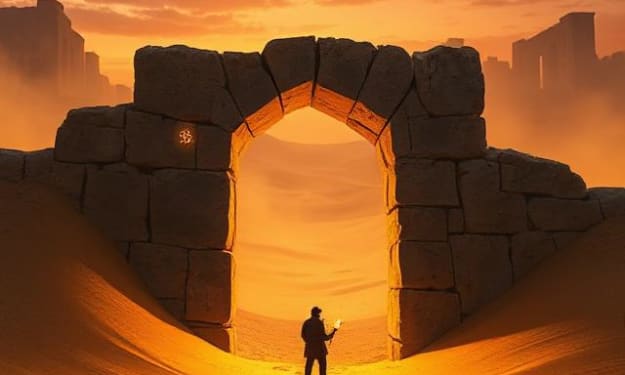
The wind screamed across the desert, flinging sand like knives against the side of the tent. Dr. Elena Marquez tightened the straps on her satchel and stepped into the storm. Behind her, the excavation camp had all but vanished in the swirling chaos. But Elena’s eyes were locked on the rising dunes ahead — and the shape that had emerged just the day before: a jagged black stone, half-buried, unlike any material found in the Saharan basin. The local tribes called this stretch of land Al-Khamseen al-Matwiyah — “The Folded Fifties,” a cursed region said to be haunted by the voices of a dead empire. Stories had been passed down for generations: of cities swallowed whole, of an emperor who defied the gods, and of a doorway that should never be opened. Elena, a renowned archaeologist from the University of Madrid, didn’t believe in curses. But she did believe in history — especially the kind that hadn’t yet been written. It had begun with an old, moth-eaten map from a merchant in Marrakesh, marked only with a faded symbol: a crown split in two. That symbol matched one from an artifact Elena had found in Tunisia a year earlier — a bronze coin inscribed with the name “Tazerak.” No record of such a kingdom existed in any archive. Now, standing before the rising dune where the black stone jutted from the earth like a tooth, Elena watched as the wind momentarily cleared the air. Her breath caught in her throat. It wasn’t just a stone. It was an arch. She dropped to her knees and brushed furiously with her hands, revealing etched lines — runes unlike any language she knew. They pulsed faintly as though something beneath still lived. Carefully, she pressed her palm against the center of the arch. The wind stopped. Silence fell across the desert like a velvet curtain. The air grew unnaturally still. And then — a low rumble beneath her feet. Sand slid away in rivers, revealing the full doorway: ten feet tall, carved from obsidian, and cold as ice. A symbol glowed on the top keystone — the broken crown. The arch shuddered, and then, to Elena’s disbelief, a seam split down the center of the stone. The doors creaked open. Darkness gaped beyond. Elena hesitated only a moment. She switched on her lantern and stepped inside. The temperature dropped sharply. The air smelled of dust, copper, and something older — like forgotten memories. Her lantern’s light flickered along the corridor walls, revealing carvings of strange beasts and tall figures in regal robes. Their eyes were gemstones, long looted or perhaps never real. The corridor descended in a spiral. At the base, she found a vast chamber. It stretched farther than her light could reach. Pillars shaped like twisted serpents held up a ceiling covered in stars — not just decorative, but a precise star map. Elena recognized a few constellations. But others were wrong. Or… from another time. In the center of the chamber stood a raised dais, and on it, a sarcophagus of black crystal. Runes glowed along its sides. As Elena approached, her heart pounded louder than her footsteps. She reached out — not to open it, but to examine the writing. A voice echoed in her head. “You are not of the blood.” She spun around. No one. The air was colder now, and the runes on the sarcophagus pulsed brighter. “But you carry the mark…” Elena’s hand burned. She looked down. The palm that touched the archway was now marked with a faint sigil — the broken crown. A whisper, like breath across her ear: “Then you may witness.” With a groan, the sarcophagus lid slid aside on its own. Inside lay a figure not of bone, but of polished gold. Human-shaped, but taller. Its eyes opened — mechanical or magical, she couldn't tell. They glowed a soft blue. It spoke, not with lips, but directly into her mind. > “I am Arkan-Zur, last Emperor of Tazerak. When the stars fell out of time, we buried our sins. We could not kill them. So we built the Tomb of Whispers — this place — to contain what should not exist.” Visions filled Elena’s mind: a gleaming city with towers of crystal and light; a people who mastered the wind and fire; then war, shadows, and something tearing reality itself. > “If you found this place, then the barrier is weakening. They will come again. You must seal the gate.” Elena staggered back. “How? Why me?” The Emperor’s gaze pierced her. > “Because you carry the spark. The memory. You are of us… though you do not know it yet.” A rumble shook the chamber. From behind, she heard hissing. Shapes moved in the dark — tall, thin, and not human. The guardians. Elena had no weapon, no plan. But something in her hand flared — the sigil. A burst of light erupted from her palm, and the shapes recoiled. The Emperor’s voice rang again: > “Run. Remember. Return when the stars align.” She sprinted back up the spiral passage, light blazing around her. As she emerged from the archway, the doors slammed shut behind her, sealing the tomb once more. The sandstorm returned. The doorway vanished. Back in her tent, Elena documented everything. Her voice trembled as she recorded her findings. She knew no one would believe her. Not yet. But she also knew this was only the beginning. Somewhere beneath the desert, an empire slept. And one day, it would rise again.
By Nizam khanabout a year ago in History
"The Price of Dreams
The sun had barely kissed the horizon when Ramesh tied the frayed laces of his old shoes and stepped out of the tin-roofed hut he called home. The chill of the morning bit through his thin shirt, but he didn't flinch. He had work to do. He always had work to do.
By Real life 🧬 stories about a year ago in History
Akhenaten: Was He an Alien Pharaoh of Ancient Egypt?
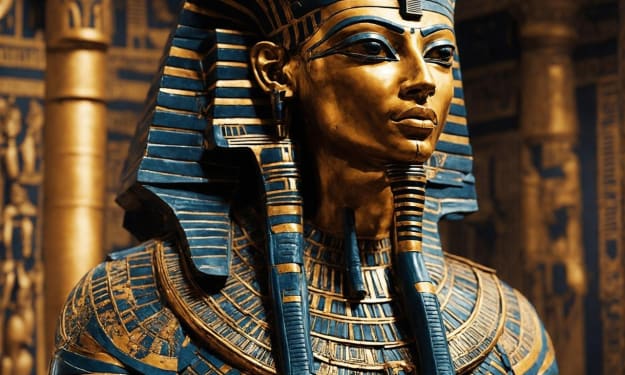
The Mysterious Pharaoh In the heart of Egypt’s ancient history, one name stands out as an enigma: Akhenaten, the heretic king, the ruler who shattered the traditional religious order, and the architect of a radical transformation. He wasn’t just another Pharaoh; his reign brought forth a monotheistic vision centered on the sun god Aten, a stark departure from the traditional polytheistic worship of Egypt’s powerful pantheon of gods.
By The Secret History Of The Worldabout a year ago in History
Gaza Civil Defence Says 19 Killed in Israeli Strikes
Gaza Civil Defence Says 19 Killed in Israeli Strikes Gaza City – May 6, 2025: At least 19 people have been killed in a wave of Israeli airstrikes across the Gaza Strip, according to a statement issued by Gaza’s Civil Defence department on Monday. The strikes reportedly targeted densely populated residential neighborhoods, resulting in widespread destruction and civilian casualties. Local officials said rescue operations were ongoing, with emergency teams struggling to reach those trapped beneath the rubble of collapsed buildings. “It’s a scene of devastation,” said Mahmoud Hamad, a spokesperson for Gaza Civil Defence. “Entire families have been wiped out. We are pulling the dead and the injured from under the ruins with our bare hands.” Eyewitnesses described scenes of chaos as explosions rocked various areas across Gaza. Families rushed out of their homes, seeking shelter amid the sound of fighter jets and falling debris. Hospitals, already operating under severe shortages of medical supplies and fuel, have been overwhelmed by the influx of casualties. According to Gaza’s Health Ministry, many of the victims were women and children. Several residential buildings, a marketplace, and a school were among the structures reported damaged or destroyed in the attacks. Ambulance crews and medical workers have made urgent appeals for support, warning that the healthcare system is on the verge of collapse. The Israeli military confirmed that it had launched a “precision operation” against what it called Hamas military targets, including weapons storage facilities and tunnels. A statement from the Israel Defense Forces (IDF) said the strikes were intended to disrupt “imminent threats” and retaliate against rocket fire launched from Gaza earlier this week. “We are targeting Hamas operatives and infrastructure while taking steps to minimize civilian harm,” the IDF said. However, Palestinian officials have accused Israel of indiscriminate attacks and collective punishment. This latest escalation comes amid a fragile and tense atmosphere in the region, with ceasefire talks stalled and diplomatic channels largely inactive. The violence has drawn sharp reactions from the international community. The United Nations has expressed “deep concern” over the rising civilian toll and called for both sides to exercise restraint. UN Secretary-General António Guterres said in a statement, “Civilians, especially women and children, continue to pay the highest price in this conflict. We urge all parties to abide by international humanitarian law and work towards a lasting ceasefire.” Human rights organizations have also condemned the airstrikes, calling for independent investigations into alleged violations. Amnesty International issued a statement urging the international community to take immediate steps to protect civilians and ensure accountability for war crimes. On the ground in Gaza, the situation remains dire. Power outages are widespread, and access to clean water and food is becoming increasingly limited. More than 1.5 million residents have been displaced since the start of the conflict, many of them living in overcrowded shelters or makeshift camps. Residents are expressing growing fear and frustration. “We have nowhere to go,” said Salma al-Khatib, a mother of four who lost her home in the strikes. “Every day we wake up not knowing if we’ll survive to see the next.” The broader conflict between Israel and Hamas, which governs the Gaza Strip, has persisted for years, with intermittent periods of intense violence. Despite repeated efforts by regional and international actors to mediate peace, a lasting resolution has remained elusive. As of now, there is no official word on when or if ceasefire negotiations will resume. In the meantime, the people of Gaza continue to endure the consequences of war — with the latest toll of 19 lives lost serving as yet another grim reminder of the conflict’s devastating human cost.
By Riaz hossin Rafiabout a year ago in History
Germany’s Merz Fails to Be Elected Chancellor in Shock First-Round Parliamentary Vote
In a stunning political development, Friedrich Merz, the leader of Germany’s center-right Christian Democratic Union (CDU), failed to secure enough votes in the Bundestag to be elected Chancellor in the first round of parliamentary voting. The outcome has sent shockwaves through the German political landscape and raised questions about the future of coalition politics in the country.
By Jannatul Ferdous about a year ago in History
The Evolution of Human History: From Prehistoric Times to the Modern Era
From prehistoric times to the present, the evolution of humankind History is the collective memory of human civilization, chronicling the journey of humanity from primitive beginnings to the complexities of modern society. The story of human history is vast, interwoven with the rise and fall of empires, technological innovations, social revolutions, and cultural transformations. The major epochs of human history and the ways in which each one shaped the world we live in today are the subject of this article. The Beginning of Humanity: The Age of Prehistory Human history begins long before the advent of writing. The Paleolithic, Mesolithic, and Neolithic periods are all examples of prehistoric times. The Paleolithic Era, also known as the Old Stone Age, lasted between about 2.5 million and 10,000 BCE. Early humans were hunter-gatherers who lived in small, nomadic groups and used simple stone tools. The development of language and the discovery of fire were significant era achievements. Humans entered the Mesolithic Era after the Ice Age ended, which was characterized by more sophisticated tools and the gradual domestication of animals. By the Neolithic Era, or New Stone Age, people began to settle in one place, cultivating crops and raising livestock. Beginning around 10,000 BCE, this agricultural revolution established the foundation for permanent settlements and eventually civilization as a whole. The Rise of Civilizations
By Abid Sadifabout a year ago in History
The Naupa Huaca Portal: Proof That Ancient Civilizations Were Secretly Connected?
The Door That Shouldn’t Exist High in the Andean mountains of Peru, carved into living rock and forgotten by time, lies a doorway to a mystery that refuses to be ignored. Hidden near the Sacred Valley, in a place untouched by modern roads or maps, the Naupa Huaca Portal emerges from the cliffside like a deliberate fracture in reality. It is not a ruin. It is not a temple. It is something else entirely.
By The Secret History Of The Worldabout a year ago in History