World History
The Life Story of Adolf Hitler
Adolf Hitler was born on April 20, 1889, in the town of Braunau am Inn in Austria. His father's name was Alois Hitler, a government employee, and his mother was Klara Hitler. As a child, Hitler was an average student but had a strong sense of leadership and influence from an early age.
By Real life 🧬 stories about a year ago in History
The Tale of Layla and Majnun . Content Warning. AI-Generated.
In the golden deserts of ancient Arabia, where the stars whispered secrets to the sands, lived a young poet named Qays ibn al-Mulawwah. He belonged to a noble tribe, known for his eloquence and devotion to poetry. But it was not just the music of words that filled his heart—it was a girl named Layla, whose beauty seemed woven from moonlight and whose soul echoed his own.
By Real life 🧬 stories about a year ago in History
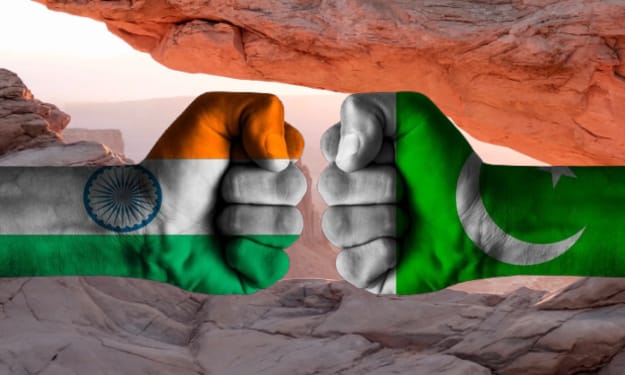
India-Pakistan War: The Bloody Legacy of the Partition of the Subcontinent
India-Pakistan War: The Bloody Legacy of the Partition of the Subcontinent The history of wars between India and Pakistan is a tragic reflection of the political, religious, and geographical tensions of the subcontinent. After the end of British rule in 1947, the subcontinent was divided into Hindu-majority India and Muslim-majority Pakistan.The partition was hasty, messy, and disastrous. It led to the displacement of millions of people and violence that has had lasting effects on relations between the two countries.
By Amdadul Haq Sardarabout a year ago in History
The Billion-Dollar Backbone: Hidden Elements and Wealth of the Himalayan Mountains. AI-Generated.
The Concealed Affluence of the Himalayas: Elements, Minerals, and Projected Monetary Value The Himalayas, renowned worldwide for their grand summits and spiritual importance, also hide an extensive and frequently undervalued reservoir of natural resources beneath their ancient formations. From rare earth elements to precious minerals such as gold, uranium, and lithium, the Himalayan region represents a geological treasure trove. This article examines the principal elements found in the area, their industrial relevance, the geopolitical consequences of their discovery, and provides an estimated monetary value of this concealed Himalayan affluence. The Concealed Affluence of the Himalayas: Elements, Minerals, and Projected Monetary Value The Himalayas are broadly acknowledged as one of the most breathtaking natural phenomena globally, spanning five nationsIndia, Nepal, Bhutan, China, and Pakistan. While the towering summits have been venerated for centuries for their beauty and spirituality, what resides beneath them may be even more precious: an extensive and varied array of elements and minerals that could reshape global resource dynamics. 1. Geological Synopsis The Himalayan range was formed over 50 million years ago due to the collision of the Indian and Eurasian tectonic plates. This continuous geological activity has established fault lines, mineral-rich locales, and a complex topography ideal for the genesis and accumulation of a diverse selection of elements. The area is particularly abundant in granitic rocks, schists, and metamorphic formationssettings conducive to the formation of valuable minerals and ores. 2. Principal Elements and Minerals Available a. Gold and Silver: In areas like Ladakh and parts of Nepal, traces of gold have been located in riverbeds and mountainous rocks. The placer gold deposits in Himalayan rivers may be modest in scale yet significant in overall volume when assessed across the region. b. Uranium: Uranium deposits have been identified in the northeastern Himalayan belt, especially in Arunachal Pradesh and segments of Himachal Pradesh. This radioactive element is essential for nuclear energy and military uses. c. Lithium: Lithium, one of the most coveted elements for battery manufacturing and electric vehicles, has been detected in trace quantities in Ladakh. As global demand for lithium escalates, exploration within the Himalayan region is intensifying. d. Rare Earth Elements (REEs): Scandium, yttrium, lanthanum, and various other REEs are believed to be present in the northern Himalayan districts. These elements are pivotal for electronics, renewable energy technologies, and defense systems. e. Copper and Zinc: The mountainous landscape is rich in copper ore, particularly in regions like the Kumaon Himalayas of Uttarakhand. Zinc deposits are also distributed throughout northern Himachal and parts of Nepal. f. Beryl and Mica: Utilized in the electronics and defense industries, both beryl and mica are found plentifully in eastern Himalayan belts, particularly in areas adjacent to Assam and Arunachal Pradesh. g. Coal and Petroleum: Although not as significant as other elements, coal reserves and petroleum deposits exist in foothill regions, such as in Assam’s Digboi and Arunachal’s Pasighat. 3. Projected Monetary Value of Himalayan Mineral Wealth It is challenging to assess the precise net worth of all the components present due to the absence of thorough mining and geopolitical tensions. Nevertheless, based on geological assessments and prevailing market valuations, a rough approximation includes: Gold: Estimated 500–1000 metric tons – valued at $30–60 billion USD. Uranium: Several thousand tons – potential worth exceeding $100 billion USD. Lithium: In preliminary exploratory phases – estimated at $20–50 billion USD. Rare Earth Elements: May surpass $200 billion USD based on international prices. Copper and Zinc: Cumulative worth exceeding $30 billion USD. Other Minerals (Mica, Beryl, etc. ): Additional $10–20 billion USD. Estimated Total Net Worth: $400–500 billion USD. 4. Environmental and Political Challenges Although the potential is substantial, extracting these resources entails a significant environmental toll. The delicate ecosystem of the Himalayas is vulnerable to landslides, glacial melting, and biodiversity decline. Furthermore, cross-border tensions between India and China have obstructed collaborative exploration or sustainable extraction of resources in disputed areas like Aksai Chin and Arunachal Pradesh. 5. Future Prospects India has commenced substantial investments in mineral exploration within the Himalayan region through organizations such as the Geological Survey of India and the Atomic Minerals Directorate. Nepal and Bhutan are also gradually permitting regulated mining activities. With the global shift towards green energy, the demand for Himalayan lithium and rare earth elements is anticipated to increase significantly. Conclusion The Himalayas represent more than merely an awe-inspiring mountain range; they constitute a vast storehouse of unexploited natural resources that could transform the economic and strategic landscape of Asia. While environmental and political challenges persist, responsible and cooperative mining initiatives could herald a new era of prosperity for the nations that share this formidable range.
By Say the truth about a year ago in History
Raja Raja Chola: The Sea King and Warrior Emperor of Southern India
"Raja Raja Chola: The Maritime Sovereign and Warrior Emperor of Southern India" Raja Raja Chola I, the renowned sovereign of the Chola Dynasty, governed from 985 to 1014 CE and transformed military tactics in South India by establishing one of the most sophisticated and coordinated military and naval forces in ancient Asian history. His legacy is characterized by his prowess in terrestrial combat, strategic military campaigns, and the formation of a formidable navy that extended Chola influence far beyond the seasfrom the Maldives to Southeast Asia. This article examines the military genius, naval supremacy, and enduring accomplishments of a monarch who was not merely a ruler but a warrior-statesman who redefined the concept of empire. Raja Raja Chola: The Maritime Sovereign and Warrior Emperor of Southern India Within the illustrious chronicles of Indian history, the name Raja Raja Chola I stands out as one of the most remarkable kings to emerge from the Tamil regions. Referred to as “Raja Raja the Great,” he presided over the Chola Empire during an era of military evolution and significant territorial expansion. More than just a king, Raja Raja was an innovative military strategist who unified extensive territories through the strength of his army and the power of his navybecoming the first South Indian emperor to effectively project authority beyond the Indian subcontinent. Ascendancy to the Throne and Military Reforms Upon Raja Raja Chola’s rise to power in 985 CE, the Chola Empire was in a state of recovery from internal discord and regional disintegration. Acknowledging the necessity for a disciplined, professional army, he reorganized the military into structured regiments such as the Velaikkara and Uttama Chola Terinda Kaikola. These specialized units received training in infantry, cavalry, and elephant combat, with each regiment assigned specific responsibilities during military operations. Raja Raja reformed military administration by inscribing detailed records on temple walls that listed soldiers’ names, remuneration, and land endowmentsrendering the Chola military one of the earliest to be administered with bureaucratic accuracy. The Expanding Chola Military The size of the Chola military during Raja Raja’s rule is estimated to have surpassed 150,000 soldiers, reinforced by numerous war elephants and cavalry units. Chola war elephants, adorned in armor and bells, frequently led assaults that breached enemy formations. Raja Raja also dedicated resources to fortifying key cities and border regions, establishing strategic garrisons. His military endeavors included triumphs over the Pandyas, Cheras, and Gangas, as well as the annexation of the northern territories of Sri Lanka. Each military campaign exhibited exceptional strategy, swift mobilization, and the proficient integration of forces. Establishment of the Chola Navy Perhaps Raja Raja’s most revolutionary contribution to warfare was the establishment of the Chola Navythe first comprehensive naval force in Indian history. Prior to this, Indian empires were predominantly land-oriented. Raja Raja recognized the strategic significance of naval superiority in securing trade routes, protecting coastal areas, and extending influence throughout the Indian Ocean. He built colossal warships utilizing teak and iron-reinforced hulls, manned by archers and boarding crews. Ports such as Nagapattinam and Kaveripattinam evolved into naval headquarters. His fleet, estimated to comprise 300 to 500 vessels, facilitated long-range operations that competed with the naval forces of contemporary China and Arabia. Southeast Asian Campaigns and Naval Accomplishments In one of the most remarkable achievements in early Indian military history, Raja Raja initiated naval expeditions across the Bay of Bengal and seized territories in the Maldives, Sri Lanka, while also impacting coastal regions of present-day Malaysia, Indonesia, and Thailand. These campaigns not only yielded wealth and tribute but also propagated Tamil culture, commerce, and religion throughout Southeast Asia. The Chola navy secured merchant vessels, safeguarded temple riches, and upheld imperial authority on foreign shores. Through such endeavors, Raja Raja established a maritime empirean ambition centuries ahead of its era. Wealth, Resources, and Military Sustainability The expense of sustaining Raja Raja’s military apparatus was substantial. The empire’s economy was bolstered by fertile agrarian territories, regulated commerce, and tribute from subjugated regions. Temples served as financial centers, financing regiments and naval contingents. The annual defense budget, in contemporary terms, could be approximated at several billion dollars, accounting for ship construction, soldier compensation, armor, elephant enclosures, and logistical support. In spite of this, Raja Raja succeeded in maintaining the empire’s financial equilibrium, employing meticulous records and regional administrative divisions (nadus) for effective taxation and resource allocation.
By Say the truth about a year ago in History
The Moon’s History: From Violent Origins to Silent Evolution
The Moon’s History: From Violent Origins to Silent Evolution The Moon, our closest celestial neighbor, has been a source of wonder, stories, and scientific curiosity for thousands of years. From ancient myths to modern space missions, the Moon has played an important role in human history. But behind its quiet appearance in the night sky lies a dramatic and violent past. The story of the Moon is one of explosive beginnings and slow, steady changes over billions of years. A Catastrophic Birth The most widely accepted theory about the Moon’s origin is known as the Giant Impact Hypothesis. About 4.5 billion years ago, soon after the Earth was formed, a planet-sized object called Theia collided with Earth. This massive impact sent a huge amount of molten rock and debris into space. Over time, that material came together and formed the Moon. This theory explains why the Moon’s chemical makeup is very similar to Earth’s outer layers. Scientists believe that much of the material that formed the Moon came from the Earth itself during the collision. Computer models and simulations also support the idea that such a crash could result in a stable moon orbiting our planet. A Fiery Young Moon The Moon’s early days were far from peaceful. After it formed, it was covered in molten rock. This “magma ocean” slowly cooled down, forming a crust. Inside, heavier materials sank, and lighter ones floated to the surface, just like oil separates from water. As the Moon cooled, volcanic activity began shaping its surface. Lava erupted from below, filling in large impact basins and creating the dark areas we now see from Earth—called “maria,” or seas. These aren’t real oceans, but flat plains of hardened lava that gave early astronomers the illusion of seas on the Moon. A Storm of Space Rocks Between 4.1 and 3.8 billion years ago, the Moon was hit by countless asteroids and comets during a period scientists call the Late Heavy Bombardment. These constant impacts carved out craters, some of which are hundreds of kilometers wide. Unlike Earth, the Moon has no atmosphere to protect it. So, every object that hits it leaves a permanent mark. With no wind, water, or plate movement to erase them, these craters have remained largely unchanged—preserving a record of the solar system’s early chaos. A Locked Dance With Earth Over time, the Moon’s internal heat faded, and volcanic activity stopped. Meanwhile, the Moon’s orbit gradually changed due to gravitational forces between it and Earth. Today, the Moon is tidally locked, meaning it always shows the same face to Earth. We didn’t see the Moon’s far side until spacecraft flew around it. The Moon’s gravity also affects Earth. It causes ocean tides and helps keep Earth’s axis stable, which plays a key role in maintaining our planet’s climate. Some scientists believe Earth’s stable environment—and even the development of life—would have been much harder without the Moon. Exploring the Moon Human understanding of the Moon changed dramatically in 1969 when NASA’s Apollo 11 mission landed astronauts on the lunar surface. Over the next few years, six Apollo missions brought back rock samples and valuable data that helped confirm many theories about the Moon’s formation and geology. Since then, many space agencies, including those from China, India, and Europe, have sent robotic missions to study the Moon. They've discovered signs of water ice in shadowed craters near the poles, which could support future lunar bases. The Moon’s Future Today, the Moon is quiet and inactive. But scientists and engineers are turning their attention back to it. NASA’s Artemis program plans to send humans back to the Moon soon, with the goal of building a sustainable presence. The Moon could become a base for future missions to Mars and beyond. The Moon is also a scientific treasure chest. By studying it, scientists can learn more about Earth’s past, the early solar system, and how planets evolve. Conclusion: A Timeless Witness The Moon may appear calm and changeless in the sky, but it has lived through fire, impacts, and transformation. From its violent birth in a giant collision to its slow cooling and quiet present, the Moon tells a story written across billions of years. As we prepare to explore it again, the Moon continues to be both a reminder of our cosmic past and a gateway to our spacefaring future.
By Riaz hossin Rafiabout a year ago in History
President George W. Bush – The Story of a Leader
President George W. Bush – The Story of a Leader George Walker Bush, known to the world as "George W. Bush," was born on July 6, 1946, in Connecticut, USA. He was born into a family known for politics and public service. His father, George H. W. Bush, had also served as the 41st President of the United States. George W. Bush learned a lot from his father's political values and principles, but his own life journey was far from easy.
By Real life 🧬 stories about a year ago in History
Israel Strikes Yemen's Capital Airport: A New Flashpoint in the Middle East
Israel Strikes Yemen's Capital Airport: A New Flashpoint in the Middle East In a dramatic turn of events, Israeli warplanes reportedly launched airstrikes on the main airport in Yemen’s capital, Sanaa, on Monday. The attack has added a dangerous new layer to the already volatile Middle East situation, especially amid ongoing regional tensions involving Iran, the Houthis, and the Israel-Hamas conflict. What Happened? According to local and international media sources, the Israeli Air Force carried out a surprise air raid on Sanaa International Airport in the early hours of the morning. Loud explosions shook the city, and initial reports suggest that parts of the airport, including the passenger terminal and several military hangars, were severely damaged. While Israel has not officially confirmed the attack, anonymous Israeli defense sources claim it was a strategic move to destroy Houthi missile and drone storage facilities. Intelligence reports allegedly showed that the airport was being used to store and launch weapons targeting Israel and other regional allies. The Houthi movement, which controls Sanaa and much of northern Yemen, has denounced the airstrike. Their military spokesperson, Yahya Saree, described the attack as a “violation of Yemen’s sovereignty” and warned that a harsh response would follow. Background: Why Yemen? Yemen has been torn apart by civil war since 2015. The conflict pits the Iran-backed Houthi rebels against a Saudi-led coalition that supports Yemen's internationally recognized government. Over the years, the Houthis have evolved from a local insurgency into a powerful armed group with growing missile and drone capabilities. In recent months, the Houthis have launched attacks on Israel and ships in the Red Sea, claiming to support Palestinians amid the Gaza war. This has led Israel to see the Houthis as an active threat. Monday’s strike may be Israel’s attempt to send a clear warning: attacks, even from distant places like Yemen, will not go unanswered. International Response The strike has drawn sharp reactions globally. Iran condemned the attack, calling it “an act of aggression” and blaming Israel for escalating tensions in the region. Iran’s foreign ministry said, “This is yet another example of Israel’s reckless behavior and expansion of its military operations.” The United Nations expressed deep concern over the airstrike, especially given its impact on civilian infrastructure. UN Special Envoy Hans Grundberg said, “We urge all parties to avoid actions that could worsen the humanitarian crisis in Yemen and derail the path to peace.” Meanwhile, Gulf countries, including Saudi Arabia, have remained largely silent, though analysts say many regional powers are closely watching the fallout. Why the Airport Matters Sanaa International Airport is more than just a transportation hub. In recent years, it has become a lifeline for humanitarian aid entering northern Yemen. The damage caused by this strike could severely disrupt the delivery of food, medical supplies, and other essential aid to millions of Yemenis already struggling due to war and famine. Humanitarian organizations like the Norwegian Refugee Council have warned that targeting airports and civilian infrastructure deepens suffering. “This is a devastating blow to Yemen’s already fragile aid network,” said NRC Secretary General Jan Egeland. Strategic Motives Behind the Strike Israel’s decision to strike an airport so far from its borders suggests a new phase in its military doctrine. Traditionally, Israel has focused its operations on nearby threats in Syria, Lebanon, and Gaza. By targeting the Houthis in Yemen, Israel is expanding its reach and sending a strong message to Iran and its allies across the region. Military analysts say the move could be an attempt to deter further attacks and prevent the Houthis from becoming a long-range threat. Drones and missiles launched from Yemen can reach Israeli territory or threaten commercial and military shipping in the Red Sea, a key trade route. However, critics warn that such strikes could provoke wider conflict, drawing Israel deeper into regional wars with unclear outcomes. The Road Ahead With the Houthis promising a retaliatory response, the risk of escalation is high. Israel remains on alert for missile or drone attacks, and regional allies like the United States may become involved in efforts to manage the fallout. Diplomatic efforts are underway behind closed doors, with the UN and Western powers urging restraint. But in a region where tensions are already stretched thin, one more spark could ignite a broader fire. Conclusion The Israeli airstrike on Sanaa’s main airport is more than a military operation—it’s a message. A message to the Houthis, to Iran, and to the world: that Israel will respond to threats wherever they emerge. But with Yemen’s civilians already caught in one of the worst humanitarian crises in the world, the cost of this message could be tragically high.
By Riaz hossin Rafiabout a year ago in History
The great Man
Imran Khan: From Cricket Legend to Pakistan's Controversial Prime Minister Imran Khan, one of Pakistan’s most iconic and polarizing figures, has lived a life marked by extraordinary achievements, dramatic political ascents, and relentless legal battles. A World Cup-winning cricket captain turned prime minister, Khan’s journey reflects both the promise and turbulence of Pakistani politics. This article explores his rise to power, his tumultuous premiership, and his ongoing struggles following his ouster in 2022.
By Saad Sunainabout a year ago in History
"The Clockmaker’s Secret"
The rain tapped softly against the windows of the modest workshop on the edge of Grimsby, a quiet coastal town that rarely made it into anyone’s story—until now. Inside, amidst the hum of time and the scent of oil and oak, seventy-three-year-old Elias Thorne sat hunched over his workbench. A master clockmaker, Elias was known for creating clocks so precise they seemed enchanted. Few knew that Elias had not built a single clock in almost twenty years. Instead, he spent his days winding, cleaning, and whispering to the clocks that lined the walls like watchful sentinels. Each tick-tock was a reminder of something he'd hidden long ago. Across town, thirty-one-year-old Iris Caldwell had just arrived after years abroad. Her mother had passed, and in her will, she left a single instruction: "Find Elias Thorne. He knows." Iris had no memory of Elias, but her curiosity and her mother's strange words brought her to the workshop door. She knocked twice. No answer. Just the ticking. She tried again. This time, the door creaked open on its own. Inside, she found a world frozen in amber light and dust. Elias looked up, surprised but not startled. "You look just like her," he murmured. "You knew my mother?" Elias hesitated. "I knew her better than most. Come in. Time doesn’t like to be kept waiting." He gestured toward a seat, and Iris sat, taking in the clocks—grandfather clocks, cuckoo clocks, mantel clocks—all ticking in perfect harmony. It was hypnotic. "Your mother, Eveline, was a brilliant woman. She saved something very dear to me once, and I owe her more than I could ever repay." "What did she mean by 'you know'? What am I supposed to find?" Elias pulled out a small, silver pocket watch from beneath the folds of his coat. "This," he said, placing it on the table. "It doesn’t just keep time. It keeps a secret." Iris leaned closer. The watch was delicate, etched with symbols she didn’t recognize. Elias pressed a hidden notch near the hinge, and with a soft click, the back popped open. Inside was a tiny scroll, barely the size of a fingertip. He passed it to her. "Your mother and I discovered something during the war. Not a weapon or treasure, but a design—a blueprint of a clock that doesn’t just measure time. It bends it." Iris blinked. "You’re saying this is a time machine?" "Not quite," Elias said. "It’s a gate. A doorway. One that must remain closed unless absolutely necessary." He stood and moved to a tall grandfather clock in the corner. He opened the face and reached inside, pulling out a key unlike any Iris had seen—golden, with interlocking gears along the shaft. "There are others who know of it," he said. "They’ve waited years for me to die so they can take it. That’s why I stopped making clocks. Every piece I made was a part of this mystery." Elias handed Iris the key. "I trust you. Like I trusted your mother. You must protect this. Promise me." Before Iris could respond, the workshop windows shattered. Two figures in dark coats burst in, faces hidden, moving with military precision. Elias shouted, grabbing Iris by the arm and dragging her toward the clock. "Now! Use the key!" Iris, shaking, fit the key into a hidden slot behind the pendulum. The gears groaned, and the floor beneath them shimmered with a golden light. Just as the intruders reached them, the workshop vanished. They landed hard on cold stone. Iris sat up, dizzy. They were in a chamber filled with clocks that had no hands. The air was still, untouched by time. "Where are we?" she asked. "The Vault of Hours," Elias said, panting. "A place outside the reach of ordinary time." He pointed to a large mechanism in the center—an unfinished clock, its heart missing. Elias reached into his coat and handed Iris the final piece: a small, spiral gear. "You finish it," he said. "Only someone who doesn’t want power should hold it." Hands trembling, Iris stepped forward and placed the gear into the clock. The chamber lit up, and for a moment, she saw images swirling around her—her mother as a young woman, Elias in uniform, strange figures walking backward, clocks melting and re-forming. Then, silence. Elias fell to the ground, exhausted. "It is done. Now it will sleep again. Until the world needs it." Back in the workshop, the intruders found only dust and silence. The clocks had stopped. In Grimsby, a new clock shop opened months later, run by a quiet woman with eyes like Eveline Caldwell. The townsfolk never knew her name, but they trusted her work. Her clocks never needed winding. They ticked in harmony with something unseen. And in the back of her shop, behind a velvet curtain, a single clock ticked backwards—slowly, steadily, waiting. For time always remembers those who protect its secret.
By Nizam khanabout a year ago in History
Beautiful Bangladesh. AI-Generated.
Bangladesh, a vibrant tapestry of culture, nature, and resilience, is nestled in the heart of South Asia. Bordered by India on three sides and the Bay of Bengal to the south, this nation of over 170 million people is renowned for its rich heritage, lush landscapes, and dynamic progress.
By Tanvirul Islam about a year ago in History
10 Unsolved Mysteries from Ancient Egypt
Ancient Egypt continues to be one of the most fascinating civilizations in history. Known for its monumental architecture, advanced knowledge of astronomy, and intricate religious beliefs, Egypt has left behind countless mysteries that continue to perplex archaeologists and historians. After decades of investigation, many questions remain.
By Himadri Niloyabout a year ago in History