World History
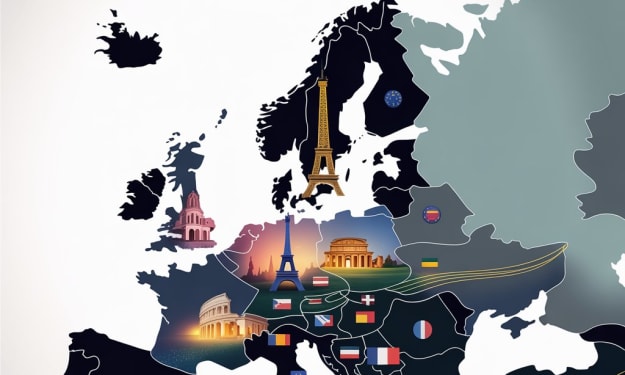
"A Contemporary Overview of European Nations"
A Contemporary Overview of European Nations Political Structures, Economic Trends, and Cultural Diversity Across the Continent Europe, often described as the cradle of Western civilization, continues to play a significant role in shaping global affairs through its dynamic political structures, robust economies, and rich cultural traditions. In the 21st century, the continent is both unified and diverse—a mosaic of sovereign nations working together while preserving their unique identities. The European Union (EU), established to foster economic and political integration after centuries of conflict, remains a central force in the region. With 27 member states, the EU exemplifies cooperation through institutions such as the European Commission, the European Parliament, and the European Court of Justice. The Schengen Agreement and the euro currency have enhanced mobility and trade across borders, illustrating a commitment to unity without erasing national sovereignty. However, Europe is not limited to the EU. Countries like Switzerland, Norway, and the United Kingdom—following Brexit—maintain strong economic and diplomatic ties with the bloc while pursuing independent policies. This balance between integration and autonomy is one of Europe's defining characteristics, allowing for varied approaches to governance while maintaining shared values of democracy, human rights, and rule of law. Economically, Europe remains one of the most prosperous regions in the world. Germany, the continent's largest economy, leads in industrial innovation and exports, while France and Italy contribute significantly through technology, fashion, and agriculture. The Nordic countries showcase models of social welfare and high living standards, often topping global happiness and education rankings. Meanwhile, Eastern European countries like Poland, Romania, and the Czech Republic have seen remarkable growth over the past two decades, transforming from post-Soviet economies into emerging market success stories. Despite this progress, challenges persist. Economic disparities between Western and Eastern Europe, as well as North and South, create tensions within the EU. Countries such as Greece, Spain, and Portugal have faced sovereign debt crises, leading to austerity measures and political unrest. Moreover, the continent must navigate the impacts of climate change, aging populations, and energy security—especially in light of geopolitical tensions near its eastern borders. Culturally, Europe is a beacon of diversity. With over 200 languages spoken and countless ethnic traditions, it remains a center for art, literature, and philosophy. UNESCO World Heritage Sites are scattered throughout, preserving centuries of human achievement—from the Roman ruins of Italy to the medieval towns of Central Europe and the fjords of Scandinavia. The free movement of people has led to vibrant multicultural cities like Berlin, Amsterdam, and Barcelona, where global influences merge with local customs. In recent years, migration has tested Europe’s commitment to humanitarian principles and social cohesion. The influx of refugees from conflict zones, especially in the Middle East and Africa, has spurred debates about identity, security, and integration. While some nations have welcomed newcomers with open arms, others have implemented strict border controls and nationalist rhetoric. These tensions reflect broader global trends but also highlight Europe's struggle to balance compassion with stability. Looking ahead, Europe's future will likely be shaped by digital transformation, environmental policy, and its geopolitical stance between global powers. With the Green Deal and a push toward carbon neutrality by 2050, the EU aims to lead in sustainability. At the same time, efforts to enhance defense cooperation and technological innovation are underway to maintain competitiveness on the world stage. In essence, Europe is a continent of contrasts and cohesion. It is where ancient traditions meet modern governance, where multiple languages echo across a shared political framework, and where historical wounds have given rise to enduring alliances. As it continues to evolve, Europe remains not only a subject of study but a living example of how diversity and unity can coexist in a rapidly changing world.
By Shahab Ali awanabout a year ago in History
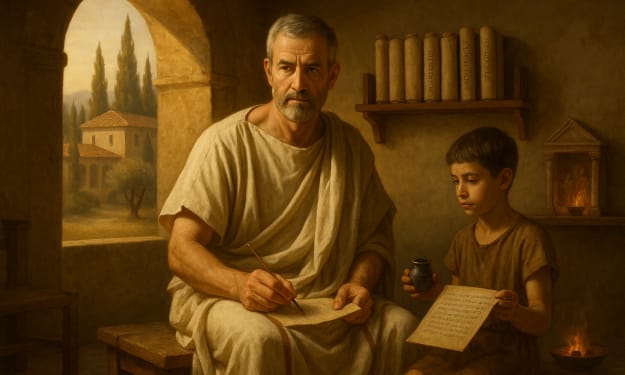
Quintus Fabius Pictor
In the rich narrative of Roman history, where prominent generals, emperors, and senators frequently take center stage, the more subdued contributions of early historians can often be overlooked. However, among these intellectual trailblazers, Quintus Fabius Pictor emerges as a crucial figure. As the first historian of Rome, he established the groundwork for Latin historiography, significantly shaping the Roman perception of their history and influencing the style and format of historical writing for future generations. Although much of his work exists only in fragments and citations, his impact is profoundly ingrained in the fabric of Roman cultural heritage.
By A Históriaabout a year ago in History
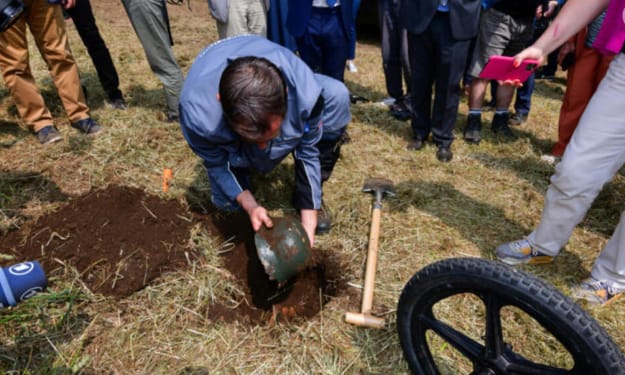
Nazi war dead are buried in Germany, sparking debate about national memory.
Even though World War II ended 80 years ago on Thursday, German soldiers' remains are still being discovered throughout Europe. Questions about remembrance are being rekindled by the discovery and the German commission tasked with giving them "dignified" graves, as Germany's far-right AfD party unites behind a larger attempt to recast national memory.
By Francis Damiabout a year ago in History
Historical Landmark of France
The Beating Heart of Paris When you think of France, what’s the first image that pops into your mind? For most of us, it’s the Eiffel Tower _ its graceful iron lattice soaring above the rooftops of Paris, sparkling at night, and standing as a proud symbol of French culture. But the Eiffel Tower is more than just a postcard _ perfect backdrop. Its story is a fascinating journey through controversy, innovation, and a nation’s enduring spirit.
By Iza Writesabout a year ago in History
The Edge of War: Understanding the India-Pakistan Conflict 2025
Introduction The year 2025 has witnessed a dramatic escalation in tensions between two of South Asia's nuclear-armed neighbors, India and Pakistan. Triggered by a series of violent incidents and military confrontations, the conflict has now drawn international attention, raising concerns of a possible full-scale war. In this article, we will explore the root causes of the conflict, its immediate impact, the global response, and the potential paths forward.
By Masih Ullahabout a year ago in History
The Unyielding Tension: India-Pakistan Conflict 2025
The recent escalation between India and Pakistan in May 2025 has once again brought the two nuclear-armed neighbors to the brink of conflict. Following a tragic attack in the Pahalgam region of Indian-administered Kashmir that claimed the lives of 26 Hindu tourists, the Indian Air Force launched airstrikes deep inside Pakistani territory, marking the beginning of 'Operation Sindoor.' This military operation targeted nine locations, including Bahawalpur, Muridke, and Muzaffarabad, which India claimed were terrorist infrastructure. Pakistan, however, condemned these strikes, calling them attacks on civilian areas, resulting in 31 civilian deaths and 57 injuries, many of whom were women and children.
By Masih Ullahabout a year ago in History
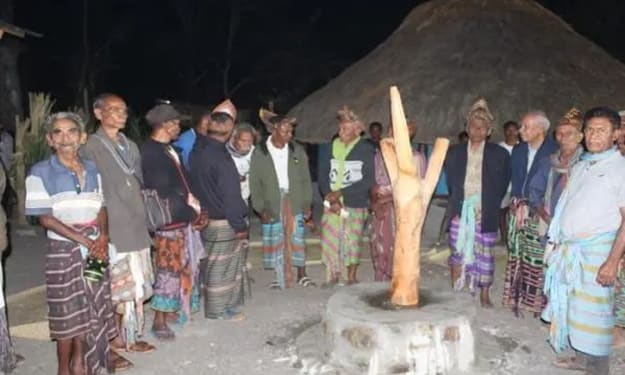
Naketi: Ritual of Healing and Life Renewal in Timorese Culture
In Timor, we often hear the saying, "Humans are not free from mistakes." This expression is not just a reminder of our imperfection but also an invitation to reflect, forgive, and begin again. In a world where pain and conflict are inevitable, forgiveness is rarely easy. And yet, my people have long upheld a tradition that goes far deeper than mere apology—it’s called Naketi.
By Flax Foryouabout a year ago in History
Harry Potter and the Philosopher’s Stone
Harry Potter was a small boy with messy black hair and glasses. He lived with his aunt, uncle, and cousin Dudley in a house on Privet Drive. The Dursleys were not kind to Harry. They made him sleep in a cupboard under the stairs and treated him like a servant.
By Mr Rifat Ahmedabout a year ago in History