World History
The Great Showdown of 2025: Pakistan vs. India – Who Will Rewrite History?
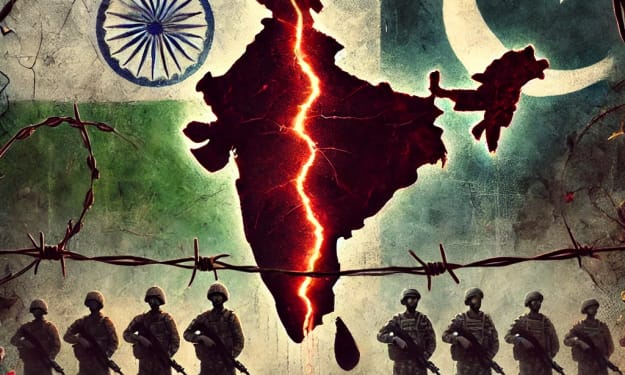
Pakistan vs India War 2025: Who Will Prevail? The year 2025 has brought with it a conflict that has captured the world's attention—Pakistan and India are once again at odds, leading to a war that many analysts have long feared. This conflict, while rooted in decades-old tensions, is unique in its scale, technology, and international implications. But the burning question remains: who will prevail? Historical Context To understand the current conflict, it's crucial to grasp the historical tensions that have long simmered between Pakistan and India. Since the partition in 1947, both nations have faced off multiple times, with major wars in 1948, 1965, 1971, and 1999. Disputes over Kashmir, political differences, and military posturing have fueled decades of rivalry. While there have been periods of relative peace, the underlying conflicts have never truly faded. Diplomatic tensions, water disputes, and territorial disagreements have only added fuel to the fire. In recent years, both countries have seen political shifts that further deepened their divides. Nationalist sentiments grew stronger, with political leaders using rhetoric that resonated with local populations but stirred up old wounds. This buildup of animosity, paired with increasing military budgets and weapons testing, foreshadowed the inevitable clash of 2025.
By Masih Ullahabout a year ago in History
Crimson Border
The night sky above the Line of Control was heavy with silence — the kind that only exists after the last bullet has been fired, but before the next command is given. Cold winds swept across the jagged terrain, carrying whispers of home, regret, and the ever-present hum of history.
By Basir khanabout a year ago in History
The Island That Vanished
Somewhere off the west coast of Ireland, in the restless Atlantic, there was once a place that mariners swore was real. A land cloaked in mist, visible only once every seven years. A place of impossible beauty, of ancient knowledge, of peace and power. Its name was Hy-Brasil.
By Logan Bennettabout a year ago in History
5 Truths That Changed the World Forever
There are ideas so powerful that once they surface, they permanently shift the course of human history. They don’t arrive with fireworks or grand declarations but their impact echoes across centuries. These truths aren't just facts; they’re frameworks that redefined what humans believe about life, power, identity, and progress. I’ve always been fascinated by the kind of insights that don’t just explain the world, but actually change it. Not inventions or events, but the deep, foundational truths that alter how entire civilizations think. What causes people to challenge kings, question gods, or split atoms? Often, it starts with a shift in belief a new truth that quietly dismantles the old order.
By Beyond The Surfaceabout a year ago in History
The Fall of the Caliphate: The History of the Division of the Muslim Ummah and the Brutal Reality of Western Geopolitics.
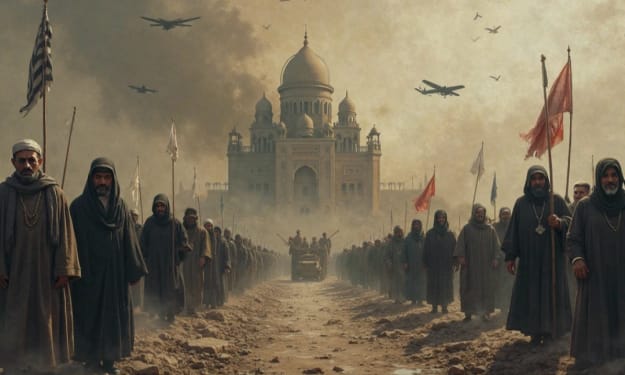
No moment in history is ever isolated or isolated. Behind every political catastrophe, every collapse lies the combined shadow of centuries of preparation, internal breakdown and external intrigue. The fall of the Caliphate was such a historical catastrophe—not just the end of a regime, but also the extinction of an ideal, a worldview and a collective ummah.
By Abdul Barikabout a year ago in History
Element 115: Bob Lazar’s Alien Fuel or Just Science Fiction?
Back in 1989, a soft-spoken physicist named Bob Lazar stepped in front of a blurred camera and made a claim so bold, it would ripple through UFO circles for decades: The U.S. government was in possession of alien spacecraft, and they ran on a mysterious element called “Element 115.”
By Rukka Novaabout a year ago in History
The Great War: A Tragic Prelude. AI-Generated.
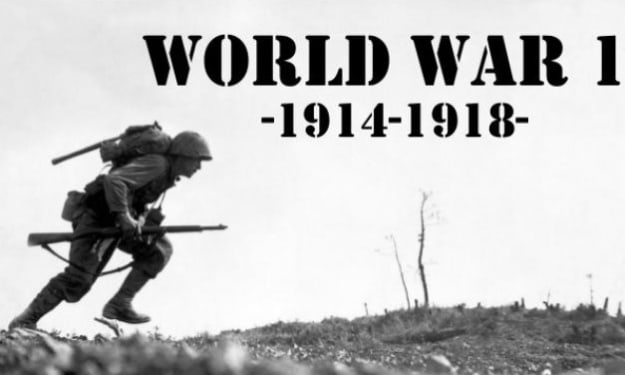
The summer of 1914 was one of the most fateful periods in human history. The world was on the cusp of a catastrophic conflict that would claim millions of lives, reshape the global landscape, and leave a lasting impact on the course of human civilization. This was the era of World War I, a war that would be remembered for its unprecedented brutality, its role in shaping the modern world, and the tragic loss of life that it entailed. The roots of World War I were complex and multifaceted. The early 20th century was a time of great tension and competition among the major powers of Europe. The complex system of alliances, the rise of nationalism, and the struggle for colonial dominance had created an environment in which war was almost inevitable. The assassination of Archduke Franz Ferdinand of Austria-Hungary in June 1914 was the spark that set off the powder keg, plunging the world into a conflict that would last for four long years. As the war began, the major powers of Europe mobilized their armies and plunged into a conflict that would test the limits of human endurance. The war was fought on multiple fronts, with the Western Front in France and Belgium becoming one of the most infamous battlefields. The introduction of new technologies, such as machine guns, tanks, and poison gas, made the war even more deadly, and the soldiers who fought in the trenches faced unimaginable horrors. One of the most significant battles of the war was the Battle of the Somme, fought in 1916. The battle was a brutal and bloody conflict that saw millions of soldiers killed or wounded. The futility of the war was evident in the fact that the battle lines barely moved, despite the enormous loss of life. The Battle of Verdun, fought in 1916, was another horrific conflict that saw the French and German armies suffer heavy losses. The war at sea was also a significant aspect of World War I. The German U-boat campaign, which targeted Allied shipping, was a major threat to the war effort. The sinking of the passenger liner Lusitania in 1915 was a major turning point in the war, as it helped to shift public opinion in the United States against Germany. The Battle of Jutland, fought in 1916, was one of the largest naval battles of the war, and it saw the British and German navies clash in a fierce and bloody conflict. As the war dragged on, the toll on the soldiers and civilians was immense. The introduction of conscription meant that millions of men were forced to leave their homes and families to fight in a war that seemed to have no end. The conditions in the trenches were appalling, with soldiers facing mud, lice, and rats, as well as the constant threat of death. The psychological toll of the war was also significant, with many soldiers suffering from what would later be known as post-traumatic stress disorder. The war also had a profound impact on civilians. The blockade of Germany, imposed by the Allies, led to widespread famine and malnutrition. The Russian Revolution, sparked by the war, led to the collapse of the Tsarist regime and the rise of the Bolsheviks. The war also saw the rise of new technologies, such as tanks, airplanes, and poison gas, which would change the face of modern warfare. In the end, it was the entry of the United States into the war that would prove to be the turning point. The U.S. declaration of war on Germany in April 1917 marked a significant shift in the balance of power, and the American troops who arrived on the Western Front in 1918 helped to turn the tide of the war. The Armistice of November 11, 1918, brought an end to the fighting, but the war's impact would be felt for generations to come. The Treaty of Versailles, signed in 1919, imposed harsh penalties on Germany, including significant reparations and territorial losses. The treaty also established the League of Nations, an international organization dedicated to preventing future wars. The legacy of World War I is complex and multifaceted. The war marked the end of the old world order and the beginning of a new era of global conflict. It also laid the groundwork for World War II, as the Treaty of Versailles's harsh terms contributed to the rise of Nazi Germany. The war's impact on literature and art was also significant, as writers and artists sought to make sense of the conflict and its aftermath. In conclusion, World War I was a tragic and devastating conflict that changed the course of human history. The war's impact on soldiers, civilians, and the global landscape was profound, and its legacy continues to be felt today. As we look back on the war, we are reminded of the importance of working towards peace and preventing future conflicts. The story of World War I is a reminder of the devastating consequences of war and the importance
By Sajjad Aliabout a year ago in History
The Forgotten Kingdom Beneath the Sand
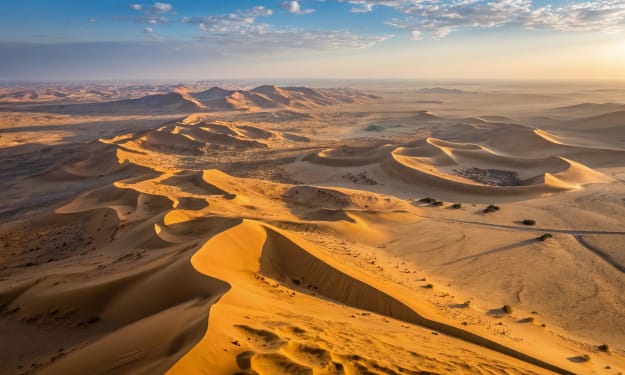
In the sweltering heart of the Sahara Desert, buried beneath centuries of shifting sand, lies the ghost of a kingdom that the world has almost entirely forgotten—Zerzura. Shrouded in myth, mystery, and whispers of lost treasure, Zerzura was once spoken of by Bedouins and medieval Arab explorers as a city of white stone, palm trees, and eternal water, hidden in the vast emptiness of the Libyan Desert. While it has never been officially “found,” clues and tantalizing accounts suggest that Zerzura may have existed—and its story is more than just a legend. It’s a tale of human endurance, obsession, and the fragile line between myth and memory.
By Logan Bennettabout a year ago in History