World History
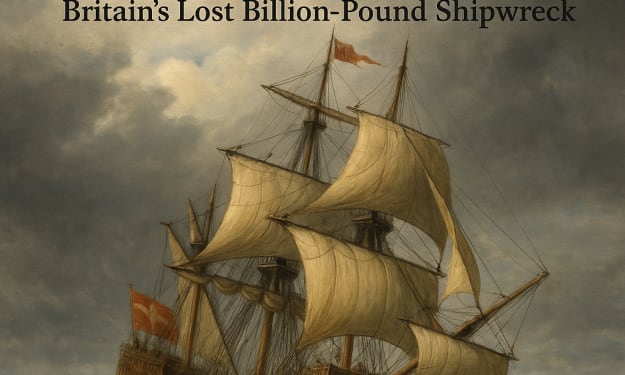
The Tragedy of the Merchant Royal: Britain’s Lost Billion-Pound Shipwreck. AI-Generated.
. A Galleon of Fortune The Merchant Royal was a substantial English galleon constructed around 1627 and owned by English traders. Under the command of Captain John Limbrey, she was a trade ship that navigated between Europe and the Spanish territories in the Americas. For years, she returned with merchandise and silver from the New World. Unlike warships or privateers, the Merchant Royal primarily operated as a peaceful trading vessel. However, what it lacked in armament, it compensated for with the immense worth of the cargo it transported. In 1641, the Merchant Royal was docked in the Spanish-controlled port of Cadiz. At the time, Spain faced financial difficulties and needed to remunerate its troops in the Netherlands. Due to political strains and a deficit of Spanish vessels, a substantial consignment of Mexican gold and silver, designated to pay the Spanish armies, was entrusted to English merchants specifically, the crew of the Merchant Royal. According to contemporary reports, the ship was laden with: 100,000 pounds of gold 400 bars of Mexican silver Over 500,000 pieces of eight (silver coins) Even in 1641, this fortune was appraised to be worth over £300,000, which would correspond to more than $1. 5 billion in today’s economy, adjusting for both inflation and the value of gold and silver. The Sinking of a Legend On September 23, 1641, the Merchant Royal commenced her voyage to England with her staggering bounty onboard. Calamity ensued just days later. Somewhere off the coast of Land’s End in Cornwall, the vessel encountered a violent storm. With her hull already deteriorated from extensive journeys and her pumps failing, the Merchant Royal began to take on water. Despite the crew’s utmost endeavors, the ship was fated. In the turmoil of the storm, the cargo comprising gold, silver, and valuable items was lost to the depths. Only 40 of the ship’s 80 crew members survived, rescued by a nearby vessel named the Dover Merchant. Captain Limbrey was among the survivors, and his account helped enshrine the loss. The precise coordinates of the wreck were never accurately documented, and in the centuries that followed, the Merchant Royal has become a contemporary Atlantis for treasure hunters. The Hunt for the Treasure The enigma of the Merchant Royal has captivated divers, historians, and treasure seekers for generations. Colloquially referred to as the “El Dorado of the Seas,” the ship has inspired numerous expeditions. Yet, despite modern sonar technology and deep-sea submersibles, the precise location of the vessel remains elusive. The most crucial moment in contemporary history occurred in 2007, when the American recovery firm Odyssey Marine Exploration declared that it had retrieved over 500,000 silver coins from a shipwreck in the Atlantic, valued at approximately $500 million. Initially, many speculated this might be the Merchant Royal. However, further investigations indicated it was actually the Nuestra Señora de las Mercedes, a Spanish galleon that sank in 1804. In that same year, British officials cautioned that anyone who discovered the Merchant Royal and neglected to report it would face legal repercussions under the legislation safeguarding historical shipwrecks. Despite all endeavors, the vessel remains missing. Some theorists propose that the wreck might be entombed beneath layers of sediment, while others contend it could have drifted into deeper waters far from its purported sinking site. The Significance of the Merchant Royal Beyond the evident appeal of its gold and silver, the narrative of the Merchant Royal encapsulates the perils and benefits of the Age of Exploration. It was an era when fortunes were created and lost at sea, when wooden ships transported the riches of empires and ventured into the unknown. The wreck also provokes inquiries regarding the ethics of treasure hunting, the ownership of cultural artifacts, and our valuation of maritime heritage. Should a salvaged treasure be repatriated to its nation of origin? Does it belong to the descendants of those who navigated the ship? Or should it remain undisturbed as a marine cemetery and time capsule? Conclusion The Merchant Royal persists as one of the most renowned and valuable shipwrecks never retrieved. Its narrative is a compelling amalgamation of ambition, misfortune, and enigma. Whether it is eventually discovered or remains eternally concealed beneath the ocean's surface it continues to captivate the imagination of those who aspire to find sunken treasures. Somewhere off the coast of England lies a billion-dollar treasure, shrouded in darkness by salt and time. And until it is located, the legend of the Merchant Royal endures.
By Say the truth about a year ago in History
The Curse of the Flor de la Mar: The Lost Treasure of the Malacca Strait
The Curse of the Flor de la Mar: The Lost Treasure of the Malacca Strait Introduction: A Golden Ghost of the Sea Beneath the swirling currents of the Malacca Strait, situated between the coasts of Sumatra and the Malay Peninsula, resides one of history's most captivating maritime enigmas the Flor de la Mar, a 16th-century Portuguese galleon allegedly having sunk with the most considerable treasure ever misplaced at sea. Burdened with gold, diamonds, spices, and invaluable artifacts plundered from the Sultanate of Malacca, this shipwreck remains one of the most elusive and precious fortunes in the world. A Jewel of the Portuguese Empire The Flor de la Mar (Portuguese for "Flower of the Sea") was built in Lisbon around 1502, during the illustrious era of Portuguese exploration. Measuring approximately 120 feet in length and weighing over 400 tons, she was a colossal vessel for her time engineered to dominate the trade routes between Europe and the East Indies. Initially utilized for commerce and military operations, the Flor de la Mar quickly garnered a reputation as both a formidable warship and a fated craft. She was susceptible to leaks and challenging to navigate, yet that did not deter the Portuguese Crown from depending on her for essential conquests most notably the capture of Malacca in 1511. The Fall of Malacca: A Rich Conquest Malacca was one of the wealthiest trading harbors in Asia, controlling access between the Indian Ocean and the South China Sea. When Afonso de Albuquerque, the Portuguese governor of India, conducted a successful campaign to seize the city, he secured not only a strategic position but also access to vast riches. The spoils acquired from Malacca were staggering chests filled with gold and silver, rare spices such as cloves and nutmeg, and artifacts from across Asia. This immense fortune, collected by Albuquerque as tribute to King Manuel I of Portugal, was estimated to be worth billions in today's currency. It was loaded aboard the Flor de la Mar, which was selected as the flagship to convey the plunder back to Lisbon. Disaster at Sea In November 1511, the Flor de la Mar departed from the port of Malacca, navigating the perilous waters of the Strait that bore its name. The ship, already aged and burdened with treasure, struggled against monsoon winds and turbulent seas. Somewhere near the northern tip of Sumatra, calamity struck. Caught in a violent storm, the Flor de la Mar disintegrated and sank. Most of the crew perished, although Albuquerque survived. The treasure, however, was lost to the depths and has never been retrieved. The Lost Fortune Estimates of the treasure aboard the Flor de la Mar vary, but contemporary historians suggest that the cargo could be valued at over $2 billion in today's terms. It encompassed:
By Say the truth about a year ago in History
The Complex History of India and Pakistan: From Unity to Division
A shared civilization, colonial dominance, religious and political divisions, and persistent geopolitical rivalry make up the deeply intricate history of India and Pakistan. They were once part of a unified cultural and political entity under various historical empires, despite the fact that these two nations are largely viewed today through the lens of mutual suspicion and conflict. 1. Shared Origins and Pre-Colonial Unity:
By sadhin khanabout a year ago in History
Sunken Gold: The Greatest Treasure Ever Lost in the Ocean
The Ocean’s Greatest Secret: The Myth of the Lost Treasure Fleet Beneath the extensive azure expanse of the planet's oceans reside innumerable enigmas, yet none as enigmatic and precious as the lost treasure fleets that disappeared amidst storms, warfare, or piracy. This article explores one of the most legendary submerged fortunesthe Spanish Treasure Fleet of 1715alongside other celebrated maritime losses, estimating the untold billions in gold, silver, and jewels consigned to the depths. It narrates a tale of aspiration, avarice, hazardous navigation, and persistent mystery. The Ocean’s Greatest Secret: The Myth of the Lost Treasure Fleet The ocean has perpetually possessed a mysterious charm, yet it also conceals some of humanity’s most significant losses. Among these are the numerous vessels that succumbed while transporting unimaginable wealthcargoes of gold, silver, gemstones, and precious artifacts lost to the abyss eternally. These shipwrecks have intrigued explorers, divers, and treasure seekers for centuries. Among the most renowned and valuable of these nautical calamities is the Spanish Treasure Fleet of 1715, frequently regarded as the greatest singular loss of wealth at sea. The Splendor and Avarice of the Spanish Empire During the 16th and 17th centuries, the Spanish Empire reigned over the seas. Following the conquest of extensive territories in the Americas, the Spanish commenced transporting back vast richespredominantly silver from the mines of Potosí in contemporary Bolivia and Zacatecas in Mexico, as well as gold from Colombia and Peru. This wealth was conveyed by heavily secured treasure fleets, or flotas, which embarked on protracted and perilous passages from the New World to Spain. Each fleet comprised several galleons and auxiliary vessels, frequently bearing treasures valued at millions of pesos. These ships were typically well-armed and accompanied by naval escorts to safeguard against pirates and rival nations. Nevertheless, despite their defenses, they were not imperviousparticularly against the forces of nature. The Catastrophe of 1715: Florida’s Submerged Cemetery On July 24, 1715, a fleet of 11 Spanish vessels burdened with immense treasure departed Havana, Cuba, en route to Spain. This treasure encompassed an estimated 14 million pesos in gold, silver, emeralds, pearls, and other valuable itemsan equivalent value of billions of dollars today. However, as they traversed the Florida coast, calamity ensued. A formidable hurricane swept through the fleet near modern-day Vero Beach, Florida. Ten of the eleven ships sank during the storm. Thousands of sailors perished, and the riches of the Spanish crown scattered along the ocean floor. While some of the treasure was salvaged in the immediate aftermath, much remained entombed beneath sand and coral, concealed by time and tide. For over two centuries, the precise locations of the wrecks were shrouded in mysteryuntil contemporary treasure hunters commenced their quest in the mid-20th century. Contemporary Rediscoveries and the Billion-Dollar Bounty The reestablishment of the 1715 Treasure Fleet represents one of the most thrilling narratives in subaqueous archaeology. In 1985, treasure seeker Mel Fisher garnered significant attention when his crew discovered a portion of the wreck of the Nuestra Señora de Atocha, another abandoned Spanish treasure vessel from 1622, situated off the coast of the Florida Keys. This ship alone transported in excess of $450 million in gold, silver, and emeralds. Comparable success was achieved with the 1715 fleet, where numerous gold coins, jewelry, and even complete chests of silver were unearthed. Some valuations suggest that the total worth of what remains unrecovered exceeds $1 billion. In 2015, a collective of divers uncovered over 300 gold coinsincluding rare specimens minted for King Philip Vvalued at more than $4. 5 million. Nevertheless, experts opine that the majority of the treasure still lies concealed beneath the ocean bed, awaiting rediscovery. Other Lost Treasures Beneath the Waves While the 1715 Fleet ranks among the most renowned, it is far from the sole sunken bounty: The Merchant Royal (1641): A British vessel frequently referred to as the “El Dorado of the Sea,” it was transporting over 100,000 pounds of gold and silver when it sank off Cornwall. Its estimated worth surpasses $1. 5 billion. The Flor de la Mar (1511): This Portuguese ship sank off the coast of Sumatra while carrying treasure from the conquest of Malacca. The estimated value exceeds $2 billion and has yet to be recovered.
By Say the truth about a year ago in History
# Never Forget How War Changes Lives: A Powerful Reminder from King Charles . AI-Generated.
War is not just about battles, soldiers, and distant lands. It touches everyone—mothers, fathers, children, grandparents—in ways that last a lifetime. King Charles once said, *"We should never forget how war changed virtually everyone's lives."* These words remind us that war’s impact goes far beyond the battlefield. It shapes families, communities, and entire nations for generations.
By Mirza Abdullahabout a year ago in History
Black Forest
The Enchanting Black Forest of Germany A Journey into Nature, Myth, and Culture Nestled in the southwest corner of Germany, the Black Forest (Schwarzwald in German) is a region of dense woodlands, rolling hills, deep valleys, and timeless charm. Renowned for its fairy-tale landscapes, cuckoo clocks, and traditional villages, this mountainous region in the state of Baden-Württemberg has captured the imagination of travelers, writers, and artists for centuries.
By Minhaj Ul Hasanabout a year ago in History
India-Pakistan Conflict 2025: Escalation and Global Concerns. AI-Generated.
As of May 2025, tensions between India and Pakistan have escalated dramatically, raising serious fears of a potential large-scale conflict between two nuclear-armed neighbors. One of the most dangerous flare-ups in recent memory follows a string of violent incidents and military battles centered largely on the long-contested Kashmir region. With diplomatic ties fraying and military rhetoric intensifying, the international community is on high alert, watching events unfold in South Asia closely.
By Mr.Mushfikabout a year ago in History
World War III: A Future We Must Avoid
The idea of a global conflict, one that could eclipse the devastation of the previous world wars, is a terrifying thought. The notion of World War III looms in the shadows of our collective consciousness, often discussed in theoretical terms, but rarely as an imminent possibility. Yet, with the rapid advancements in technology, the growing political tensions, and the volatility of international relations, we must ask ourselves: Could World War III become a reality?
By Abrar Siddikabout a year ago in History