World History
The Chicken War of 1325: When Clucking Chickens Sparked a Noble Revolt
I. A Crown Perched Precariously: Poland Before the Storm In the first decades of the 14th century, Poland was a kingdom stitched together with threadbare seams. Once a mighty and unified entity under the Piast dynasty, it had fractured during the "Period of Fragmentation" - a two-century-long brawl between dukes, princes, and churchmen, each more interested in carving up territory than fostering national unity. From the late 1100s through the 1200s, Poland resembled not a kingdom, but a jigsaw puzzle in a windstorm. Petty dukedoms rose and fell like the tides, and foreign powers nibbled greedily at Polish borders.
By History Seekerabout a year ago in History
🏰The London Beer Flood of 1814: When a River of Ale Drowned a City Block
Part I: The Day London Drowned in Beer In the early afternoon of October 17, 1814, the ordinary hum of life in St. Giles, one of London's most densely populated and impoverished neighborhoods, was about to be shattered - not by war, fire, or famine, but by something far more absurd and sinister. A freak disaster was brewing behind the brick walls of the Horse Shoe Brewery on Tottenham Court Road. Unbeknownst to the workers inside or the families living nearby, a monstrous force was growing - pressurized, fermented, and lethal. The day would soon turn from mundane to macabre as 320,000 gallons of beer burst into the streets, sweeping away buildings, lives, and any sense of normalcy.
By History Seekerabout a year ago in History
The Night the Statue of Liberty Almost Sank
When people picture the Statue of Liberty, they imagine fireworks, tourists with selfie sticks, or that triumphant scene in every New‑York‑based movie. What they rarely picture is a French steamship fighting for its life in the middle of the Atlantic, its cargo hold sloshing with seawater, and 214 giant copper pieces groaning like a wounded whale.
By Mohammad Ashiqueabout a year ago in History
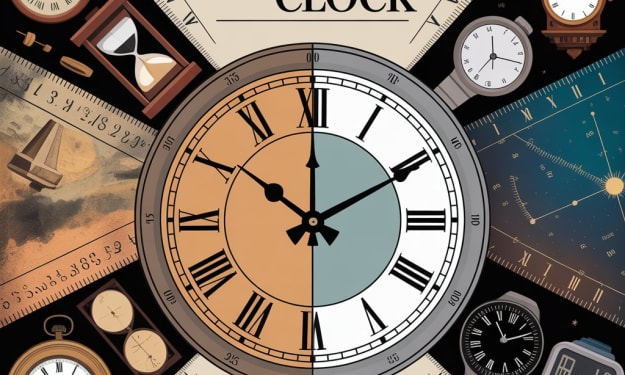
The History of the Clock
The History of the Clock From Sundials to Smartwatches: How Timekeeping Shaped Civilization Since the dawn of civilization, humanity has sought to master the rhythm of time. The story of the clock is more than a tale of gears and hands—it’s a story of how humans shaped their lives, societies, and understanding of the universe through the need to measure moments.
By FAIZAN AFRIDIabout a year ago in History
Where Shadows Remember
The wind carried strange voices the day Mara stepped into the ruins of Vareth. Once a thriving mountain village, it was now only charred stone walls and hollowed streets. Locals said the town vanished overnight fifty years ago—no bodies, no signs of struggle. Just silence, as though the earth had swallowed it whole. Mara wasn’t there to uncover a mystery. At least, that’s what she told herself. Officially, she was a sound archivist, documenting the acoustic fingerprints of abandoned places. But this one… this place called to her in dreams. In one recurring vision, a child stood at the village center, mouthing words she couldn’t hear—until the wind blew, and they echoed in her chest like a forgotten melody. She pressed the recorder’s red button and began her sweep. “Echo test. Point Alpha,” she said aloud. “Structure intact. No signs of life.” Her voice bounced off crumbling stone. The wind shifted again, slipping between the narrow alleyways with an unnatural rhythm. Not random. Not wild. Intentional. She paused. There it was again—a murmur. Faint. Indistinct. Not quite human, not quite wind. She lifted her microphone higher. The recorder crackled. “…ara…” Her name. She rewound and played it back. Nothing. Just wind. She walked deeper into the village, stopping in front of a well. Its stones were etched with runes unfamiliar to her—a spiraling pattern of symbols like water currents. She dropped a small mic down into the shaft. Silence. Then a flutter. A sigh. Then, a voice—childlike, melodic. “Why did you leave us?” Mara stumbled back, pulse racing. The air thickened, pressing in like unseen hands. She whispered, “Who are you?” A pause. “We are the vanished.” The village around her shifted. Where rubble had stood, outlines of homes flickered like ghosts caught in the dusk light. Shadows moved within the walls. Children played in silence. Women carried baskets. A bell rang somewhere, though there was no tower left to house it. She blinked. The vision passed. Mara fell to her knees. Her mother had lived here once—she remembered that much from the fragmented stories told by her grandmother. Her mother never spoke of Vareth. Only once had she muttered in her sleep, “They didn’t forget us. We forgot ourselves.” She never asked what that meant. Until now. “Why did they disappear?” Mara asked, standing again. The wind hesitated. Then it answered with a sound—not a voice, but an emotion: grief. “They tried to warn the world,” the wind said, sibilant and fragmented. “The stars changed. The balance was lost. They heard the end before it came.” “What end?” “They vanished to avoid it. To keep the song alive.” Mara didn’t understand. Not fully. But something in her bones did. The villagers had heard a change in the harmony of the world—a cosmic dissonance. And to preserve themselves, they didn’t die. They left. Not to another place, but another resonance. Another frequency of existence. She lifted the mic again. “Can I join you?” Silence. Then: “You already have. You were born from the echo.” The wind rose again, this time not chaotic but musical. Notes formed in it, an ancient scale no modern tongue could sing. The stones vibrated. The air shimmered. Mara dropped her equipment and closed her eyes. A warmth spread through her body—familiar, like a mother’s touch, a lullaby half-remembered. She saw the villagers not as phantoms, but as glowing silhouettes—vibrations made flesh. She saw her mother as a girl, laughing, playing, before everything changed. The bell tolled again. The earth rumbled—not with destruction, but with alignment. The village didn’t rebuild. It reappeared, tuned once more to the world. Half-real, half-memory. Mara’s recorder clicked off, battery drained. It didn’t matter. She no longer needed it. She was the recording now. The living echo of the vanished. And she knew her purpose. To remind the world of what was lost.
By Usman Khanabout a year ago in History
Scientists Found an 8,000-Year-Old Figurine in a Cave: Its Engravings Tell the Story of an Ancient Culture. AI-Generated.
Scientists Found an 8,000-Year-Old Figurine in a Cave: Its Engravings Tell the Story of an Ancient Culture In a remarkable archaeological discovery that is captivating historians and researchers worldwide, scientists have unearthed an 8,000-year-old figurine from a remote cave. This ancient artifact, found buried deep within layers of soil and time, offers an extraordinary glimpse into a long-lost civilization. Intricately engraved with symbols and artistic patterns, the figurine is believed to represent not just a religious or cultural object, but also a form of early storytelling — a narrative tool used by prehistoric people to pass down their history, beliefs, and rituals.
By Adnan Rasheedabout a year ago in History
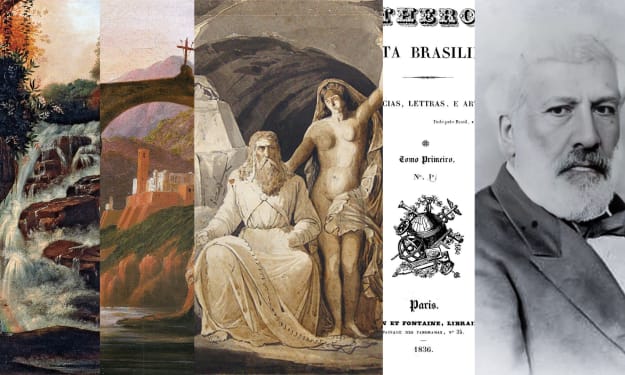
Araújo Porto-Alegre
Manuel de Araújo Porto-Alegre stands out as a remarkable figure in Brazilian cultural history. Born in 1806 in Rio Pardo, located in the southern province of Rio Grande do Sul, Porto-Alegre was truly a visionary. As a painter, poet, playwright, architect, critic, diplomat, and professor, his impact was felt across various fields, securing his essential role in shaping Brazil's cultural identity in the 19th century.
By A Históriaabout a year ago in History
The Vanished Fortune of Emperor Montezuma: The Lost Gold of the Aztecs. AI-Generated.
The Golden Empire of Montezuma The Aztec Empire, at its height in the early 1500s, dominated central Mexico through fearsome military might and sophisticated administration. The empire’s wealth flowed in the form of tribute—extracted from conquered regions and paid in cacao, textiles, jade, and above all, gold. Montezuma II, who ruled from 1502 to 1520, presided over a city unlike any in Europe at the time. Tenochtitlán was built on a lake, crisscrossed with canals, and filled with gleaming temples, vibrant markets, and palaces adorned with precious stones and gold leaf. Aztec gold wasn't just wealth—it held spiritual and political power. Objects were cast in exquisite designs: feathered serpents, golden masks, discs representing the sun, and ritual knives. Gold represented divine favor from the gods, particularly Huitzilopochtli, the god of the sun and war. The Arrival of the Conquistadors In 1519, Hernán Cortés and around 600 Spanish soldiers landed on the Gulf Coast of Mexico. Marching inland, they were stunned by the wealth and grandeur of Tenochtitlán. Montezuma, believing Cortés might be a god-king foretold in prophecy, welcomed the Spanish into the city with gifts of gold and silver. These gestures, meant to awe and pacify, only whetted the conquistadors’ greed. Cortés wrote to the Spanish king, describing streets lined with gold, stores filled with treasures, and temples adorned with golden shields and masks. But beneath the surface, tensions simmered. The Fall of Tenochtitlán and the Disappearance of the Treasure In 1520, after months of uneasy occupation, the situation exploded. Cortés left the city to fight rival Spaniards, leaving a garrison under Pedro de Alvarado. During a religious festival, the Spanish massacred hundreds of Aztec nobles, inciting a massive rebellion. Montezuma, now seen as a Spanish puppet, was either killed by his own people or died from wounds inflicted during the uprising. As the Aztecs besieged the Spaniards inside their compound, Cortés returned. Facing annihilation, he planned a nighttime escape—La Noche Triste, or “The Night of Sorrows.” La Noche Triste: The Treasure Lost On the night of June 30, 1520, Cortés and his men fled the city across narrow causeways over Lake Texcoco. They carried with them wagons and crates filled with Aztec gold—jewelry, coins, religious relics, and artifacts. But the plan turned to disaster. Aztec warriors ambushed the Spaniards on the causeways. Many were killed, and countless treasure-laden horses and porters drowned in the lake. Some soldiers, too greedy to part with their loot, sank under its weight. Cortés survived and eventually returned with reinforcements to capture the city in 1521—but the treasure carried out on La Noche Triste was never recovered. What Happened to Montezuma’s Treasure? There are several theories: Lost in Lake Texcoco: The simplest explanation is that the gold was lost in the lake during the retreat. Though parts of the lake have since dried up and Mexico City now stands atop it, underwater excavations and digs over the centuries have revealed only small fragments—never the vast hoard Cortés described. Hidden by Aztecs: Before the Spanish siege, some Aztec priests and nobles may have hidden sacred treasures in underground chambers, temple ruins, or remote mountain caves to prevent desecration. Stolen by Survivors: Surviving Spanish deserters or indigenous allies might have taken and buried parts of the treasure while fleeing. Melted Down: Some treasure may have eventually reached Spain, melted into bars and ingots. However, much of the iconic, artistic goldwork described by conquistadors was never seen again. Modern Searches for the Lost Aztec Gold The tale of Montezuma’s lost treasure has captured imaginations for centuries. From early colonial treasure hunters to modern archaeologists, the legend continues to inspire expeditions and studies. In 1981, a construction crew in Mexico City unearthed a golden disc beneath a street, sparking renewed interest. In 2020, archaeologists discovered a massive Aztec altar and remnants of a temple beneath the city—confirming more layers of history remain buried. In the mountains of northern Mexico and New Mexico, local legends speak of a hidden Aztec hoard, transported out of the city and concealed in remote caves. Dozens of adventurers have perished or vanished searching for it. Even today, rumors persist among metal detectorists and amateur historians of a cache of Aztec gold still lying undiscovered beneath modern Mexico City or in the Sierra Madre. Montezuma’s Curse? Some treasure hunters and folklorists speak of the “Curse of Montezuma”—a supposed curse that afflicts those who seek or steal the emperor’s treasure. This idea, while rooted in legend rather than evidence, adds another layer of mystery to the saga. Conclusion: A Legacy Beyond Gold Whether or not Montezuma’s treasure is ever found, the story holds a deeper truth: it represents the collision of civilizations, the tragedy of cultural destruction, and the insatiable drive for wealth that helped shape the modern world. In museums around the world, you’ll find traces of Aztec artistry—fragments of a once-golden empire. But the heart of Montezuma’s treasure, the one that dazzled the conquistadors and vanished into legend, remains one of the great unsolved mysteries of the Americas.
By Say the truth about a year ago in History