World History
Before Rosa, There Was Claudette: The Teenage Girl Who Sat Down for Justice
When we think of the civil rights movement, we picture Rosa Parks: calm, composed, quietly powerful. But what many don’t know is that before Rosa made history, a 15-year-old schoolgirl named Claudette Colvin had already taken the same stand—by sitting down.
By Mohammad Ashiqueabout a year ago in History
NASA's James Webb Space Telescope mission — Live updates. AI-Generated.
# **NASA's James Webb Space Telescope Mission — Live Updates** The **James Webb Space Telescope (JWST)**, NASA’s most ambitious and powerful space observatory, has been revolutionizing our understanding of the universe since its launch on **December 25, 2021**. As Webb continues its mission, scientists are uncovering unprecedented details about distant galaxies, exoplanets, and the origins of the cosmos. Below are the latest live updates on JWST’s groundbreaking discoveries and mission progress.
By Ananta Biswas about a year ago in History
The Rise of the Zodiac Killer
The chill of the San Francisco night crept into the bones of Officer Daniel Hayes as he walked his patrol beat along Washington Street. It was October 1969, and the city had become a breeding ground for paranoia. People double-locked their doors. Teenagers canceled dates. Newspapers were selling out daily with bold headlines splashed across the front: “Zodiac Strikes Again!” This was the fifth murder in just a few months, each one more brutal than the last. The killer didn’t just slay—he taunted. Letters arrived at local newspapers, handwritten in a strange cipher, signed with a cryptic symbol: a circle with a cross through it. Inside those envelopes were clues, mocking law enforcement and challenging them to “catch me if you can.” To the police and the public alike, the Zodiac was more than a murderer—he was a ghost wrapped in a riddle. His attacks were scattered, his victims varied—young lovers in parked cars, a taxi driver shot in cold blood, a couple stabbed by the lake. There was no clear pattern except one: unpredictability. Detective Sarah Collins, the youngest in her precinct, found herself obsessed. The Zodiac wasn’t just a case to her—it was a shadow that haunted every dream. She poured over crime scene photos, compared letter formations, and even traveled to Napa Valley to interview a surviving victim, Bryan Hartnell. He had been stabbed six times and lived to tell the tale. His account of the hooded man with the strange symbol stitched onto his chest was chilling. “I saw his eyes,” Bryan whispered during the interview, “and they weren’t angry… they were calm. Almost... satisfied.” Despite her relentless efforts, the killer stayed ahead, as if he could read their every move. Then one night, a break came—one of the ciphers was cracked by a high school teacher and his wife. The letter didn’t reveal his name, but it spoke of the killer’s desire to “collect slaves for the afterlife.” The man was either a deranged psychopath or someone driven by a twisted philosophy—maybe both. Sarah’s obsession deepened. She began to suspect that the Zodiac wasn't a lone wolf but part of something bigger. A theory began to form—what if the killer wasn’t hiding in the shadows but standing in plain sight? Her suspicion fell on Arthur Leigh Harris, a schoolteacher with a disturbing past and a fascination with cryptography. He owned a typewriter that matched the letters. He had a watch with the Zodiac symbol. And yet, the forensic evidence was always inconclusive. Every time she tried to corner him, he slipped away with airtight alibis. The FBI joined the case, but red tape and jurisdictional politics made the investigation slow and clumsy. Sarah was told to back off, but she couldn't let it go. One night, against orders, she broke into Harris’ cabin in the woods. What she found chilled her more than any crime scene. Dozens of journals, all written in cipher, filled the dusty shelves. Drawings of the symbol. Clippings of every article written about the Zodiac. But just as she was photographing the evidence, she heard a creak behind her. “You’re trespassing, detective,” Harris said softly, standing in the doorway. They stared at each other, silence thick between them. She couldn’t arrest him. Not yet. But he knew. And she knew. From that moment, it became a psychological war. The killings stopped after 1974. No more letters. No more bodies. Many believed the Zodiac had died, or perhaps he had simply grown tired of the game. Sarah, however, knew better. Killers like him didn’t stop. They adapted. She dedicated the next 30 years of her life to solving the mystery. She taught criminology, hoping to inspire a new generation of detectives to take up the hunt. Even in retirement, she kept a corkboard in her home office covered with strings and photos. Then in 2021, new DNA techniques reopened the case. A forensic genealogy team traced partial DNA from one of the stamps to a family tree. The trail led to Gary Francis Post, a former Air Force veteran who had died in 2018. But still—no full confirmation. No justice. Sarah visited Post’s grave. She stood silently, the wind whipping around her, and placed a single red rose on the headstone. She didn’t know if it was truly him. But she knew one thing: The Zodiac Killer had changed America. He was the first killer to turn murder into a media spectacle. He made people fear the night, trust no stranger, question even their neighbors. And though his face may never be unmasked with certainty, his rise had left a permanent scar on the heart of a nation.
By Mati Henry about a year ago in History
The Iron Amir: The Story of Abdur Rahman Khan
The Iron Amir: The Story of Abdur Rahman Khan In the heart of 19th-century Afghanistan, when the winds of empire and rebellion blew fiercely across the mountains, a man of steely will emerged to forge unity from chaos. His name was Abdur Rahman Khan, a prince in exile, a warrior by blood, and the man who would become known as “The Iron Amir.”
By Ihsas Feeling about a year ago in History
🍯 The Great Molasses Flood of Boston, January 15, 1919: A Sticky Catastrophe That Swept Through the Streets and Caused Multiple Fatalitie
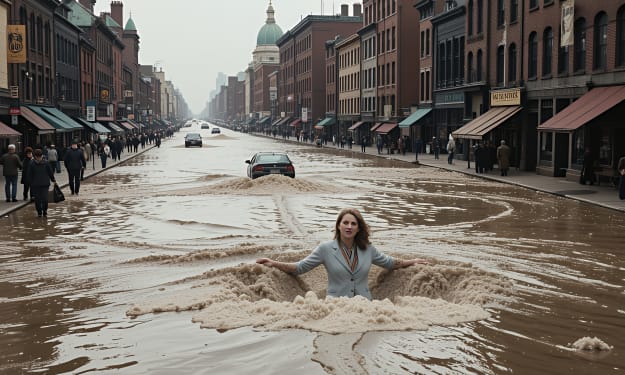
🌇 Part 1: Boston at Boiling Point - The City Before the Flood To understand how a flood of molasses could destroy part of a city and take lives, we must first travel back to Boston in the winter of 1919 - a city full of contradictions, opportunity, and unrest. The Great War had just ended in November 1918, and like many American cities, Boston was adjusting to the uneasy transition from wartime industry to peacetime life. Amid economic shifts, labor strikes, political radicalism, and the tail-end of a deadly flu pandemic, tension simmered in the air.
By History Seekerabout a year ago in History
🐖The Pig War on the US–Canada Border, 1859: A Territorial Dispute Triggered by the Killing of a Single Pig
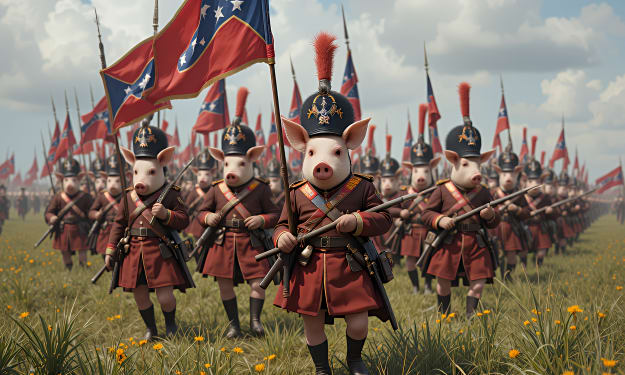
🏞 Part 1: A Snoutful of Trouble - The Pig That Started It All In the otherwise quiet and pastoral June of 1859, San Juan Island - then an unsettled jewel in the Pacific Northwest's emerald crown - became the unlikely battleground for a bizarre territorial standoff between two of the world's most powerful nations: the United States and Great Britain. San Juan Island, lush with cedar forests, rugged coastlines, and fertile grazing fields, was inhabited by a small but tense mix of British employees of the Hudson's Bay Company and independent American homesteaders drawn west by the promise of land and opportunity.
By History Seekerabout a year ago in History
🏰The Defenestrations of Prague, 1419 and 1618: Political Assassinations by Throwing People Out of Windows That Sparked Wars
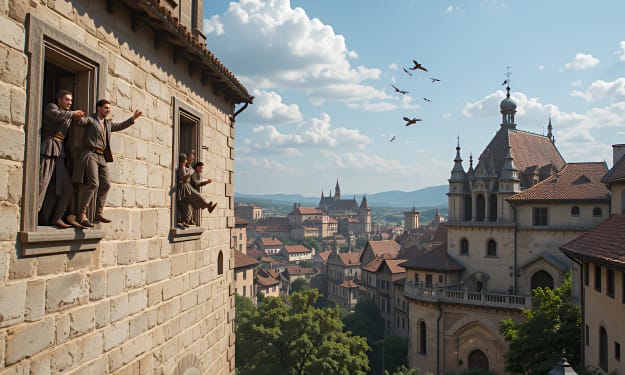
Part 1: Introduction - What Is a Defenestration? The term defenestration may sound peculiar to modern ears, but it holds a deeply significant place in European history - particularly in the Czech lands. Derived from the Latin words de- ("down from" or "away") and fenestra ("window"), defenestration simply means the act of throwing someone out of a window. Though seemingly straightforward, this term encapsulates a rare yet dramatic form of political violence that became emblematic of Prague's turbulent religious and political struggles during the late Middle Ages and the early modern period.
By History Seekerabout a year ago in History
🐇The Great Rabbit Panic of 1730: When Fluffy Bunnies Terrorized England
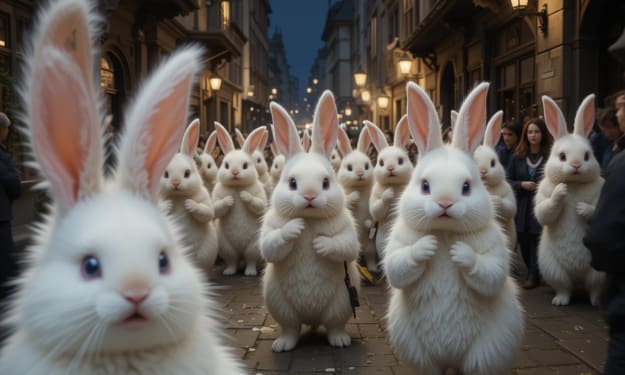
Part 1: The Quiet Before the Storm - England's Peaceful Countryside In the early 1700s, England's countryside was a patchwork of farmland, pastures, and sleepy villages, where life revolved around planting, harvesting, and simple village traditions. Potatoes were becoming a staple crop, slowly reshaping the British diet. For many, farming was a steady, if humble, livelihood - season after season of sowing seeds, tending fields, and reaping crops.
By History Seekerabout a year ago in History
The Da Vinci Code – Dan Brown
--- **Chapter One: The Cry of the Canvas** The Louvre Museum lay cloaked in the silence of midnight, save for the soft echo of footsteps moving swiftly across the marble floor. Jacques Arnaud, the museum’s chief curator, clutched a tattered envelope in one hand and a flashlight in the other. His breath was shallow. He had little time.
By Jawad Khanabout a year ago in History
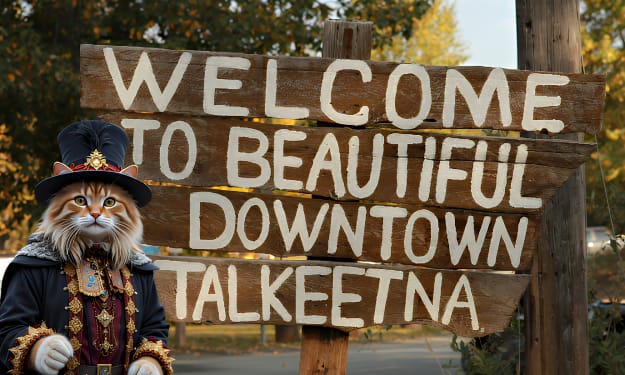
😺Stubbs the Cat: The Legendary Mayor Who Ruled an Alaskan Town with a Purr (1997–2017)
I. Welcome to Talkeetna: Where the Unusual Is the Norm Deep in the icy heart of Alaska, at the confluence of three rivers and nestled under the towering shadow of Denali, lies the quirky town of Talkeetna - a place that proudly marches to the beat of its own drum. It isn't just remote. It's the kind of offbeat outpost that feels as if it were plucked from a Coen Brothers film and plopped into reality. Talkeetna doesn't do things the normal way, and the locals wouldn't have it any other way.
By History Seekerabout a year ago in History
The Pepsi 349 Scandal: How a Marketing Error Sparked Riots and Deaths in the Philippines
In 1992, PepsiCo launched an ambitious promotional campaign in the Philippines called "Number Fever" to boost its market share against Coca-Cola, which dominated with a 75% market share compared to Pepsi’s 17%. The campaign promised life-changing prizes, including a grand prize of one million pesos (approximately $40,000 USD), in a country grappling with widespread poverty. However, a catastrophic printing error turned this marketing stunt into a national crisis, leading to riots, at least five deaths, numerous injuries, and billions of dollars in potential liability. This article delves into the campaign’s mechanics, the error that sparked chaos, the violent fallout, and the long-term consequences for Pepsi in the Philippines.
By Doctor Strangeabout a year ago in History