World History
Trail of the Crimson Clue
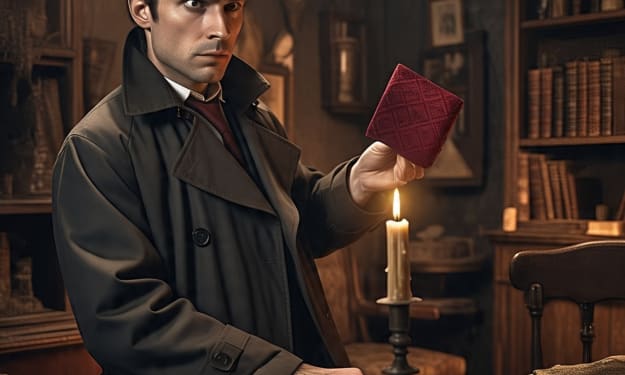
Detective Mara Langley had seen blood before—but never like this. The body lay slumped over a mahogany desk, a pool of red seeping into the Persian rug beneath. But what caught her eye wasn’t the gruesome scene. It was the single red paper crane resting on the desk, untouched by the carnage. It was the third murder in as many weeks. Each victim was connected, each killed in their own home, and each left behind a crimson origami clue. The press had dubbed the killer The Paper Reaper. The name sounded dramatic, but Mara didn’t believe in theatrics. She believed in patterns. She scanned the room—no signs of forced entry. The window was cracked open slightly, letting in the scent of late-autumn rain. She pulled on gloves and picked up the paper crane. Inside, folded with surgical precision, was a message: “Truth lies where blood was born.” “What do you make of it?” asked Officer Jayden Cortez, peering over her shoulder. “It’s a riddle,” she muttered, pocketing the crane. “And I hate riddles.” Back at headquarters, Mara laid out the evidence from all three cases. All the victims were part of a now-defunct company called Crimson River Pharmaceuticals. They’d been sued five years ago for unethical drug testing but had settled quietly. The company had vanished—its name buried in public records. Until now. The first victim was Martin Voss, the company’s former CEO. The second, Alicia Trent, head of research. And now, Theodore Baines, head of legal. All dead. All with blood and paper. “Truth lies where blood was born,” Mara repeated. She stared at an old black-and-white photo pinned to the case board. The founding members of Crimson River, all smiling for the press. In the background was a small laboratory in East Brighton. The company’s first location. “Jayden,” she said, grabbing her coat. “We’re going back to where it all started.” --- The East Brighton lab had been abandoned for years. Its windows were boarded, and ivy choked the sides like claws of the past. Mara and Jayden pried open the front door and stepped inside. The air smelled of dust, chemicals, and something deeper—secrets. They found a basement hatch rusted shut. Jayden forced it open with a crowbar, revealing a staircase that led into darkness. Flashlights flickered as they descended. The basement was lined with locked cabinets and broken lab equipment. In the far corner, Mara noticed a sealed steel drawer with the company logo still visible. She pried it open. Inside were old patient files. “Human trials,” she whispered. “Some of these names… they were test subjects.” One name jumped out: Elias Crane. She froze. Elias was a patient who had died during testing, swept under the rug by Crimson River’s lawyers. But he had a brother—Adrian Crane—a brilliant chemist who had vanished after the trial. Mara’s heart sank. Adrian must be the killer. --- The next night, Mara received an envelope at her doorstep. No return address. Inside: a crimson paper crane and another note. “The final truth waits where silence was paid.” She knew exactly what it meant. The Crimson River settlement had been handled in a single law firm—Dunford & Hale—the one place every victim had visited after the scandal. There had to be one last piece of the puzzle left there. She went alone. The office was dark, the night air humid. She slipped inside, flashlight in hand. The firm had closed years ago, but the records remained in the back archive. She found the settlement file, tucked in a drawer labeled CONFIDENTIAL. But as her fingers brushed the folder, the lights flickered on. Adrian Crane stood in the doorway, a small knife in his hand and sadness etched across his face. “You found me,” he said quietly. “You left clues,” Mara replied. “I wanted someone to see what they did. My brother was fourteen. He trusted them. They killed him for profit, then buried the truth.” Mara didn’t draw her weapon. She saw the pain, the torment that had hollowed him out. “They paid people to stay quiet. I tried the courts. No one cared. So I gave them a taste of what it feels like to bleed.” Mara nodded slowly. “You think killing them makes it right?” “I think the world needed to know.” She lowered her flashlight. “It does now.” He looked at her, a faint smile tugging at his lips. “That’s enough, then.” Adrian dropped the knife and raised his hands. --- Weeks later, the case of The Paper Reaper dominated headlines. The Crimson River scandal resurfaced, this time with proof—files Adrian had hidden in the firm’s archive. The public demanded justice. Lawsuits reopened. Names cleared. As Mara filed her final report, she unfolded the last crimson crane. No riddle this time. Just a line scrawled in red ink: “Truth bleeds, but it heals.”
By Usman Khanabout a year ago in History
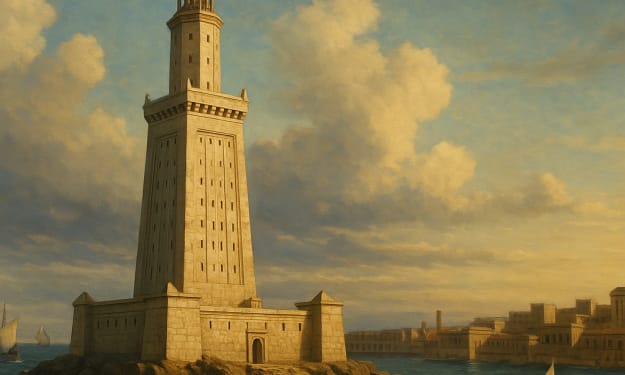
The Lighthouse of Alexandria: An Ancient Greek Engineering Marvel. AI-Generated.
The Lighthouse of Alexandria: An Ancient Greek Engineering Marvel The Lighthouse of Alexandria, also known as the Pharos of Alexandria, was one of the greatest architectural and engineering achievements of the ancient world. Built on the small island of Pharos, just off the coast of the city of Alexandria in Egypt, this magnificent structure guided sailors safely to port for centuries. It was so iconic and important that it earned its place among the Seven Wonders of the Ancient World.
By Adnan Rasheedabout a year ago in History
Trump calls on Walmart to absorb tariffs rather than raise prices
Trump Calls on Walmart to Absorb Tariffs Rather Than Raise Prices In a move that reignited debate over trade policy and consumer pricing, former President Donald Trump recently made headlines by calling on retail giant Walmart to absorb the cost of tariffs rather than passing those expenses onto American consumers. The comments come amid growing concerns about inflation, supply chain challenges, and trade tensions with China and other manufacturing nations. Trump’s message, posted on his social media platform Truth Social, signaled a renewed political focus on economic nationalism and corporate responsibility.
By Nirob Khanabout a year ago in History
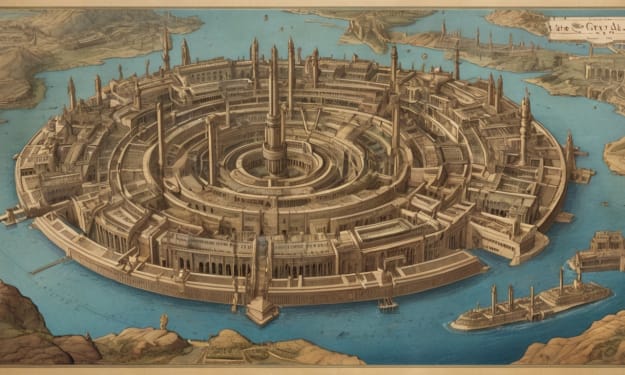
The Lost City of Atlantis
A civilization that lies deep in the seas... A legendary city that rules the world with its advanced technology, but was buried in the waters overnight by incurring the wrath of the gods: Atlantis! So is this story real, or is it a metaphor thousands of years old? Today, we are putting all the details on the table, from Plato's writings to modern conspiracy theories, even NASA's explanations!
By Remzi Kazdalabout a year ago in History
Title: The World at War
The term "World War" refers to two of the largest and most destructive conflicts in human history—World War I (1914–1918) and World War II (1939–1945). These wars not only involved dozens of countries across the globe, but also changed the course of history, politics, and society. Together, they caused the deaths of tens of millions of people and left lasting effects on the world.
By Muhammad Sananabout a year ago in History
Brooklyn Bridge History: 15 Reasons It Became a New York City Icon
The Brooklyn Bridge is one of the most famous bridges in the world. It connects Manhattan and Brooklyn, two important parts of New York City. Every day, thousands of people walk, bike, or drive across it. But why is the Brooklyn Bridge so famous? Let’s look at 15 simple reasons why this bridge became a true New York City icon.
By Sangita Nandiabout a year ago in History
“Petals of Time: Exploring the Global Beauty and Cultural Significance of Cherry Blossoms”
🌸 Introduction: The Ephemeral Allure of Cherry Blossoms Every spring, cherry blossoms, or sakura, paint landscapes with delicate shades of pink and white, captivating hearts worldwide. Beyond their visual appeal, these blossoms embody profound cultural meanings, symbolizing the transient nature of life. This article delves into the rich history, cultural significance, and top destinations to experience the mesmerizing beauty of cherry blossoms.
By Md Muij Ahmedabout a year ago in History
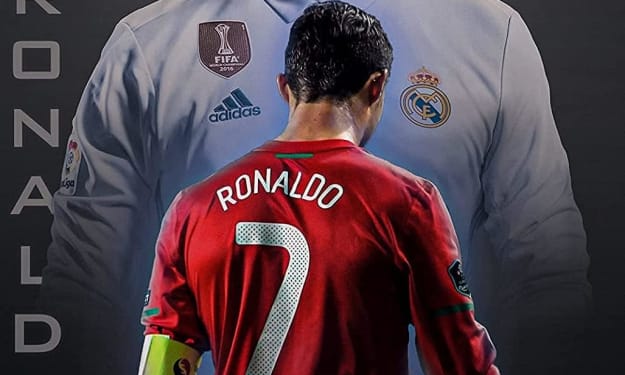
Moral Story of a Footballer (Struggle Life)
Struggle For Success: Football is more than just a game—it’s a journey of passion, perseverance, and life lessons. Some of the greatest footballers in history didn’t just achieve success because of their talent; they overcame immense struggles, proving that hard work and determination can turn dreams into reality.
By Shihab Ahmedabout a year ago in History
12,000-Year-Old Rock Carvings Baffle Researchers: Echoes of a Lost Civilization
Stones That Speak Across Time In the shifting sands of time, some stories are not told in books. They are carved in stone, hidden beneath the soil, and waiting. Beneath layers of earth and centuries of silence, a forgotten voice has emerged, etched into massive stones over 12,000 years ago. These rock carvings, now brought to light, are not only ancient, they are impossible.
By The Secret History Of The Worldabout a year ago in History
Buddha is Smiling: The Secret Message of India's Nuclear Triumph
India's First Nuclear Test and the Broken Jeep: When the Bomb’s Creator Fell Face-First to the Ground Due to the Tremor Exactly 51 years ago today (on May 18, 1974), India announced its first nuclear test. The following account is being republished to mark the occasion. On the morning of May 18, 1974, All India Radio’s Delhi station was broadcasting the popular song from the film Bobby, “Hum Tum Ek Kamre Mein Band Hon, Aur Chaabi Kho Jaye” (“If you and I were locked in a room and the key got lost”). At exactly 9 AM, the song was cut off and an announcement was made: “Please stand by for an important announcement.” A few seconds later, the announcer’s voice came on: “At 8:05 this morning, India conducted an underground nuclear test for peaceful purposes at an undisclosed location in western India.” One Day Earlier in London… A day earlier in London, Indian Prime Minister Indira Gandhi’s Principal Secretary, P.N. Haksar, kept asking Indian High Commissioner B.K. Nehru, “Any news from Delhi?” As soon as the news of the nuclear test arrived, Nehru could see the visible relief on Haksar’s face. He understood why Haksar had been so anxious. Who Would Be Beheaded? Five days before the test, on May 13, under the supervision of Homi Sethna, Chairman of the Atomic Energy Commission, Indian nuclear scientists began assembling the bomb. On the night of May 14, the device was taken to an L-shaped underground shaft. The next day, Sethna traveled to Delhi for a pre-scheduled meeting with Indira Gandhi. Sethna told her, “We have placed the device in the shaft. Now please don’t ask us to remove it, because it’s no longer possible. You can’t stop us now.” Indira Gandhi replied, “Go ahead. Are you afraid?” Sethna said, “Not at all. I just wanted to say, there’s no turning back from here.” After getting Gandhi’s approval the next day, Sethna returned to Pokhran. He gathered the team and asked, “If the test fails, whose head will roll?” Bomb designer Rajagopal Chidambaram promptly responded, “Mine.” Deputy leader P.K. Iyengar added, “No heads need to roll. If it fails, it means the laws of physics are wrong.” The Jeep That Failed On the morning of May 18, the desert heat in Pokhran was intense. A makeshift observation post had been set up five kilometers from the blast site. Present were Homi Sethna, Raja Ramanna, Indian Army Chief General Bewoor, DRDO Chairman B.D. Nag Chaudhry, Deputy Leader P.K. Iyengar, and Lt. Col. P.P. Subharwal. Nag Chaudhry had a camera around his neck and was continuously taking photos. Chidambaram and fellow designer Satinder Kumar Sikka were on another hill near the control room. The electronic detonation team, led by Srinivasan and Pranab Dastidar, was inside the control room. The blast was scheduled for 8:00 AM. But an hour earlier, scientist Virendra Singh Sethi’s jeep refused to start on the way to the test site for the final check. Time was running out. Sethi abandoned the jeep and walked 2 kilometers to the control room. Sethna asked General Bewoor what to do about the broken-down jeep so close to the test site. Bewoor replied, “Oh, you can blow the damn thing up.” Fortunately, Indian Army troops soon arrived with another jeep and moved the faulty one to a safe distance. Still, the test was delayed by five minutes. “We Will Proceed” Finally, a countdown began over the loudspeaker near the observation post. Sethna and Ramanna gave Pranab Dastidar the honor of pressing the trigger. At the count of five, Dastidar switched on the high-voltage switch. Seeing the electric meter, Dastidar was shaken — it showed that only 10% of the required voltage was reaching the device. He panicked: “Shall we stop? Shall we stop?” The countdown halted. But Dastidar suspected the reading was wrong due to moisture inside the shaft. He shouted, “No! We will proceed!” According to George Perkovich in his book India’s Nuclear Bomb, Dastidar pressed the red button at exactly 8:05 AM. “Krishna Lifted the Mountain with His Finger” At the observation post, when Sethna and Ramanna heard the countdown stop, they thought the test had failed. Ramanna wrote in his memoir Years of Pilgrimage that his colleague Venkatashan, who had been chanting the Vishnu Sahasranama, stopped mid-prayer. Everyone feared all their hard work had gone to waste. Suddenly, a huge sand column shot up from the earth and stayed suspended for nearly a minute. P.K. Iyengar later wrote, “It was a breathtaking sight. The legends of Krishna lifting a mountain with his finger started to seem real.” Jitendra Soni, head of the system integration team, felt like a sand minaret had risen in front of him. Fell Face-First to the Ground At that moment, it felt like a massive earthquake struck. Sethna felt the earth shaking violently. But he was puzzled — why wasn’t there a blast sound? Or could he simply not hear it? A second later, a faint explosion sound was heard. Chidambaram, Sikka, and their team began hugging each other. Chidambaram later said, “It was the greatest moment of my life.” Overcome with excitement, Sikka jumped off the observation post, spraining his ankle. In the control room, Srinivasan felt like he was on a small boat in a stormy sea. Ramanna later wrote in his memoir, “I saw the sand mountain rise as if Hanuman (a Hindu deity) had lifted it.” But he forgot in his excitement that the earth would soon shake. As he descended from the observation post, the ground trembled. Ramanna lost his balance and fell flat on his face. Ironically, the architects of India’s nuclear bomb ended up face-first in the hot sands of Pokhran on the very day of their monumental success.
By Ikram Ullahabout a year ago in History