World History
The Cold War: A Detailed Overview
🧊 The Cold War: A Detaiew Timeframe: Approximately 1947 – 1991 Main Adversaries: The United States and its NATO allies vs. The Soviet Union and its Warsaw Pact allies Ideological Conflict: Capitalism and democracy (USA) vs. Communism and authoritarianism (USSR) --- 🌍 Origins of the Cold War The Cold War emerged after the end of World War II, as the wartime alliance between the United States and the Soviet Union began to disintegrate. The primary factors contributing to the Cold War included: Ideological Differences: The U.S. championed capitalism and democracy, while the USSR advocated for communism and a centrally planned economy. Geopolitical Tensions: The Soviet Union sought to expand its influence in Eastern Europe, leading to the establishment of communist governments in countries like Poland, Hungary, and Czechoslovakia. The U.S. viewed this as a threat to democratic nations and responded with policies aimed at containing communism. Economic Factors: The U.S. implemented the Marshall Plan to aid in the reconstruction of Western Europe, while the USSR established the Comecon to support Eastern Bloc countries. ---🔑 Key Events During the Cold War 1. Berlin Blockade and Airlift (1948–1949) In an effort to gain control over the entire city of Berlin, the Soviet Union blockaded all land routes to West Berlin. In response, the United States and its allies initiated the Berlin Airlift, supplying West Berlin with food and fuel via air transport for nearly a year. 2. Formation of Military Alliances NATO (North Atlantic Treaty Organization): Established in 1949, NATO was a collective defense alliance among the U.S., Canada, and Western European nations. Warsaw Pact: Formed in 1955, this was a collective defense treaty among the Soviet Union and its Eastern Bloc allies. 3. Korean War (1950–1953) The Korean Peninsula was divided into North Korea (communist) and South Korea (capitalist). The war began when North Korean forces, supported by the USSR and China, invaded South Korea. The United Nations, led by the U.S., intervened on behalf of South Korea. The conflict ended in an armistice, restoring the original borders. 4. Cuban Missile Crisis (1962) The Soviet Union placed nuclear missiles in Cuba, just 90 miles from the U.S. coast. This discovery led to a tense 13-day standoff, bringing the world to the brink of nuclear war. The crisis was resolved when the USSR agreed to remove the missiles in exchange for a U.S. promise not to invade Cuba and the secret removal of U.S. missiles from Turkey. 5. Vietnam War (1955–1975) North Vietnam, supported by the USSR and China, aimed to unify the country under communism. South Vietnam, backed by the U.S., resisted. The war resulted in a communist victory and the unification of Vietnam under communist rule. 6. Space Race The U.S. and the USSR competed to achieve significant milestones in space exploration. Notable events include the Soviet Union launching Sputnik, the first artificial satellite, in 1957, and the U.S. landing the first humans on the Moon in 1969.
By Ahmed rahi about a year ago in History
Asia's LNG demand stays muted in April while Europe eases
.LAUNCESTON, Australia, April 29 (Reuters) - Asia's imports of liquefied natural gas (LNG) remained tepid in April while Europe's started to show signs of the usual seasonal easing as winter peak demand passed.
By Md.Abdur Roufabout a year ago in History
The Southern Battlefield That Helped Forge a Nation
In the humid mist of a South Carolina dawn in October 1780, a band of ragtag militia fighters crouched low behind trees, muskets loaded and nerves high. They weren’t formally trained soldiers—just farmers, blacksmiths, and frontiersmen—but they had a cause. As British Major Patrick Ferguson stood atop King’s Mountain, unaware of the net closing in, a pivotal chapter in the American Revolution was about to be written.
By Mythic_Questorabout a year ago in History
The Last Call
It started with a ring. 12:01 a.m., precisely. Elena Moore had been asleep for barely an hour when the shrill sound of her old landline jolted her upright. She blinked at the red digits glowing on her bedside clock. Who called at this hour? No one used the landline anymore—except spammers or the occasional wrong number. Still groggy, she answered. “Hello?” Silence. Then, a whisper. “Elena…” Her heart skipped. “Who is this?” But the line was dead. She sat there, phone pressed to her ear, listening to the quiet buzz. There was something haunting in the way her name had been said—familiar, sorrowful, and heavy with unspoken meaning. The next night, it happened again. 12:01 a.m. “Elena…” the same whisper, barely audible. This time, she didn’t hang up. “What do you want? Why are you calling me?” Again, silence. Then static. Then a click. The third night, Elena unplugged the phone. But at 12:01 a.m., her cell rang. Unknown number. She nearly dropped it. This wasn’t coincidence. “Elena…” The same voice. But something had changed in the tone—urgency. She pressed the phone to her ear. “Who are you?” “Don’t trust him,” the whisper came. “He’s lying.” Before she could ask who, the line went dead again. Elena didn’t sleep that night. The voice haunted her—soft, broken, but unmistakably real. It felt like someone was trying to tell her something important. Something dangerous. She went to the police the next morning, but they dismissed it as a prank. Maybe someone using a voice modulator. No threats, no crime. But Elena knew better. The voice stirred memories—things she’d buried long ago. Twelve years ago, her sister Rachel vanished without a trace. No leads, no suspects. Only a frantic phone call the night she disappeared. A whisper. “Elena…” Back then, she’d thought she’d imagined it. But now—now she was sure. The voice belonged to Rachel. Desperate for answers, Elena dug through old records, police reports, and phone logs. Most of it led nowhere. But then she found something odd. A number that had dialed their house the night Rachel went missing. Traced back to a cabin on the edge of Black Hollow Woods, just outside town. The cabin had belonged to Daniel Cross—Rachel’s boyfriend at the time. He claimed he hadn’t seen her that night. The police questioned him, but never charged him. Elena remembered his charm, his calm demeanor during the investigation, and how he seemed too perfect, too unaffected. She decided to visit the cabin. It was abandoned now, sagging and overgrown. Inside, dust coated every surface, but nothing looked disturbed—except for a drawer in the back room, left slightly ajar. Inside it, she found a box. Tapes. Cassette recordings, each labeled with a date. She recognized the last one—October 12, 2013—the day Rachel disappeared. Her hands trembled as she played it on an old recorder she’d found nearby. Static. Then a voice. Rachel’s. “If anything happens to me, it’s Daniel. He’s not who he says he is. He found out I knew. Please, if you hear this, tell Elena—don’t let him get away with it.” The tape ended with a muffled scream. Elena fell to her knees. The whispering calls, the messages—they were Rachel, reaching out somehow, urging her to uncover the truth. She returned to town and went straight to the police with the tape. This time, they listened. Daniel Cross was arrested two days later. In his storage unit, they found more tapes, diaries, even Rachel’s locket. Enough evidence to convict him. The trial was swift. The town was stunned. For years, Daniel had been a respected figure, a community volunteer, even ran for city council. But beneath the surface was a monster. Rachel’s case was finally closed. But the calls didn’t stop. At 12:01 a.m., Elena’s phone rang one last time. She answered. “Elena…” the voice was softer now, peaceful. “Rachel,” she whispered. “I know. I did it. He’s gone. You’re safe now.” There was silence. Then one final word: “Thank you.” The line went dead. Forever this time. Elena placed the phone down, tears streaming down her face—not of fear, but of release. She’d carried guilt for years, thinking she hadn’t done enough. But Rachel had known she’d come. In the quiet of the night, Elena looked to the stars and whispered back. “You’re not alone anymore.”
By Usman Khanabout a year ago in History
The Silent Genocide
The summer of 1931 arrived with its usual warmth, the endless fields of Ukraine stretching like waves of gold beneath the vast, blue sky. The wheat swayed gently in the breeze, a promise of life, of sustenance for the coming winter. But for our village, that promise was about to be stolen.
By Gabriela Toneabout a year ago in History
70 Rare Historical Photos That Shaped Global History – From Gandhi to Guevara, Einstein to Elvis
1. Madhubala – The Eternal Beauty Madhubala, often hailed as the most beautiful actress Indian cinema has ever seen, remains an enduring symbol of grace, charm, and cinematic brilliance. Her performances in classics like Mughal-e-Azam continue to mesmerize audiences decades after her untimely demise.
By Sujeet M Sonarabout a year ago in History
Have We Misunderstood Our Past? 12,000-Year-Old Calendar Found in Turkey Rewrites Human History
Have We Misunderstood Our Past? 12,000-Year-Old Calendar Found in Turkey Rewrites Human History Imagine standing in front of a towering stone carved by hands that lived 12,000 years ago. No cities no written language no smartphones just a community of early humans looking up at the sky and trying to understand their place in the universe. In southern Turkey near the city of Şanlıurfa lies Göbekli Tepe an ancient archaeological site that continues to puzzle and fascinate scientists. But now a recent discovery at this site may shake the very foundations of our understanding of history a calendar older than any known system of timekeeping in the world.
By Adnan Rasheedabout a year ago in History
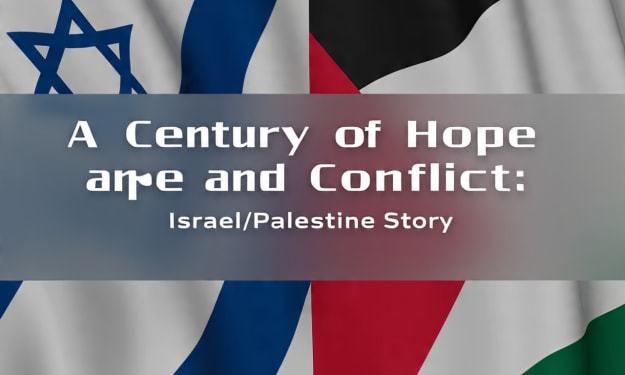
The Jewish Migration to Palestine/Israel: A Historical Journey from Zionism to Statehood
**Introduction: The Roots of Jewish Migration** The migration of Jews to Palestine, culminating in the establishment of Israel in 1948, is one of the most complex and contentious chapters in modern history. Driven by a blend of religious longing, political ideology, and survival imperatives, this movement reshaped the demographics and geopolitics of the Middle East. This essay explores the four major waves of Jewish migration (Aliyah) to Palestine, their historical contexts, and their lasting impact on both Jewish and Palestinian communities.
By Muhammad Israrabout a year ago in History
Whispers of the Lost River
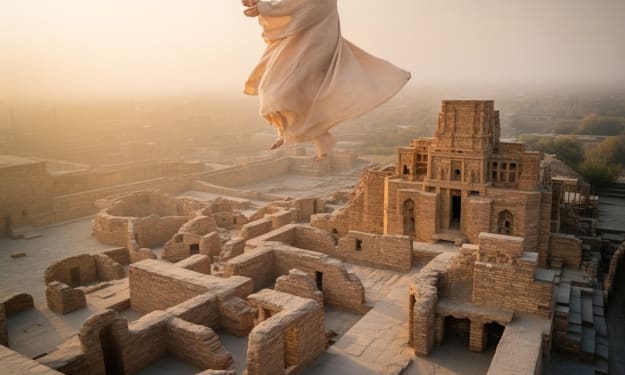
In the twilight of history, where time itself lingers like a mystic dervish spinning in silence, the Indus Valley Civilization once breathed with a rhythm as ancient as the stars. It was not merely a cluster of mud-brick cities etched along a river’s edge—it was a hymn sung in clay, stone, and spirit. Before Babylon dreamed of ziggurats or the Nile whispered secrets to the pyramids, the Indus had already woven a tapestry of life where the sacred and the mundane danced hand in hand. It is said by Sufi sages that every soul is born from a divine sigh, a breath of beauty that carries the essence of truth. So too was this civilization—a sigh of the earth, born of water, fire, wind, and silence. The River That Remembered The Indus River, known in whispers as Sindhu, did not simply carve valleys; it carved destinies. It was the bearer of stories and the drinker of time. On its sacred banks bloomed cities like Harappa and Mohenjo-daro, where people moved in harmony, their lives choreographed like the turning of prayer beads. Unlike the kingdoms of war that roared elsewhere, the Indus people were quiet architects of peace. Their cities were not built for conquest but for communion—with nature, with each other, and perhaps, with the divine. Streets ran straight, as if in meditation. Homes, humble yet wise, bore no thrones, no grand palaces, no signs of kings. No temples scraped the sky. Instead, wells were dug deep—perhaps to drink from the same silence the mystics later sought. The Great Bath of Mohenjo-daro, still echoing with droplets unseen, hints not at mere hygiene but a ritual of purification. In its waters, one might imagine pilgrims washing off the dust of illusion. A People of Gentle Strength They left behind no tales of bloody conquest. No records of dynastic arrogance. Only seals pressed with animal motifs and undeciphered script—fragments of thought suspended like Sufi verses waiting to be understood by hearts rather than eyes. What wisdom did they guard so quietly? What song hummed through their pottery and jewelry, their games and grain stores? Perhaps their true temple was life itself. Perhaps they saw no boundary between the sacred and the everyday. A potter shaping clay was no less than a priest shaping spirit. A farmer coaxing wheat from soil was a poet whispering couplets into the ears of the earth. Trade routes blossomed like gardens, connecting them not only to lands far beyond—Mesopotamia, Central Asia, the Arabian Gulf—but to the idea of shared humanity. They traded beads and lapis lazuli, yes—but perhaps, too, they traded silence and understanding. Perhaps in every transaction was a gesture of trust, a recognition of divine presence in the other. Mystery as the Message It is the silence of the Indus that speaks most. Their language, etched in delicate script upon terracotta seals, remains unread. But maybe, just maybe, they never meant it to be read with the eyes. Maybe their script was for the heart—a mantra not to be translated but to be felt. In this silence, the Sufi finds kinship. Rumi once said, “Silence is the language of God, all else is poor translation.” The Indus people, then, may have been early disciples of this ineffable tongue. What they left behind is not a riddle to be solved, but a presence to be experienced. Their disappearance, too, is not a tragedy but a transcendence. Civilizations often die with a scream; the Indus vanished like a breath returning to the Beloved. No great wars, no plagues carved on walls. Just a slow ebbing, like the river that gave them life retreating to some higher realm. The Soul’s Architecture Walk through the ruins of Mohenjo-daro, and you may still hear it—the quiet dignity of baked brick, the geometry of spirit made manifest. Every courtyard, every granary, every drain whispers that life is sacred when lived with balance. Their cities mirrored a philosophy later echoed by Sufi thought: that heaven is not above but within; that order and beauty arise from inner clarity. Could it be that the Indus people were the first mystics of the subcontinent? That their unbroken harmony with nature, their measured life, and their graceful exit from history were all part of a deeper truth? Sufis speak of fana—the annihilation of the ego, the merging into the divine. What if the Indus did not fall but simply melted into time, leaving behind no kings or battles, only stillness? What if their ruins are not reminders of loss, but doorways to that truth? Legacy of Light Today, in Pakistan’s Sindh and Punjab, or India's Gujarat and Haryana, children still play near those sacred mounds. Farmers till the same soil. The river still flows, though thinner now, as if mourning or remembering. Sufi shrines dot the landscape now—at Sehwan, Multan, and beyond. Pilgrims gather, spinning in trance, seeking the same truth the Indus may have once lived: that God is in the grain of the brick, in the flow of the river, in the breath of the wind. Archaeologists study the material remains, but perhaps the Indus Valley’s real inheritance lies not in what is seen but what is felt. It is in the patience of the potter, the silence between words, the space between heartbeats. As you hold a shard of their pottery or gaze at their seals in a museum, close your eyes. Listen. You may just hear the song they left behind. Not a song of war or power. But a lullaby of balance. A whisper of harmony. A sigh of the eternal.
By Kaleem Ullah about a year ago in History
Rising Shadows, Shifting Powers. AI-Generated.
In the name of Allah, the Most Gracious, the Most Merciful The world stands at a delicate crossroads. Time is spinning swiftly, and the destinies of nations are being redrawn on new lines. Circumstances are changing before our eyes, yet the common person remains unaware. What lies ahead will not only shake global politics but also deeply impact the hearts and minds of the Muslim Ummah. All of this is happening silently, but those who can see, know that deep changes are taking root beneath the surface. The epicenter of this transformation is the Middle East, where countries like Israel, Arab states, Pakistan, Iran, and Turkey are preparing for monumental decisions. When the future is analyzed through the lens of artificial intelligence, the focus turns first to Israel. Israel's policy is clear: power, control, and total dominance. It doesn't just want to remain in control of Palestine but also has its sights set on neighboring Arab nations. Its grip on technology, intelligence, and global media shows that it is not alone — some of the world’s most powerful forces stand behind it. The United States and European powers see it as a strategic partner. Backed by this support, Israel is no longer just a state; it has become an ideology — one that seeks to reshape the Middle East on its own terms. This is why many Arab countries that once stood firmly in support of Palestine are now falling silent. The UAE, Bahrain, and others have already normalized relations with Israel, and behind closed doors, more nations are preparing to follow. Their aim is simple: economic gains, security, and the preservation of power. These regimes now prioritize the survival of their monarchies over Islamic brotherhood. They have realized that opposing Israel comes at a high cost — international pressure, economic sanctions, and internal instability. This silence could spread further. According to AI-based forecasts, in the coming years, North African countries like Morocco, Tunisia, and Sudan may formally recognize Israel. Following them, Oman, Qatar, and possibly even Indonesia might form ties with Israel under global pressure and economic incentives. Their ruling elites are seeking Western approval and investments, yet their populations’ hearts beat for Palestine. This contradiction will inevitably lead to an explosion. In the midst of all this, the question arises: what will Pakistan do? Will Pakistan also recognize Israel? A country founded on the ideology of Islam, one that has always raised its voice for Palestine — will it also bow to global pressure? AI-driven analysis predicts that Pakistan will come under intense pressure in the coming days. Global financial institutions, Arab regimes, and certain international powers will attempt to coerce Pakistan into recognizing Israel. But Pakistan’s true strength lies in its public consciousness — in a population that sees Israel as a tyrannical occupier and cannot remain silent on Palestinian suffering. For this reason, Pakistan will not recognize Israel in the near future. There may be secret diplomatic engagements, intelligence exchanges, or softened rhetoric in global forums. However, the public outcry will be so intense that no government will dare make such recognition openly. If Pakistan becomes internally stable, achieves economic self-reliance, eradicates corruption, and sees the rise of ideological leadership, it could assume a leading role in the Islamic world. Its military, youth, scientists, and Islamic intellectuals could transform the nation into a new kind of state — an ideological fortress that not only defends itself but also speaks out for the oppressed Ummah. Turning to Palestine, its fate hinges on two possible paths. The first path — complete Israeli domination, where Gaza, the West Bank, and Jerusalem come under tighter Israeli control, and Palestinians are reduced to a marginalized minority. The second path — a surge of public awakening, a movement that shakes Muslims worldwide. Social media, independent journalism, and the youth will drive this awakening, potentially forming a global narrative against Israeli aggression. The case of Saudi Arabia is even more sensitive. Home to Islam’s holiest sites — the Haramain — Saudi Arabia also seeks to modernize under Vision 2030. Entertainment, arts, Western investment, and cultural transformation are accelerating. But the question remains: will the Haramain be protected from these changes? According to AI predictions, the next decade could witness an intense ideological debate across the Muslim world — should the Haramain be safeguarded solely by the Saudi government, or should they be administered through a global Islamic council? This is already being discussed informally, but in the future, it could become a formal demand — especially if the current leadership continues to prioritize Western alignment over Islamic interests. Iran and Turkey hold distinct positions. Iran, with its revolutionary ideology, uses proxies like Hezbollah, the Houthis, and its influence in Iraq to directly oppose Israel. Turkey, considered the successor of the Ottoman Caliphate, seeks influence in the Muslim world through soft power — diplomacy, media, and economic strength. These two countries take different paths but share the same direction — leadership. But where will true leadership emerge from? AI analysis suggests that it won’t arise from any government or monarchy but from public awareness. The youth — educated, conscious, and ideologically driven — are raising questions on social media. They are the ones who will ignite change. They could be Pakistani, Turkish, African, or Indonesian — but their language will be one: Islam. When Pakistan refuses to recognize Israel — while many neighboring countries have already established relations — it will have both regional and global consequences. Pakistan will face economic, diplomatic, and security challenges on the world stage, as well as internal pressures. But this very pressure could strengthen Pakistan — if its leadership is sincere, capable, and ideological. In the global arena, only those nations that remain firm on their principles under pressure are remembered by history. Pakistan’s refusal could become a global narrative — one that touches the hearts of Muslims everywhere, reminding them that there still exists a nation unwilling to compromise on the core values of the Ummah. This rejection won’t be merely diplomatic — it will be a declaration of ideological resistance, offering hope and inspiration to Muslim youth worldwide. That will be the moment when new concepts of leadership emerge in the Muslim world. Leadership will no longer rest solely on governments and militaries but on public awareness, media strategy, academic excellence, and the courage to speak truth. Those who side with truth in this time will become the future leaders of the Ummah. AI analysis also indicates that although Israel is expanding its influence through technology, media, and politics, its greatest weakness is its moral foundation. Any state built on oppression, occupation, and division is inherently unstable. It cannot withstand an awakened global conscience. The perseverance of the Palestinian people and the love Muslims feel for them will one day awaken that conscience. There is also the possibility that a global Islamic bloc will emerge — unified in economics, defense, education, and diplomacy. Pakistan, Turkey, Iran, Malaysia, Indonesia, and other key Muslim nations could be members. If such a bloc forms, it will become impossible for Israel and its allies to dictate unilateral policies in the region. In this entire scenario, Saudi Arabia’s role will be pivotal. If it handles the spiritual leadership of Islam with responsibility, treating the Haramain as a collective trust of the Ummah, it could become the center of this unity. But if it continues to prioritize Western culture over Islamic values, a new ideological movement will arise — one determined to protect the sanctity of the Haramain. In the end, the question remains: Will the Muslim Ummah awaken in this crucial era? Will it identify its enemies, reform its internal ranks, and move toward a common purpose? Or will it remain entangled in sectarianism, national interests, and internal divisions? AI analysis gives hope. Though the times ahead are tough, the eyes of the new generation are opening. A new intellectual awakening is being born — one that not only seeks to heal the wounds of the Ummah but also envisions a bright, independent, and dignified future. This generation is asking the questions that were once suppressed. It is ready to take the steps that can bring about monumental change. And this generation will become the true leadership of the Muslim Ummah — a leadership that owes nothing to any superpower or monarchy. It will follow only Allah, His Messenger, and the interests of the Ummah. This is the future we are witnessing — a decisive yet hopeful future. It is now up to us to prepare for it or be swept away by the tides of time. Time is short, but the opportunity still lies in our hands.
By RafiBinYousafabout a year ago in History
Donald Trump" – Wikipedia
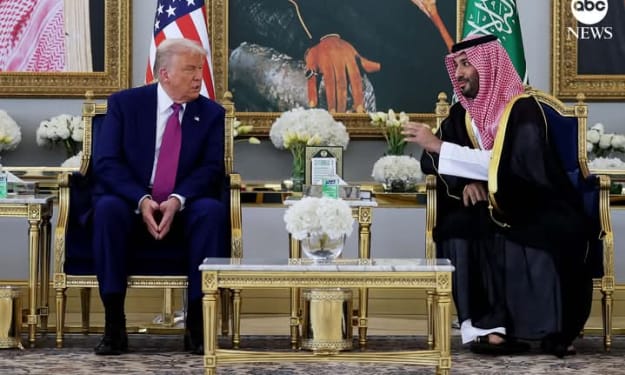
Donald John Trump (born June 14, 1946) is an American businessman, media personality, and politician who has served as both the 45th and 47th president of the United States. Known for his unconventional approach to politics and business, Trump's career has been marked by significant achievements and controversies.
By Silas Blackwoodabout a year ago in History