World History
The history of Islam
The history of Islam is believed, by most historians, to have originated with Muhammad,mission in Mecea and Medina at the start of the 7th century CE,although Muslims regard this time as a return to the original faith passed down by the Abrahamic prophets such as Adam Noah, Abarham , Moses, David, Solomon,and Jesus with the submission (Islam) to the will of God.
By Mahmud Forhad about a year ago in History
2024 Election Fallout: Supreme Court Rules on Trump’s Immunity Case
Introduction In a historic decision that could reshape the future of U.S. presidential accountability, the Supreme Court ruled on former President Donald Trump’s immunity case in 2024. The case, Trump v. United States, centered on whether a former president enjoys absolute immunity from criminal prosecution for actions taken while in office. The ruling not only impacts Trump’s multiple legal battles but also sets a precedent for the limits of executive power. This article examines the Court’s decision, its legal and political implications, and the potential consequences for the 2024 election and beyond. Background: The Legal Battle Over Presidential Immunity
By Silas Blackwoodabout a year ago in History
A Journey to Leave Nothing Behind
What We Leave Behind Matters Most The desert was silent—eerily so. No wind, no birds, no hum of insects. Just a stillness that felt like the world had stopped breathing. Eli stood at the edge of the ancient sandscape, boots sinking slightly into the powdery ground. Before him stretched endless dunes, cracked earth, and the faint remains of roads now buried beneath time. Once, long ago, this had been a city. A thriving place of laughter, industry, and progress. Now, it was dust and memory. He glanced down at the small device in his hand—a tracker, old but reliable. It pulsed gently, a soft green light blinking every few seconds. It guided him not by coordinates, but by legacy. Somewhere out there, his grandmother's final footprint remained. Eli was part of the Recovery Project—an initiative started when humanity finally decided to look back, instead of endlessly forward. With Earth on the brink of being declared "unsalvageable," a growing number of people began returning to find the last traces of those they had loved. “Footprints” were not always literal; sometimes they were letters, hidden data caches, gardens overtaken by wild growth. But in rare cases, someone had left behind something tangible. A single step frozen in time. And that was what Eli was searching for. His grandmother, Amara Holt, had been a soil biologist—a quiet, tireless worker who had tried to regenerate dying ecosystems in Earth’s final days. She hadn’t left behind fame or fortune. She had left behind hope, and Eli clung to it. He walked for hours, occasionally consulting the tracker. The blinking grew stronger. Closer. He remembered her stories, told to him before she passed—a time when trees grew without scaffolding, when children played in rain without filters, when people believed in tomorrows. He had never known that world, born on one of the floating cities in the stratosphere, where air was thin and rules were rigid. Earth had become myth to most. A mistake they rose above. But not for Eli. At last, he saw it. Half-buried in the sand was a small glass dome, barely the size of a room. He brushed away the grit, revealing a reinforced seal. A faded symbol marked the entry: her initials, AH, carved into the corner in a style only she used. He opened the hatch. Inside, the air was stale but breathable. Dust floated like ghosts in the slanting sunlight. There were no machines, no blinking lights—just a single footprint in a bed of preserved soil, perfectly outlined. The Final Footprint. Eli knelt beside it. Around it were native seeds, carefully embedded in pockets of fertile earth. A small plaque beside the footprint read: "For what I cannot save, I plant. For what I cannot fix, I forgive. This is my mark—not of ownership, but of care. Let it be the last thing I take, and the first thing I give back." He touched the earth. It was alive. Against all odds, the dome’s old filtration system had kept the seeds viable. Some had sprouted—tiny green tendrils, fragile but determined. His breath caught. She hadn’t just left a footprint—she’d left a beginning. He sat for hours, letting the silence speak. He thought of what people chased now—credits, status, escape. But here, in the quiet dome of a forgotten woman, was something purer. Something that asked not for admiration, but continuation. Eli activated his communicator. “This is Eli Holt, Recovery Team Alpha. I’ve found it.” There was a pause on the other end, then a quiet reply: “The footprint?” “Yes,” he said. “And more. I’m staying here a while. I’m going to finish what she started.” A pause. “Copy that. Should we send backup?” He looked around the dome—his grandmother’s sanctuary, her soil, her seeds. “No,” he said softly. “This is a one-person job. Like it always was.” He ended the call and began unpacking his tools. Not just to document—but to plant, to protect, to preserve. As night fell and the stars emerged, Eli placed his boot next to hers. Not to erase it. But to walk beside it. And so, beneath the dark sky, the earth remembered something it thought it had lost—a promise, made quietly, kept fiercely. A single step that mattered. The final footprint. And the first one back.
By Usman Khanabout a year ago in History
World’s Oldest Pyramid Built 25,000 Years Ago Was Not Made by Humans Archaeologists Claim
World’s Oldest Pyramid Built 25,000 Years Ago Was Not Made by Humans Archaeologists Claim In a groundbreaking claim that challenges everything we thought we knew about ancient civilizations and the timeline of human history archaeologists have unearthed what they believe could be the world’s oldest pyramid predating Egypt’s iconic pyramids by over 20,000 years. But what’s truly shocking is not just its age but the belief that it was not constructed by human hands. The site located in the heart of Indonesia’s Java island and referred to as Gunung Padang has long been a source of mystery and legend. For years local folklore spoke of a sacred mountain with unexplained energies and ancient secrets. Now with extensive carbon dating ground penetrating radar and 3D imaging researchers have uncovered a massive structure hidden beneath what was once believed to be a natural hill. And their findings are rewriting the pages of prehistory.
By Adnan Rasheedabout a year ago in History
The Sunken Wealth of the Flor de la Mar: The Forsaken Treasure Vessel of the Portuguese Empire. AI-Generated.
. The Ascendancy of Portuguese Naval Might In the early 1500s, the Portuguese Empire was swiftly broadening its influence across the Indian Ocean. Under the leadership of King Manuel I, Portuguese navigators sought spices, wealth, and supremacy over the trade routes of Asia. Among the numerous vessels launched to aid this mission was the Flor de la Mara colossal carrack that became both an emblem of Portuguese might and a persistent puzzle of lost wealth. Constructed in 1502 in Lisbon, the Flor de la Mar weighed over 400 tons and was designed for extended voyages to India and beyond. Despite initial design shortcomings and repair complications, she would soon play a crucial role in one of the most profitable undertakings in the annals of European colonialism. The Conquest of Malacca By 1511, under the direction of Afonso de Albuquerque, the Portuguese set their ambitions on Malacca, the affluent trading center situated on the Malay Peninsula. Gaining control of Malacca meant dominating the lucrative spice trade that flowed between the East Indies, India, and the West. The conquest was harsh but triumphant. The Portuguese dethroned Sultan Mahmud Shah and acquired vast quantities of treasure from the royal palace and local merchants. Among the riches were gold coins, jeweled artifacts, ceremonial weapons, and rare spices. Estimates suggest the total worth could amount to billions in contemporary terms. This colossal treasure was loaded onto the Flor de la Mar, which Albuquerque personally designated to transport the spoils back to Portugal. The Fateful Journey The Flor de la Mar departed from Malacca in late 1511, escorted by several other vessels. However, her destiny was determined not by adversaries, but by nature itself. As the fleet approached the Strait of Malaccasituated between Sumatra and the Malay Peninsulathe Flor de la Mar faced a ferocious storm. The aging vessel, already notorious for structural deficiencies and an inadequate rudder system, could not endure the onslaught. She disintegrated on a reef off the northern coast of Sumatra. Most of the treasure sank along with the ship. Some survivors were rescued by nearby ships, including Albuquerque himself, but the cargovast, shimmering, and historically invaluablewas never retrieved. The Enigma of the Treasure Throughout the centuries, numerous treasure seekers, archaeologists, and maritime specialists have endeavored to locate the wreck of the Flor de la Mar. The challenges are numerous: the region is perilous, laden with shifting sandbanks, treacherous tides, and a dense thicket of coral reefs. Furthermore, the historical documentation is ambiguous. Some locate the wreckage near the contemporary Aceh coastline in Indonesia; others propose it is situated further within the Strait. Despite enhancements in underwater surveying and sonar technology, no authenticated discovery has ever occurred. If uncovered, the treasure could encompass: Golden Thrones and Religious Artefacts from the Sultan of Malacca Spices and Silks of significant worth at that time Chests of Gemstones and Coins acquired from merchants and royal reserves Documents and Relics from the initial phase of Portuguese expansion Legal and Ethical Issues The quest for the Flor de la Mar also brings forth legal dilemmas. Indonesia asserts ownership of any treasure located within its maritime boundaries, while Malaysia and Portugal may also assert claims due to historical and cultural connections. UNESCO's 2001 Convention on the Protection of Underwater Cultural Heritage discourages commercial treasure hunting, complicating recovery endeavors. Some private enterprises have attempted to negotiate salvage rights, but political unrest and national safeguards have predominantly curtailed such initiatives. Cultural Heritage and Contemporary Legends The Flor de la Mar has integrated into regional mythology. Fishermen near Aceh recount tales of spectral lights beneath the ocean and peculiar phenomena on tempestuous nights. Legends flourish of divers who disappeared while seeking the wreck or found themselves cursed after retrieving artefacts. In Melaka (Malacca), a replica of the Flor de la Mar exists as a maritime museum, enlightening visitors about the golden era of Portuguese exploration and the destiny of the fabled vessel. Yet the true treasure remains concealed, alluring each generation to uncover what centuries have consumed. Conclusion: A Fortune Beneath the Waves The Flor de la Mar persists as one of the most captivating lost treasures in history. She represented more than a mere ship; she embodied imperial aspiration, cultural intertwining, and the avarice that prompted the rise and fall of empires. Beneath the ocean, in the depths of coral and time, resides the promise of unimaginable richesa legacy of conquest, gold, and the profound silence of history.
By Say the truth about a year ago in History
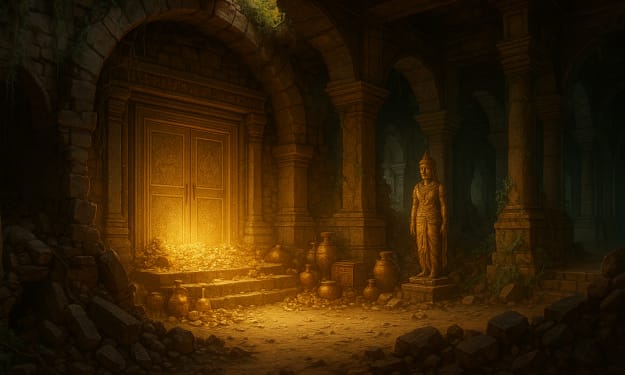
The Golden Vault of the Maharaja: India’s Overlooked Regal Fortune
The Narrative of the Golden Vault India, with its rich mosaic of kingdoms, empires, and dynasties, has long been a land of myths and opulence. Among its most timeless narratives is that of the Golden Vault of the Maharaja, a treasure hoard believed to be concealed beneath a now-decrepit palace in southern India. The narrative alleges a secret vault that was sealed during the early 18th century, brimming with gilded thrones, ivory-carved figures, invaluable jewels, and sacred manuscripts. The treasure was not solely emblematic of royal dominance but also regarded as a divine offering for the kingdom's protection. As colonial forces started encroaching on Indian territories, the last ruling Maharaja allegedly instructed that the treasure be sealed, hidden eternally from foreign hands. The Realm of Kaliganj The narrative focuses on the once-mighty yet now obscure realm of Kaliganj, situated between the boundaries of contemporary Karnataka and Tamil Nadu. Governed by a dynasty claiming descent from the Chola monarchs, Kaliganj thrived for nearly three centuries owing to its control over trade routes linking the Bay of Bengal with the Arabian Sea. Maharaja Virendra Dev, the last distinguished sovereign of Kaliganj, was a profoundly spiritual individual, renowned for his wisdom and architectural patronage. Under his administration, the kingdom’s temples were embellished with gold, and its treasury flourished from profits derived from silk trading and gemstone mining. However, Virendra Dev anticipated the decline of Kaliganj. With the Marathas ascending in the north and the British East India Company tightening its hold, the Maharaja commenced devising a strategy to safeguard the essence of his kingdomits treasure. The Sealing of the Vault According to preserved manuscripts and oral traditions transmitted through temple priests, Maharaja Virendra Dev commissioned his craftsmen to create an underground vault within the innermost part of his palace complex. With the assistance of master architects and priests, the vault was consecrated through ancient Vedic ceremonies and sealed employing a blend of mechanical locks and mystical mantras. The vault, according to some accounts, was distinguished by a lotus emblem and shielded by inscriptions cautioning of severe repercussions for those who entered with impure intentions. It was purported that only a genuine descendant of the Maharaja, wielding the sacred key and the knowledge of ancient chants, could safely unlock it. Colonial Incursion and Vanishing In 1765, British forces invaded Kaliganj and demolished the palace during their conquest. The royal family was displaced, and many members either fled or perished. However, the vault remained untouched, entombed beneath the debris of the palace ruins. British authorities recorded hearsay regarding concealed wealth, and numerous failed endeavors were undertaken to unearth it. Nevertheless, enigmatic collapses, the abrupt sickness of workers, and unusual natural phenomena caused the British to cease their pursuit. Some even inscribed in their diaries about “a celestial force” safeguarding the treasure. Rediscovery in the 20th Century During the 1930s, archaeologists encountered partially buried temple remnants close to Kaliganj, sparking renewed fascination in the myth. Locals recounted tales of subterranean chambers and “murmurs within the earth. ” A British-Indian archaeologist, Dr. Rudranath Bose, performed excavations and asserted that he had discovered the outer boundary of the original palace framework, comprising the foundations of a substantial square chamber that aligned with ancient accounts. However, World War II interrupted the excavation process. Dr. Bose’s records and discoveries mysteriously vanished following his demise in 1951, adding yet another layer of intrigue. Modern Speculation and Theories In contemporary times, satellite imagery and ground-penetrating radar have unveiled peculiar subterranean formations beneath the ruins of Kaliganj. A square configuration with adjacent corridors and sealed passageways suggests that a vault may indeed exist. Some theorists assert that the treasure was relocated prior to the British arrival, potentially transported to a clandestine Himalayan monastery. Others contend that it remains concealed, safeguarded by spiritual entities. The Indian government has imposed restrictions on extensive excavation in the vicinity due to its religious and historical significance, further intensifying speculation. In 2021, a collective of historians and spiritual researchers proposed a hypothesis that the vault’s lock was not merely mechanical but symbolicnecessitating a spiritual “key” in the form of ancient incantations performed by a living descendant. The Cultural Impact Whether factual or legendary, the Golden Vault of the Maharaja has integrated itself into local folklore. Artists, poets, and filmmakers have found inspiration in the narrative, portraying the treasure as both a tangible hoard of riches and a metaphor for lost wisdom, cultural pride, and divine heritage. Temples in the area still host annual celebrations honoring Maharaja Virendra Dev, and prayers are offered to the vaultregarded not simply as a repository, but as a sacred domain encompassing the spirit of a lost kingdom. Conclusion The legend of the Golden Vault of the Maharaja transcends a mere tale of concealed riches; it encapsulates India’s tumultuous history, spiritual depth, and the enduring human aspiration for what lies beneath the surface. Whether buried in gold or enshrined in myth, Kaliganj's secret continues to allure the inquisitive and the intrepid.
By Say the truth about a year ago in History
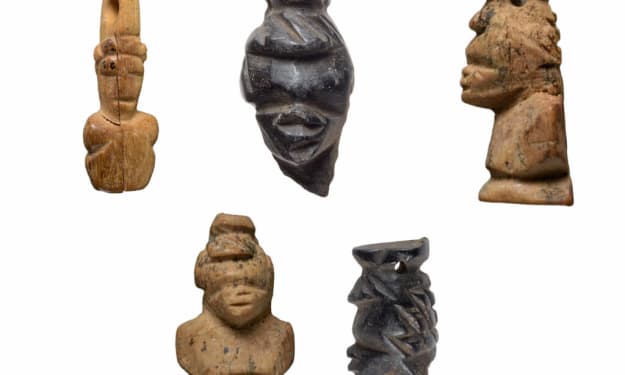
African Figurines Found in Negev Desert Christian Burial Shed Light on Early Cross-Cultural Connections. AI-Generated.
In an marvelous archaeological discovery, a fixed of African collectible figurines changed into exposed in a Christian burial web website online placed within side the Negev Desert, supplying splendid proof of early cross-cultural interactions among Africa and the Middle East. This surprising locate has raised good sized questions on the motion of people, goods, and thoughts in the course of the past due antiquity period, revealing how interconnected historic civilizations virtually had been.
By jihad ahmedabout a year ago in History
The Memory Garden
Once, the lot on the corner of Elm and Fourth was an eyesore—a tangle of weeds, broken bottles, and forgotten dreams. Kids avoided it, neighbors ignored it, and the town seemed content to let it fade into oblivion. But today, that same lot is a thriving oasis called the Memory Garden, where every flower, stone, and bench tells a story of our town’s past and its unbreakable spirit. This is the tale of how a patch of dirt became a place of healing, connection, and hope.
By Shohel Ranaabout a year ago in History
The Time Capsule Tapes
Tucked away in the dusty basement of the Willow Creek Library, behind a stack of moldy encyclopedias, a rusted metal box was about to change our town forever. When librarian Ellie Harper stumbled across it during a routine inventory last spring, she thought it was just another forgotten relic. But inside that unassuming time capsule, buried 50 years ago, was a treasure trove of cassette tapes—recordings of our town’s long-lost music scene that have sparked a joyous, toe-tapping revival.
By Shohel Ranaabout a year ago in History