World History
The Origin and Value of Tutankhamun’s Treasure: A Heritage in Gold
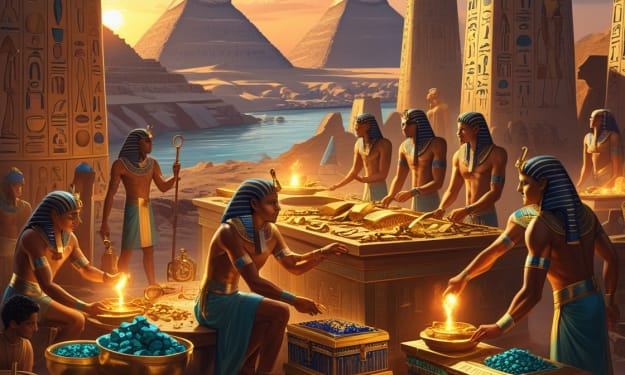
But from where did this vast treasure arise? Why was such wealth interred with a boy-king who perished around the age of 18 or 19? And what might be the current estimated worth of these treasures? This article investigates the origins, symbolism, and contemporary valuation of one of history’s most renowned caches. The Origin of Tutankhamun’s Treasure: Tutankhamun ruled during a turbulent epoch in ancient Egyptian history. His predecessor, Akhenatenthought to be his fathersought to transform Egypt’s faith by advocating the veneration of a singular deity, Aten, the sun disk, over the customary pantheon of gods. This monotheistic initiative disrupted Egyptian society, governance, and religious life. Following Akhenaten’s passing, the young Tutankhamun ascended to the throne and endeavored to reinstate Egypt’s traditional beliefs and institutions. Although his reign was short-lived (circa 1332–1323 BCE), it signified a revival of political stability and religious orthodoxy. As part of this restoration, considerable efforts were made to affirm his divine legitimacy and kingship. This political and spiritual rejuvenation may elucidate the grandeur of his intermentthe treasure was intended not merely to commemorate a king but to symbolize the resurgence of the Egyptian order. Numerous historians contend that a substantial portion of Tutankhamun’s burial artifacts may have been repurposed or inherited from preceding royal interments. Some relics discovered in his tomb feature inscriptions or designs that imply they initially belonged to otherspossibly even his stepmother Nefertiti or his father Akhenaten. This hypothesis is reinforced by evidence of hastily crafted or modified items within the tomb, indicating that the burial was orchestrated swiftly and perhaps under duress following the king’s unforeseen demise. Contents of the Treasure: The tomb of Tutankhamun housed over 5,000 artifacts, including: The Golden Death Mask: Constructed from solid gold and adorned with lapis lazuli, quartz, obsidian, turquoise, and colored glass, this emblematic mask alone is believed to weigh over 10 kilograms and symbolizes the divine countenance of Osiris. Three Nested Coffins: The innermost coffin, entirely fashioned from solid gold and weighing approximately 110 kilograms, enclosed the mummy of the pharaoh. Chariots, Furniture, and Thrones: Many of these were inlaid with ivory, ebony, and precious metals, serving ceremonial functions in both life and the afterlife. Canopic Shrine and Jars: Utilized to contain the pharaoh’s internal organs, these items were also crafted from gold and alabaster and elaborately decorated. Statues and Figurines: Representing deities, guardians, and the king himself. Jewelry and Amulets: Necklaces, rings, armlets, and earrings made of gold, semi-precious stones, and glass. Weapons and Shields: Encompassing daggers, bows, and a curved sword (khopesh), frequently ceremonial yet emblematic of sovereign authority. Symbolism and Purpose: Every item within Tutankhamun’s burial site fulfilled a distinct spiritual function. The ancient Egyptians held a belief in the afterlife as a continuation of terrestrial existence. To guarantee a seamless transition and sustenance in the subsequent realm, the monarch required all the implements, provisions, furnishings, and magical safeguards he could transport with him. The items were not solely ornamental; they symbolized a spiritual safety net. Estimated Net Worth of the Treasure: Assigning a contemporary financial value to such artifacts is intricate. Numerous items are deemed invaluable owing to their cultural, artistic, and historical significance. Nevertheless, for the purpose of estimation: The golden death mask may possess a value exceeding $2 million based solely on gold weight, but in the art market, its symbolic and historical significance could elevate it to $100–$200 million, if such a transaction were even plausible. The solid gold inner coffin, weighing 110 kg, could be appraised at $6 million according to current gold valuesbut once more, its true worth in cultural terms is far greater. Jewelry and statues, considering craftsmanship and materials, could collectively range from $50–100 million. Furniture, chariots, and ceremonial artifacts might attract another $50–100 million, contingent on intricacy and condition. In total, the net estimated financial value of Tutankhamun’s treasure could surpass $750 million to $1 billion, although this figure remains conjectural and is confined to material worth, not cultural or historical significance. Conclusion: Tutankhamun’s treasure serves as a magnificent testament to the splendor of ancient Egypt, yet it represents more than merely a compilation of gold. It narrates the saga of a civilization’s religious convictions, political turbulence, artistic brilliance, and veneration for death and the divine. The origin of his treasure is as political and spiritual as it is economica royal legacy molded by centuries of tradition and the necessity to validate a tenuous reign. While contemporary evaluations of worth endeavor to quantify the immeasurable, the legacy of Tutankhamun’s tomb remains a priceless glimpse into the ancient world.
By Say the truth about a year ago in History
The Flame and the Scroll
The morning sun broke over the Egyptian coast, bathing the white marble pillars of Alexandria in gold. Seagulls cried overhead, echoing across the Great Harbor, where ships from every corner of the known world docked, their hulls heavy with scrolls, spices, and secrets. Nestled near the royal palace stood the famed Library of Alexandria—more a temple than a building. Founded under the rule of Ptolemy I, it had become the beating heart of ancient knowledge. Thousands of scrolls lined its walls, brought from Greece, Persia, India, and beyond. It was said that if a ship entered Alexandria, its texts were seized, copied, and only the copies returned. The originals remained in the library’s sacred halls. Among the scholars who walked its cool corridors was Callimachus, a stoic yet passionate cataloger who had spent thirty years mapping every scroll. He believed knowledge was a flame—one that must be tended, not owned. His apprentice, a spirited young woman named Nysa, disagreed. “If knowledge is fire,” she would say, “then the world must burn with it.” The city, however, had begun to shift. Once a haven for science, poetry, and philosophy, Alexandria grew tense under Rome’s expanding shadow. Political strife and religious fervor crept into its streets. Christianity, rising rapidly, clashed with the old pagan ways and the scholars who guarded them. In 391 AD, the tides turned. Emperor Theodosius I declared pagan practices illegal. Temples were stripped, and their priests driven out. In the Library, Nysa watched as scrolls were hidden, whispered over, and, in some cases, quietly smuggled away. “They fear what they don’t understand,” Callimachus warned. “And they destroy what they fear.” One fateful night, word spread like wildfire: a Christian mob was marching toward the Serapeum—the temple complex that now housed part of the Library’s collection. Led by zealots who believed the scrolls held dangerous, pagan magic, they carried torches, crosses, and stones. Callimachus barred the gates. “We are protectors of memory!” he shouted. But reason had no place in a city drunk on faith and fear. Nysa pleaded, “Let us at least save what we can!” She and a handful of scholars scrambled through the archive’s vast halls, pulling scrolls from shelves, wrapping them in cloth, tucking them into baskets and chests. Callimachus lingered near a scroll from Aristotle, his trembling hands refusing to leave it behind. The mob broke through by dawn. Fire met parchment. Flames leapt hungrily from shelf to ceiling. Smoke swallowed centuries of wisdom. Outside, people cheered. To them, it was not destruction—it was purification. Nysa barely escaped with a satchel of salvaged texts, fleeing to the outskirts of the city. Behind her, the sky bled orange. The Library, once a beacon of light, crumbled into ash. Callimachus did not follow. Later, historians would debate the event’s truth. Was it the Romans? The Christians? Julius Caesar, who had earlier set fire to ships in the harbor? Or had the Library faded over time, dying not in flames but in neglect? But for Nysa, who lived the fire, the memory was clear. She settled in a small village, dedicating her life to copying the scrolls she had saved. She taught children to read and think. She taught them to question. Decades later, when asked if the Library still lived, she would smile and answer, “Yes. In us.” --- The destruction of the Library of Alexandria remains one of history’s great tragedies. Whether it perished all at once or through slow decline, its loss symbolizes the fragility of knowledge and the power of belief—for better or worse. In the end, it is not just scrolls that burn in fire—it is the minds they might have lit.most beautiful story in the world are interested.
By Usman Khanabout a year ago in History
The Legacy of the Boy King: Unveiling the Treasure of Tutankhamun's Tomb
The Discovery that Resounded Globally In 1922, British archaeologist Howard Carter, supported by Lord Carnarvon, made an astounding discovery in Egypt's Valley of the Kings. After years of digging in challenging conditions with little fortune, Carter's tenacity ultimately bore fruit when he uncovered a staircase leading into the sands. At the base of these steps was a sealed doorinscribed with royal cartouches indicating it belonged to Tutankhamun, a relatively obscure pharaoh of the 18th Dynasty. Behind the entrance lay a tomb virtually unspoiled for more than three millennia. It was one of the most preserved royal tombs ever located in Egypt. Upon glancing inside with a candle, Carter famously proclaimed: “Yes, marvelous things! ” What he observed was not merely a burial siteit was a resplendent chamber of unimaginable opulence. The Myth of Tutankhamun Tutankhamun (ruled circa 1332–1323 BCE) took the throne at merely nine years of age and passed away around the age of 18. He governed during a tumultuous era in Egyptian historyshortly following the controversial reign of Akhenaten, who had sought to revolutionize Egypt’s religion by venerating a singular deity, Aten. Tutankhamun utilized his brief reign to restore traditional religious customs and stabilize the realm. Despite his relatively minor standing in Egyptian history, his notoriety surged in the 20th century, not because of his accomplishments, but owing to the astonishing bounty discovered in his tomb. The Tomb: Chambers of Gold The tomb of Tutankhamun, officially designated KV62, is modest in comparison to other pharaohs’ burial sites, likely a result of his unexpected demise and expedited burial. Nevertheless, it was extravagant beyond belief. The tomb comprised four primary rooms: Antechamber Annex Burial Chamber Treasury Each room was brimming with treasures that showcased the magnificence of ancient Egypt and the religious convictions of the era. A Glimpse Inside: What Was Discovered? Over 5,000 artifacts were cataloged from the tomb. Some of the most extraordinary items included: The Golden Death Mask: The most iconic artifact, crafted from solid gold and adorned with lapis lazuli, quartz, obsidian, and colored glass, weighing over 10 kg. It was positioned directly over the mummy's head and shoulders. The Nested Coffins: Three coffins encased the king’s mummified remains. The innermost coffin was constructed of solid gold. Canopic Shrine: A golden shrine that housed alabaster jars, which contained the pharaoh’s preserved internal organs. The Chariots: Several ceremonial and practical chariots were disassembled and interred within the tomb. Thrones and Furniture: Ornately embellished thrones, beds, and chairs demonstrated exceptional artistry and provided insight into daily royal existence. Weapons and Implements: Daggers (including one crafted from meteoric iron), bows, and other implements signify the pharaoh’s status as a warrior monarch. Ornaments: Necklaces, rings, bracelets, and pendants, frequently adorned with semiprecious stones. Figurines of Deities and Attendants: To guide and safeguard the pharaoh in the afterlife. The Enigma of the Treasury Chamber The Treasury housed some of the most sacred items in the tomb, including: Anubis Altar: A lifelike statue of the jackal-headed deity Anubis overseeing the tomb.
By Say the truth about a year ago in History
All the Light We Cannot See – Anthony Doerr
The sky over Saint-Brieuc was heavy with clouds, the kind that hung low and pressed against the roofs like a threat. Though the war had quieted in the north, its whispers still roamed the air—through radio static, cracked windows, and the wary glances of strangers.
By Jawad Khanabout a year ago in History
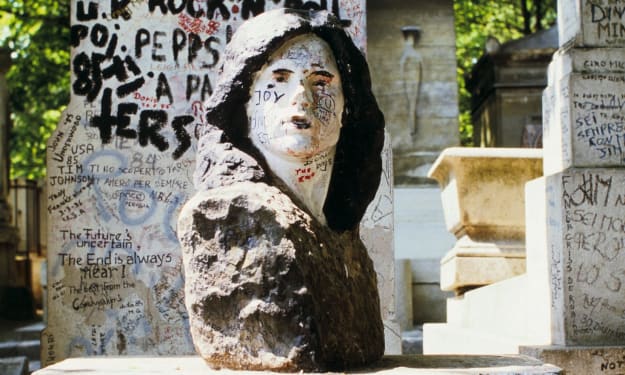
Jim Morrison’s Stolen Gravesite Statue Found After 37 Years Emotional Return to Paris Cemetery
Jim Morrison’s Stolen Gravesite Statue Found After 37 Years Emotional Return to Paris Cemetery In the heart of Paris lies Père Lachaise Cemetery a resting place for luminaries poets and rebels. Among its winding paths and moss covered gravestones fans from all over the world make their pilgrimage to visit the grave of Jim Morrison the iconic lead singer of The Doors. For decades the gravesite has stood as a silent testament to a man whose lyrics blurred the lines between rock and poetry passion and chaos. But something crucial had been missing a statue that once adorned the grave stolen years ago taking with it a piece of Morrison’s soul. Now in a moment that feels almost mythical the statue has been found.
By Adnan Rasheedabout a year ago in History
Cristiano Ronaldo Biography: From Madeira to Global Icon
Cristiano Ronaldo dos Santos Aveiro, extensively considered one of the finest footballers of all time, was born on February 5, 1985, in Funchal, Madeira, Portugal. His adventure from a small island to worldwide superstardom isn't simply the tale of athletic brilliance, however one of unwavering determination, relentless work ethic, and unequaled self-belief.
By Sports News about a year ago in History
Gerrymandering the Presidency: Why Trump could lose the popular vote in 2020 by 6 percent and still win a second term.
Donald Trump was the clear Electoral College winner in the 2016 election, despite losing the popular vote by a wide margin to Hillary Clinton. Anthony J. McGann, Charles Anthony Smith, Michael Latner and Alex Keena write that, unless the Supreme Court stops congressional gerrymandering, President Trump can guarantee re-election in 2020 – even if he loses by 6 percent. When the US Supreme Court takes up the issue of partisan gerrymandering this year, they will decide not only the fate of popular control in the House of Representatives and many state legislatures, but quite possibly the Presidency as well. If four Republican controlled state governments (Pennsylvania, Michigan, Wisconsin and Florida) change the way they allocate Electoral College votes, President Trump could be re-elected in 2020, even if he loses the popular vote by 6 percentage points. All the states need do is to allocate Electoral College votes by congressional district (like Nebraska and Maine), instead of giving all of the state’s electors to the statewide winner. Of course, this strategy only works to the benefit of the Republicans because the congressional districts in these states are heavily gerrymandered. As we argue in our book Gerrymandering in America, the congressional districts in many states are drawn to advantage the Republican Party. For example, in Pennsylvania in 2012 the Republicans took 13 out of 18 House districts even though the Democrats received more votes. If this partisan gerrymandering were outlawed, then allocating Electoral College votes by congressional district in the four states would actually disadvantage the Republican candidate for President. However, if the Supreme Court continues to allow partisan gerrymandering – as it has since its decision Vieth v. Jubelirer in 2004 – then the plan is highly effective and there is nothing that can stop the four states adopting it. Allocating Electors by congressional district is clearly legal – Nebraska and Maine already do it this way. Furthermore, the Republicans control the state legislature and the governor’s mansion in all four states. How allocating Electors by congressional districts could benefit the Republican candidate Surprisingly, the strategy that is most effective for the Republicans is to change how Presidential Electors are allocated in certain states that voted for Trump in 2016. Of course, the Republicans would get an advantage by allocating Electors more proportionally in states that Clinton won. The problem is that this would require the support of Democrats. For example, Republican legislators in Virginia and Minnesota have already proposed such measures, and Stephen Wolf describes this as an attempt to “gerrymander the electoral college”. The problem is that both these states have Democratic governors, who would surely veto such proposals. Similarly Harry Enten at fivethirtyeight.com shows that if all states allocated Electors by Congressional districts, the Republicans could win the Presidency despite a 5 percent popular vote deficit. Again the problem is that this would require Democratic controlled states to agree to such a system. However, in Pennsylvania, Wisconsin, Michigan and Florida, Republicans control both the state legislature and the
By Silas Blackwoodabout a year ago in History
🤢The Great Stink of London, Summer 1858: How the Thames River's Filth Nearly Shut Down Parliament and Sparked Sewer Reforms
The Summer That Stank to High Heaven In the sweltering summer of 1858, London became the setting for one of the foulest crises in urban history. For several weeks, an unbearable stench rose from the River Thames, the city's main waterway and open sewer, engulfing the metropolis in a nauseating miasma that no one - not even the powerful lawmakers in the Palace of Westminster - could escape. The event, which became known as "The Great Stink," was more than just a sensory nightmare; it was a pivotal moment in the evolution of public health and urban infrastructure.
By History Seekerabout a year ago in History
The Balfour Declaration: A Century of Contradiction. AI-Generated.
On November 2, 1917, British Foreign Secretary Arthur James Balfour penned a 67-word letter to Lord Lionel Walter Rothschild, a leader of Britain’s Jewish community. Its contents—a pledge to support “the establishment in Palestine of a national home for the Jewish people”—would alter the trajectory of Middle Eastern history. The Balfour Declaration, as it came to be known, was not merely a diplomatic gesture but a colonial gambit, weaving together imperial ambition, wartime strategy, and competing nationalist aspirations. Over a century later, its legacy remains a wound that refuses to heal.
By Muhammad Israrabout a year ago in History
🧻 The Toilet Paper Panic Buying During Various Pandemics: How a Mundane Household Item Became a Symbol of Global Anxiety
Part I: A Curious Phenomenon — Panic in the Aisles In the early months of the COVID-19 pandemic, a peculiar sight became common across the globe: barren supermarket shelves where once stood neat stacks of toilet paper. This wasn’t an isolated event. From Tokyo to Toronto, from Milan to Melbourne, scenes emerged of people rushing into stores, carts overflowing with bulky packs of toilet rolls, sometimes wrestling them away from fellow shoppers in desperate attempts to “stock up.” The rush on toilet paper became one of the most vivid, surreal images of the global health crisis, replayed in countless news reports and social media posts. As viral as the virus itself, these panic-buying frenzies turned toilet paper — a soft, white, everyday necessity — into a symbol of a world unmoored by fear.
By History Seekerabout a year ago in History
Echoes in the Elderwood
The village of Blackthorn lay on the edge of the Elderwood, a sprawling forest that few dared to enter. It was not that the forest was particularly dangerous—at least, not in any way one could understand with human senses—but there was something in the air there, something that made every person who had the misfortune to wander too deep feel… unsettled.
By ibrahimkhanabout a year ago in History