World History
Taylor Swift’s Record-Breaking ‘Eras Tour’ Movie Dominates Streaming
Taylor Swift continues to redefine success in the entertainment industry, and her latest triumph comes in the form of Taylor Swift: The Eras Tour (Taylor’s Version), a concert film that has taken streaming platforms by storm. Originally released in theaters in October 2023, the film shattered box office records before making its highly anticipated debut on Disney+ in March 2024. Since then, it has dominated streaming charts, reinforcing Swift’s unparalleled influence in music, film, and pop culture.
By Silas Blackwoodabout a year ago in History
The Forgotten Empire That Shaped the Modern World
We often talk about history like it’s a straight line from ancient Greece to Renaissance Europe to Silicon Valley. But between the ruins of Rome and the rockets of Elon Musk lies a missing chapter — one written not in Latin or English, but in Arabic script, inked with innovation, and powered by curiosity. It’s the story of a civilization that burned brightly at a time when most of the Western world had gone dark.
By Mohammad Ashiqueabout a year ago in History
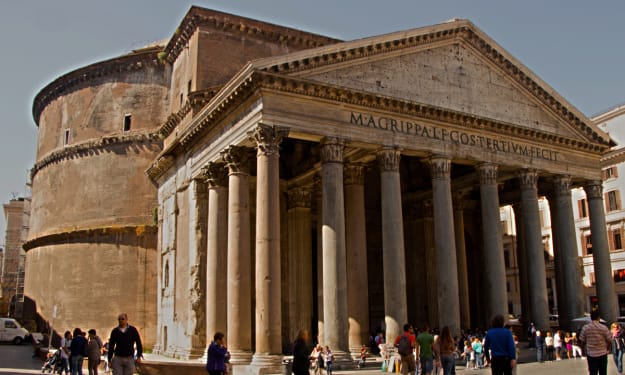
The Legacy of the Roman Empire in Today’s World
The Roman Empire, one of history’s most formidable civilizations, dominated the ancient world for over a millennium. At its peak, it stretched from Britain to the Middle East, leaving an indelible mark on governance, law, engineering, language, and culture. Even today, the legacy of Rome permeates modern society in ways both obvious and subtle.
By Himadri Niloyabout a year ago in History
History Would’ve Burned: How Fire Shaped Civilizations
Fire is one of humanity’s oldest and most transformative discoveries. Its mastery marked the dawn of civilization, altering the course of history in ways both constructive and destructive. From providing warmth and protection to enabling technological advancements, fire has been a double-edged sword—capable of nurturing societies or reducing them to ashes. This article explores how fire has shaped human history, from prehistoric times to the modern era, and how civilizations have risen, fallen, and adapted in its flames. The Dawn of Fire: Humanity’s First Great Tool The controlled use of fire dates back at least 1 million years, with evidence suggesting that early hominids like Homo erectus harnessed it for warmth, cooking, and protection. Fire allowed early humans to: Cook food, making it more digestible and unlocking greater nutritional value, which may have contributed to brain development. Ward off predators, enabling safer settlements. Extend waking hours by providing light after sunset, fostering social interaction and tool-making. Without fire, human evolution and migration—especially into colder climates—would have been drastically different. Fire and the Birth of Civilization As humans transitioned from nomadic hunter-gatherers to settled agricultural societies, fire became indispensable. 1. Agriculture & Land Management Slash-and-burn farming cleared forests for crops, though it also led to soil depletion over time. Controlled burns were used by Indigenous peoples to manage ecosystems, promoting biodiversity. 2. Metallurgy & Technology The discovery of smelting (extracting metal from ore using fire) revolutionized tool-making, leading to the Bronze and Iron Ages. Fire enabled ceramics and glassmaking, essential for storage, construction, and art. 3. Warfare & Destruction Fire was weaponized early, from flaming arrows to Greek fire (a Byzantine incendiary weapon). Cities like Rome (64 AD) and London (1666) suffered catastrophic fires that reshaped urban planning. Fire as a Cultural and Religious Symbol Beyond its practical uses, fire held deep spiritual significance: Zoroastrianism revered fire as a symbol of divine wisdom. Greek mythology told of Prometheus, who stole fire from the gods to give to humanity. Hindu rituals involve sacred fires (yajna) for purification and offerings. The Industrial Revolution: Fire Powers the Modern World The 18th and 19th centuries saw fire’s role expand exponentially with the advent of: Steam engines (burning coal) powering factories and transportation. Internal combustion engines, leading to automobiles and airplanes. Electricity generation, initially through coal and later gas and oil. However, industrialization also brought pollution, deforestation, and climate change—unintended consequences of humanity’s reliance on fire. Fire in the Modern Age: Control and Catastrophe Today, fire remains both a vital tool and a devastating force: 1. Controlled Use Energy production (natural gas, nuclear reactions). Space exploration (rocket propulsion). Medicine and industry (sterilization, manufacturing). 2. Uncontrolled Disasters Wildfires (exacerbated by climate change) destroy millions of acres annually. Urban fires (e.g., Grenfell Tower, 2017) reveal vulnerabilities in modern infrastructure. Warfare (napalm, incendiary bombs) continues to use fire as a weapon. Conclusion: Will Fire Consume or Sustain Us? Fire has been a defining force in human history—both creator and destroyer. As we advance, the challenge is to harness its power responsibly, mitigating its dangers while leveraging its benefits. From ancient campfires to fusion energy, fire remains at the heart of civilization’s progress. If history is written in flames, then humanity’s future will be shaped by how well we master this primal force—before it masters us.
By Silas Blackwoodabout a year ago in History
Arthur Blank's Honorary Jim Arsai legacy: Georgia NFL icon
Arthur Blank's Honorary Jim Arsai legacy: Georgia NFL icon Homage to Atlanta - The National Football League laments one of the most colorful and influential characters after the death of Indianapolis Colts owner Jim Irsay. Players, coaches, and co-owners receive the tribute, including a warm description of Atlanta Falcons owner Arthur Blank.
By MD. zahid prantoabout a year ago in History
A Witness Without a Voice
The little town of Brooksville had always been quiet — too quiet for some. Nestled between rolling hills and thick forests, its residents kept to themselves, exchanging polite nods and guarded smiles. But beneath the calm surface, secrets lurked. And sometimes, those secrets were forced into the light by the quietest witnesses. Lena Morgan was one such witness. A shy, introverted sixteen-year-old, she often found solace in observing rather than participating. She preferred the company of books, her sketchpad, and the occasional stray cat that visited her backyard. Talking was difficult for Lena — a soft-spoken girl with a stutter that made her retreat further into silence. One chilly October evening, as twilight crept over the town, Lena sat by her bedroom window, sketching the silhouette of the ancient oak tree that stood in her front yard. The house across the street, belonging to Mr. Jacobs, was dark except for a flickering light in the study. She noticed a shadow moving inside, rapid and tense. Curiosity piqued, Lena focused her gaze. Suddenly, a loud crash shattered the evening calm. She gasped, pressing her hand over her mouth, heart pounding. Then, the sound of hurried footsteps. A car sped away down the street, tires squealing against the pavement. Unable to resist, Lena grabbed her coat and crept outside. The front door of the Jacobs house was ajar. Inside, the room was a mess — overturned furniture, broken glass, and papers scattered like leaves. But Mr. Jacobs was nowhere to be seen. The next morning, the town awoke to the news: Mr. Jacobs had vanished overnight. No clues, no ransom demands, nothing. The police were baffled. The old man, a retired professor, was well-liked but private. Why would anyone want to harm him? Lena knew she had seen something, but fear and her natural hesitation kept her silent. She felt invisible, like no one would believe a quiet girl who barely spoke. Yet the image of the shadow and the crash haunted her. Days passed. The police investigation grew cold. Lena found herself sketching the scene repeatedly, hoping the act would unlock more memories. One afternoon, her art teacher, Ms. Carter, noticed her distress. “Lena, you’ve been distant lately. Something wrong?” Lena shook her head but finally found the courage to whisper, “I… I saw something the night Mr. Jacobs disappeared.” Ms. Carter’s eyes softened. “Tell me.” Slowly, Lena described the flickering light, the shadow, the crash, the footsteps, and the car speeding away. Ms. Carter listened carefully, then encouraged her to share this with the police. With trembling hands, Lena agreed. At the station, Detective Harper greeted her kindly, offering water and patience. She described everything, every detail — the broken glass, the shadow’s shape, the direction of the car. The detective’s interest grew. “Did you recognize the car?” Lena nodded faintly. “It was black, with a scratch on the side… like a claw mark.” Days later, the police found the car abandoned at the edge of town, just where Lena had said. Inside were clues — a torn piece of fabric, a cryptic note — enough to reignite the investigation. As the pieces fell into place, the truth emerged. Mr. Jacobs had discovered illegal activity involving a local business owner, someone powerful and dangerous. The night he vanished, he confronted the culprit, who tried to silence him. But thanks to the silent witness, the police were one step ahead. The town buzzed with whispers as arrests were made. Lena, once invisible, became an unlikely hero. Her courage to speak up despite her fears changed everything. One evening, standing again by her bedroom window, Lena looked out at the ancient oak. The world was still full of shadows, but now she knew — even silence could speak volumes.
By Usman Khanabout a year ago in History
History of Israel
History of Israel The history of Israel is a great matter of religious significance, colonial mandates, and enduring conflict. This article covers key developments from biblical times to the present-day geopolitical affairs, synthesizing historical indicators and their long lasting impacts.
By MD. HEDAYTUN NABIabout a year ago in History