World History
The Untold Story of the Pendle Witches.
Lancashire, England , 1612. It all started with a coin. A single, cold shilling passed between the rough fingers of a peddler and the calloused palm of Alizon Device, a young woman with nothing but her name and her need. She looked down at the man , John Law, a traveling merchant , and saw in him the same contempt she saw from every stranger: that narrowed gaze that weighed her by the dirt under her fingernails and the cadence of her accent. When he refused her charity, when he cursed her family’s name, Alizon cursed him back. Not with fire, not with brimstone , but with the sharp, childish instinct of someone whose powerlessness burns in the gut: “I hope your bones rot where you stand.” He collapsed not long after. His body failed him , a stroke, they said later , and the whispers started. In a place like Pendle, whispers are deadlier than wolves.
By Strategy Hubabout a year ago in History
The Overlooked Treasures of the Khmer Empire: Cambodia's Concealed Wealth
The Overlooked Treasures of the Khmer Empire: Cambodia's Concealed Wealth When discussing the world's most affluent ancient empires, names such as Rome, Persia, and Mali often take precedence. However, nestled deep within the jungles of Southeast Asia lies an unrecognized giant—the Khmer Empire, whose lavishness once matched the greatest empires globally. Spanning across present-day Cambodia, Thailand, Laos, and Vietnam, the Khmer Empire thrived between the 9th and 15th centuries, leaving behind treasures—both material and spiritual—that astonish contemporary observers. At the core of this empire was Angkor, the largest pre-industrial urban center globally, home to the magnificent temple of Angkor Wat, now recognized as a UNESCO World Heritage site. Yet Angkor was more than a spiritual and architectural wonder—it was also a bastion of wealth and authority. The Riches Beneath the Stone The Khmer Empire's affluence stemmed from a potent mix of agriculture, commerce, and expertise in hydraulic engineering. The empire flourished through rice cultivation, utilizing sophisticated irrigation systems that supported a vast populace. However, agriculture formed only the foundation. What genuinely enriched the Khmer elite was trade—especially in gold, gemstones, ivory, and forest resources. The empire occupied a pivotal position along the trade routes connecting the Indian Ocean and East Asia. Chinese, Indian, and Arab merchants frequently visited Khmer ports to barter silks, ceramics, and spices for Khmer gold, sandalwood, and exotic birds. Evidence of this wealth is dispersed throughout the temples. Inscriptions and bas-reliefs portray processions of royals and priests adorned in jewels, gold necklaces, and intricately designed crowns. Archaeological discoveries suggest that the Khmer elite possessed substantial quantities of sapphires, rubies, and emeralds—many of which came from the empire’s own mines and riverbeds. The Concealed Treasures of Angkor Despite centuries of looting, some Khmer treasures remain hidden. In 2008, during the excavation of a concealed chamber in Angkor Thom, archaeologists uncovered numerous gold artifacts, including rings, figurines, and ceremonial implements dating back to the 11th century. Many experts believe this is merely the beginning. Submerged crypts, underground reservoirs, and temples lost to history continue to conceal what could amount to millions of dollars in ancient relics. Looters have long targeted these locations, selling statues and jewelry on the black market; however, extensive areas of Angkor remain unexplored due to dense forest coverage and insufficient funding. In 2016, LIDAR (Light Identification and Ranging) technology unveiled previously unrecognized temple complexes, roadways, and urban structures beneath the forest surface—indicating that Angkor was part of a much broader network of cities, all of which may harbor untouched caches of wealth. Assessing the Empire’s Valuation Determining a monetary value for a long-lost empire is a complex endeavor, yet historians and economists have formulated rough assessments. When adjusted for contemporary values, the Khmer Empire’s assets in gold, land, and precious stones could have been valued at over $200 billion. This does not consider cultural capital—the significance of monuments such as Angkor Wat or misplaced artifacts currently residing in private collections. The immense scale of Angkor Wat alone, which necessitated 5 million tons of sandstone, illustrates the magnitude of resources the empire could assemble. In current terms, constructing such a edifice would entail billions—and this figure pertains to merely one of over 1,000 temples erected during the apex of the empire. The Decline and Heritage The Khmer Empire commenced its decline in the 13th century, attributed to a combination of factors: climatic shifts, overpopulation, internal discord, and assaults from neighboring realms such as the Ayutthaya of Thailand. As the capital cities deteriorated, numerous temples were forsaken, and their riches abandoned—some interred, some pilfered, and others simply overlooked. Nevertheless, the Khmer heritage endures. The Cambodian royal regalia still features symbols derived from the Khmer Empire, and the national pride associated with Angkor is substantial. Initiatives are currently underway to reclaim and conserve what remains of this concealed wealth, with museums and archaeologists collaborating closely with local communities. Final Thoughts Although the Khmer Empire may not garner the same prominence as Rome or Egypt, its affluence, creativity, and magnificence warrant acknowledgment. Beneath the towering trees and moss-laden stones of Cambodia lies a narrative of monarchs, deities, and gold—a narrative still being uncovered. As technology and international collaboration progress, we may yet rediscover more of this lost wealth and redefine the history of the world’s most affluent empires.
By Say the truth about a year ago in History
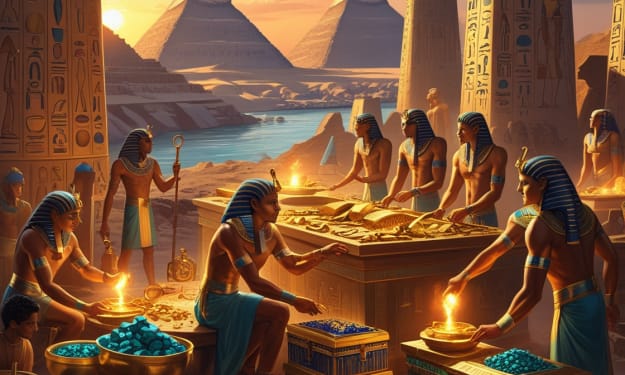
The Treasure Beneath the Nile: Egypt's Lost Gold Mines and Ancient Wealth. AI-Generated.
The Golden Legacy of the Nile The Nile River is justifiably regarded as the lifeblood of Ancient Egypt. Spanning over 6,600 kilometers, it not only facilitated agriculture in the arid desert but also functioned as a trade artery and spiritual thoroughfare. However, what rests beneath the deserts encircling the Nile has intrigued archaeologists and historians for centuries—gold. Gold represented more than a mere metal in Ancient Egypt. It symbolized divine power, eternal existence, and royal dominion. The pharaohs believed it constituted the flesh of the deities, particularly the sun god Ra. It adorned temples, accompanied kings in burial, and was crafted into objects of remarkable beauty and precision. But from whence did all this gold originate? The Lost Mines of Nubia The ancient territory of Nubia, situated south of Egypt (present-day Sudan), was abundant in gold mines. This region was so vital that the pharaohs referred to it as Ta-Seti (Land of the Bow) and often waged warfare or engaged in diplomacy to gain control. The gold of Nubia was sourced from quartz veins and alluvial deposits, subsequently smelted and refined in desert workshops. Evidence from inscriptions and archaeological excavations indicates that Egypt possessed a highly organized gold mining system as early as 2600 BCE. Laborers resided in isolated desert camps and utilized rudimentary tools to excavate shafts and tunnels deep into the rock. Despite the challenges and hazards, the allure of wealth motivated the empire's aspirations.
By Say the truth about a year ago in History
The Concealed Wealth of the Inca Empire: Forgotten Treasures of the Andes. AI-Generated.
The Concealed Wealth of the Inca Empire: Forgotten Treasures of the Andes Situated high in the Andes Mountains, the Inca Empire (1438–1533) was the most extensive pre-Columbian empire in the Americas. At its zenith, it spanned across Peru, Bolivia, Ecuador, and portions of Chile and Argentina, governing over more than 10 million individuals. However, beyond its expansive territory and sophisticated infrastructure, what astonished Spanish conquistadors most was the empire’s unfathomable wealth—particularly its vast reserves of gold and silver.
By Say the truth about a year ago in History
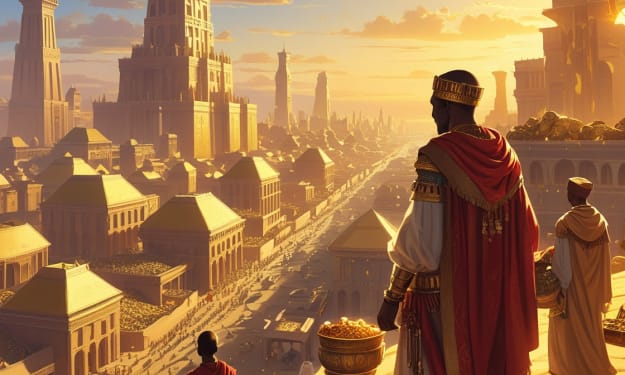
The Wealthiest Empire in History: The Golden Heritage of the Mali Empire
The Foundations of the Mali Empire The Mali Empire was established circa 1235 AD by Sundiata Keita, who unified several smaller kingdoms following the decline of the Ghana Empire. Under Sundiata’s guidance, Mali evolved into a centralized entity with a formidable military and effective administration. Nonetheless, it was under his successors—most notably Mansa Musa (r. 1312–1337)—that the empire attained its pinnacle. Encompassing portions of contemporary Mali, Senegal, Gambia, Guinea, Niger, Nigeria, and Mauritania, the Mali Empire governed extensive territories and essential trade routes, including segments of the Sahara Desert. This positioned it to dominate trans-Saharan commerce, especially in salt, ivory, enslaved individuals, and most crucially—gold. Mansa Musa: The Most Affluent Individual in History Mansa Musa, the tenth sovereign of Mali, is frequently recognized as the most affluent person in documented history. His net worth, adjusted for inflation and current assessments, is approximated to exceed $400 billion USD. This fortune was not solely attributed to dominion over land but also the empire’s gold mines, which contributed more than half of the world’s gold during his reign. In 1324, Mansa Musa embarked on a renowned pilgrimage to Mecca (Hajj), an occasion that highlighted the immense scale of his empire’s riches. He journeyed with a caravan composed of: 60,000 individuals, 12,000 enslaved individuals conveying gold bars, 80 camels transporting hundreds of pounds of gold dust each. According to historians, he distributed so much gold in Cairo, Mecca, and Medina that it diminished the value of the metal, resulting in economic inflation in the region for over a decade. This singular incident established Mali—and Musa—as significant players on the medieval global landscape. Sources of Wealth
By Say the truth about a year ago in History
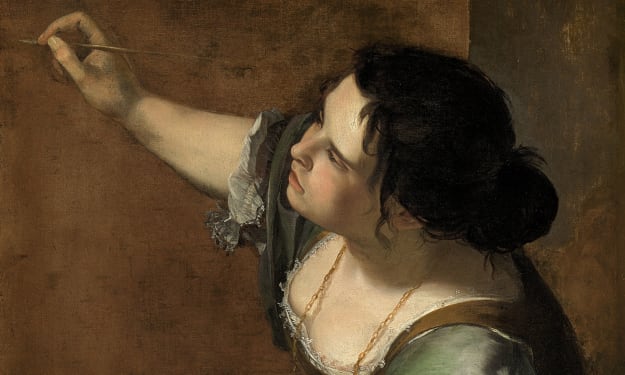
Painted in Blood: The Renaissance of Artemisia Gentileschi. . Content Warning.
History does not remember Artemisia Gentileschi with the reverence she deserves. Her name was omitted from textbooks for centuries. When it was mentioned, it was often tethered to scandal rather than skill. But behind the layers of oil paint and baroque shadow lies the story of a woman who dared to wield her brush as a weapon against violence, patriarchy, and artistic obscurity.
By Strategy Hubabout a year ago in History
What History Was Meant To Leave Out
“In the beginning God created the heaven and the earth. And the earth was without form, and void; and darkness was upon the face of the deep. And the Spirit of God moved upon the face of the waters.”Genesis 1:1-2
By Natasha Collazoabout a year ago in History
The Unseen World of Abandoned Places: A Journey Through Time
** Have you ever wondered what happens to places when they're left behind? The silence, the stillness, and the secrets they keep are a mystery to many. Abandoned places are a window into the past, a glimpse of what once was, and a reminder of the transience of time. In this article, we'll embark on a journey to explore the unseen world of abandoned places, and uncover the stories they tell. *The Allure of Abandoned Places* There's something hauntingly beautiful about abandoned places. The crumbling structures, the overgrown gardens, and the eerie silence all seem to whisper stories of the past. These places are a testament to the passage of time, a reminder that everything that rises will eventually fall. Yet, despite their neglect and decay, abandoned places hold a certain allure, a mystique that draws us in. *A Window into the Past* Abandoned places are a window into the past, a glimpse of what life was like in a bygone era. They tell stories of people, places, and events that shaped the world we live in today. From abandoned factories to ghost towns, each place has its own unique history and significance. By exploring these places, we can gain a deeper understanding of the past and its relevance to our present. *The Psychology of Abandonment* Abandonment is a complex phenomenon that can be triggered by various factors, including economic decline, natural disasters, or simply a change in societal values. When a place is abandoned, it's not just the physical structure that's left behind; it's also the memories, the emotions, and the stories that were once associated with it. The psychology of abandonment is a fascinating topic that reveals the intricate relationships between people, places, and things. *Exploring Abandoned Places* Exploring abandoned places can be a thrilling experience, but it's not without its risks. From structural hazards to environmental concerns, there are many factors to consider before venturing into an abandoned place. However, for those who are willing to take the risk, the rewards can be immense. Whether it's the thrill of discovery, the rush of adrenaline, or the sense of adventure, exploring abandoned places can be a truly unforgettable experience. *The Art of Urban Exploration* Urban exploration, or urbex, is a growing trend that involves exploring abandoned places and capturing their beauty through photography and videography. Urban explorers are drawn to the aesthetic appeal of abandoned places, the textures, the colors, and the compositions that can be found in these forgotten spaces. Through their art, urban explorers can reveal the beauty in decay, the elegance in neglect, and the stories that lie hidden in plain sight. *Preserving the Past* As we explore abandoned places, we're often faced with the question of preservation. Should we preserve the past, or let it fade away? The answer is complex, and it depends on the context and significance of the place. Some abandoned places are historic landmarks that deserve to be preserved, while others are mere relics of a bygone era that can be left to nature. The key is to strike a balance between preservation and progress, to respect the past while embracing the future. *Conclusion* Abandoned places are a mysterious and fascinating world that holds many secrets and stories. By exploring these places, we can gain a deeper understanding of the past, appreciate the beauty in decay, and uncover the hidden narratives that lie within. Whether you're an urban explorer, a historian, or simply a curious individual, abandoned places have something to offer. So, the next time you come across an abandoned place, take a moment to pause, reflect, and appreciate the stories it tells.
By Umair Khanabout a year ago in History
Phil Robertson, ‘Duck Dynasty’ Patriarch, Dies at 79. AI-Generated.
Hit reality-Phil Robertson, a robust, bearded nature lover who became a famous name through the TV series Duck Dynasty, passed away peacefully on May 25, 2025 at his home in Louisiana. He was 79 years old. His death followed a lengthy struggle with several health conditions, including Alzheimer's disease and degenerative blood disorders.
By Sonia begumabout a year ago in History
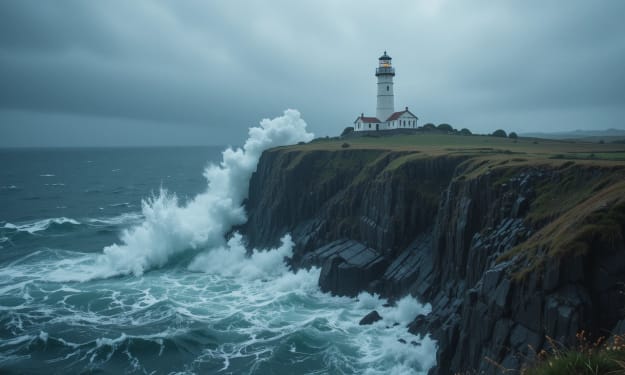
Last Letter from the Lighthouse
The last time I saw Thomas, he stood at the edge of the cliffs beneath the lighthouse, his coat whipping in the sea wind. He smiled at me with that quiet sadness he always carried, as though part of him belonged more to the ocean than to the land.
By Shohel Ranaabout a year ago in History
In the shadow of the Sultan
The beginning of the mystery Year 1566 On a gloomy night in Istanbul, the capital of the Ottoman Empire, a thick fog covers the city. Beneath the high walls of the palace a lonely boat floats in the black waters of the Bosphorus. Year 1566 On a gloomy night in Istanbul, the capital of the Ottoman Empire, a thick fog covers the city. Beneath the high walls of the palace a lonely boat floats in the black waters of the Bosphorus.
By MD. Tanvir Hossainabout a year ago in History
The Day the Crown Fell
The bells tolled low and mournful across the stone-clad capital of Edrion. The city, once radiant with the gold of royalty, now bathed in the red glow of rebellion. Smoke coiled from the merchant quarter. The palace stood like a wounded beast, its banners torn, its gates shattered. King Alric IV stood atop the western tower, his crown held loosely in one trembling hand. Below, his kingdom crumbled. It had begun with whispers in the taverns. Whispers of grain shortages, of taxes rising like tides, and of a king who had not walked among his people in years. The nobles, fat with favor, ignored it. But rebellion does not need armies at first—it only needs hunger and hope. Sir Marek, captain of the royal guard, entered the tower. Blood soaked his armor, and soot blackened half his face. “My king,” Marek said, dropping to one knee. “The eastern gate is breached. The rebels are within the palace walls.” Alric didn’t answer. His eyes fixed on the horizon, where the sun sank like a dying ember. “I was crowned on this tower,” he said. “My father stood here, proud. He told me to rule with strength, not softness. He said mercy weakens a crown.” “Your father ruled in a different time, sire.” “Did he?” Alric asked bitterly. “Or did I simply fail where he succeeded?” Below them, a thunderous cheer rose—another wing of the palace lost. The rebels had come not as a mob, but as an organized force, led by a former noble turned firebrand named Lysandra Vale. Once a court poet, she had seen her family stripped of lands during Alric’s early campaigns. She wrote verses then. Now she wrote history with steel. “I should have spoken with her,” Alric muttered. “Listened.” “Would words have changed her mind?” Marek asked. “Or would it have shown weakness?” Alric looked at his crown—an elegant band of gold, inset with black pearls from the Eastern Sea. “Perhaps it was weakness not to speak.” A crash echoed from below. The rebels were near. Marek rose. “There is still time, sire. We can escape through the catacombs. Regroup, rally loyal lords—” “No,” Alric said softly. “The crown doesn’t run.” “Sire—” “You will go, Marek. Lead my daughter to safety.” Marek’s jaw clenched. “And you?” “I will answer for what I’ve done… and what I failed to do.” Silence stretched between them. Finally, Marek nodded. “As you command.” When the captain had gone, Alric stood alone. He thought of Queen Elira, buried five winters past. Of Princess Kaelyn, barely sixteen, wiser than her father in too many ways. Of the people who once cheered his name. Footsteps echoed on the stairs. Alric turned as the door burst open. Lysandra Vale stood in the doorway, sword in hand, a red sash tied around her arm. Her face bore no hatred—only resolve. “It’s over,” she said. Alric nodded. “So it is.” She stepped forward, slowly. “You have the choice. Surrender, and we end it without blood. Resist, and the rebels won’t be so kind.” Alric held up the crown. “Do they still want this?” “They want what it represents to fall,” she said. “But how it falls… that is yours to choose.” He looked at her, and for a moment, saw the poet she had once been. “You wrote a poem,” he said quietly. “‘The Crown is a Mirror.’ I remember.” Lysandra blinked, caught off-guard. “You read it?” “I did. But I didn’t understand it.” “And now?” He smiled sadly. “Now I do.” He walked to the edge of the tower and held the crown high. Below, thousands of rebels looked up in silence. The gold caught the last of the dying light. Alric lowered his hand—and let the crown fall. It spun once, glinting, then vanished into the shadows below. A cheer rose. Loud. Final. A king had fallen—not by sword, but by choice. Lysandra stepped forward, but Alric had already turned, walking toward the staircase. “Take me to the people,” he said. “Let history judge me.” --- In the months that followed, Edrion changed. The monarchy was abolished, and a council of guilds, farmers, and scholars took its place. Streets once guarded by soldiers were now watched by citizen patrols. Lysandra became the first Chancellor of the Republic. Alric lived quietly in a modest house by the river. He spent his days writing—letters, regrets, lessons for a daughter who would one day read them. And on quiet mornings, as the sun rose over the new republic, he would walk through the city he once ruled, unguarded and unseen. History remembered him not as a tyrant, nor a hero, but as the king who knew when to let the crown fall.
By Usman Khanabout a year ago in History