World History
Persepolis: Ancient Persia’s Majestic Ceremonial Capital
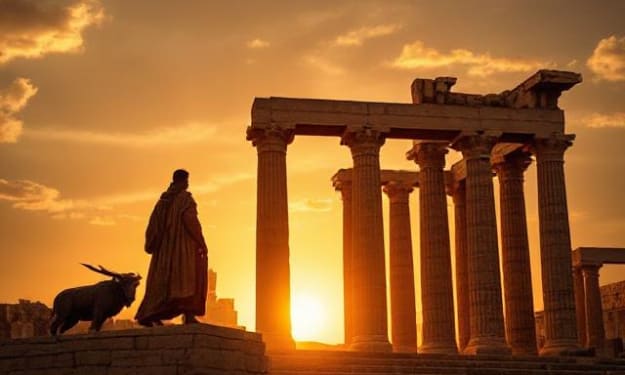
Nestled in the arid heartland of modern-day Iran lies one of the most awe-inspiring archaeological treasures of the ancient world—Persepolis. Known as “Takht-e Jamshid” in Persian, this ceremonial capital of the Achaemenid Empire stood as a symbol of power, grandeur, and imperial pride for centuries. Founded by Darius I in 518 BCE, Persepolis was more than a city—it was a statement. Built to host kings, dignitaries, and subject nations of the vast Persian Empire, it showcased the architectural genius, cultural sophistication, and political might of one of history’s greatest empires.
By Mukhtiar Ahmadabout a year ago in History
Petra: Ancient Rose-Red City Revealed
Tucked away in the rugged mountains of southern Jordan lies one of the world’s most magnificent archaeological treasures — Petra. Often referred to as the “Rose-Red City” due to the color of the sandstone cliffs that surround it, Petra stands as a testament to the ingenuity and cultural richness of the ancient Nabataean civilization. With a history dating back more than 2,000 years, Petra is a place where nature and human craftsmanship combine in stunning harmony.
By Mukhtiar Ahmadabout a year ago in History
🗻 Trapped in the Snow – How a Rugby Team Survived 72 Days in the Andes
✦ The Flight and the Crash ✦ On October 13, 1972, Uruguayan Air Force Flight 571 carried 45 people—mostly a rugby team and their friends—over the Andes mountains to Santiago, Chile. Soon after takeoff, bad weather and navigational errors led the plane into heavy snow and clouds. The aircraft hit a mountain slope and broke apart. Many died on impact. The survivors found themselves high in the Andes, amid snow and ice, with no easy way out. ✦ Alone on a Frozen Peak ✦ About 16 people survived the crash and reached a makeshift shelter among the wreckage. Temperatures dropped far below freezing. With no shelter except parts of the plane scattered on the slope, they faced bone-chilling cold each night. Clothing was torn or buried under snow. They huddled together for warmth but knew that without better protection, hypothermia could kill them quickly. They had almost no food. A few snacks and sweets from the plane’s supplies were gone within days. Water came only from melting snow using body heat or small fires, but fuel was limited. Each hour felt like a test: the cold stung, and hunger grew.
By Echoes by Imadabout a year ago in History
The Crescent Rises: The Story of Osman
The winds of Anatolia carried the scent of wild grass and the smoke of distant hearths. Along the foothills of the Sakarya River, a young warrior sat atop his horse, gazing at the rolling green hills beyond. His black eyes were steady, calculating—not yet the gaze of an emperor, but of a man who understood what was coming. His name was Osman. No one knew then that he would become the father of an empire, that the small principality under his command would grow to dominate three continents, shaping the destiny of Europe, Asia, and the Middle East for over six hundred years. The dynasty he founded would bear his name — the Ottoman Empire — but when Osman’s story began, he was simply the ambitious son of a tribal leader on the edge of collapsing empires. Born around 1258, Osman was the son of Ertuğrul, leader of the Kayı tribe of Oghuz Turks. These were hard times for the Turkish tribes. The once-mighty Seljuk Sultanate of Rum was disintegrating under Mongol pressure, and the Byzantine Empire to the west was but a shadow of its former glory. Between these two dying worlds lay opportunity. Osman inherited leadership from his father around 1280, but he didn’t inherit a kingdom — only a borderland, or uç, near the Byzantine frontier. For many, this was a cursed land, constantly raided, constantly fought over. For Osman, it was exactly where greatness could be born. Unlike other Turkish beyliks who fought only for survival, Osman saw further. He had a vision of conquest, not merely for loot, but for building. According to later Ottoman chronicles, Osman once had a dream: a massive tree growing from his chest, shading all lands from the mountains of the Balkans to the rivers of Mesopotamia. Whether true or legend, Osman began acting as if the dream were destiny. He began launching raids into Byzantine territory—not mere bandit raids, but calculated strikes. Fort after fort fell under his control. Local Christians, weary of Byzantine corruption and neglect, sometimes preferred Osman’s rule, for he was known as a fair leader who respected those who submitted peacefully. But Osman’s genius wasn’t just military—it was political. He married Malhun Hatun, the daughter of a powerful neighboring emir, strengthening alliances among rival tribes. He attracted warriors not only with promises of plunder but with the offer of belonging to something greater: a state guided by Islamic justice but welcoming of anyone loyal to his cause. In 1301, Osman struck a decisive blow against the Byzantines at the Battle of Bapheus, near Nicomedia. It was not a large battle by world standards, but it was a signal to everyone in Anatolia: the old empire was crumbling, and Osman was the one pulling at its foundations. By 1302, the Byzantines had practically abandoned the countryside of Bithynia. Turkish warriors, or ghazis, flocked to Osman’s banner. His principality expanded, not by formal declarations of empire, but by slow, relentless advance. Osman established his capital at Söğüt, transforming what had been a tribal camp into an embryonic state. His administration began to formalize—coinage was minted in his name, justice was administered by his appointed judges, and Friday prayers bore his title as ruler. His leadership was so firm that even in his later years, when illness confined him to his bed, his followers continued to push the borders outward, loyal to his vision. But Osman would not live to see the jewel of his ambition captured. Shortly before his death in 1326, he instructed his son, Orhan, to take the city of Bursa—a wealthy Byzantine stronghold that would serve as the true capital of his people. Orhan completed the conquest soon after Osman’s passing, laying the foundation for the empire that would, in time, stretch from the gates of Vienna to the deserts of Arabia. When Osman died, his domain was still small. But in that small principality lay the disciplined army, the clear vision, and the iron loyalty that would, under his descendants, defeat empires, seize Constantinople, and hold dominion over the crossroads of the world for centuries. From a rugged borderland chieftain, Osman became the architect of an empire that would outlast kingdoms and emperors alike. His grave rests in Bursa, still visited today by those who remember how the world can change not by the wealth of kings—but by the dreams of a shepherd’s son with a sword, a vision, and the will to see it done. --- Thank you for reading. From a forgotten frontier came a dynasty that shaped the course of history. If you want Part 2 (Orhan, Murad, or the conquest of Constantinople under Mehmed II), just let me know.
By Waqif Khanabout a year ago in History
The Rise of the Eternal Blue Sky
The wind screamed across the Mongolian steppes, wild and cold, carrying with it the scent of winter and blood. The boy stood there alone, his thin frame barely enough to withstand the storm, but his dark eyes were steady. Sharp. Watching. His name was Temujin. He was not yet the man the world would call Genghis Khan, the universal ruler. Not yet the storm that would sweep across kingdoms and empires, reducing mighty cities to ashes. For now, he was just a boy, betrayed, starving, hunted. But that would change. Temujin was born around 1162, near the Onon River, into the Borjigin clan, a proud but struggling Mongol tribe. His father, Yesugei, was a minor chieftain who taught Temujin the brutal truth of the steppes: loyalty was rare, and survival belonged only to the ruthless. That lesson would come early. When Temujin was only nine years old, his father was poisoned by rivals. His family, once respected, was cast out by their own tribe, left to starve in the harsh Mongolian winters. Temujin, his mother Hoelun, and his siblings scavenged like animals, surviving on roots and scraps of meat. But Temujin was not like the others. Where others bent, he learned to endure. Where others fled, he plotted. Where others wept, he sharpened his will. As the years passed, Temujin began gathering allies—not through blood ties or tribal loyalty, but through something far more dangerous: belief. He offered his followers something no Mongol warlord ever had before—a vision beyond the petty rivalries of clans. He promised that no one would be judged by their blood, but by their strength, loyalty, and skill. Slowly, the outcast became the leader. At first, it was just a handful of broken warriors. Then, entire clans began to listen. And soon, Temujin forged alliances that no one thought possible—alliances that crossed tribal lines, uniting traditional enemies under one banner. But unity came at a cost. Betrayal was constant. Friends became enemies overnight. Temujin himself was captured by former allies and held in wooden stocks. He escaped. He was hunted. He fought. Again and again, he survived. By 1206, Temujin had defeated every major Mongol rival and held a great kurultai—a council of Mongol tribes. There, on the banks of the Onon River where his story had begun, he was proclaimed Genghis Khan—“Universal Ruler.” But the steppes could no longer contain him. With the loyalty of the Mongol nation behind him, Genghis Khan turned outward, like a storm rolling down from the mountains. His armies were not large by the standards of great empires, but they were unlike anything the world had ever seen. Fast. Merciless. Disciplined. Each warrior was trained to ride and shoot from horseback since childhood. Communication was swift; punishment for disobedience was brutal. City after city fell before them. The Xi Xia kingdom in the west was first to feel his wrath. Then the powerful Jin Dynasty of northern China. The mighty walls of their cities crumbled before Mongol siege engines and burning arrows. Entire populations were wiped out if they resisted. But Genghis was not only a destroyer—he was a builder of empires. He established the Yassa, a unified code of law, ensuring justice (however harsh) across his growing dominion. He protected trade routes, making the Silk Road safer than it had been in centuries. Merchants, scholars, engineers, and craftsmen were welcomed into his empire, regardless of their origin. Even religious tolerance was his policy. Buddhists, Muslims, Christians, and others were allowed to worship freely under Mongol rule, as long as they paid tribute and did not rebel. But Genghis Khan’s true genius was not just military—it was psychological. Before attacking a city, he would often offer them a choice: surrender and prosper, or resist and be annihilated. Most cities tested his threat. Few survived to tell the tale. By the time of his death in 1227, the Mongol Empire stretched from the Pacific Ocean to the Caspian Sea. It was the largest contiguous empire in world history. Yet, Genghis Khan never saw himself as merely a conqueror. To the Mongols, he was the Son of the Eternal Blue Sky, fulfilling a destiny given by the heavens to unite the world under one rule. His body was buried in secret, somewhere in the Mongolian wilderness. Those who buried him were said to have been killed to keep the secret, a fitting legend for a man who belonged to no one—but shaped the fate of everyone. Centuries later, empires would rise and fall on the foundations he laid. His bloodline would give rise to Kublai Khan, who conquered China, and to Tamerlane, who would later terrorize Central Asia. But it all began with one boy, standing against the winds on the steppe, hungry, betrayed—but utterly unbroken. Temujin, the boy who became a storm. --- Thank you for reading. History remembers conquerors, but legends remember the survivors.
By Waqif Khanabout a year ago in History
The Bangladesh Liberation War of 1971
r Introduction The Bangladesh Liberation War of 1971 was one of the most significant and bloodiest events in South Asian history. It resulted in the independence of Bangladesh from Pakistan. The war lasted for nine months, from March to December 1971, and was marked by a brutal crackdown by the Pakistani military, a massive refugee crisis, and finally, intervention by India. Bangladesh gained independence before the war was over, and Pakistan suffered a significant political and military defeat. ---
By Masud Ahmed about a year ago in History
The Eight Kings Who Ruled Before the Flood: Unveiling the Sumerian King
A Forgotten Record of Impossible Reigns: Unraveling the Enigma of the Sumerian King List In the cradle of civilization, where the first written words were penned, and society took its earliest steps, ancient scribes inscribed a remarkable document into clay tablets: the Sumerian King List. This cuneiform text, over 4,000 years old, lists the names of kings who reigned in ancient Mesopotamia.
By The Secret History Of The Worldabout a year ago in History
Imran Khan: The Prisoner of Power
Article: In the turbulent world of Pakistani politics, very few figures have commanded the kind of devotion and controversy as Imran Khan. Once celebrated globally as the cricketing hero who led Pakistan to its first-ever World Cup victory in 1992, Khan’s transformation into a political titan has been nothing short of remarkable. Yet, what makes his story even more compelling is not just his rise to power — but his dramatic fall, culminating in his arrest and imprisonment. Imran Khan’s journey from cricket pitches to prison cells is not just a personal tale. It is a reflection of Pakistan’s ongoing struggle between democratic aspirations and the deep-rooted influence of the establishment. His time in jail has not only tested his resilience but has also reshaped Pakistan’s political landscape in ways no one could have predicted. The Rise of a Hero For decades, Imran Khan was admired for his leadership on the cricket field. After retiring from sports, he entered politics in 1996 by founding his own party, Pakistan Tehreek-e-Insaf (PTI). Initially, his political career was marked by years of struggle. But with his charismatic persona and promises of ending corruption and bringing justice, Khan’s popularity grew steadily. By 2018, riding a wave of support from young voters and the urban middle class, Khan led PTI to a historic victory in Pakistan’s general elections, becoming the 22nd Prime Minister of the country. His supporters saw him as a reformer, a leader who would finally break the cycle of dynastic politics that had dominated Pakistan for decades. However, governing Pakistan proved far more difficult than winning cricket matches. The Fall from Grace Imran Khan’s tenure was marred by economic instability, rising inflation, and growing tensions with political rivals and, more critically, with Pakistan’s powerful military establishment. Though initially perceived to have the backing of the establishment, cracks soon appeared in that relationship. In April 2022, after a series of political defections and mounting pressure from opposition parties, Khan was ousted from office through a parliamentary vote of no-confidence. Never before had a Pakistani Prime Minister been removed this way. But Khan did not fade quietly into political obscurity. Instead, he launched a relentless campaign against what he called a “foreign-backed conspiracy” and accused the military and opposition leaders of betraying the will of the people. His public rallies attracted massive crowds, and his popularity surged once again — but this time, it came at a cost. Arrest and Imprisonment In May 2023, Pakistan was stunned when Imran Khan was arrested on charges of corruption and misconduct. The arrest was dramatic. Armed paramilitary forces stormed a government building where Khan was present for a court appearance, dragging him away as cameras captured the moment. Within hours, Pakistan erupted in chaos. Protesters filled the streets, clashing with security forces. Government buildings were attacked, and the entire nation teetered on the edge of disorder. For many Pakistanis, the arrest was not about legal accountability but about silencing dissent. His supporters argued that the charges were politically motivated, a desperate attempt by the establishment to remove the biggest threat to their power. Inside the prison walls, Khan faced isolation. Reports indicated he was denied regular contact with his legal team, family, and even basic facilities. Yet those close to him described his state of mind as calm and unbroken. Letters smuggled from his cell and statements released by his lawyers spoke of a man still committed to his cause. The Symbol of Resistance Imran Khan’s imprisonment quickly transformed him into more than just a politician; he became a symbol of resistance against authoritarianism in Pakistan. The more the state tried to suppress his voice, the louder his message echoed across the country. Even from behind bars, he continued to rally his supporters through social media, speeches read by party members, and defiant legal challenges in court. His arrest also exposed deep divisions within Pakistani society. To his critics, Khan was a reckless populist willing to destabilize the country for personal power. But to his supporters, he was the embodiment of courage, standing alone against a system long accused of exploiting the masses. Interestingly, Khan’s imprisonment also forced many Pakistanis to confront uncomfortable questions about democracy in their country. If a former Prime Minister with global recognition could be treated this way, what hope was there for ordinary citizens seeking justice? A Story Still Being Written As of now, Imran Khan’s legal battles continue. Court rulings, appeals, and political negotiations are unfolding daily, making it clear that his story is far from over. Whether he emerges from this chapter politically stronger or permanently sidelined remains uncertain. What is certain, however, is that Imran Khan has already secured his place in Pakistan’s history — not just as a cricketing legend or a former Prime Minister, but as a figure who dared to challenge the entrenched powers of his country. Behind bars, Imran Khan may have been physically confined, but in the hearts and minds of millions of Pakistanis, his influence has never been greater.
By Waqif Khanabout a year ago in History
Gyeongbokgung Palace: Korea’s Royal Legacy
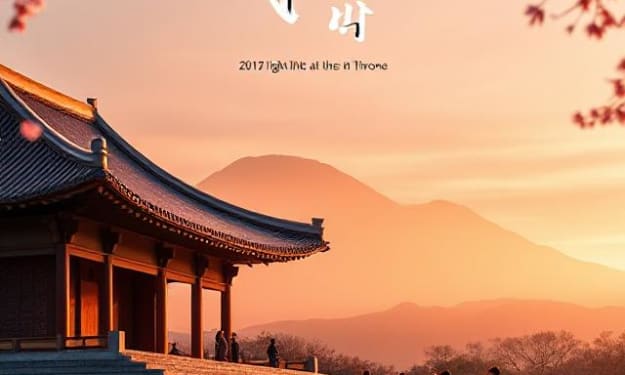
Gyeongbokgung Palace – The Timeless Heart of South Korea Nestled in the heart of Seoul, South Korea, Gyeongbokgung Palace stands as a majestic symbol of Korean heritage, resilience, and royal legacy. Known as the “Palace Greatly Blessed by Heaven,” Gyeongbokgung is the largest and most iconic of the Five Grand Palaces built during the Joseon Dynasty. With its stunning architecture, turbulent history, and cultural revival, this historic landmark remains a centerpiece of South Korea’s national identity.
By Mukhtiar Ahmadabout a year ago in History