World History
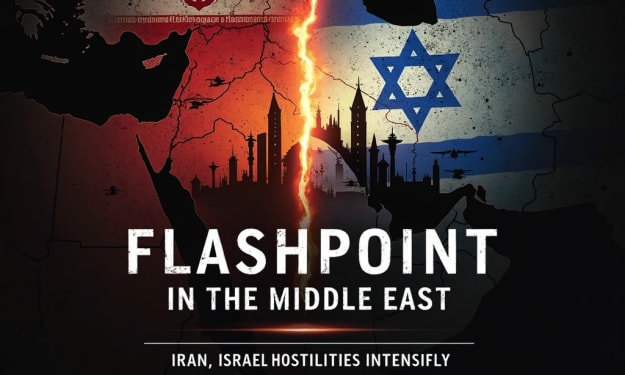
Flashpoint in the Middle East: Iran-Israel Hostilities Intensify
Flashpoint in the Middle East: Iran-Israel Hostilities Intensify The Middle East, a region long marked by shifting alliances, deep-rooted conflicts, and complex geopolitical rivalries, is once again at the brink of escalation. The growing hostilities between Iran and Israel have emerged as one of the most volatile flashpoints, with implications that extend far beyond their borders. In recent months, tensions have sharply increased, threatening to plunge the region into a wider conflict. Understanding the dynamics behind this struggle, its causes, and potential outcomes is essential to grasp the precarious state of Middle Eastern geopolitics today.
By Nauman Khanabout a year ago in History
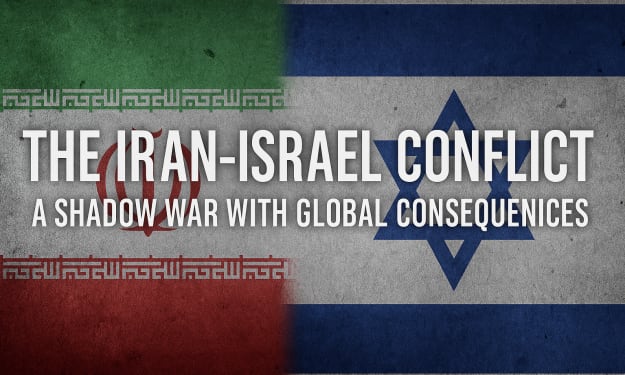
The article is titled the Iran-Israel Conflict: A Shadow War with Global Consequences.. AI-Generated.
Iran and Israel: the hidden conflict lurking behind the newsfront Proxy Battles to Nuclear Tensions Developments: How Two Regional Giants Continue to make the Middle East Tense
By Md Peyel Hassanabout a year ago in History
Iran and Israel: At the Edge of the War. AI-Generated.
Iran-Israel War: Tension is on the Rise and Regional Implications The possibility of the war of Iran and Israeli has been at the forefront of geo politics in Middle East over the decades. Although the war has not yet erupted into an all-out, all-stream confrontation, both the countries are engaged in a stealth premature confrontation, characterized by state-sponsored clandestine activities, cyberspace war, direct executions, and proxy-battles in the region. The long-running conflict, based on ideology, strategy, and security reasons, has colossal overtures that not only concern the two related countries, but also the stability of the region and the world in large.
By Md Peyel Hassanabout a year ago in History
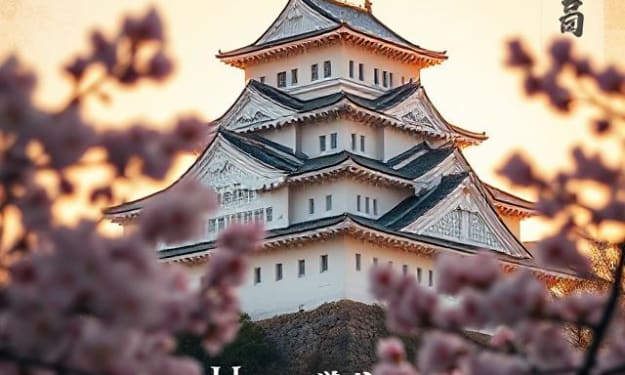
Himeji Castle: Japan’s Timeless White Fortress
Himeji Castle – Japan’s White Heron of History and Beauty Rising elegantly above the city of Himeji in Hyōgo Prefecture, Himeji Castle is one of Japan’s most treasured landmarks. Known as Shirasagi-jō or the "White Heron Castle" because of its brilliant white plaster walls and graceful, bird-like silhouette, Himeji Castle is not only a marvel of traditional Japanese architecture but also a powerful symbol of resilience, history, and cultural pride.
By Mukhtiar Ahmadabout a year ago in History
How a Tiny Village Changed the Course of a War. Content Warning.
They called it Bellenhof— a dot on the map of Eastern Europe, barely big enough for a dozen homes and a crooked church. No one outside the region paid much mind to it — not until the autumn of 1943, when the winds of war swept too close. The Second World War had devoured much of the continent by then. Borders shifted like sand under boots; armies marched; cities crumbled. And somewhere on the edge of those shifting lines lay Bellenhof, its people caught between advancing Allied forces and retreating Axis divisions. The village sat atop an ancient Roman road — a narrow strip of cobblestone that connected two key mountain passes. Whoever controlled that road controlled access to the valley beyond, a vital route for troop movement and supply chains. In late September, a German convoy rolled through Bellenhof. Soldiers requisitioned homes, stabled their horses in the old barns. The villagers — farmers, bakers, craftsmen — said nothing. They knew better. But among them lived Anja Keller, a young woman whose husband had been conscripted years earlier. Her heart, like the war itself, burned quietly. She worked at the village bakery by day, but at night she listened — to passing soldiers, to whispered rumors from travelers. And what she heard chilled her: a large German column was massing to retreat through the mountain pass, hoping to cut off the advancing Allies. If they succeeded, thousands of Allied soldiers would be trapped in the lowlands. There was no time to send a message. No radios, no phones. Couriers would be shot on sight. But Anja had an idea — one born of old stories her grandmother used to tell about the Roman road. Beneath it, somewhere, ran the remains of an ancient aqueduct — partially collapsed, half-forgotten. If they could trigger a landslide, they could bury the road... delay the retreat... maybe long enough for the Allies to catch up. It was a mad plan. The villagers were farmers, not engineers or soldiers. But desperation sharpens the mind. Quietly, under cover of darkness, Anja gathered those she trusted: the blacksmith Otto, old Marta from the inn, and the young shepherd Emil, whose knowledge of the hills was unmatched. Over the next two nights, they dug — risking everything — beneath the hillside flanking the road. They packed the weakened soil with barrels of oil, gunpowder stolen from careless soldiers, anything they could find. At dawn on the third day, the German convoy prepared to move. Tanks, trucks, horses — hundreds of men lined the ancient road. Anja waited on the hilltop, heart pounding. At her signal — a single flaming arrow — Emil loosed the fuse. For a moment, nothing. Then — a roar like the gods themselves. The earth trembled. The hillside collapsed, tons of stone and soil pouring onto the road. Wagons toppled. Soldiers shouted in panic. The convoy ground to a halt. Word spread like wildfire. Nearby Allied scouts, hearing the blast, raced to investigate. Within hours, Allied forces launched a swift advance, overwhelming the stalled Germans. The trapped Axis units, unable to retreat, surrendered en masse. Historians would later write that the battle for the pass had turned the tide of that campaign — cutting off Axis reinforcements and hastening the liberation of the region. But few recorded the name of Bellenhof, or the villagers whose courage had sparked it. Anja never sought glory. When the war ended, she rebuilt the bakery, planted a garden where the road once lay buried. Life returned, as it always does. But sometimes, when travelers passed through and marveled at the beauty of the valley, they would hear an old tale — of how, in the darkest days of war, a tiny village changed the course of history. And on quiet nights, under the stars, Anja would remember — not the fear, nor the destruction, but the simple truth she had learned: that even the smallest voices, in the right moment, can echo through the ages. ---
By Huzaifa Writerabout a year ago in History
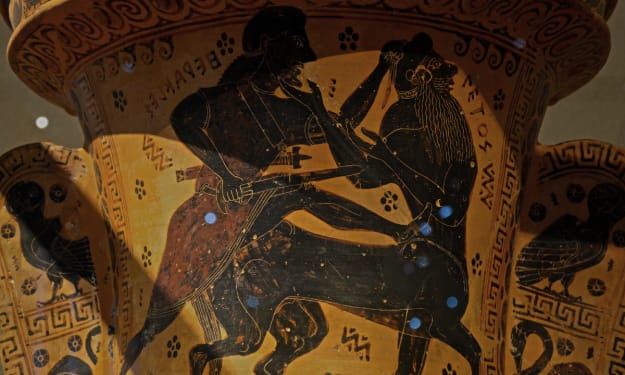
Top 5 Historical Creatures Described in Ancient Texts
Throughout history, ancient civilizations have documented fantastical creatures that blur the line between myth and reality. These beings, often described in sacred texts, epic poems, and historical accounts, have fascinated scholars and enthusiasts alike.
By Himadri Niloyabout a year ago in History
The Sinking of the RMS Titanic
Start The Sinking of the RMS Titanic: A Tragic Voyage into History – April 15, 1912 The sea was calm on the night of April 14, 1912, eerily so. The stars sparkled overhead with an intensity that made them seem closer than ever. On the deck of the RMS Titanic, passengers laughed, danced, and strolled beneath the clear sky, completely unaware that history’s most infamous tragedy loomed just hours ahead.
By Muhammad Maazabout a year ago in History
From Allies to Adversaries: Iran and Israel’s Tumultuous Journey
For much of the 20th century, the relationship between Iran and Israel was defined more by quiet cooperation than conflict. In the decades following World War II, Iran under Shah Mohammad Reza Pahlavi quietly aligned with Israel as part of a broader pro-Western axis in the Middle East. Despite Iran’s majority Muslim population, the Shah maintained clandestine diplomatic and economic ties with Israel, including arms deals, oil sales, and intelligence sharing. These links served the strategic interests of both nations during the Cold WaThis hidden alliance was abruptly shattered in 1979 with the Islamic Revolution. Ayatollah Ruhollah Khomeini led the overthrow of the Shah, replacing the monarchy with an Islamic Republic built on anti-Western, anti-Zionist ideology. Almost overnight, Israel transformed from a quiet partner into a sworn enemy in Iranian rhetoric. Tehran severed ties with Tel Aviv, and “Death to Israel” became a fixture of official Iranian discourse. In the place of diplomacy, Iran began supporting armed groups hostile to Israel—most notably Hezbollah in Lebanon and later Hamas in Gaza.
By Umar Faraz Gulabout a year ago in History
Girl Who Survived a Plane Crash in the Jungle 🌿✈️
❖ A Normal Flight on Christmas Eve It was December 24, 1971—Christmas Eve. Juliane Koepcke, a 17-year-old girl from Peru, boarded LANSA Flight 508 with her mother. They were flying from Lima to visit Juliane’s father in another city. The plane was almost full, with 92 people on board. The sky looked cloudy. As the flight continued, they flew into a big thunderstorm. The plane began shaking badly. People were scared. Lightning flashed all around. Then, suddenly, there was a loud noise. The plane had been hit by lightning. It started breaking apart in the air. Juliane remembers falling through the sky, still tied to her seat, spinning and surrounded by wind and clouds. She fell from over 10,000 feet—almost 3 kilometers high—into the Amazon rainforest. ❖ Waking Up in the Jungle Juliane woke up the next day on the ground. She was alone. Her arm hurt, one eye was swollen shut, and she had deep cuts on her legs and shoulders. Her glasses were gone. She had only one sandal on her foot and a torn summer dress. There was no sign of her mother or anyone else. Only trees, insects, and silence. She was in the middle of the rainforest—a place full of wild animals, snakes, and insects. But Juliane didn’t panic. She remembered what her parents had taught her: follow water. Small streams usually lead to rivers, and rivers may lead to people ❖ Eleven Days of Survival For the next 11 days, Juliane walked through the jungle. She followed a small stream, hoping it would take her somewhere safe. She had no food, just a small bag of candy she had found near the crash site. She drank water from the stream to stay alive. Flies laid eggs inside the cuts on her arm. She could feel them moving under her skin. She pulled out as many as she could. She was tired, in pain, and scared. But she kept going. At night, it was cold. During the day, the jungle was hot and full of biting insects. She had to walk carefully, afraid of snakes or other animals. But she didn’t give up. ❖ The Rescue On the 11th day, Juliane saw something—a small wooden hut near the river. It was empty, but it had a path nearby. She waited. Soon, local lumber workers arrived. They were shocked to see a skinny, weak girl, covered in wounds, standing alone in the jungle. They took her in, cleaned her wounds, and gave her food. Later, a helicopter came to fly her to a hospital. She found out she was the only survivor of the crash. All 91 other people, including her mother, had died. ❖ Life After the Crash Juliane recovered from her injuries. She later became a scientist, just like her parents. Years later, she returned to the crash site with a film crew and told her story. She said she never thought she would survive—but something inside her told her to keep walking. ❖ Reflection Juliane Koepcke’s story is one of the most amazing survival stories ever told. A teenage girl fell from the sky, landed in one of the wildest places on Earth, and survived for 11 days on her own. She didn’t have special tools or equipment. She didn’t have help. She had only courage, knowledge from her parents, and a strong will to live. Her story reminds us that even when things seem impossible, hope and strength can help us get through anything. Juliane’s story is still taught today in survival courses, documentaries, and books. It shows that even in the most hopeless situations, calm thinking and determination can save lives. Her experience not only inspired millions but also raised awareness about jungle survival, aviation safety, and the importance of mental strength in life-threatening situations.
By Echoes by Imadabout a year ago in History