World History
7 Wonders, 1 World: Secrets, Science & Soul of Earth's Greatest Marvels
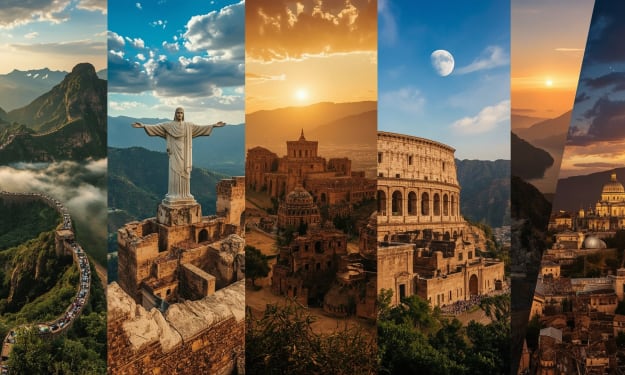
A World Beyond the Obvious There are places on Earth that don't just exist — they echo. Whispers of ancient brilliance, thunderous feats of engineering, and stories carved in stone, all waiting to be uncovered. From jungles of Peru to deserts of Jordan, humanity has sculpted legacies so grand, they defy time, weather, and logic.
By DRE Explainsabout a year ago in History
World War 2. AI-Generated.
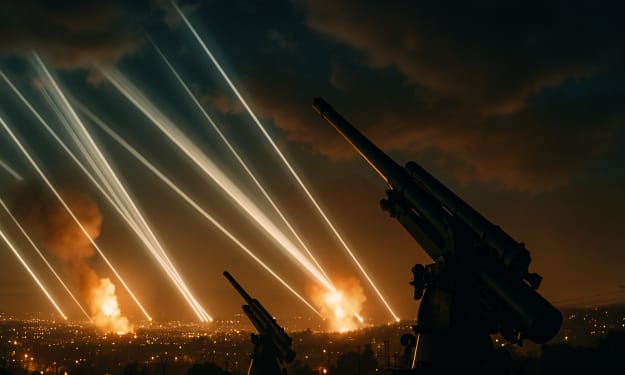
London, England – November 1940 The air raid sirens screamed like ghosts. Anna Dalton gripped her brother Thomas’s hand tightly as they hurried down the narrow stone steps into the underground shelter, joining dozens of others pressed shoulder to shoulder beneath the city. The smell of damp bricks and soot mixed with fear.
By Muhammad Asifabout a year ago in History
World War I. AI-Generated.
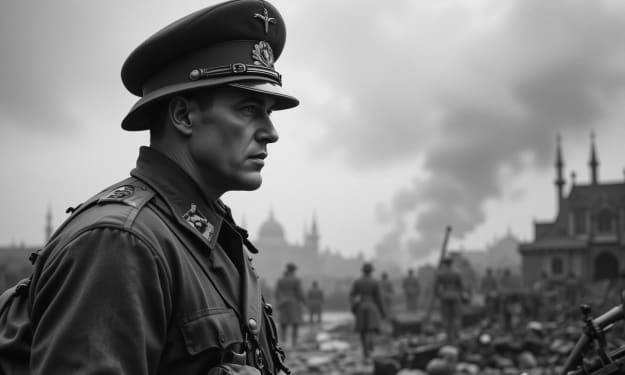
France, November 1916 The rain had not stopped for three days. Private James Hawthorne sat with his back pressed against the cold, mud-slick trench wall, clutching his rifle like a lifeline. His uniform was soaked through, his boots squelching with each step. Around him, the low murmur of exhausted voices mixed with the distant echo of artillery fire—like thunder on a battlefield that never truly slept.
By Muhammad Asifabout a year ago in History
The Eternal Smile: A Story of the Mona Lisa
In the echoing halls of the Louvre Museum in Paris, behind a thick pane of bulletproof glass, hangs the most famous smile the world has ever known. The Mona Lisa—silent, mysterious, and immortal—is more than just a portrait. She is a story, a riddle wrapped in oil and wood, whose journey from the hands of a Renaissance genius to global icon status is nothing short of extraordinary. It all began in Florence, Italy, in the early 1500s. Leonardo da Vinci, the quintessential Renaissance man, had returned to his homeland after years spent in Milan. Amidst commissions for churches, scientific sketches, and engineering blueprints, he accepted a humble portrait commission—one that would defy time. The woman was Lisa Gherardini, the wife of a wealthy Florentine silk merchant, Francesco del Giocondo. By all accounts, Lisa was not famous, royal, or extraordinary. Yet Leonardo, known for infusing soul into his art, saw something in her that others might have missed. He began the portrait around 1503. But, unlike other commissions, Leonardo didn’t let this one go. He carried it with him for years—through cities, countries, even as he crossed the Alps into France. This begs the question: why? Some say Leonardo saw it as more than a portrait. It became a lifelong project, a personal obsession. The Mona Lisa was his laboratory—a place where he experimented with techniques like sfumato, the delicate blending of tones that gives her face its lifelike softness. Her smile—subtle, elusive—was a marvel of optical illusion. Depending on the viewer’s angle, it seemed to change: now amused, now distant, now knowing. The painting was alive. Leonardo never delivered the portrait to Francesco del Giocondo. Instead, he took it with him to France in 1516 when he accepted an invitation from King Francis I. After Leonardo’s death in 1519, the painting became part of the French royal collection, admired behind palace walls but not yet the cultural titan she would become. For centuries, the Mona Lisa was respected but relatively obscure. That all changed in 1911. On a quiet August morning, the Louvre’s guards discovered an empty space on the wall where the Mona Lisa had hung. Panic spread. Paris was stunned. The police interrogated everyone—even Pablo Picasso. But the real thief was Vincenzo Peruggia, an Italian handyman who believed the painting belonged in Italy and had simply walked out with it hidden under his smock. For over two years, the Mona Lisa was missing. Newspapers around the world printed her image, and the public obsession began. When she was finally recovered in 1913, in a hotel room in Florence, the Mona Lisa returned to France not just as a masterpiece—but as a legend. From then on, her fame soared. Tourists flocked to see her. Writers and poets wrote about her. Scholars debated her secrets. Was she smiling or sad? Was she truly Lisa Gherardini—or someone else entirely? Some claimed she was a vision of femininity; others suspected hidden messages and codes. Through it all, she never said a word. In World War II, the Mona Lisa was hidden in various secret locations to protect her from the Nazis. She traveled in padded crates, watched over like royalty, always returning to the Louvre once peace was restored. In the modern age, she has traveled less—but her image has gone everywhere. She has been parodied by Dali, adored by Warhol, and replicated on mugs, t-shirts, and memes. She has starred in Hollywood films, inspired novels like The Da Vinci Code, and graced textbooks in classrooms across continents. Yet despite the fame, the real Mona Lisa remains as she always has: quiet, serene, unknowable. She watches the world through her glass, never aging, never changing. Her fame may be modern, but her soul is timeless. Perhaps that is the secret to her power. Leonardo, with all his genius, painted not just a woman, but a moment suspended in eternity. He captured not only the softness of skin and the glint in the eye, but something deeper—the quiet grace of human presence. A feeling that even five centuries later, draws millions to stand in silence before her. In a world driven by noise and speed, the Mona Lisa reminds us that mystery has its own magnetism. That some stories are more powerful for being incomplete. That a single, subtle smile can captivate the world—forever.
By Soul Draftsabout a year ago in History
Alexander the Great: The Lion of Macedon
Alexander the Great: The Lion of Macedon Long ago, in the land of Macedon, a boy was born under a sky lit by omens. His name was Alexander, son of King Philip II and Queen Olympias. From the very beginning, it was clear that he was not like other children. While others played with wooden swords, Alexander listened to the tales of Achilles, the mighty warrior of Troy, dreaming of glory on distant battlefields.
By Inamullah Rahimiabout a year ago in History
Shadow of the Steppe
Part I – The Horse and the Flame The first time I saw Genghis Khan, he was not yet the god men whispered about. He was flesh and fury, a man with lightning eyes and a voice that cracked like a war drum. I was twelve. My mother had died from fever. My father was a minor Tatar chieftain, slain in a night raid by Mongol warriors. When they came for our camp a second time, I did not run. I stood with a broken spear, heart trembling, and met the gaze of the commander. “Courage,” he said in Mongol, nudging his horse closer. “Or stupidity?” I did not answer. He looked at me a moment longer, then spat to the side. “Both will serve.” They called me Altan, meaning "gold," for the sun-colored streak in my hair. I learned to ride before I could read. Under Mongol command, I became a scout—light, fast, invisible. I rode ahead of armies, across forests, rivers, and endless plains. My reward was survival. My price, slowly, was the erosion of self. --- Part II – Blood on the Silk Road By the time I was sixteen, the empire stretched far beyond our wildest dreams. Cities fell like dominos. Samarkand. Nishapur. Merv. I watched entire cultures burn behind us—texts, temples, and tongues reduced to smoke. "Do you weep for them?" asked Khasar, my closest companion. His father had been a general under Genghis himself. Brutality was his inheritance. "No," I said, though my heart said otherwise. "Good," he grunted. "A scout cannot carry the dead with him. They're heavy, and they don't ride fast." That night, I buried a small talisman my mother once gave me—a carved bone, smoothed by her fingers when she told me stories of our ancestors. I buried it beneath the roots of a pine tree, as if hiding my past. --- Part III – The Question of Europe In the Carpathian foothills, the land turned cold and cruel. Snow bit at our faces. We rode through villages that whispered rumors of "iron knights" in the West, warriors with crossbows and castles of stone. Genghis Khan was dead by then, but the empire surged forward, led by his sons and grandsons. I scouted a small Hungarian town in winter. I saw children with red cheeks laughing by a frozen stream. A woman sang to a baby as she spun thread. A man carved wooden spoons. None of them had seen our banners. Not yet. I reported back: “No soldiers. Only peasants. No threat.” A week later, they burned it anyway. --- Part IV – The Drowning Song On a spring night, after the village fires had turned to embers, I heard singing by a stream. It was not Mongol, not Turkic. A girl’s voice, soft and sure, in a language I didn’t know. I followed it and found her kneeling in the water, releasing lotus blossoms down the stream. Her name was Erzsébet. She was no more than fifteen. “I sing for the drowned,” she said, in broken Tatar. “For the ones your people killed.” I said nothing. I had no excuse. “Why do you ride with them?” she asked, her eyes sharp as flint. I looked at my hands. “Because they spared me.” “And so you repay mercy with blood?” I wanted to tell her that survival is not loyalty. That a blade does not choose its master. But my mouth was empty. We met again the next night. And the next. Until her village, too, was marked for fire. --- Part V – The Turn I warned her. We escaped in the dark—two figures on horseback riding away from the thundercloud of conquest. She clung to my back as arrows whistled past. I felt Khasar’s betrayal like a blade in my gut. He would have seen me in the moonlight. He knew. They caught us two days later. They dragged me before the general and beat me until blood pooled in my ears. Erzsébet was thrown into a cage meant for dogs. I thought they would kill us. Instead, Khasar intervened. “Let the traitor ride,” he spat. “To the edge of the earth if he wishes. He’ll die there anyway.” They left us tied and bruised, two mouths full of silence. --- Part VI – The Long Ride West We did not return east. We rode west, through burned-out fields and shattered dreams. We begged and bartered, stole when we had to. At night, I dreamed of rivers red with blood. Faces of the fallen. My father’s last cry. My mother’s songs. But also of Erzsébet, her head on my shoulder as we crossed a mountain pass into a valley that had not yet known war. There, under spring blossoms, we built a hut. Planted barley. Let horses roam free. The scars remained. So did the memories. But each day the sun rose over a field not on fire felt like a kind of rebellion. --- Epilogue – What Remains Years later, when the Mongols finally withdrew from Europe, legends remained. Of shadow riders. Of villages spared by a ghost in a golden mane. They said a Tatar once rode with the Great Khan but turned his back on conquest. They called him coward. Others, saint. But I—Altan—knew only this: Some wars are not fought with swords. Some victories leave no monuments. And sometimes, mercy is the only way to survive your own story.
By 🇲 🇮 🇳 🇩 🇺 🇳 🇫 🇴 🇱 🇩 🇪 🇩 about a year ago in History
Everest: The Cost of Glory
🌬️ Into Thin Air: The Day Everest Took Lives and Left Scars A True Story of Courage, Survival, and Tragedy on the World’s Highest Peak On May 10, 1996, the sky above Mount Everest—silent, vast, and sparkling with snow—hid no warning signs. At 29,029 feet above sea level, where oxygen is so thin you can hardly breathe, a group of climbers stood triumphantly on the summit of the world’s highest mountain. They had made it. The dream of a lifetime had come true. But they had no idea they were standing at the edge of death. Jon Krakauer, an American journalist and mountaineer, was one of those climbers. He had come to Everest on assignment from Outside magazine to document the growing commercialization of Everest expeditions. He was climbing with a well-respected guide, Rob Hall, from New Zealand. Another team, led by the charismatic American Scott Fischer, was also aiming for the summit the same day. These were not amateurs. They were experienced climbers, guided by professionals. They had trained for months. They had paid up to $65,000 for the chance to stand on the roof of the world. And yet, none of them—not even the experts—were prepared for what was coming. 🚨 The Perfect Storm of Mistakes Everything seemed in place. But Everest is not a place of mercy. At those heights, every step is agony, every breath burns your lungs, and the human brain starts to shut down. The climbers were already exhausted when they reached the summit—hours later than planned. A strict rule in mountaineering is: turn around by 2:00 PM, summit or not. That rule was broken. Why? Because ambition is louder than fear. And Everest tempts the soul. As climbers descended, a sudden blizzard rolled in—fierce winds, blinding snow, and freezing temperatures below minus 30°C. The path disappeared. Ropes were buried. Visibility dropped to nothing. It was chaos. People became lost. Some collapsed. Some wandered off cliffs. Some simply sat down and never stood up again. 🧗♂️ The Heroes and the Heartbreak Rob Hall stayed with a client, Doug Hansen, who was too weak to move. Despite radio calls begging Rob to come down alone and save himself, he refused to leave Doug. “We’re fine,” he said over the radio. “Just a bit slow.” Hours later, the radio crackled again. “Please tell Jan I love her,” Rob said. Jan Arnold—his pregnant wife—was listening from New Zealand. It was the last time she would ever hear his voice. Scott Fischer, the second team leader, was found later—dead, frozen near the summit. He had pushed himself too hard and collapsed on the way down. He refused help. Everest swallowed him. And yet… there were survivors. Some miraculous, impossible survivors. ❄️ The Woman Who Came Back from the Dead One of the most stunning parts of the story is Beck Weathers, a Texan climber who was left for dead—twice. Left in the cold after losing consciousness, his face and hands were frostbitten beyond recognition. His teammates assumed he had died. But the next morning, he woke up. Alone. Half-blind. Barely able to walk. He staggered through the snowstorm back to camp. His nose was black. His fingers frozen stiff. But he was alive. He survived against all odds—and was rescued by helicopter from a near-impossible altitude the next day. He would later lose his right hand, left fingers, and most of his nose, but he lived to tell the tale. 😢 Survivors' Guilt and the Weight of Memory Jon Krakauer, though alive, was shattered. As he descended to base camp, past the frozen bodies of friends he had spoken with just hours before, guilt consumed him. He had written the story for a magazine—but it had become the most painful experience of his life. He later turned his article into the now-famous book, Into Thin Air, not to glorify Everest, but to tell the truth: Everest is not just a dream. It is a death zone. A place where nature always wins. The book doesn’t just document facts—it aches with emotion. It carries the weight of real voices lost to snow. It is not a story about how far humans can go—it’s a warning of what happens when we go too far. 💔 Why This Story Still Matters More than 200 bodies still remain on Everest, too dangerous to recover. The 1996 disaster became one of the most studied tragedies in mountaineering history. It changed the rules, exposed the risks of commercial climbs, and forced climbers to respect the mountain in new ways. But beyond the statistics, it’s a story of love, loyalty, and human will. Rob Hall stayed to the end for a client. Beck Weathers returned from the dead for his family. People helped each other, even when help meant dying too. In the coldest place on Earth, warmth came not from gear, but from human connection. 🕯️ Final Words Into Thin Air is more than just a book. It’s a haunting echo from the heights. It’s a call to remember those who reached for the sky—and paid the price. It’s a reminder that sometimes, the most dangerous thing about climbing Everest isn’t the height—it’s the belief that we’re invincible. > “There’s no such thing as fair or unfair on a mountain. There is only the mountain. And it does not care.” — Jon Krakauer
By Khan Afzalabout a year ago in History
The Rise and Fall of Rome
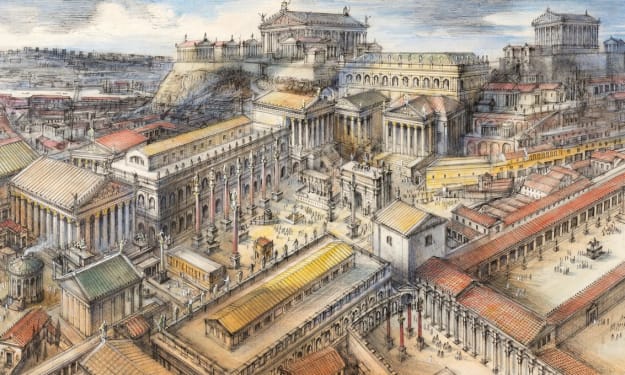
Rome didn’t start as an empire. It began as a myth. A story of two brothers — Romulus and Remus — abandoned in the wild, raised by a she-wolf, and destined to build a city that would one day rule the known world. In 753 BC, Romulus is said to have founded Rome, naming it after himself — by blood, by war, and by destiny. At first, Rome was just a village. Mud huts, shepherds, and farmers. But there was something different about the people of Rome. They were survivors. Fighters. They were not just building homes — they were building legacy. Soon, kings ruled the city. Some wise. Some cruel. But the Romans grew tired of monarchs. So, in 509 BC, they did something radical: they overthrew their last king and founded a Republic. No more crowns. Rome would now be ruled by law, by senators, by the voice of its people — or at least, the powerful ones. The Republic was built on discipline, strength, and an obsession with control. Rome didn’t just defend itself — it expanded. First across Italy. Then beyond. Enemies fell one by one — the Samnites, the Etruscans, the Gauls. But it wasn’t enough. Rome set its sights across the sea. There, in North Africa, stood a rival power: Carthage. A rich city. A proud people. A terrifying general named Hannibal, who led elephants through the Alps to destroy Rome. But Rome didn’t break. It rebuilt. And when the final war ended, Carthage was burned to the ground. Rome now ruled the western Mediterranean. Its legions were unmatched. Its roads stretched like veins across nations. Its law, its order, and its language shaped the world. But inside… cracks were forming. Power was shifting. Corruption crept through the Senate. Rich families grew richer. The poor were forgotten. And then came a name that would change everything: Julius Caesar. A brilliant general. A man of the people. A dangerous politician. He conquered Gaul, crossed the Rubicon, and took Rome by force. No one had ever done it like him before. But the Senate feared what he had become: too powerful, too loved, too close to being king. And so, on the Ides of March, 44 BC, they murdered him. In public. In daylight. In cold blood. They thought they had saved the Republic. They were wrong. Civil war followed. Rome tore itself apart. Friend fought friend. Brother killed brother. And in the end, one man emerged victorious: Octavian — Julius Caesar’s adopted son. He would become Augustus, the first Emperor of Rome. The Republic was dead. The Empire was born. Under Augustus, Rome entered a golden age. Peace, art, engineering, architecture — the Pax Romana, or Roman Peace, lasted for 200 years. The Colosseum rose. Aqueducts carried water to millions. The legions marched across Europe, Asia, and Africa. Rome was now a god among cities. But time does not obey glory. As emperors changed, so did Rome. Some were wise, like Marcus Aurelius. Others were cruel, like Nero and Caligula. The Empire grew too large to manage. Barbarians pushed at the borders. Plagues drained the people. Armies became more loyal to gold than to Rome itself. Then came a divide. In 285 AD, the Empire was split in two — East and West. Two capitals. Two emperors. Two paths. The East would survive. The West… would not. In 410 AD, the unthinkable happened: Rome was sacked by the Visigoths. The eternal city… looted, burned, and humbled. Once the master of the world, now begging for mercy. But it wasn’t over. The Western Roman Empire limped on for a few more decades. Broken. Poor. Weak. And finally, in 476 AD, a Germanic warrior deposed the last emperor — Romulus Augustulus — a boy with a borrowed crown. Rome had fallen. Not with a final battle… but with silence. What had begun as a myth… ended as a memory. But did Rome truly die? No. Its spirit lives on — in laws, in languages, in cities and systems across the world. In every republic, every senate, every column and courthouse, Rome still breathes. It rose from nothing. Ruled everything. And though its walls have crumbled, its shadow stretches still. This was Rome. The world it built… and the cost of power it couldn’t escape.
By Waqif Khanabout a year ago in History
Napoleon Bonaparte: The Mastermind of Modern Warfare
Napoleon Bonaparte stands as one of history’s most fascinating and controversial figures. Born in modest circumstances, he rose to dominate Europe through sheer ambition, unmatched military prowess, and keen political acumen. From a general of the French Revolution to Emperor of the French, Napoleon’s impact on both France and the broader world was enormous. His reforms modernized state institutions, his battles redrew national borders, and his legacy continues to influence the fields of law, governance, and warfare.
By Anwar Jamilabout a year ago in History
Tamerlane: The Sword of Islam
In the turbulent 14th century, when empires were rising and falling with dramatic swiftness, few figures left as indelible a mark as Tamerlane, also known as Timur. A descendant—at least by claim—of Genghis Khan, Timur emerged from the steppes of Central Asia to establish an empire that would stretch from India to the Mediterranean. Known for his brilliant military strategies as well as his brutal methods, Tamerlane was both feared and admired. Though his empire was relatively short-lived, his legacy would influence regions from the Islamic world to Renaissance Europe and shape the political and cultural landscape for centuries.
By Anwar Jamilabout a year ago in History