World History
The Ghost of Coco Chanel: How One Woman Reinvented Fashion Forever
The Ghost of Coco Chanel: How One Woman Reinvented Fashion Forever The dark, glamorous, and complicated legacy of Chanel. The name Coco Chanel lingers in the world of fashion like a ghost — ever-present, elusive, and immortal. To this day, her designs define elegance, her fragrance whispers of timeless femininity, and her persona embodies both brilliance and controversy. More than a designer, Chanel was a revolution, a woman who dared to dismantle the corseted cages of her era and replace them with freedom, power, and allure.
By waseem khanabout a year ago in History
72 Days in the Ice: The Andes Plane Crash Survival Story
On October 13, 1972, a Uruguayan Air Force plane carrying a rugby team, their friends, and family crashed in the snowy peaks of the Andes Mountains. Known today as the Andes plane crash 1972 or Flight 571 crash, this event turned into one of the most famous survival stories in history. For 72 days in the Andes, the survivors endured freezing temperatures, starvation, avalanches, and unimaginable choices. What emerged was not just a tragedy but an inspirational survival story of courage, endurance, and hope.
By Rana Ahmadabout a year ago in History
Harriet Tubman’s Secret Road: The Underground Railroad’s Untold Stories
When we think of courage, it is easy to picture soldiers on battlefields or leaders in grand halls making decisions that shape nations. But sometimes, the greatest courage comes in the silence of the night, when one person risks everything for the freedom of others. Harriet Tubman’s story is one of those legacies—a story etched not only in history books but in the very soil of America’s struggle for freedom.
By Echoes of Lifeabout a year ago in History
The History of the Danube's Cauldrons
The History of the Danube's Cauldrons: A Legend Sculpted in Time Part I: The Land of Decebalus and Roman Power Before the rock of Ghița mountain bore the face of Decebalus, and before the road narrowed into a gorge where the waters of the Danube thrashed like a wounded dragon, the Cauldrons were a sacred place. For the Dacians in the area, the mountains were sanctuaries, and the river was a living being with a powerful spirit. The deep waters and strong currents were considered a manifestation of the gods, who protected the land from enemies. When rival tribes approached, the sound of the troubled waters hitting the rocks would drive them away, as a warning that here, the land itself was defending itself.In those times, the elders of the villages would whisper stories about Zamolxe, who had sat on a rock, with his gaze fixed on the sun, and had merged with the mountain. Thus, his spirit became the protector of the Cauldrons, watching over his people. Every rock had a legend, every waterfall a secret. It was believed that in the hidden caves lived beings of the earth, who appeared only on full moon nights to bless those who respected nature.Then, the Romans came. With their shiny weapons and disciplined legions, they descended towards the Danube, seeking to conquer and civilize. For them, the river was not a sacred being but a transportation route, a strategic border. When they reached the Cauldrons, they understood why the Dacians revered them. The waters were agitated, the currents were strong, and the narrow rocks made navigation almost impossible. They were forced to build a network of roads on the bank to transport troops and supplies, and the testimony of their work is still inscribed in the famous Tabula Traiana, a commemorative plaque that stands as a testament at the entrance to the gorge today.Trajan, the Roman emperor, understood that to conquer Dacia, he also had to conquer this water route. But the Dacians were not easy to defeat. Fearless warriors, led by King Decebalus, they knew every crevice, every hidden rock. They retreated into the mountains, using the rugged terrain as an ally. Fierce battles took place, and their echoes can still be heard when the wind blows strongly through the rocks. After the death of Decebalus and the conquest of Dacia, the Romans remained. But the spirit of the place refused to be subdued. The Dacian stories continued to be told in whispers around campfires, and the Romans, although they considered them superstitions, felt an unseen force, a weight of history that hovered over the Canyon. That is why the Tabula Traiana was not just a monument to Roman victory, but also a recognition of the power of the place. It was as if the Romans were telling the world: "We came, we conquered, but this place is more than just land. It has a soul." For centuries, the Cauldrons were a border, a place of passage and conflict. Romans, migrants, foreign peoples, all passed through here. But the Dacian spirit, that of freedom and love for the land, remained.
By alin butucabout a year ago in History
Life on the Nile: Egypt Beyond the Pharaohs
When we think of ancient Egypt, our minds often jump to the towering pyramids, grand temples, and mysterious pharaohs who ruled with divine authority. But beyond the monumental stone structures and royal tombs lies a world much more intimate and vivid—a world where millions of ordinary Egyptians lived, worked, dreamed, and endured along the life-giving banks of the Nile.
By Echoes of Lifeabout a year ago in History
Mythical Creatures of the North: Legends from Norse Mythology
When the Vikings looked at the world around them, they saw danger everywhere. Long winters, raging seas, and untamed forests shaped their lives. To explain these forces—and perhaps to face them with a measure of courage—they created stories. These stories were full of gods and heroes, yes, but also of the creatures that lurked in the shadows: wolves destined to swallow gods, serpents coiled around the earth, and the restless dead who refused to stay in their graves.
By Ancient Spiritabout a year ago in History
Civilization's Zero Point- MU
When Ancient Wisdom Becomes Dangerous Knowledge There exists a profound irony in how we approach ancient history. We celebrate the mysteries of Atlantis, we romanticize the spiritual depths of Lemuria, yet we systematically ignore what may have been the foundation of all human civilization: a continent that predates them both, carrying secrets so transformative that their very acknowledgment would require us to rewrite everything we think we know about ourselves.
By Infinite Queriesabout a year ago in History
The Trail of Tears: America’s Dark March Westward
A Promise of Expansion, A Reality of Sorrow In the early 19th century, the United States stood at a crossroads. The young nation was eager to expand westward, driven by the belief in Manifest Destiny—the idea that Americans were destined to settle across the continent. But this expansion came at a devastating cost.
By Echoes of Lifeabout a year ago in History
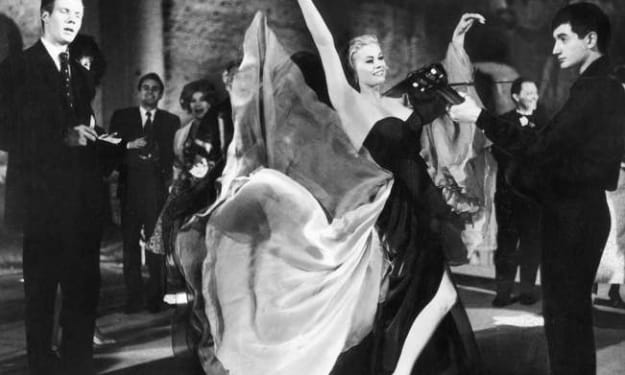
The best movies in history
That's right. Personal taste, cultural impact, technological innovation, and critical consensus all play a role in determining the "best" films of all time. We can, however, compile a list of films that have fundamentally influenced cinema and are almost universally acclaimed by combining these elements. This list, which is organized by era and genre to highlight their distinct contributions, serves as a starting point. The Complete List of "Must-See" Events (A Selection of the Best) Sight & Sound's and the AFI's 100 Years...100 Movies critic and director polls consistently place these films at the top. The Classics of the Golden Age (pre-1960) Orson Welles' Citizen Kane (1941) Why it's so important: It has been called the best movie ever. It changed sound design, deep-focus photography, and narrative structure. The story of the rise and fall of a newspaper tycoon remains a masterclass in filmmaking. Michael Curtiz's 1942 film Casablanca Why it's so important: It has romance, drama, suspense, and humor all in one. It may be the most perfect Hollywood studio film ever made due to its timeless themes of sacrifice and honor, memorable characters, and iconic dialogue. Jean Renoir's The Rules of the Game (1939) Why it's important:
By parves mosharafabout a year ago in History
Judge Frank Caprio’s Legacy of Kindness
Most judges retire with little fanfare outside their communities. But when Judge Frank Caprio announced his retirement, the news reverberated around the world. Millions of people who had never set foot in Rhode Island felt the weight of his departure. That’s because Judge Caprio wasn’t just a judge — he was a teacher, a mentor, and a symbol of kindness in a world that often feels unforgiving.
By Echoes of Lifeabout a year ago in History