World History
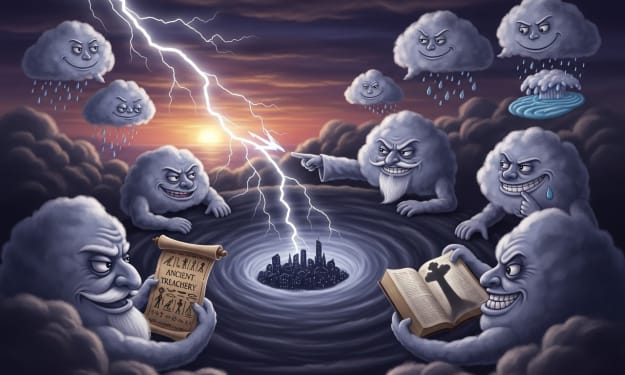
Why Clouds Are Plotting Against Us
Gaze up on a bright day, and there they are—clouds, those fluffy impostors, drifting across the sun to cast a shadow on your joy. This isn’t mere weather; it’s a calculated strike. Clouds have been scheming against humanity since time immemorial, and their sinister agenda is hiding in plain sight. From ancient omens to modern-day disruptions, let’s unravel the 600-word truth about why clouds are plotting against us.
By nahida ahmedabout a year ago in History
The Evolution of Trains: From Ancient Tracks to Modern High-Speed Rails
The history of trains spans millennia, evolving from simple wooden tracks to sophisticated high-speed networks that revolutionized global transportation. Ancient civilizations laid the groundwork for rail systems. As early as 600 B.C., the Greeks created grooves in limestone roads to guide wheeled vehicles, facilitating the transport of boats across the Isthmus of Corinth. This primitive form of rail fell into disuse after the Roman conquest in 146 B.C., vanishing for over 1,400 years. Railways reemerged in the 16th century in Germany as "wagonways"—wooden rails that allowed horse-drawn carts to move goods more efficiently than on dirt roads. By the 1700s, these evolved into iron-railed tramways across Europe, still powered by horses.
By jahidul Islam Sifatabout a year ago in History
The Untold Story of the Amazigh: The People Who Refused to Disappear
Long before maps divided North Africa into modern nations, before the pyramids rose in Egypt, and before Rome claimed dominion over the Mediterranean, there lived a people who called themselves Imazighen – “the free ones.” Their history is as old as the desert winds, yet much of it has been buried, renamed, or forgotten. The Amazigh story, however, is not one of disappearance, but of survival, identity, and resilience that has lasted thousands of years.
By Youssef Khabchiabout a year ago in History
The 600-Year-Old Mystery That Still Defies Decoding
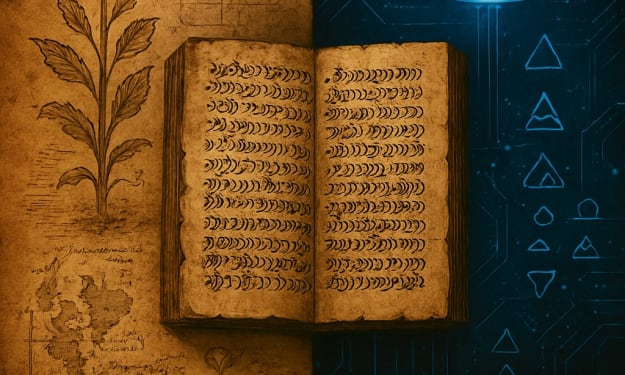
Imagine this: You open an old chest in a dimly lit library, and inside lies a book so strange, it doesn’t even feel human. Its pages are made of ancient vellum smooth but yellowed with time filled with strange, looping script no one has ever read, and illustrations that make your brain go, Wait… what am I looking at?
By Muhammad Ayaan about a year ago in History
Haunting Memories of World War II: The Nazi Regime’s Dark Secrets
Introduction: World War II (1939–1945) remains one of the darkest chapters in human history. Beyond the battlefield victories and political shifts, the Nazi regime under Adolf Hitler left behind chilling secrets—haunting memories of cruelty, oppression, and inhumane experiments that scarred generations.
By Md Abul Kasemabout a year ago in History
Is the God of the Old Testament the Same One Jesus Spoke Of?
Is the God of the Old Testament the Same One Jesus Spoke Of? This is one of the most challenging and provocative questions in the history of religion. At its heart lies the tension between two seemingly different portraits of the divine: on the one hand, Yahweh of the Hebrew Bible, a God who appears deeply invested in law, sacrifice, and judgment, and on the other hand, the Father of Jesus Christ, a God of love, mercy, and boundless forgiveness. The Church has long held that these two figures are the same, that the stern ruler of Sinai is also the compassionate Father of the Sermon on the Mount. Yet when we look closely, the differences seem so stark that reconciliation is not easily achieved.
By The Secret History Of The Worldabout a year ago in History
Twelve Days of Fire: The Iran–Israel War That Shook the World
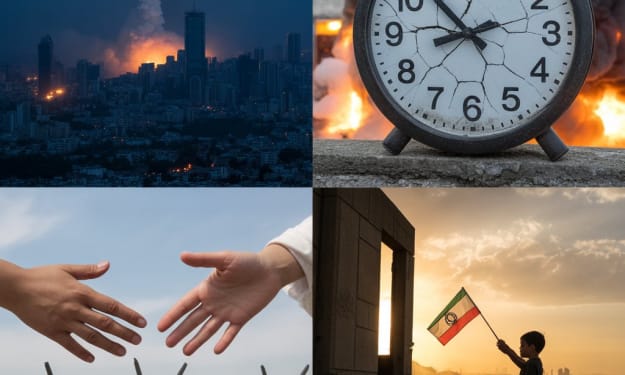
It began in the quiet hours of a June night, when most of the world was asleep. The skies over the Middle East erupted with missiles, drones, and the roar of fighter jets. What started as a surprise strike quickly became a conflict that would grip headlines for nearly two weeks — the Iran–Israel 12-Day War. The war, fought between June 13 and June 24, 2025, was brief by the standards of history, yet its impact was profound. Every day carried the weight of decades of tension, every missile strike a reminder of the long shadow of distrust that had lingered between the two nations. Day One: A Sudden Inferno The opening salvo caught Iran off guard. Israeli jets and missiles struck deep into Iranian territory, targeting nuclear facilities and missile stockpiles. Explosions lit up the skies near Tehran, Isfahan, and military bases across the country. Israel declared that its actions were “preventive and defensive”, claiming that Iran’s nuclear ambitions had crossed a dangerous red line. Iran, furious and shaken, responded with its own barrage of drones and ballistic missiles. Sirens wailed across Israeli cities, and civilians crowded into bomb shelters. The cycle of retaliation had begun. Days of Fire and Fear By the third day, the war had become relentless. Iran’s Revolutionary Guard launched waves of drones toward Tel Aviv and Haifa, while Israel’s Iron Dome and Arrow defense systems lit up the night skies as they intercepted the incoming fire. On the ground, civilians lived in constant fear. In Iran, apartment blocks crumbled under Israeli strikes. Hospitals overflowed, and families fled southward seeking safety. In Israel, daily life came to a halt; markets were empty, schools closed, and even weddings were postponed. The human cost escalated rapidly. By the end of the first week, thousands were injured, and hundreds had lost their lives. It was no longer just a war of weapons — it was a war of endurance, survival, and psychological torment. The U.S. Enters the Arena The world could not stand by silently. The United States, alarmed by the scale of destruction, made a calculated decision. B-2 stealth bombers were deployed to strike Iranian nuclear sites, significantly damaging facilities thought to be weeks away from enrichment breakthroughs. President Trump, ever eager to project strength, declared that the strikes were necessary to “neutralize a global threat”. Yet, this intervention only complicated the conflict. Iran accused the U.S. of collusion with Israel, while Washington insisted it was protecting global security. Day Ten: Fatigue and Desperation As the tenth day dawned, both nations were weary. Israel had dealt massive blows to Iran’s infrastructure, yet its people were tired of constant sirens and sleepless nights. Iran, though battered, refused to surrender. Crowds filled Tehran’s streets waving flags, chanting resilience, and calling the war a test of national pride. In truth, both nations were nearing a breaking point. Fuel supplies ran low, hospitals overflowed, and international pressure mounted. Global powers, including Russia, China, and the European Union, urged restraint. Diplomats scrambled to broker a truce before the conflict spiraled beyond repair. Day Twelve: Ceasefire and Chaos On June 24, the twelfth day, the U.S. announced that a ceasefire had been brokered. For a brief moment, hope returned. Guns fell silent, and missiles ceased. Civilians dared to peek outside their shelters, praying it was finally over. But peace was fragile. Within hours, missiles once again streaked across the skies. Israel claimed Iran had launched two rockets in violation of the truce — both intercepted by missile defenses. In retaliation, Israeli warplanes struck near Tehran. Iran denied involvement, accusing Israel of staging the incident. Amid the chaos, tragedy struck: Corporal Eitan Zacks, an 18-year-old Israeli trainee, was killed when a missile slammed into his family’s apartment in Beersheba. He became the first Israeli soldier to die in the war, a devastating reminder that the ceasefire had come too late for many. Who Won the War? When the dust settled, all three major players — Israel, Iran, and the United States — claimed victory. Israel hailed its campaign as a historic triumph, declaring that Iran’s nuclear ambitions had been crippled and its deterrence reinforced. Prime Minister Netanyahu proclaimed, “We have secured our nation’s future.” Iran, despite heavy losses, framed survival as victory. President Masoud Pezeshkian stood before cheering crowds and called the ceasefire a “great triumph of resilience”, proof that Iran could withstand even the harshest assaults. The United States claimed success for preventing a wider regional war. President Trump boasted that his intervention had saved lives while safeguarding the world from a nuclear Iran.
By Ismail khan about a year ago in History
The 9 Unknown Men of Ashoka, The Secret Society That Has Guarded Knowledge for Over 2,000 Years
Imagine a secret so powerful that it could change the fate of the world… What if such knowledge was hidden away not destroyed, but kept in the hands of a few chosen individuals, passed down silently from generation to generation for over two millennia?
By Muhammad Ayaan about a year ago in History
The Untold Story of Elon Musk’s First Million
Today, Elon Musk is a household name—the billionaire behind Tesla, SpaceX, and Neural Ink. But every story of success has a beginning. Before the rockets, before the electric cars, before becoming one of the richest men alive, there was a young man with an idea and a lot of determination.
By ✦•············• Freelancer •············✦about a year ago in History
Prague Castle: A Millennium of Power
Prague Castle – The Heart of Czech History High on a hill overlooking the winding Vltava River, Prague Castle (Pražský hrad) dominates the skyline of the Czech capital. Its silhouette, with Gothic spires and sprawling courtyards, has been a symbol of Czech identity, resilience, and power for more than a millennium. More than just a fortress, it is an enduring witness to the changing tides of history — from medieval kings to modern presidents — and holds the Guinness World Record as the largest ancient castle in the world, covering nearly 70,000 square meters.
By Mukhtiar Ahmadabout a year ago in History