Research
Weather
Weather affects everyone, every day. Whether it’s sunny, rainy, or snowy, weather impacts what we wear, how we travel, and even how we feel. This article explains weather in simple and easy words, helping you understand what it is, how it works, and why it changes.
By Farhan Sayed2 years ago in History
The Most Beautiful Ancient Temples in the World
Temples are not just places of worship; they are monumental testaments to the ingenuity, creativity, and spirituality of ancient civilizations. These structures, often designed to align with celestial events or to evoke a sense of divinity, stand as reminders of humanity's enduring quest for meaning and connection with the divine. In this article, we’ll journey across the globe to discover the most beautiful ancient temples in the world, each telling its own story of culture, religion, and artistry.
By Zinnat ara Begum2 years ago in History
The Maritime and Military Power of the Tamil Dynasties
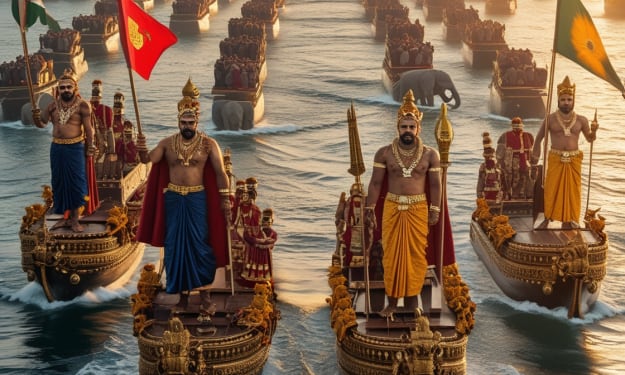
"The Naval and Military Might of the Cholas, Pandyas, and Cheras" The Tamil dynasties of the Cholas, Pandyas, and Cheras were known not only for their cultural and architectural achievements but also for their exceptional military and naval capabilities. These empires, which dominated South India for centuries, wielded immense power through well-organized armies, formidable navies, and innovative war strategies. Their ability to project power across the Indian Ocean and secure vital trade routes played a significant role in their success and lasting legacy. The Naval Power of the Tamil Dynasties Chola Navy
By Say the truth 2 years ago in History
The Strangest Stories in History: Discovering the Most Bizarre Events from the Past
In the beginning There are a lot of unusual things that have happened throughout history, as well as strange happenings and mysterious tales that almost seem too fantastic to be real. Individuals from all over the globe continue to be fascinated and perplexed by these peculiar tales from the past, which vary from ancient mysteries to contemporary riddles that have not been solved. For what reasons are some historical occurrences considered "strange"? Why is it that some events in history are relegated to the realm of fables, while others are relegated to the realm of obscurity?
By QuirkTales2 years ago in History
Moss Landing Fire
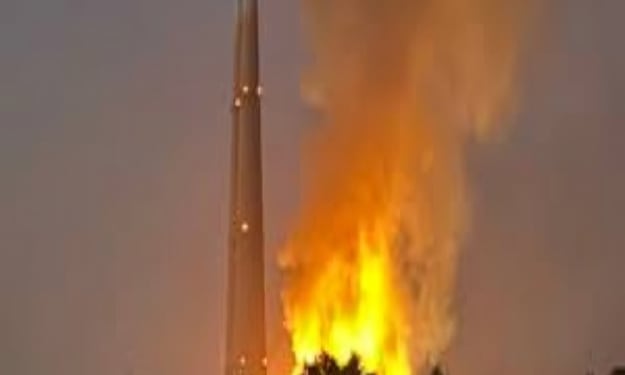
On January 16, 2025, a large fire broke out at the Moss Landing Power Plant in Monterey County, California. The plant, known for housing one of the world’s biggest lithium battery storage systems, became the center of attention as firefighters and emergency teams worked tirelessly to control the situation. This incident caused concern in the local community due to the potential risks from toxic smoke and other safety issues.
By Farhan Sayed2 years ago in History
Challenge to Decipher Ancient Indian Scripts. AI-Generated.
Rajesh PN Rao, a computer scientist, receives emails from people claiming they've cracked an ancient script that has puzzled scholars for years. These self-proclaimed codebreakers, including engineers, IT workers, retirees, and tax officers—mostly from India or of Indian origin living abroad—believe they have decoded the script of the Indus Valley Civilization, a mix of symbols and signs. "They say they’ve solved it and the 'case is closed,'" says Mr. Rao, a professor at the University of Washington, who has published studies on the Indus script. To make things more interesting, MK Stalin, the chief minister of Tamil Nadu in southern India, recently announced a $1 million prize for anyone who can crack the code. The Indus, or Harappan, civilization, one of the world’s oldest urban societies, appeared 5,300 years ago in what is now northwest India and Pakistan. Its people, who lived in cities made of baked bricks, thrived for centuries. Since its discovery a century ago, over 2,000 sites have been found in the region. While the reasons for the civilization's sudden decline are unclear, with no signs of war, famine, or natural disasters, its biggest mystery is its undeciphered script. This keeps its language, governance, and beliefs hidden from us. over a hundred years, experts such as linguists, scientists, and archaeologists have been trying to decode the Indus script. Some have linked it to early Brahmi scripts, Dravidian and Indo-Aryan languages, Sumerian, and even suggested it might just be political or religious symbols. ut its meaning remains a mystery. "The Indus script is perhaps the most important writing system that is still undeciphered," says Asko Parpola, a well-known scholar of Indian studies. In recent times, some theories have linked the script to Hindu scriptures and given the symbols spiritual or magical meanings. However, many of these ideas overlook the fact that the script, made up of signs and symbols, mostly appears on stone seals used in trade, making it less likely that they contain religious or mythological content, according to Mr. Rao. Deciphering the Indus script is difficult for several reasons. Firstly, there is a small number of inscriptions—around 4,000—mostly on small objects like seals, pottery, and tablets. Secondly, the inscriptions are very short, with an average of about five symbols, and there are no long texts on walls, tablets, or upright stone slabs. Take the commonly found square seals, for example: they have lines of signs at the top, with a central animal symbol—often a unicorn—and an object next to it, but the meaning of the object remains unknown. There is also no bilingual artifact, like the Rosetta Stone, which helped scholars decode Egyptian hieroglyphs. Bilingual artifacts contain text in two languages, allowing a direct comparison between a known and an unknown script. Recently, advancements in decoding the Indus script have involved using computer science to solve this ancient puzzle. Researchers have applied machine learning techniques to analyze the script, looking for patterns and structures that could help understand its meaning. Nisha Yadav, a researcher at the Tata Institute of Fundamental Research (TIFR) in Mumbai, is one of these researchers. She has been working with scientists like Mr. Rao to use statistical and computational methods to study the undeciphered script. Using a digitized dataset of Indus signs, they have discovered interesting patterns. However, Ms. Yadav adds a caution: "We still don't know if the signs represent complete words, parts of words, or parts of sentences." Ms. Yadav and her co-researchers discovered 67 signs that make up 80% of the writing in the Indus script. One of the most commonly used signs looks like a jar with two handles. They also noticed that the scripts typically start with a large number of signs and end with fewer. Some sign patterns appeared more frequently than expected. Additionally, a machine-learning model was developed to help restore the damaged or illegible parts of the text, which could open the door to more research on the script. "Our understanding is that the script is structured and has an underlying logic in the writing," says Ms. Yadav. However, several ancient scripts still remain undeciphered, facing similar challenges to those of the Indus script.Mr. Rao points to scripts like Proto-Elamite (from Iran), Linear A (from Crete), and Etruscan (from Italy), whose languages are unknown. Other scripts, like Rongorongo (from Easter Island) and Zapotec (from Mexico), have known languages, but their symbols are still unclear. The Phaistos Disc, a mysterious fired clay disc from the Minoan civilization in Crete, also shares challenges with the Indus script—it has an unknown language, and only one known example of it exists. It’s unclear why Mr. Stalin, the chief minister of Tamil Nadu, announced a reward for deciphering the Indus script. His announcement came after a new study linked Indus Valley signs to graffiti found in Tamil Nadu. K. Rajan and R. Sivananthan analyzed over 14,000 pottery fragments with graffiti from 140 excavation sites in Tamil Nadu, identifying more than 2,000 signs. Many of these signs closely resemble those in the Indus script, with 60% of the signs matching, and over 90% of the graffiti marks from southern India having "parallels" with those from the Indus civilization, according to the researchers.It is suggests there may have been some cultural contact between the Indus Valley and south India, say Mr. Rajan and Mr. Sivananthan. Many believe that Mr. Stalin’s decision to announce the reward positions him as a strong supporter of Tamil heritage and culture, setting himself apart from Narendra Modi's Bharatiya Janata Party (BJP), which rules the central government in Delhi. However, researchers are confident that no one will claim Mr. Stalin’s prize anytime soon. Scholars have compiled comprehensive, updated databases of all known inscribed artifacts, which are crucial for deciphering the script. "But what did the Indus people write? I wish we knew," says Ms. Yadav.
By Sipu Kumar2 years ago in History